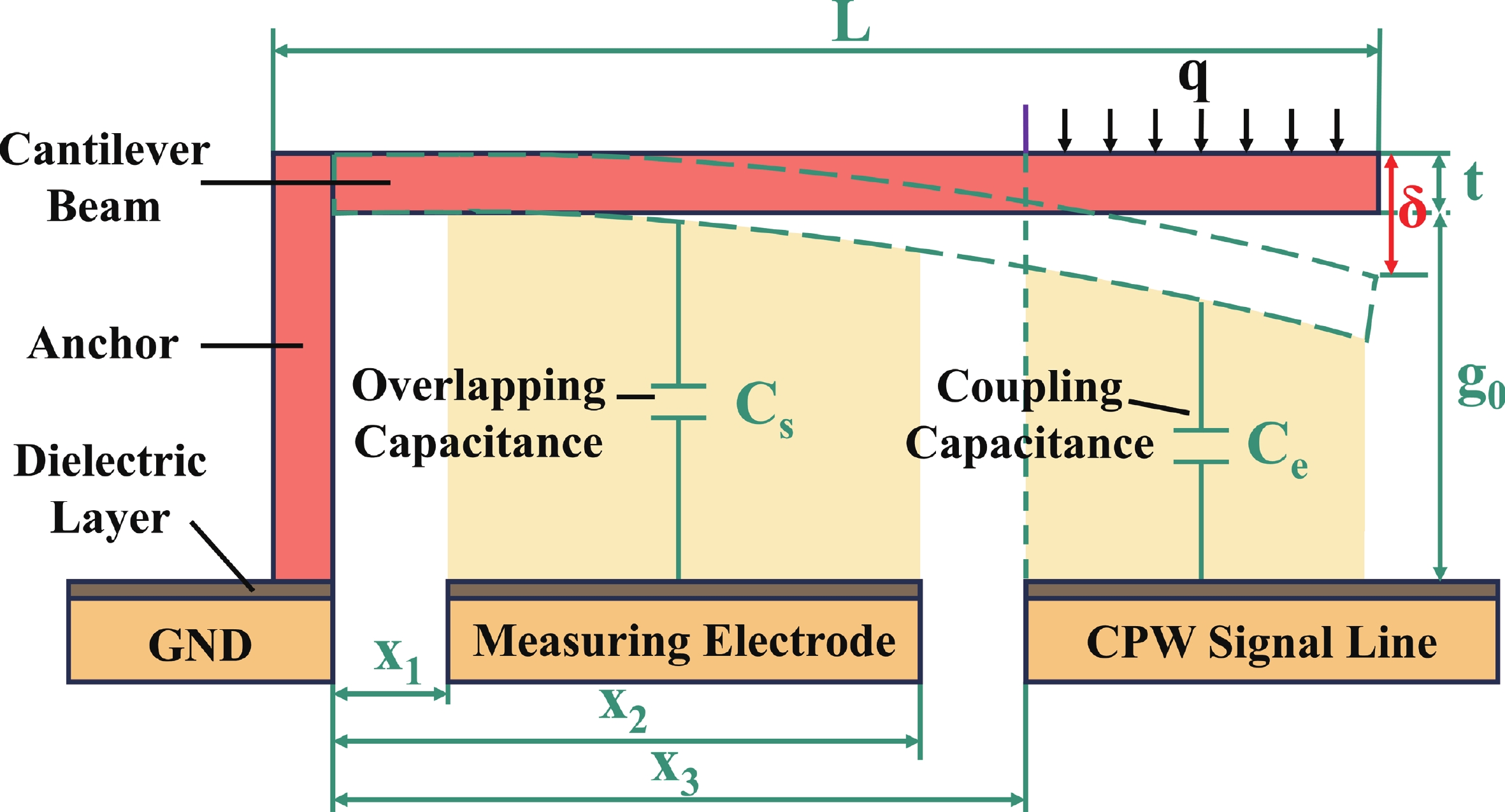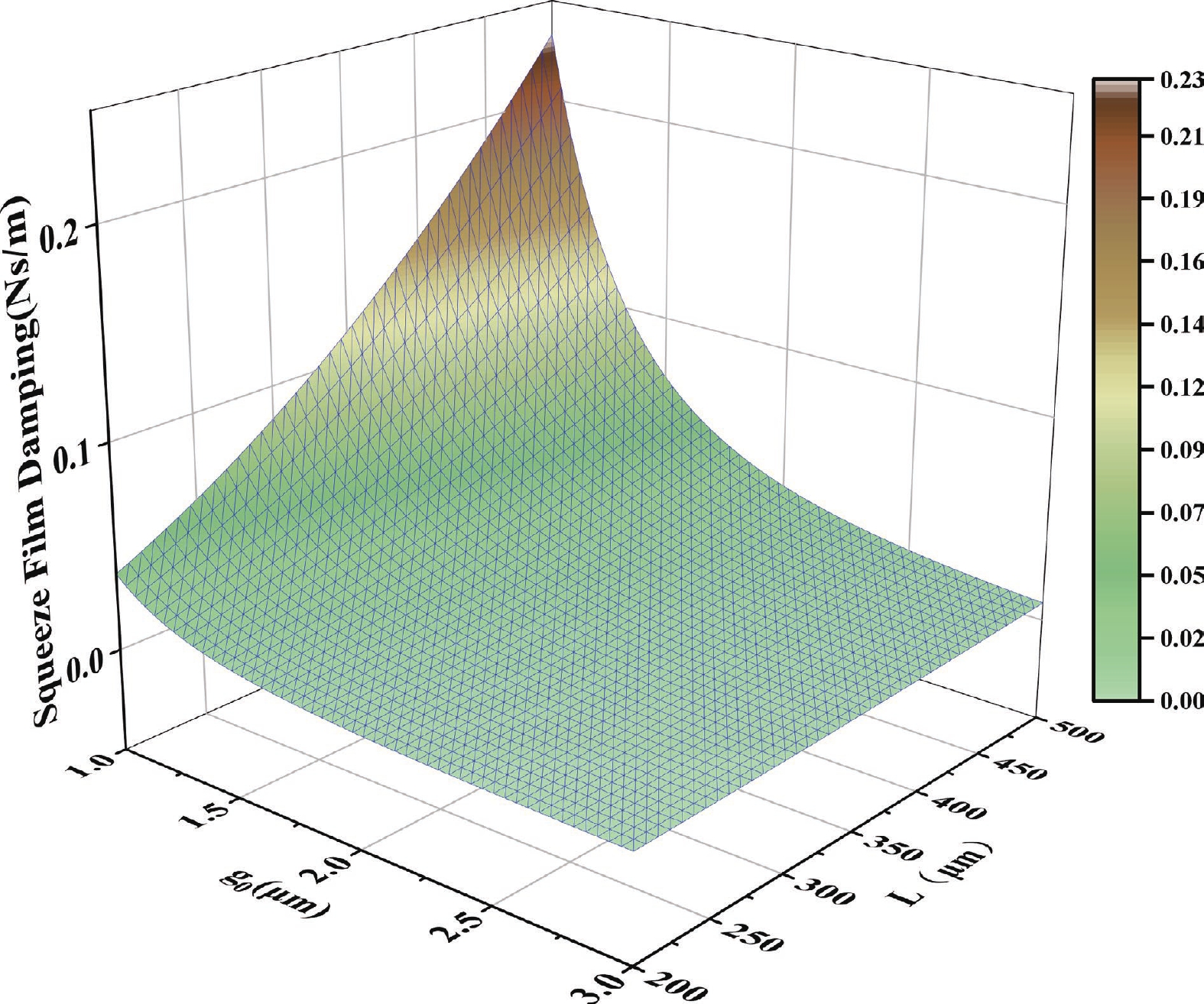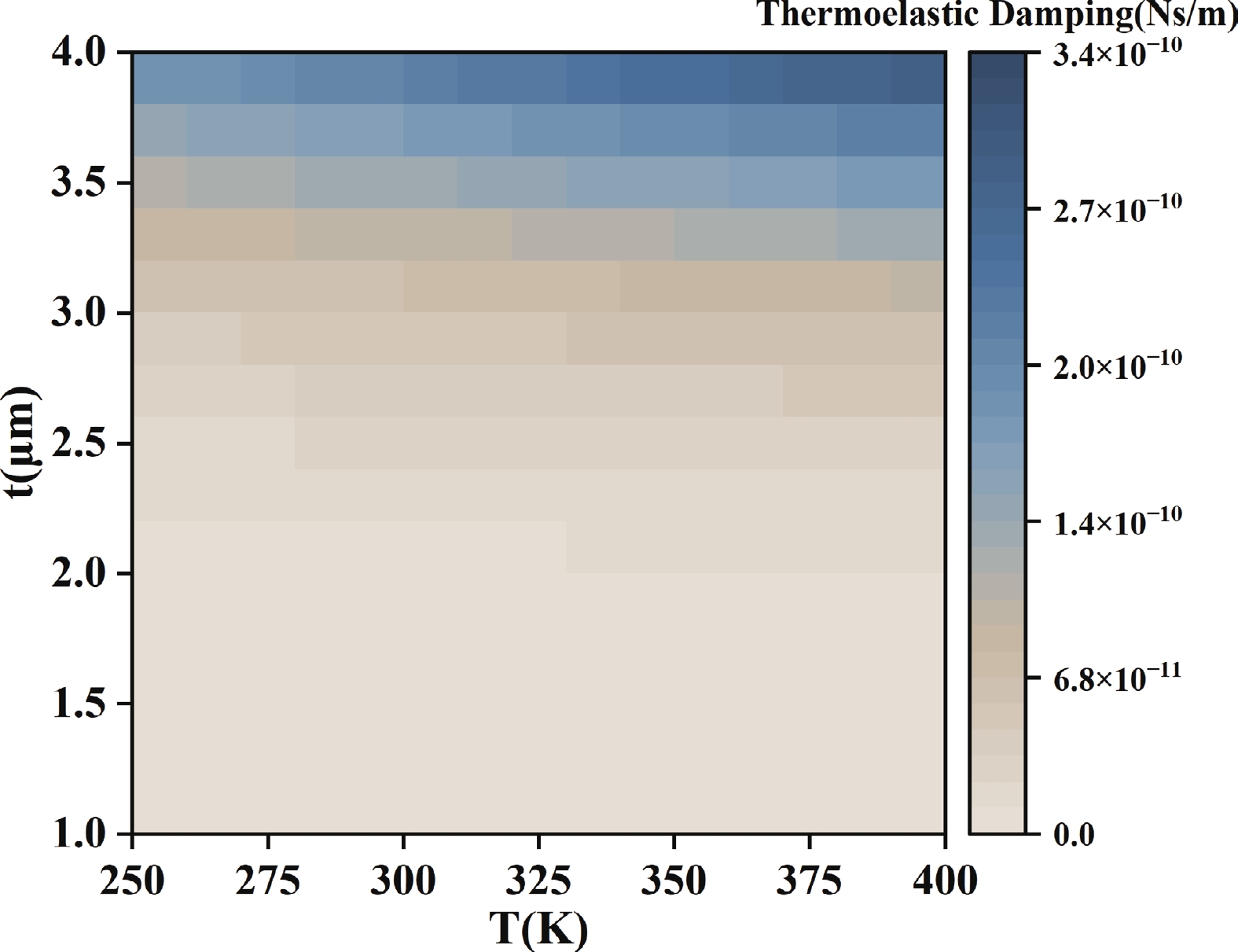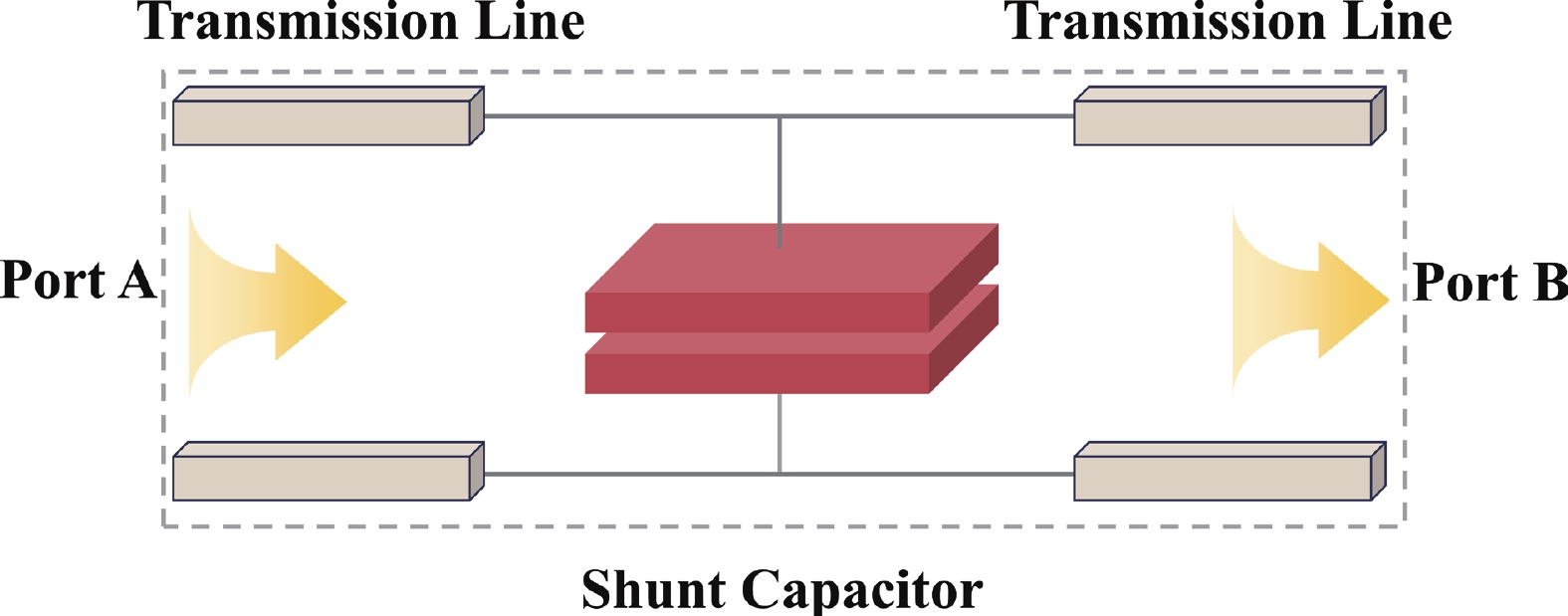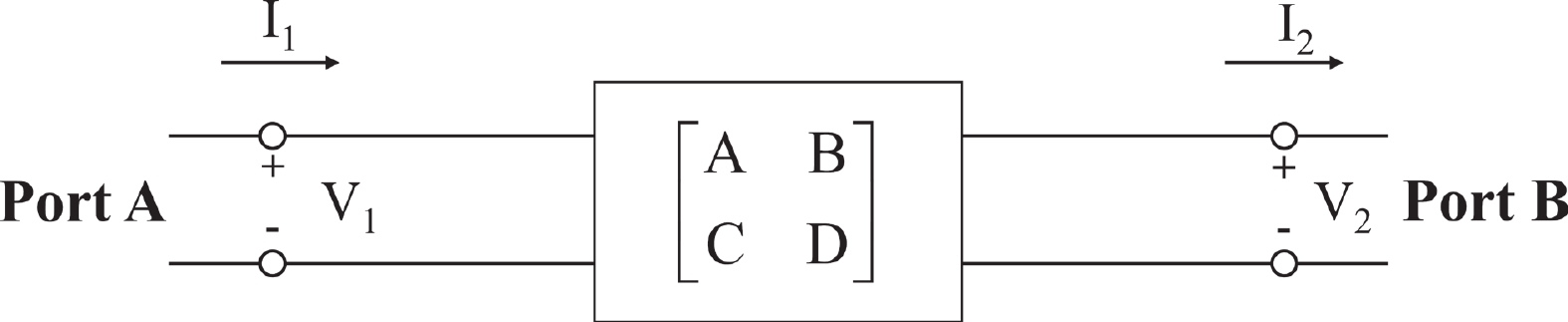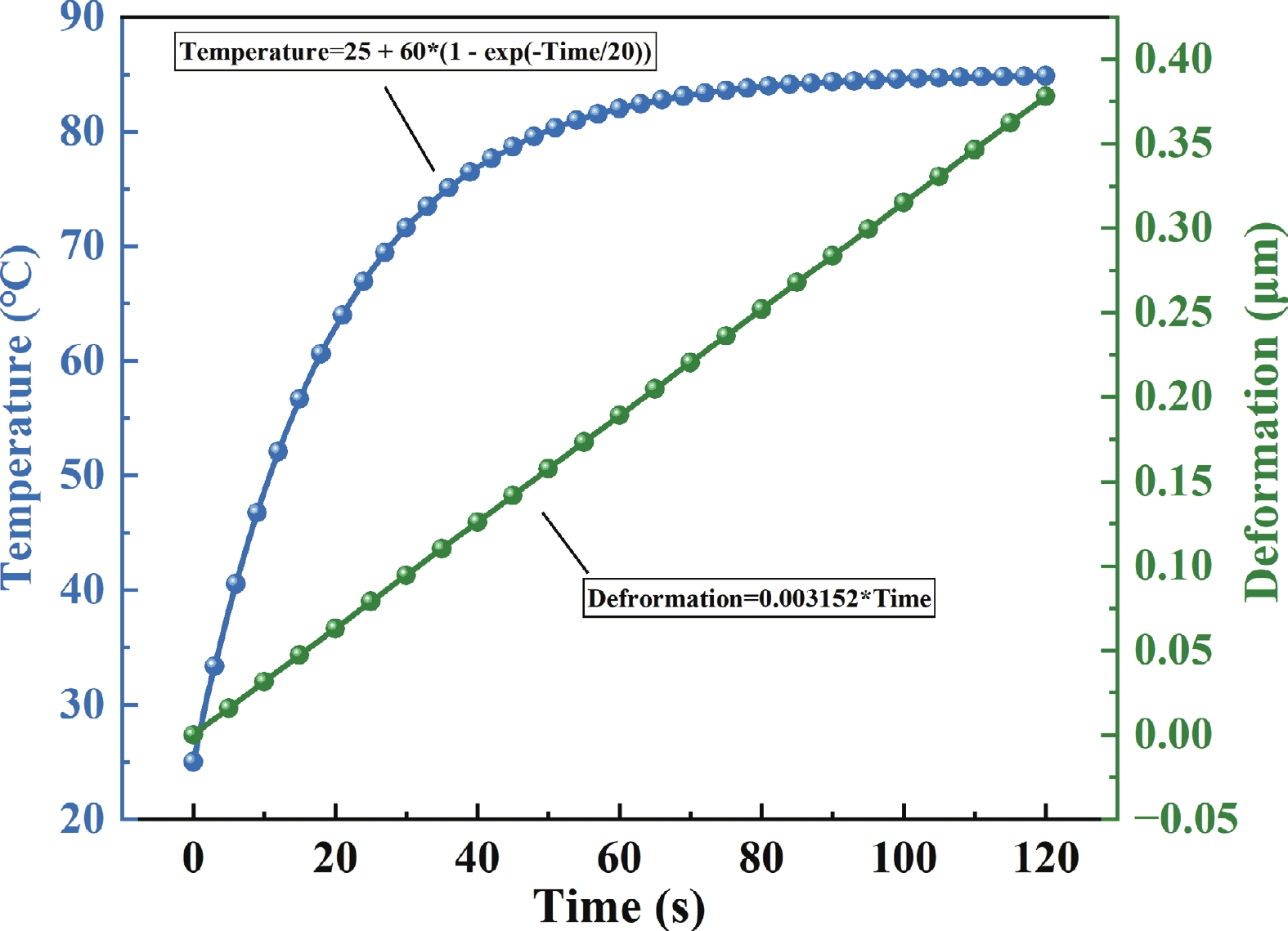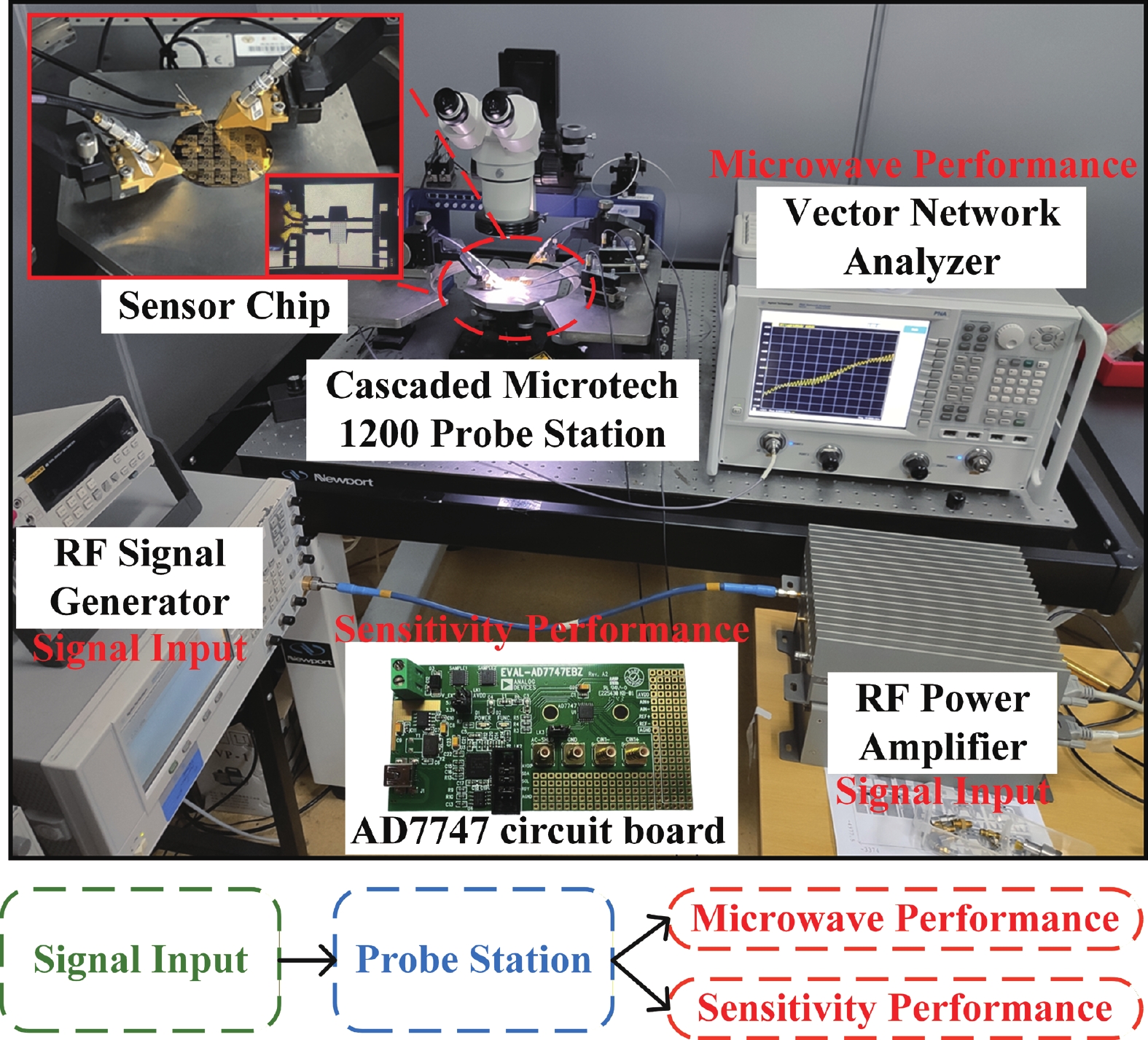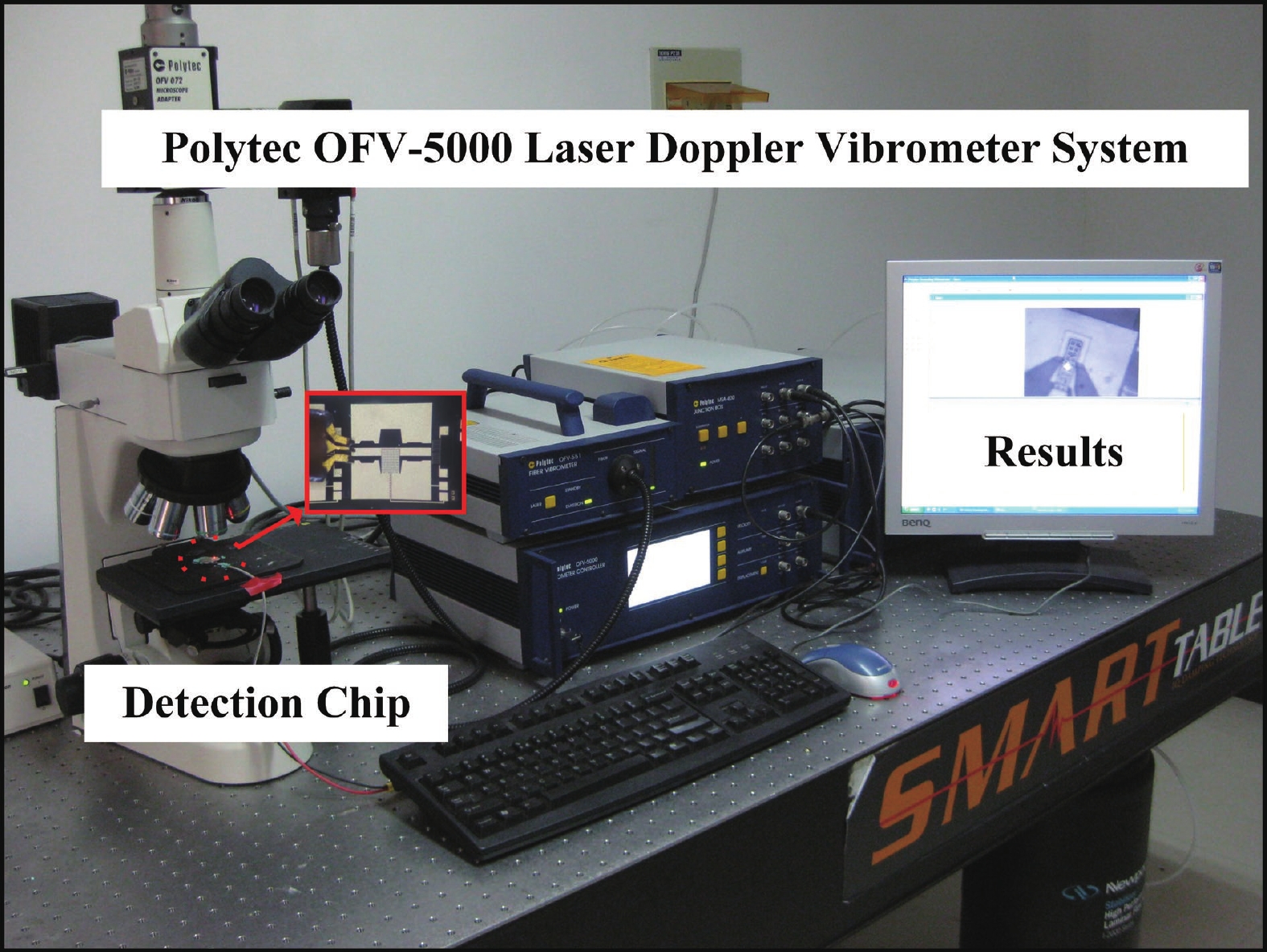


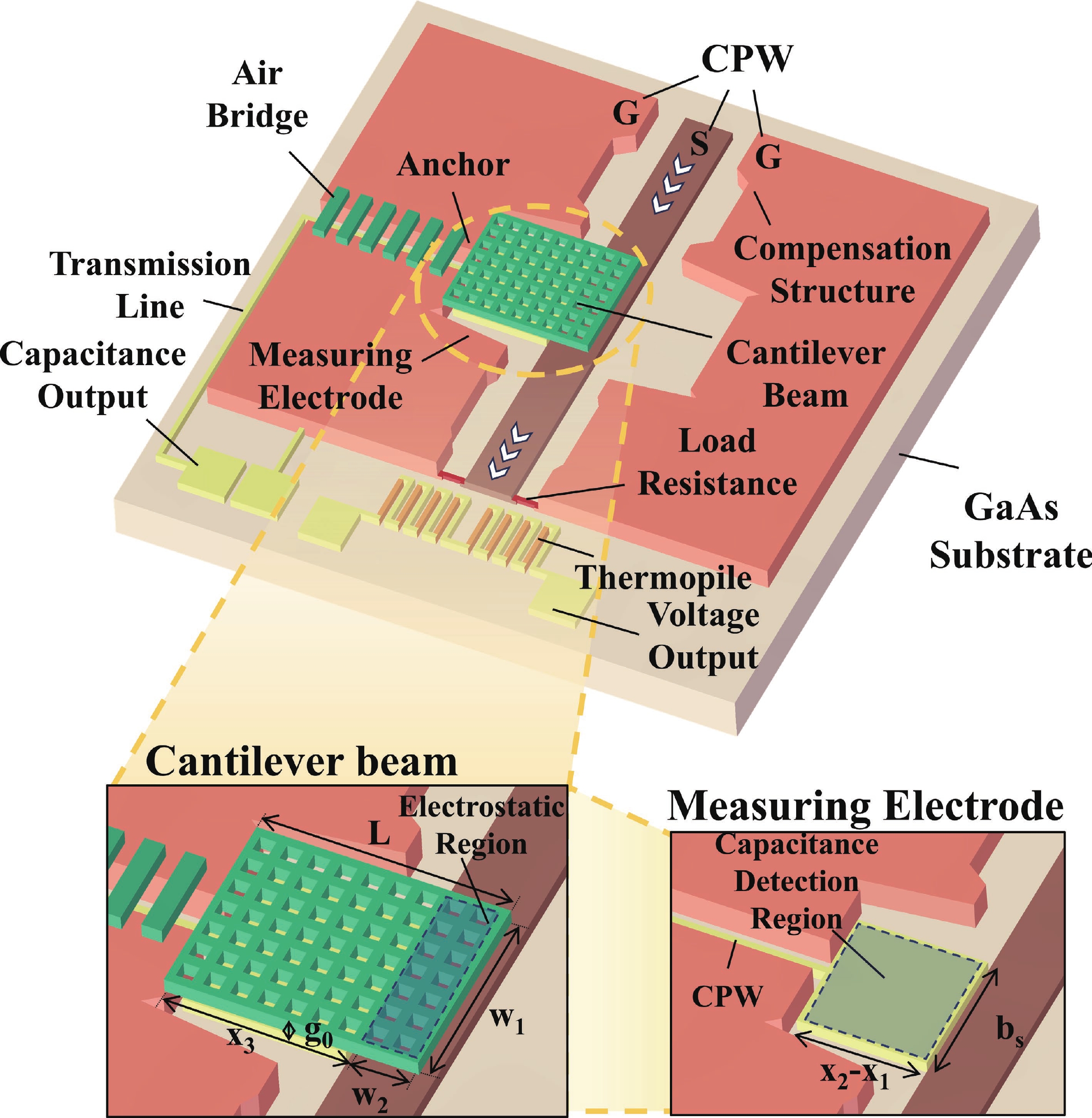
Fig. 1.
(Color online) Structure of the microwave power detection chip.
ARTICLES
Ruifeng Li and Debo Wang
Corresponding author: Debo Wang, wdb@njupt.edu.cn
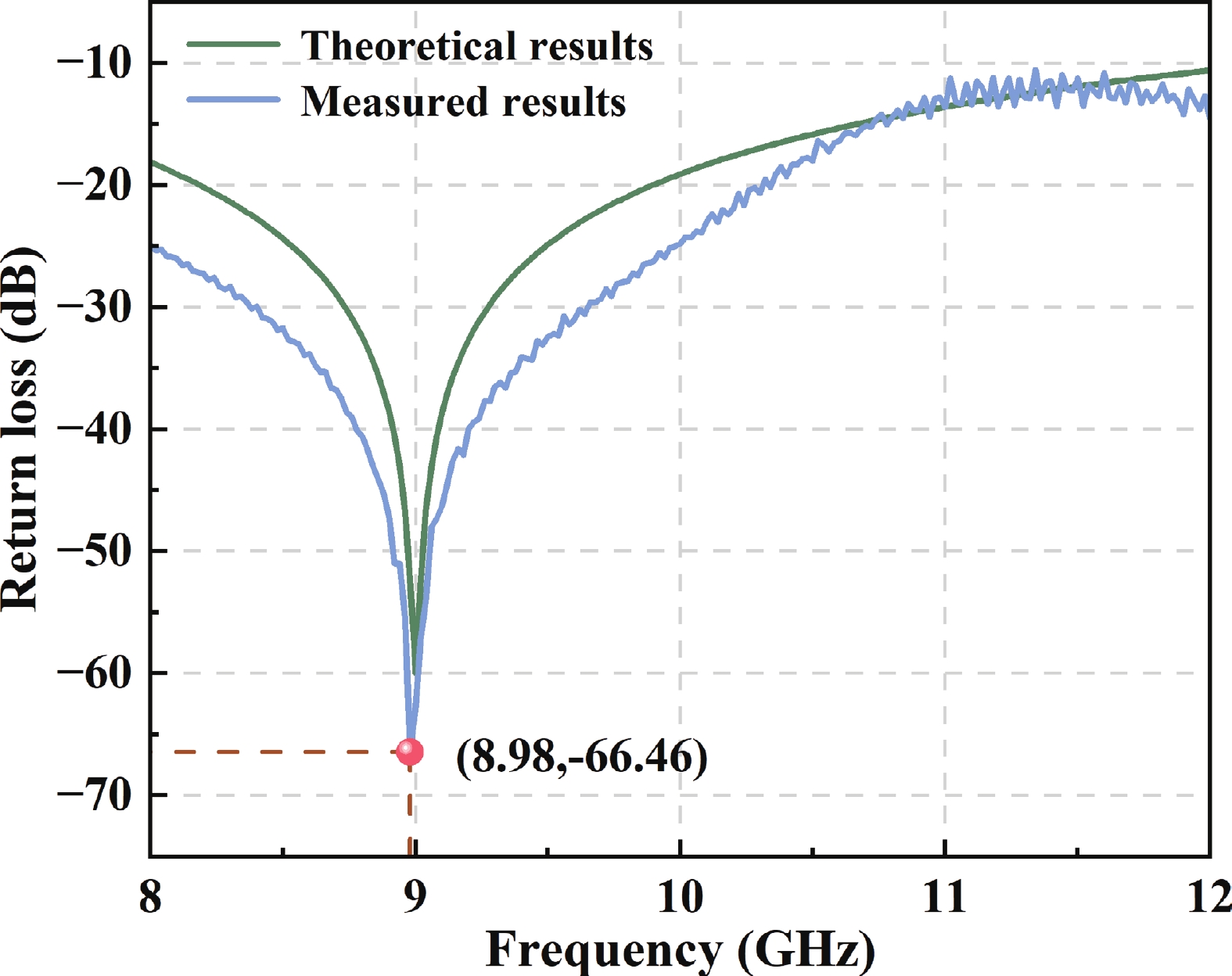
Abstract: To study MEMS power detection chips more accurately, a thermo-electromechanical coupling model is proposed in this work. The fringing capacitance is included in the model, further refining the expression for the parallel-plate capacitance. Moreover, the squeeze-film damping and thermoelastic damping are considered in the second-order differential equation to study the cantilever vibration. It is found that the squeeze-film damping is the dominant damping of the system, and the cantilever beam exhibits linear expansion with increasing temperature. A dual-channel microwave detection chip is fabricated and measured, and the return loss reaches its minimum of -66.46 dB at 9 GHz, indicating optimal impedance matching at the central frequency. Moreover, the measured sensitivity is approximately 65.6 fF/W. Critically, the measured resonant frequency of the cantilever beam is 115.7 kHz, which is orders of magnitude lower than the input signal frequency. This large separation ensures that the sensor operates in a stable, non-resonant regime, thereby guaranteeing linearity and reliability. These findings demonstrate the excellent microwave performance of the power sensor fabricated in this work, providing valuable insights for optimizing the design of MEMS microwave power detection chips.
Key words: MEMS, thermo-electromechanical coupling, sensitivity, microwave power detection, cantilever beam
| [1] |
Wang D B, Gu X F, Xie J C, et al. Research on a Ka-band MEMS power sensor investigated with an MEMS cantilever beam. Chin J Electron, 2020, 29(2): 378 doi: 10.1049/cje.2020.02.002
|
| [2] |
Wang J T, Xue Z C, Cai C H, et al. A novel piezoelectric energy harvester with different circular arc spiral cantilever beam. IEEE Sens J, 2022, 22(11): 11016 doi: 10.1109/JSEN.2022.3169626
|
| [3] |
Zhou G C, Lim Z H, Qi Y, et al. MEMS gratings and their applications. Int J Optomechatronics, 2021, 15(1): 61 doi: 10.1080/15599612.2021.1892248
|
| [4] |
Grzebyk T. MEMS vacuum pumps. J Microelectromech Syst, 2017, 26(4): 705 doi: 10.1109/JMEMS.2017.2676820
|
| [5] |
Khushalani D G, Pande R S, Patrikar R M. Fabrication and characterization of MEMS cantilever array for switching applications. Microelectron Eng, 2016, 157(C): 78 doi: 10.1016/j.mee.2016.02.022
|
| [6] |
Fernández L J, Wiegerink R J, Flokstra J, et al. A capacitive RF power sensor based on MEMS technology. J Micromech Microeng, 2006, 16(7): 1099 doi: 10.1088/0960-1317/16/7/001
|
| [7] |
Yi Z X, Liao X P. A capacitive power sensor based on the MEMS cantilever beam fabricated by GaAs MMIC technology. J Micromech Microeng, 2013, 23(3): 035001 doi: 10.1088/0960-1317/23/3/035001
|
| [8] |
Yi Z X, Yan H, Yan J B, et al. Fabrication of the differential microwave power sensor by seesaw-type MEMS membrane. J Microelectromech Syst, 2016, 25(4): 582 doi: 10.1109/JMEMS.2016.2569610
|
| [9] |
Yan J B, Yi Z X, Liao X P. An analytical model for self-assembling microwave power sensor with thermopile and curled cantilever beam. Sens Actuat A Phys, 2017, 257: 98 doi: 10.1016/j.sna.2017.02.015
|
| [10] |
Zuo W, Guo Q T, Ji X C, et al. Structural optimization of capacitive MEMS microwave power sensor. IEEE Sens J, 2020, 20(19): 11380 doi: 10.1109/JSEN.2020.2998075
|
| [11] |
Li C, Xiong J J, Wang D B. A novel capacitive microwave power sensor based on double MEMS cantilever beams. IEEE Sens J, 2022, 22(12): 11803 doi: 10.1109/JSEN.2022.3174556
|
| [12] |
Xiong Z Z, Zhuang J Y, Gu B D. Piezoelectric thermal elastic buckling analysis on nanostructures via nonlocal elastic theory. Arch Appl Mech, 2025, 95(5): 117 doi: 10.1007/s00419-025-02829-0
|
| [13] |
Jin Y, Wang D B. Study on static deflection model of MEMS capacitive microwave power sensors. Chin J Electron, 2024, 33(5): 1188 doi: 10.23919/cje.2023.00.087
|
| [14] |
Han L, Wang Z Y, Jiang X, et al. Multiphysics coupling model of flexible multisensor system based on MEMS beam structure. IEEE Trans Electron Devices, 2024, 71(2): 1238 doi: 10.1109/TED.2023.3346861
|
| [15] |
Xiong S L, Xu Q R, You A X, et al. Study on the second-order vibration model of dual-channel microwave power detection chip. IEEE Trans Electron Devices, 2025, 72(7): 3820 doi: 10.1109/TED.2025.3566358
|
| [16] |
Xu Q R, Chen X, Wang D B. A novel dual-channel MEMS microwave power detection chip with fixed beam. IEEE Trans Electron Devices, 2025, 72(8): 4385 doi: 10.1109/TED.2025.3584003
|
| [17] |
Langfelder G, Longoni A F, Tocchio A, et al. MEMS motion sensors based on the variations of the fringe capacitances. IEEE Sens J, 2011, 11(4): 1069 doi: 10.1109/JSEN.2010.2078499
|
| [18] |
Liu C. Foundations of MEMS. Beijing: China Machine Press, 2007 (in Chinese)
|
| [19] |
Bao M H. Introduction to MEMS devices. Analysis and Design Principles of MEMS Devices, 2005: 1
|
| [20] |
Jin Y, Wang D B. A high sensitivity on-line MEMS microwave power sensor. Microelectronics, 2023, 53(2): 304
|
| [21] |
Li Y, Zhang X F, Wang Y Q, et al. Vibrations and optimization of cantilever elastic beam with energy-harvesting vibration mitigation using genetic algorithm. Proc Indian Natl Sci Acad, 2024, 90(1): 39 doi: 10.1007/s43538-023-00217-2
|
| [22] |
Chien S Y, Cramer M S, Untaroiu A. Compressible Reynolds equation for high-pressure gases. Phys Fluids, 2017, 29(11): 116101 doi: 10.1063/1.5000827
|
| [23] |
Sun J X. Simple analytic equations of state for Sutherland fluids and square-well fluids. Can J Phys, 2005, 83(1): 55 doi: 10.1139/p04-070
|
| [24] |
Zener C M, Siegel S. Elasticity and anelasticity of metals. J Phys Chem, 1949, 53(9): 1468 doi: 10.1038/164084b0
|
| [25] |
Hobiny A D, Abbas I A. The influences of thermal relaxation time and varying thermal conductivity in thermoelastic media. Case Stud Therm Eng, 2024, 56: 104263 doi: 10.1016/j.csite.2024.104263
|
| [26] |
Xin Z H, Sun H Y, Wang D B. A high-performance dual-channel MEMS microwave power sensor with cantilever beam. IEEE Sens J, 2023, 23(11): 11540 doi: 10.1109/JSEN.2023.3269035
|
| [27] |
Pozar D M. Microwave engineering. Beijing: Publishing House of Electronics Industry, 2019
|
| [28] |
Vandevelde S, Daidié A, Sartor M. Use of 1D mechanical and thermal models to predetermine the heat transferable by a thermal interface material layer in space applications. Proc Inst Mech Eng Part C J Mech Eng Sci, 2020, 234(17): 3459 doi: 10.1177/0954406220915508
|
| [29] |
Xu Q R, Ding Z Y, Wang D B. MEMS microwave power detection chip based on fixed beams and its model. J Semicond, 2025, 46(6): 062301 doi: 10.1088/1674-4926/24100018
|
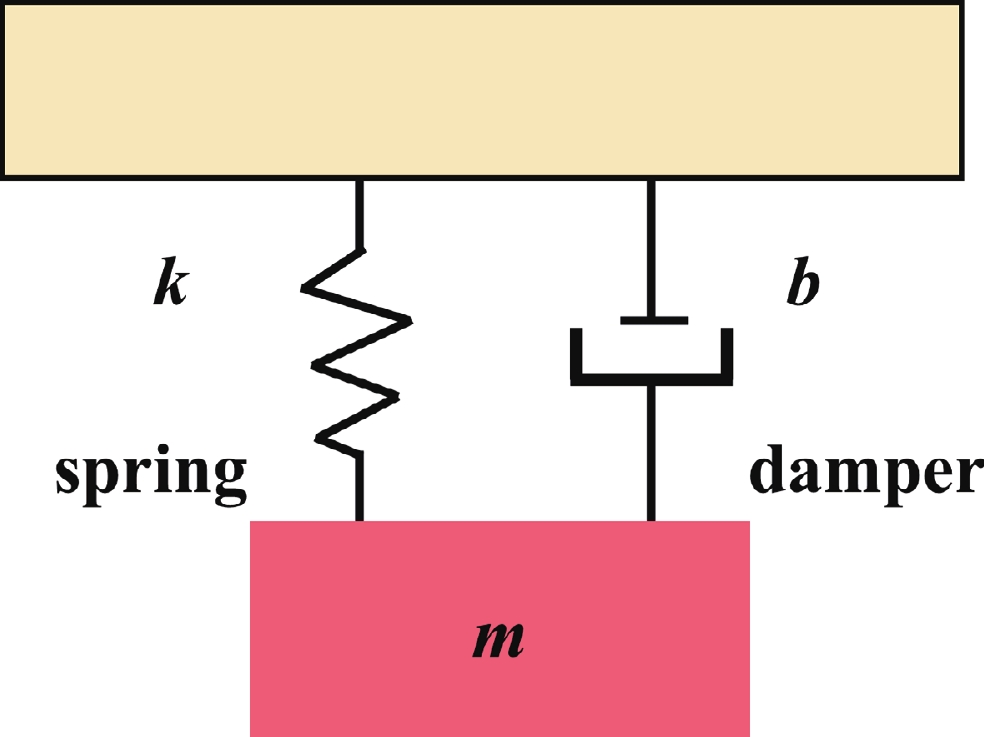
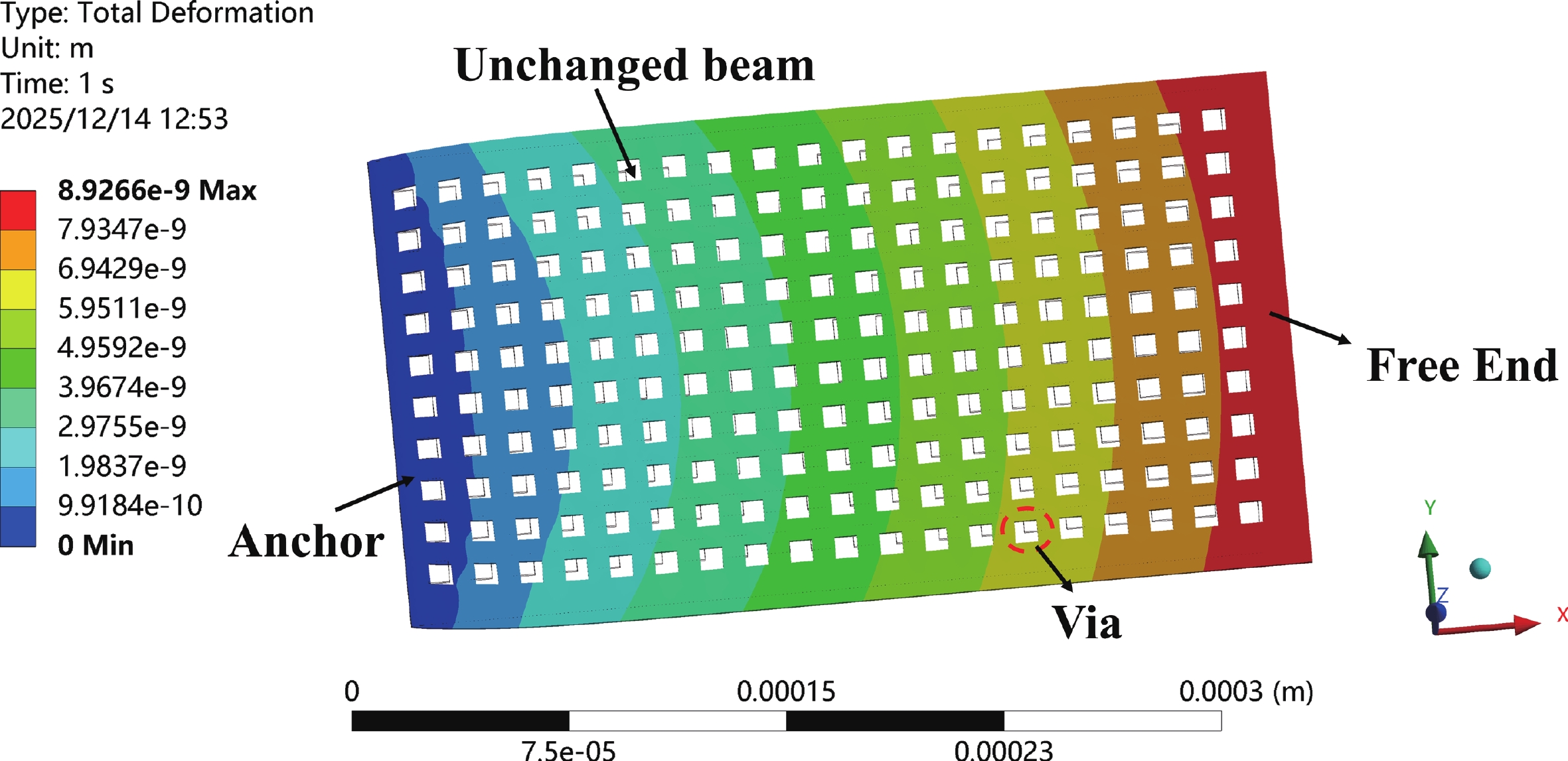
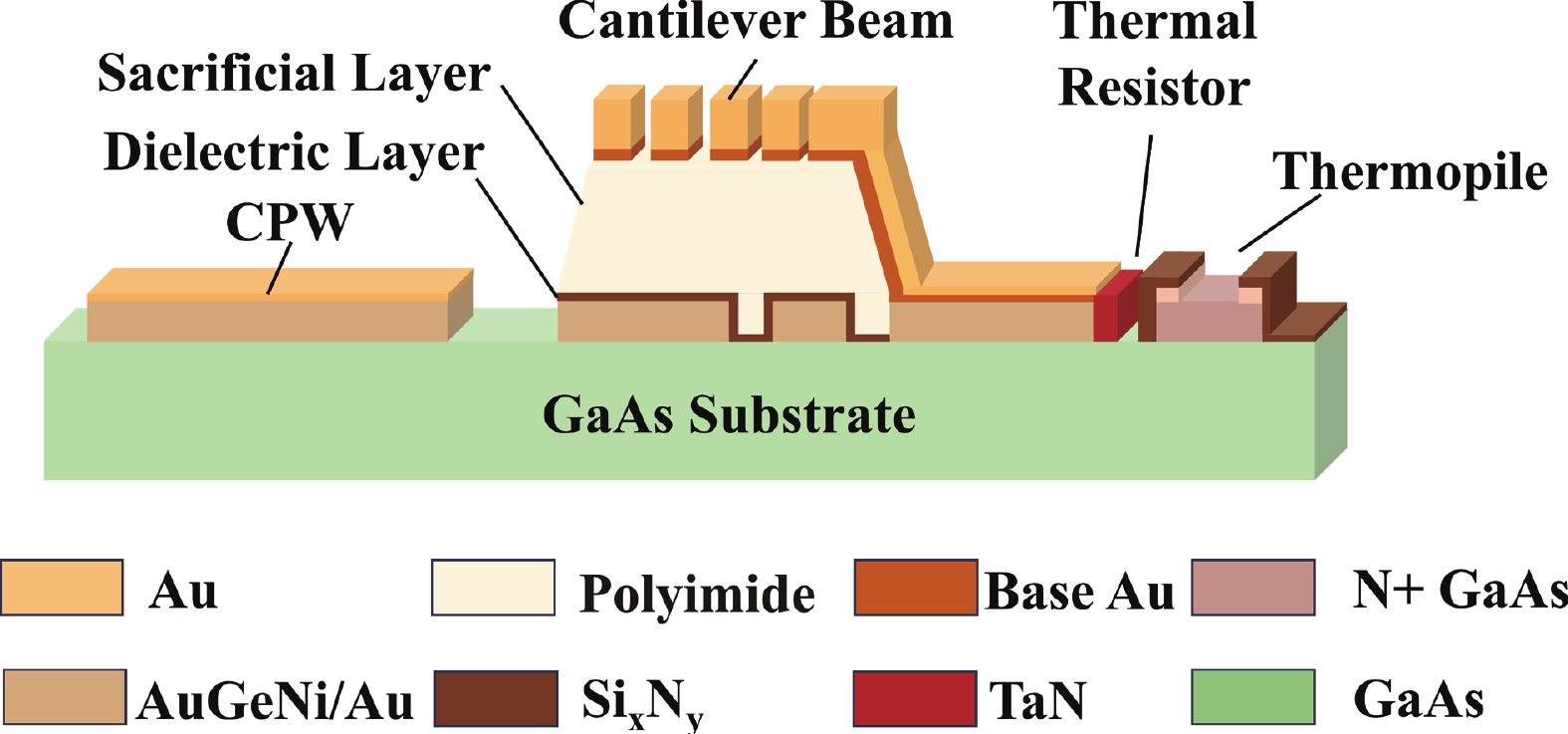
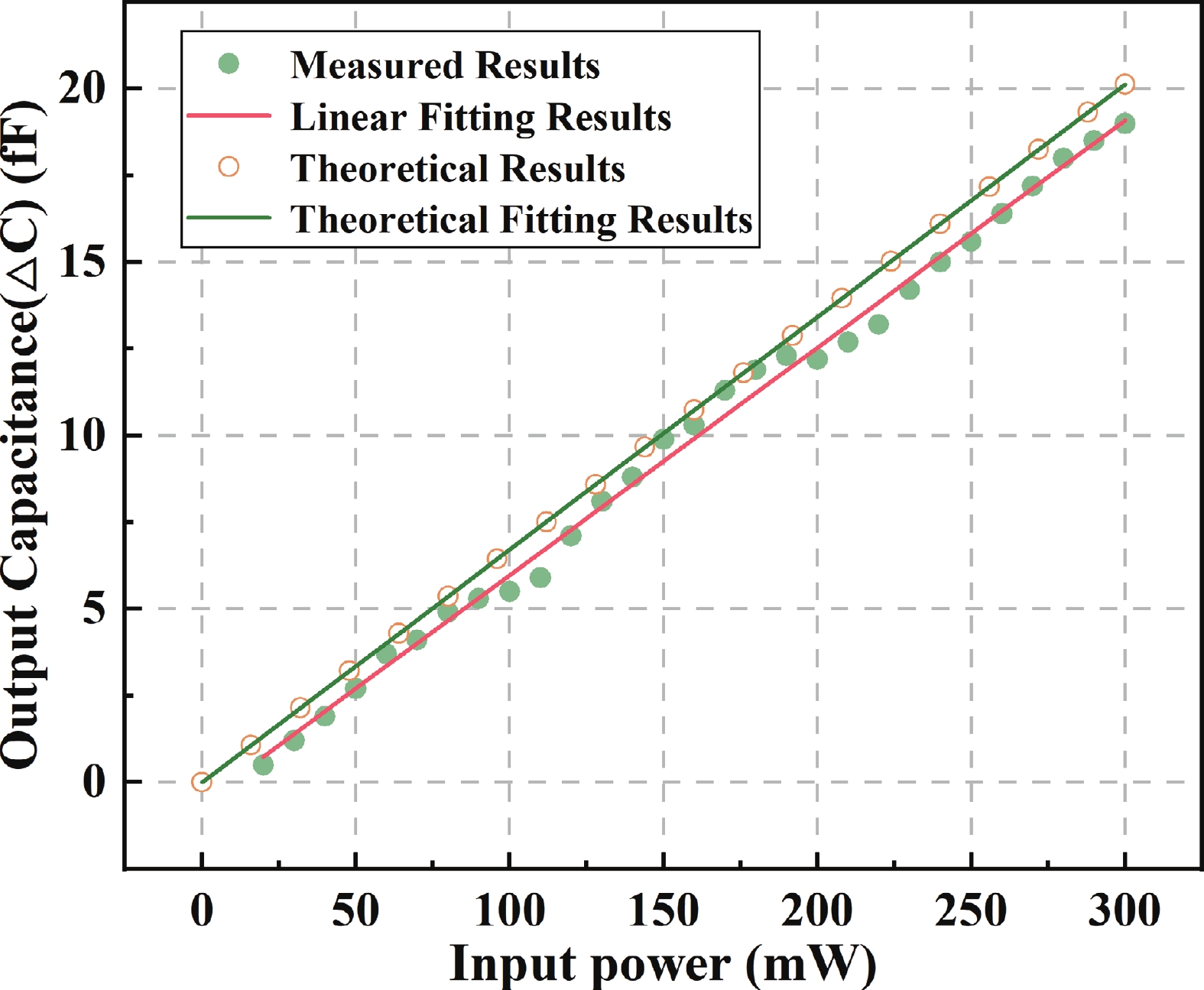
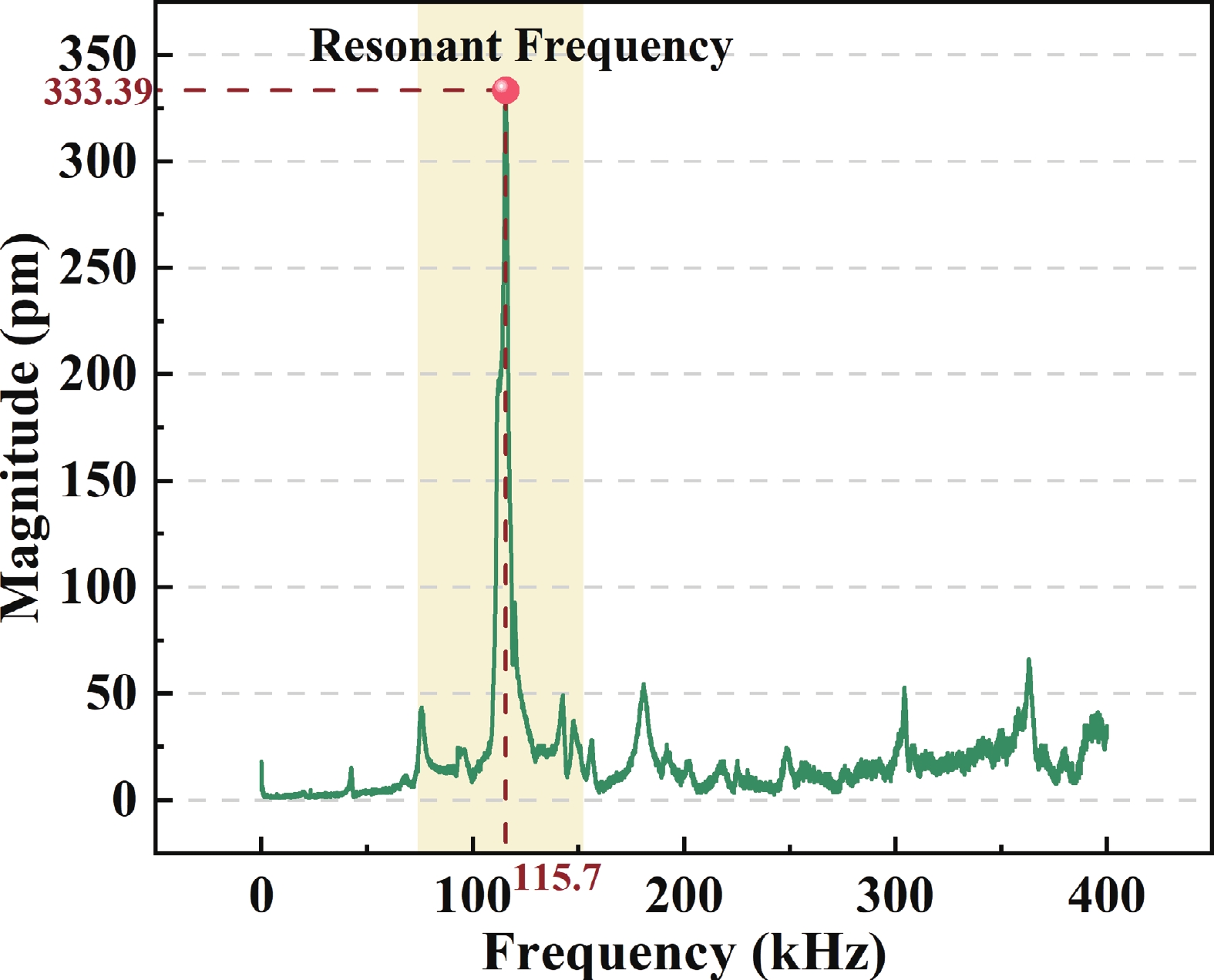
Table 1. Fabrication parameters of the detection chip.
| Symbol | Description | Value |
| E | Young's modulus of cantilever beam (gold) | 79 GPa |
| ε0 | Permittivity of air | 8.85×10⁻¹² F/m |
| Z0 | Impedance of matched load | 50 Ω |
| L | Length of cantilever beam | 300 μm |
| g0 | Initial gap between the cantilever beam and the CPW | 1.6 μm |
| t | Thickness of the cantilever beam | 2 μm |
| w1 | Width of cantilever beam | 225 μm |
| w2 | Length of the overlapping region between the cantilever beam and the signal line | 82 μm |
| bs | Width of measuring electrode | 200 μm |
| x1 | Horizontal distance between the left end of the measuring electrode and the anchor of the cantilever beam | 8 μm |
| x2 | Horizontal distance between the right end of the measuring electrode and the anchor of the cantilever beam | 208 μm |
| x3 | Horizontal distance between the left end of the CPW signal line and the anchor of the cantilever beam | 218 μm |
 DownLoad: CSV
Table 2. Comparison of sensitivity calculation for four different models.
| Model | Theoretical Results (fF/W) | Measured Results (fF/W) | Relative Error |
| Lumped Model | 61.09 | 66.5 | 7.36% |
| Pivoted Model | 84.5 | 66.5 | 22.37% |
| Distributed Static Model | 69.3 | 66.5 | 5.34% |
| This Work | 67.1 | 66.5 | 2.24% |
DownLoad: CSV
| [1] |
Wang D B, Gu X F, Xie J C, et al. Research on a Ka-band MEMS power sensor investigated with an MEMS cantilever beam. Chin J Electron, 2020, 29(2): 378 doi: 10.1049/cje.2020.02.002
|
| [2] |
Wang J T, Xue Z C, Cai C H, et al. A novel piezoelectric energy harvester with different circular arc spiral cantilever beam. IEEE Sens J, 2022, 22(11): 11016 doi: 10.1109/JSEN.2022.3169626
|
| [3] |
Zhou G C, Lim Z H, Qi Y, et al. MEMS gratings and their applications. Int J Optomechatronics, 2021, 15(1): 61 doi: 10.1080/15599612.2021.1892248
|
| [4] |
Grzebyk T. MEMS vacuum pumps. J Microelectromech Syst, 2017, 26(4): 705 doi: 10.1109/JMEMS.2017.2676820
|
| [5] |
Khushalani D G, Pande R S, Patrikar R M. Fabrication and characterization of MEMS cantilever array for switching applications. Microelectron Eng, 2016, 157(C): 78 doi: 10.1016/j.mee.2016.02.022
|
| [6] |
Fernández L J, Wiegerink R J, Flokstra J, et al. A capacitive RF power sensor based on MEMS technology. J Micromech Microeng, 2006, 16(7): 1099 doi: 10.1088/0960-1317/16/7/001
|
| [7] |
Yi Z X, Liao X P. A capacitive power sensor based on the MEMS cantilever beam fabricated by GaAs MMIC technology. J Micromech Microeng, 2013, 23(3): 035001 doi: 10.1088/0960-1317/23/3/035001
|
| [8] |
Yi Z X, Yan H, Yan J B, et al. Fabrication of the differential microwave power sensor by seesaw-type MEMS membrane. J Microelectromech Syst, 2016, 25(4): 582 doi: 10.1109/JMEMS.2016.2569610
|
| [9] |
Yan J B, Yi Z X, Liao X P. An analytical model for self-assembling microwave power sensor with thermopile and curled cantilever beam. Sens Actuat A Phys, 2017, 257: 98 doi: 10.1016/j.sna.2017.02.015
|
| [10] |
Zuo W, Guo Q T, Ji X C, et al. Structural optimization of capacitive MEMS microwave power sensor. IEEE Sens J, 2020, 20(19): 11380 doi: 10.1109/JSEN.2020.2998075
|
| [11] |
Li C, Xiong J J, Wang D B. A novel capacitive microwave power sensor based on double MEMS cantilever beams. IEEE Sens J, 2022, 22(12): 11803 doi: 10.1109/JSEN.2022.3174556
|
| [12] |
Xiong Z Z, Zhuang J Y, Gu B D. Piezoelectric thermal elastic buckling analysis on nanostructures via nonlocal elastic theory. Arch Appl Mech, 2025, 95(5): 117 doi: 10.1007/s00419-025-02829-0
|
| [13] |
Jin Y, Wang D B. Study on static deflection model of MEMS capacitive microwave power sensors. Chin J Electron, 2024, 33(5): 1188 doi: 10.23919/cje.2023.00.087
|
| [14] |
Han L, Wang Z Y, Jiang X, et al. Multiphysics coupling model of flexible multisensor system based on MEMS beam structure. IEEE Trans Electron Devices, 2024, 71(2): 1238 doi: 10.1109/TED.2023.3346861
|
| [15] |
Xiong S L, Xu Q R, You A X, et al. Study on the second-order vibration model of dual-channel microwave power detection chip. IEEE Trans Electron Devices, 2025, 72(7): 3820 doi: 10.1109/TED.2025.3566358
|
| [16] |
Xu Q R, Chen X, Wang D B. A novel dual-channel MEMS microwave power detection chip with fixed beam. IEEE Trans Electron Devices, 2025, 72(8): 4385 doi: 10.1109/TED.2025.3584003
|
| [17] |
Langfelder G, Longoni A F, Tocchio A, et al. MEMS motion sensors based on the variations of the fringe capacitances. IEEE Sens J, 2011, 11(4): 1069 doi: 10.1109/JSEN.2010.2078499
|
| [18] |
Liu C. Foundations of MEMS. Beijing: China Machine Press, 2007 (in Chinese)
|
| [19] |
Bao M H. Introduction to MEMS devices. Analysis and Design Principles of MEMS Devices, 2005: 1
|
| [20] |
Jin Y, Wang D B. A high sensitivity on-line MEMS microwave power sensor. Microelectronics, 2023, 53(2): 304
|
| [21] |
Li Y, Zhang X F, Wang Y Q, et al. Vibrations and optimization of cantilever elastic beam with energy-harvesting vibration mitigation using genetic algorithm. Proc Indian Natl Sci Acad, 2024, 90(1): 39 doi: 10.1007/s43538-023-00217-2
|
| [22] |
Chien S Y, Cramer M S, Untaroiu A. Compressible Reynolds equation for high-pressure gases. Phys Fluids, 2017, 29(11): 116101 doi: 10.1063/1.5000827
|
| [23] |
Sun J X. Simple analytic equations of state for Sutherland fluids and square-well fluids. Can J Phys, 2005, 83(1): 55 doi: 10.1139/p04-070
|
| [24] |
Zener C M, Siegel S. Elasticity and anelasticity of metals. J Phys Chem, 1949, 53(9): 1468 doi: 10.1038/164084b0
|
| [25] |
Hobiny A D, Abbas I A. The influences of thermal relaxation time and varying thermal conductivity in thermoelastic media. Case Stud Therm Eng, 2024, 56: 104263 doi: 10.1016/j.csite.2024.104263
|
| [26] |
Xin Z H, Sun H Y, Wang D B. A high-performance dual-channel MEMS microwave power sensor with cantilever beam. IEEE Sens J, 2023, 23(11): 11540 doi: 10.1109/JSEN.2023.3269035
|
| [27] |
Pozar D M. Microwave engineering. Beijing: Publishing House of Electronics Industry, 2019
|
| [28] |
Vandevelde S, Daidié A, Sartor M. Use of 1D mechanical and thermal models to predetermine the heat transferable by a thermal interface material layer in space applications. Proc Inst Mech Eng Part C J Mech Eng Sci, 2020, 234(17): 3459 doi: 10.1177/0954406220915508
|
| [29] |
Xu Q R, Ding Z Y, Wang D B. MEMS microwave power detection chip based on fixed beams and its model. J Semicond, 2025, 46(6): 062301 doi: 10.1088/1674-4926/24100018
|





Article views: 19 Times PDF downloads: 6 Times Cited by: 0 Times
Received: 24 December 2025 Revised: 12 February 2026 Online: Accepted Manuscript: 02 April 2026
| Citation: |
Ruifeng Li, Debo Wang. Study on the thermo-electromechanical coupling model of the dual-channel microwave power detection chip[J]. Journal of Semiconductors, 2026, In Press. doi: 10.1088/1674-4926/25120026
****
R F Li and D B Wang, Study on the thermo-electromechanical coupling model of the dual-channel microwave power detection chip[J]. J. Semicond., 2026, accepted doi: 10.1088/1674-4926/25120026

|
 Ruifeng Li was born in China in 2005. She studies at Nanjing University of Posts and Telecommunications for her undergraduate degree. Her interest is MEMS microwave power detection chip
 Debo Wang was born in China in 1983. He received the B.S. degree in electronic science and technology from the Hebei University of Science and technology, Shijiazhuang, China, in 2007, the M.S. degree and the PhD degree in Key Laboratory of MEMS of the Ministry of Education from the southeast university, Nanjing, China, in 2010 and 2012. He is now a post-doctor in Nanjing University and an associate professor of the Nanjing University of Posts and Telecommunication. The discipline of his research focuses on the RF MEMS devices, particularly on microwave power sensor and its package
| [1] |
Wang D B, Gu X F, Xie J C, et al. Research on a Ka-band MEMS power sensor investigated with an MEMS cantilever beam. Chin J Electron, 2020, 29(2): 378 doi: 10.1049/cje.2020.02.002
|
| [2] |
Wang J T, Xue Z C, Cai C H, et al. A novel piezoelectric energy harvester with different circular arc spiral cantilever beam. IEEE Sens J, 2022, 22(11): 11016 doi: 10.1109/JSEN.2022.3169626
|
| [3] |
Zhou G C, Lim Z H, Qi Y, et al. MEMS gratings and their applications. Int J Optomechatronics, 2021, 15(1): 61 doi: 10.1080/15599612.2021.1892248
|
| [4] |
Grzebyk T. MEMS vacuum pumps. J Microelectromech Syst, 2017, 26(4): 705 doi: 10.1109/JMEMS.2017.2676820
|
| [5] |
Khushalani D G, Pande R S, Patrikar R M. Fabrication and characterization of MEMS cantilever array for switching applications. Microelectron Eng, 2016, 157(C): 78 doi: 10.1016/j.mee.2016.02.022
|
| [6] |
Fernández L J, Wiegerink R J, Flokstra J, et al. A capacitive RF power sensor based on MEMS technology. J Micromech Microeng, 2006, 16(7): 1099 doi: 10.1088/0960-1317/16/7/001
|
| [7] |
Yi Z X, Liao X P. A capacitive power sensor based on the MEMS cantilever beam fabricated by GaAs MMIC technology. J Micromech Microeng, 2013, 23(3): 035001 doi: 10.1088/0960-1317/23/3/035001
|
| [8] |
Yi Z X, Yan H, Yan J B, et al. Fabrication of the differential microwave power sensor by seesaw-type MEMS membrane. J Microelectromech Syst, 2016, 25(4): 582 doi: 10.1109/JMEMS.2016.2569610
|
| [9] |
Yan J B, Yi Z X, Liao X P. An analytical model for self-assembling microwave power sensor with thermopile and curled cantilever beam. Sens Actuat A Phys, 2017, 257: 98 doi: 10.1016/j.sna.2017.02.015
|
| [10] |
Zuo W, Guo Q T, Ji X C, et al. Structural optimization of capacitive MEMS microwave power sensor. IEEE Sens J, 2020, 20(19): 11380 doi: 10.1109/JSEN.2020.2998075
|
| [11] |
Li C, Xiong J J, Wang D B. A novel capacitive microwave power sensor based on double MEMS cantilever beams. IEEE Sens J, 2022, 22(12): 11803 doi: 10.1109/JSEN.2022.3174556
|
| [12] |
Xiong Z Z, Zhuang J Y, Gu B D. Piezoelectric thermal elastic buckling analysis on nanostructures via nonlocal elastic theory. Arch Appl Mech, 2025, 95(5): 117 doi: 10.1007/s00419-025-02829-0
|
| [13] |
Jin Y, Wang D B. Study on static deflection model of MEMS capacitive microwave power sensors. Chin J Electron, 2024, 33(5): 1188 doi: 10.23919/cje.2023.00.087
|
| [14] |
Han L, Wang Z Y, Jiang X, et al. Multiphysics coupling model of flexible multisensor system based on MEMS beam structure. IEEE Trans Electron Devices, 2024, 71(2): 1238 doi: 10.1109/TED.2023.3346861
|
| [15] |
Xiong S L, Xu Q R, You A X, et al. Study on the second-order vibration model of dual-channel microwave power detection chip. IEEE Trans Electron Devices, 2025, 72(7): 3820 doi: 10.1109/TED.2025.3566358
|
| [16] |
Xu Q R, Chen X, Wang D B. A novel dual-channel MEMS microwave power detection chip with fixed beam. IEEE Trans Electron Devices, 2025, 72(8): 4385 doi: 10.1109/TED.2025.3584003
|
| [17] |
Langfelder G, Longoni A F, Tocchio A, et al. MEMS motion sensors based on the variations of the fringe capacitances. IEEE Sens J, 2011, 11(4): 1069 doi: 10.1109/JSEN.2010.2078499
|
| [18] |
Liu C. Foundations of MEMS. Beijing: China Machine Press, 2007 (in Chinese)
|
| [19] |
Bao M H. Introduction to MEMS devices. Analysis and Design Principles of MEMS Devices, 2005: 1
|
| [20] |
Jin Y, Wang D B. A high sensitivity on-line MEMS microwave power sensor. Microelectronics, 2023, 53(2): 304
|
| [21] |
Li Y, Zhang X F, Wang Y Q, et al. Vibrations and optimization of cantilever elastic beam with energy-harvesting vibration mitigation using genetic algorithm. Proc Indian Natl Sci Acad, 2024, 90(1): 39 doi: 10.1007/s43538-023-00217-2
|
| [22] |
Chien S Y, Cramer M S, Untaroiu A. Compressible Reynolds equation for high-pressure gases. Phys Fluids, 2017, 29(11): 116101 doi: 10.1063/1.5000827
|
| [23] |
Sun J X. Simple analytic equations of state for Sutherland fluids and square-well fluids. Can J Phys, 2005, 83(1): 55 doi: 10.1139/p04-070
|
| [24] |
Zener C M, Siegel S. Elasticity and anelasticity of metals. J Phys Chem, 1949, 53(9): 1468 doi: 10.1038/164084b0
|
| [25] |
Hobiny A D, Abbas I A. The influences of thermal relaxation time and varying thermal conductivity in thermoelastic media. Case Stud Therm Eng, 2024, 56: 104263 doi: 10.1016/j.csite.2024.104263
|
| [26] |
Xin Z H, Sun H Y, Wang D B. A high-performance dual-channel MEMS microwave power sensor with cantilever beam. IEEE Sens J, 2023, 23(11): 11540 doi: 10.1109/JSEN.2023.3269035
|
| [27] |
Pozar D M. Microwave engineering. Beijing: Publishing House of Electronics Industry, 2019
|
| [28] |
Vandevelde S, Daidié A, Sartor M. Use of 1D mechanical and thermal models to predetermine the heat transferable by a thermal interface material layer in space applications. Proc Inst Mech Eng Part C J Mech Eng Sci, 2020, 234(17): 3459 doi: 10.1177/0954406220915508
|
| [29] |
Xu Q R, Ding Z Y, Wang D B. MEMS microwave power detection chip based on fixed beams and its model. J Semicond, 2025, 46(6): 062301 doi: 10.1088/1674-4926/24100018
|

 WeChat ID
Journal of Semiconductors © 2017 All Rights Reserved 京ICP备05085259号-2