J. Semicond. >  Just Accepted

ARTICLES

Versatile interfacial modifier enabling efficient antimony selenosulfide indoor photovoltaics

Ming Wang1, §, Weijia Zhao1, §, Xin Yao1, , Zhirui Wang1, Qi Gao1, Hong Zhang2, , Fuling Guo1, Yanqing Wang1 and Wangchao Chen1,

+ Author Affiliations

 Corresponding author: Xin Yao, yao_x_c@hfut.edu.cn; Hong Zhang, zhanghong81@hebeu.edu.cn; Wangchao Chen, chenwc@hfut.edu.cn

DOI: 10.1088/1674-4926/26010009CSTR: 32376.14.1674-4926.26010009

PDF

Turn off MathJax

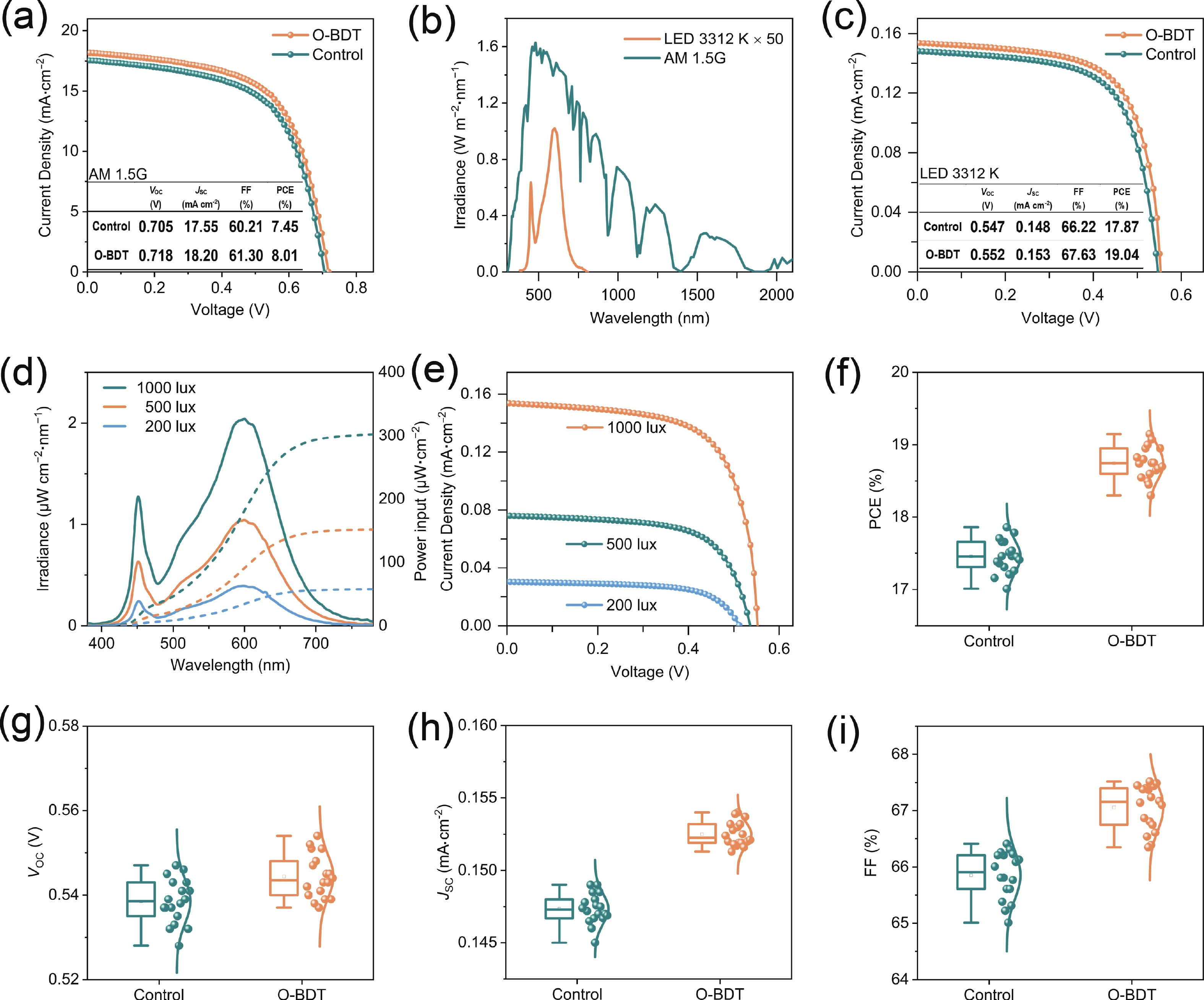
Abstract: Antimony selenosulfide (Sb2(S,Se)3) is a promising photovoltaic absorber material for both outdoor and indoor application scenarios. Nevertheless, the performance of Sb2(S,Se)3 solar cells remains constrained by the severe interface trap-induced nonradiative recombination. Interface engineering has been recognized as an effective approach to suppress recombination and boost charge transport. In this work, we introduce an organic modifier (O-BDT) between Sb2(S,Se)3 absorber and hole transport layer. The theoretical and experimental results evidence that O-BDT can simultaneously passivates interface defects and optimizes the energy-level alignment, leading to a significantly reduced voltage loss. Finally, the O-BDT modified solar cell achieves a power conversion efficiency (PCE) of 8.01% under AM 1.5G illumination. Moreover, the device delivers a PCE of 19.04% under 1000 lux, 3312 K LED lighting, among the best list of IPVs based on antimony chalcogenide compounds.

Key words: antimony selenosulfideinterfacial modificationindoor photovoltaics


[1]
Grandhi G K, Koutsourakis G, Blakesley J C, et al. Promises and challenges of indoor photovoltaics. Nat Rev Clean Technol, 2025, 1(2): 132 doi: 10.1038/s44359-024-00013-1
[2]
Liu C, Yang T H, Cai W L, et al. Flexible indoor perovskite solar cells by in situ bottom-up crystallization modulation and interfacial passivation. Adv Mater, 2024, 36(24): 2311562 doi: 10.1002/adma.202311562
[3]
Dou D, Sun H X, Li C, et al. Perovskite-based indoor photovoltaics and their competitors. Adv Funct Mater, 2024, 34(13): 2314398
[4]
Zhao Y Q, Xu W T, Wen J, et al. Innovative in situ passivation strategy for high-efficiency Sb2(S, Se)3 solar cells. Adv Mater, 2024, 36(46): 2410669
[5]
Chen J W, Xu C, C Li G Y, et al. Se-elemental concentration gradient regulation for efficient Sb2(S, Se)3 solar cells with high open-circuit voltages. Angew Chem Int Ed, 2024, 63(40): e202409609
[6]
Liu C, Gong A W, Zuo C, et al. Heterojunction lithiation engineering and diffusion-induced defect passivation for highly efficient Sb2(S, Se)3 solar cells. Energy Environ Sci, 2024, 17(21): 8402 doi: 10.1039/D4EE03135K
[7]
Chen X, Shu X X, Zhou J C, et al. Additive engineering for Sb2S3 indoor photovoltaics with efficiency exceeding 17%. Light Sci Appl, 2024, 13(1): 281 doi: 10.1038/s41377-024-01620-0
[8]
Tang R F, Wang X M, Lian W T, et al. Hydrothermal deposition of antimony selenosulfide thin films enables solar cells with 10% efficiency. Nat Energy, 2020, 5(8): 587 doi: 10.1038/s41560-020-0652-3
[9]
Dong J B, Gao Q Q, Wu L, et al. Carrier management through electrode and electron-selective layer engineering for 10.70% efficiency antimony selenosulfide solar cells. Nat Energy, 2025, 10(7): 857 doi: 10.1038/s41560-025-01792-y
[10]
Cao R, Lv K, Shi C W, et al. Efficient Sb2S3 and low Se content Sb2SeyS3–y indoor photovoltaics. ACS Appl Mater Interfaces, 2024, 16(32): 42513 doi: 10.1021/acsami.4c09458
[11]
Li J S, Gao Z, Hu X Z, et al. Defects passivation via potassium iodide post-treatment for antimony selenosulfide solar cells with improved performance. Adv Funct Mater, 2023, 33(10): 2211657 doi: 10.1002/adfm.202211657
[12]
Dong J B, Liu H Z, Cao Z X, et al. Low-cost antimony selenosulfide with tunable bandgap for highly efficient solar cells. Small, 2023, 19(9): 2206175 doi: 10.1002/smll.202206175
[13]
Che B, Cai Z Y, Xiao P, et al. Thermally driven point defect transformation in antimony selenosulfide photovoltaic materials. Adv Mater, 2023, 35(6): 2208564 doi: 10.1002/adma.202208564
[14]
Niu Y J, Peng Y L, Zhang X X, et al. Resonant molecular modification for energy level alignment in perovskite solar cells. ACS Energy Lett, 2022, 7(9): 3104 doi: 10.1021/acsenergylett.2c01537
[15]
Qi Y M, Li Y Y, Lin Q Q. Defect passivation of efficient Sb2(S, Se)3 solar cells with ultrathin, insulating polymers. Sol RRL, 2022, 6(9): 2200376 doi: 10.1002/solr.202200376
[16]
Azam M, Luo Y D, Tang R, et al. Organic chloride salt interfacial modified crystallization for efficient antimony selenosulfide solar cells. ACS Appl Mater Interfaces, 2022, 14(3): 4276 doi: 10.1021/acsami.1c20779
[17]
Zhang J, Sun Q, Chen Q Y, et al. Dibenzo [b, d] thiophene-cored hole-transport material with passivation effect enabling the high-efficiency planar p–i–n perovskite solar cells with 83% fill factor. Sol RRL, 2020, 4(3): 1900421
[18]
You S, Eickemeyer F T, Gao J, et al. Bifunctional hole-shuttle molecule for improved interfacial energy level alignment and defect passivation in perovskite solar cells. Nat Energy, 2023, 8(5): 515 doi: 10.1038/s41560-023-01249-0
[19]
Zhang Z L, Wang C, Li F, et al. Bifunctional cellulose interlayer enabled efficient perovskite solar cells with simultaneously enhanced efficiency and stability. Adv Sci, 2023, 10(8): 2207202 doi: 10.1002/advs.202207202
[20]
Chen W C, Sun J J, Zhang Z, et al. Thiazole functionalized hole transport material featuring defect passivation effects for high-performance perovskite solar cells. ACS Materials Lett, 2023, 5(6): 1772 doi: 10.1021/acsmaterialslett.3c00225
[21]
Chen X L, Zhao Y Q, Li C, et al. Interfacial engineering by self-assembled monolayer for high-performance Sb2S3 solar cells. Adv Energy Mater, 2024, 14(33): 2400441
[22]
Ke A, Ali S, Gao R H, et al. Two-terminal Sb2S3/PbS-QDs tandem solar cells with over 12% certificated efficiency utilizing bidentate additive strategy. Adv Energy Mater, 2025, 15(39): e03358 doi: 10.1002/aenm.202503358
[23]
Shao W L, Wang H B, Ye F H, et al. Modulation of nucleation and crystallization in PbI2 films promoting preferential perovskite orientation growth for efficient solar cells. Energy Environ Sci, 2023, 16(1): 252 doi: 10.1039/D2EE03342A
[24]
Zheng L F, Shen L N, Fang Z, et al. Reducing the surface reactivity of alkyl ammonium passivation molecules enables highly efficient perovskite solar cells. Adv Energy Mater, 2023, 13(36): 2301066 doi: 10.1002/aenm.202301066
[25]
Jiang X Q, Zhu L N, Zhang B Q, et al. Spatial conformation engineering of aromatic ketones for highly efficient and stable perovskite solar cells. J Am Chem Soc, 2024, 146(50): 34833 doi: 10.1021/jacs.4c13866
[26]
Huang L, Dong J B, Hu Y, et al. Temperature-gradient solution deposition amends unfavorable band structure of Sb2(S, Se)3 film for highly efficient solar cells. Angew Chem Int Ed, 2024, 63(36): e202406512 doi: 10.1002/anie.202406512
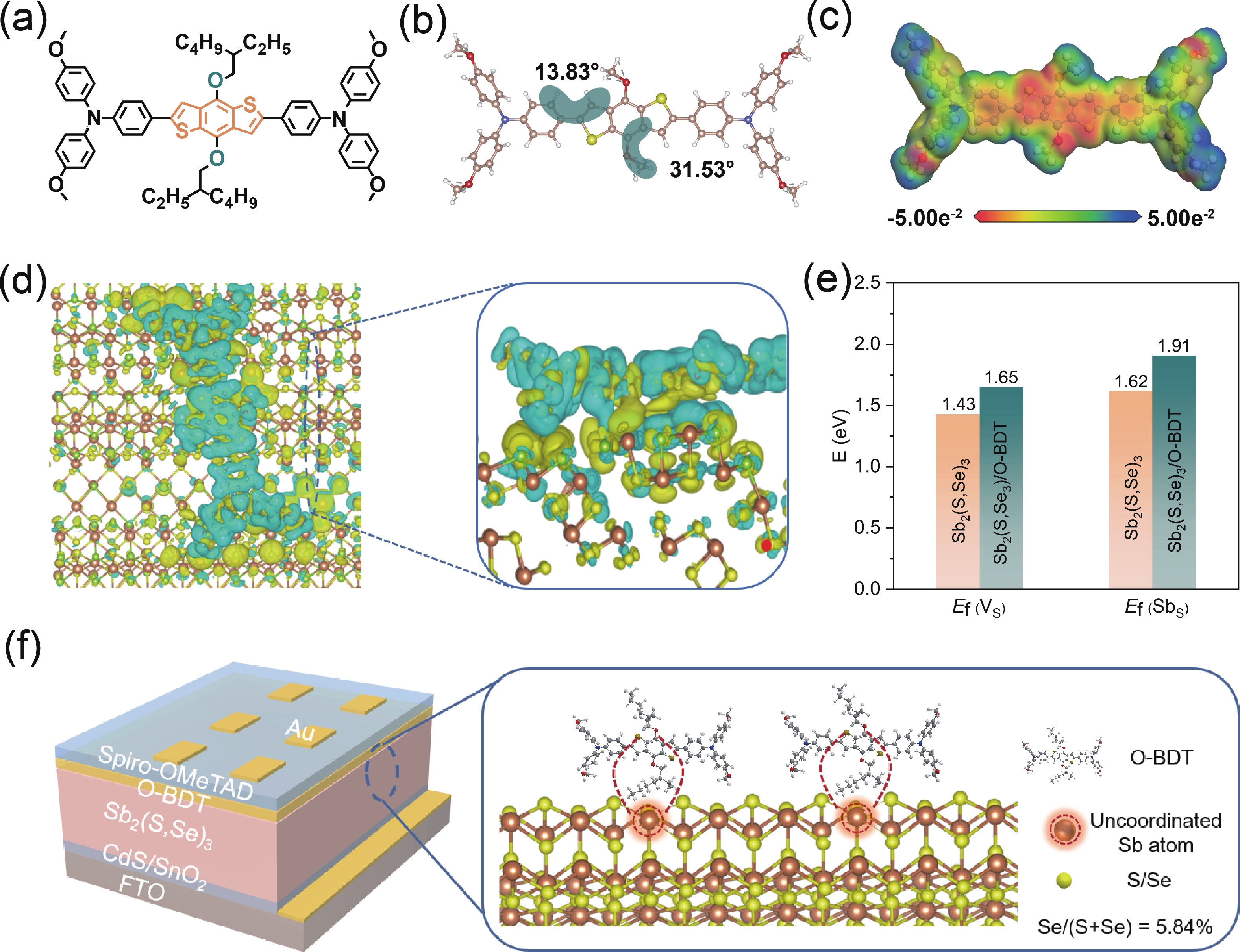
Fig. 1.  (Color online) (a) Chemical structure of O-BDT. (b) DFT-optimized structure of O-BDT. (c) ESP of O-BDT. (d) Top views of the charge density difference map at the Sb2(S,Se)3 terminated interface upon O-BDT adsorption. (e) Calculated formation energies (Ef) of the two surface defects upon Sb2(S,Se)3 surface. (f) Schematic illustration of O-BDT molecule working at Sb2(S,Se)3/HTL interface.

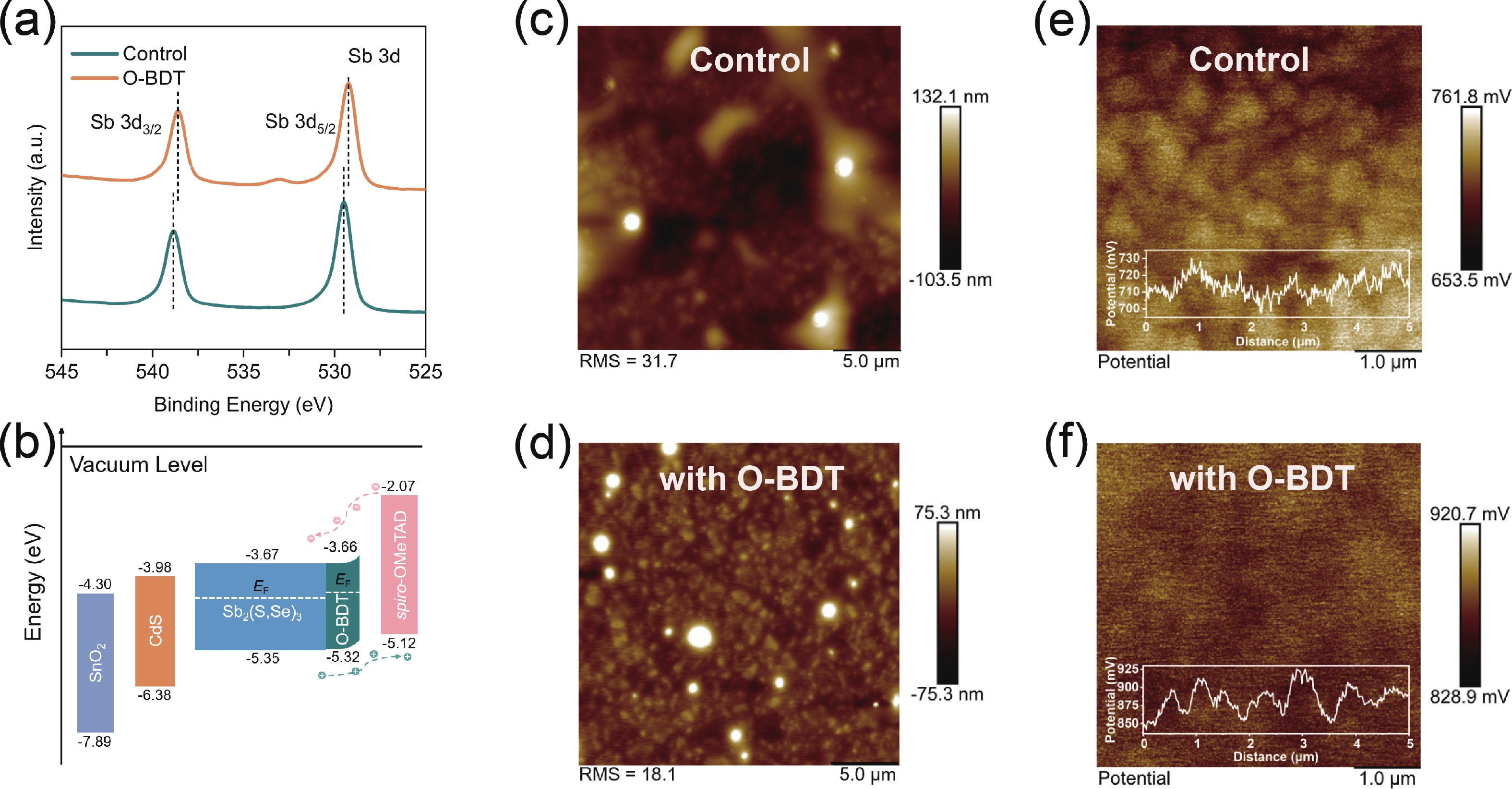
Fig. 2.  (Color online) (a) Sb 3d XPS spectra and (b) Energy level diagram of the control and O-BDT treated Sb2(S,Se)3 films. Height images of (c) pristine Sb2(S,Se)3 film surface, (d) Sb2(S,Se)3 film with O-BDT treatment. Potential images of (e) pristine Sb2(S,Se)3 film surface, (f) Sb2(S,Se)3 film with O-BDT treatment surface.

Fig. 3.  (Color online) (a) J-V curves of the Sb2(S,Se)3 devices under AM 1.5G illumination. (b) Emission spectra of AM 1.5G and LED (3312 K, 1000 lux). The intensity of LED is amplified by 50 times for clear showing. (c) J-V curves of the IPVs under LED lighting of 1000 lux. (d) Irradiance and integrated power densities of LED at 200, 500 and 1000 lux. (e) J-V curves of the IPVs under LED illumination of at 1000, 500, and 200 lux. (f)−(i) Performance parameters statistics of IPVs.

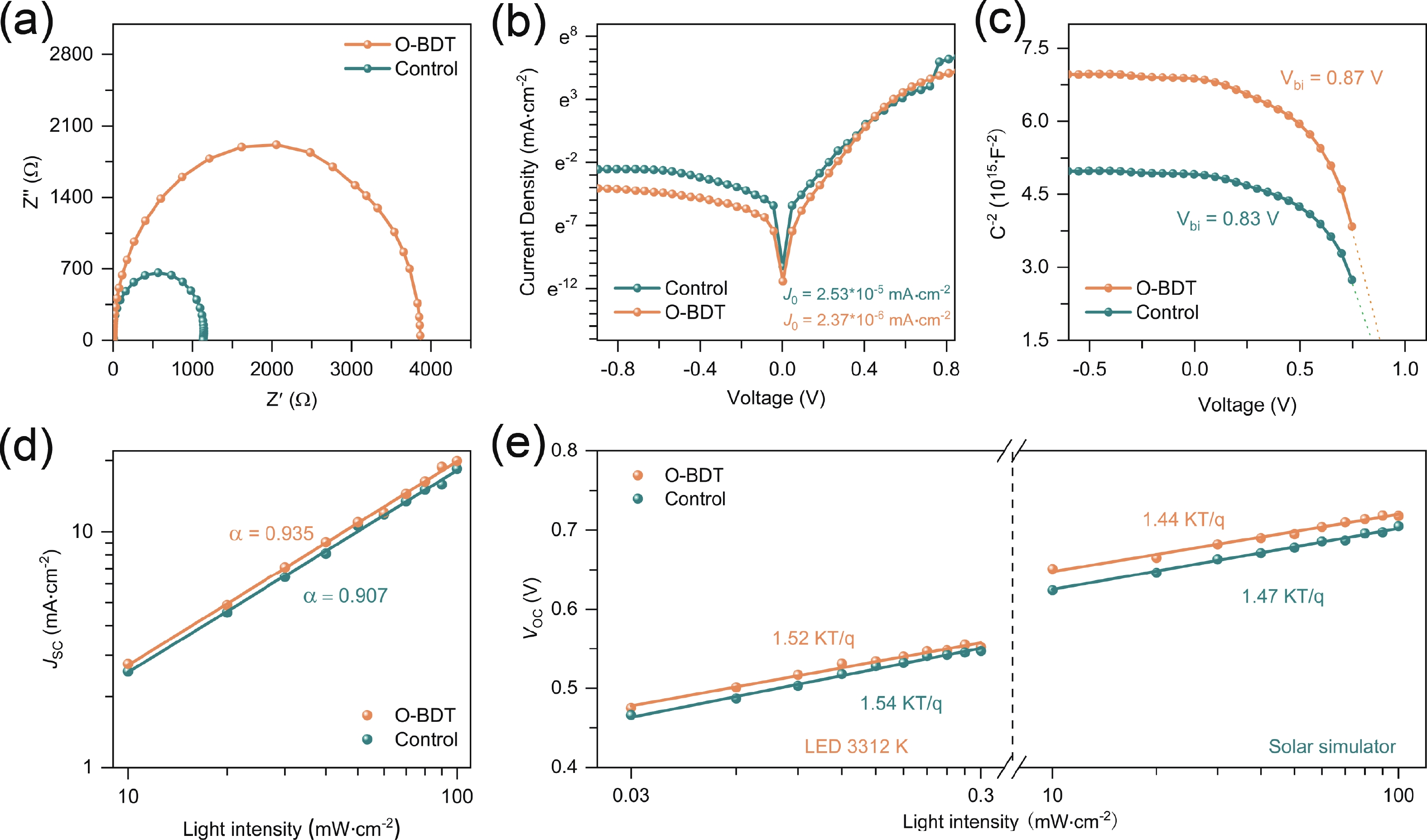
Fig. 4.  (Color online) (a) EIS curves, (b) dark J-V curves, (c) Mott-Schottky curves and (d) JSC versus light intensity for Sb2(S,Se)3 devices with or without O-BDT. (e) VOC versus light intensity for Sb2(S,Se)3 devices with or without O-BDT under the illumination of AM 1.5G and LED.

[1]
Grandhi G K, Koutsourakis G, Blakesley J C, et al. Promises and challenges of indoor photovoltaics. Nat Rev Clean Technol, 2025, 1(2): 132 doi: 10.1038/s44359-024-00013-1
[2]
Liu C, Yang T H, Cai W L, et al. Flexible indoor perovskite solar cells by in situ bottom-up crystallization modulation and interfacial passivation. Adv Mater, 2024, 36(24): 2311562 doi: 10.1002/adma.202311562
[3]
Dou D, Sun H X, Li C, et al. Perovskite-based indoor photovoltaics and their competitors. Adv Funct Mater, 2024, 34(13): 2314398
[4]
Zhao Y Q, Xu W T, Wen J, et al. Innovative in situ passivation strategy for high-efficiency Sb2(S, Se)3 solar cells. Adv Mater, 2024, 36(46): 2410669
[5]
Chen J W, Xu C, C Li G Y, et al. Se-elemental concentration gradient regulation for efficient Sb2(S, Se)3 solar cells with high open-circuit voltages. Angew Chem Int Ed, 2024, 63(40): e202409609
[6]
Liu C, Gong A W, Zuo C, et al. Heterojunction lithiation engineering and diffusion-induced defect passivation for highly efficient Sb2(S, Se)3 solar cells. Energy Environ Sci, 2024, 17(21): 8402 doi: 10.1039/D4EE03135K
[7]
Chen X, Shu X X, Zhou J C, et al. Additive engineering for Sb2S3 indoor photovoltaics with efficiency exceeding 17%. Light Sci Appl, 2024, 13(1): 281 doi: 10.1038/s41377-024-01620-0
[8]
Tang R F, Wang X M, Lian W T, et al. Hydrothermal deposition of antimony selenosulfide thin films enables solar cells with 10% efficiency. Nat Energy, 2020, 5(8): 587 doi: 10.1038/s41560-020-0652-3
[9]
Dong J B, Gao Q Q, Wu L, et al. Carrier management through electrode and electron-selective layer engineering for 10.70% efficiency antimony selenosulfide solar cells. Nat Energy, 2025, 10(7): 857 doi: 10.1038/s41560-025-01792-y
[10]
Cao R, Lv K, Shi C W, et al. Efficient Sb2S3 and low Se content Sb2SeyS3–y indoor photovoltaics. ACS Appl Mater Interfaces, 2024, 16(32): 42513 doi: 10.1021/acsami.4c09458
[11]
Li J S, Gao Z, Hu X Z, et al. Defects passivation via potassium iodide post-treatment for antimony selenosulfide solar cells with improved performance. Adv Funct Mater, 2023, 33(10): 2211657 doi: 10.1002/adfm.202211657
[12]
Dong J B, Liu H Z, Cao Z X, et al. Low-cost antimony selenosulfide with tunable bandgap for highly efficient solar cells. Small, 2023, 19(9): 2206175 doi: 10.1002/smll.202206175
[13]
Che B, Cai Z Y, Xiao P, et al. Thermally driven point defect transformation in antimony selenosulfide photovoltaic materials. Adv Mater, 2023, 35(6): 2208564 doi: 10.1002/adma.202208564
[14]
Niu Y J, Peng Y L, Zhang X X, et al. Resonant molecular modification for energy level alignment in perovskite solar cells. ACS Energy Lett, 2022, 7(9): 3104 doi: 10.1021/acsenergylett.2c01537
[15]
Qi Y M, Li Y Y, Lin Q Q. Defect passivation of efficient Sb2(S, Se)3 solar cells with ultrathin, insulating polymers. Sol RRL, 2022, 6(9): 2200376 doi: 10.1002/solr.202200376
[16]
Azam M, Luo Y D, Tang R, et al. Organic chloride salt interfacial modified crystallization for efficient antimony selenosulfide solar cells. ACS Appl Mater Interfaces, 2022, 14(3): 4276 doi: 10.1021/acsami.1c20779
[17]
Zhang J, Sun Q, Chen Q Y, et al. Dibenzo [b, d] thiophene-cored hole-transport material with passivation effect enabling the high-efficiency planar p–i–n perovskite solar cells with 83% fill factor. Sol RRL, 2020, 4(3): 1900421
[18]
You S, Eickemeyer F T, Gao J, et al. Bifunctional hole-shuttle molecule for improved interfacial energy level alignment and defect passivation in perovskite solar cells. Nat Energy, 2023, 8(5): 515 doi: 10.1038/s41560-023-01249-0
[19]
Zhang Z L, Wang C, Li F, et al. Bifunctional cellulose interlayer enabled efficient perovskite solar cells with simultaneously enhanced efficiency and stability. Adv Sci, 2023, 10(8): 2207202 doi: 10.1002/advs.202207202
[20]
Chen W C, Sun J J, Zhang Z, et al. Thiazole functionalized hole transport material featuring defect passivation effects for high-performance perovskite solar cells. ACS Materials Lett, 2023, 5(6): 1772 doi: 10.1021/acsmaterialslett.3c00225
[21]
Chen X L, Zhao Y Q, Li C, et al. Interfacial engineering by self-assembled monolayer for high-performance Sb2S3 solar cells. Adv Energy Mater, 2024, 14(33): 2400441
[22]
Ke A, Ali S, Gao R H, et al. Two-terminal Sb2S3/PbS-QDs tandem solar cells with over 12% certificated efficiency utilizing bidentate additive strategy. Adv Energy Mater, 2025, 15(39): e03358 doi: 10.1002/aenm.202503358
[23]
Shao W L, Wang H B, Ye F H, et al. Modulation of nucleation and crystallization in PbI2 films promoting preferential perovskite orientation growth for efficient solar cells. Energy Environ Sci, 2023, 16(1): 252 doi: 10.1039/D2EE03342A
[24]
Zheng L F, Shen L N, Fang Z, et al. Reducing the surface reactivity of alkyl ammonium passivation molecules enables highly efficient perovskite solar cells. Adv Energy Mater, 2023, 13(36): 2301066 doi: 10.1002/aenm.202301066
[25]
Jiang X Q, Zhu L N, Zhang B Q, et al. Spatial conformation engineering of aromatic ketones for highly efficient and stable perovskite solar cells. J Am Chem Soc, 2024, 146(50): 34833 doi: 10.1021/jacs.4c13866
[26]
Huang L, Dong J B, Hu Y, et al. Temperature-gradient solution deposition amends unfavorable band structure of Sb2(S, Se)3 film for highly efficient solar cells. Angew Chem Int Ed, 2024, 63(36): e202406512 doi: 10.1002/anie.202406512
  • Search

    Advanced Search >>

    GET CITATION

    shu

    Export: BibTex EndNote

    Article Metrics

    Article views: 10 Times PDF downloads: 2 Times Cited by: 0 Times

    History

    Received: 09 January 2026 Revised: 16 March 2026 Online: Accepted Manuscript: 14 April 2026

    Catalog

      Email This Article

      User name:
      Email:*请输入正确邮箱
      Code:*验证码错误
      Ming Wang, Weijia Zhao, Xin Yao, Zhirui Wang, Qi Gao, Hong Zhang, Fuling Guo, Yanqing Wang, Wangchao Chen. Versatile interfacial modifier enabling efficient antimony selenosulfide indoor photovoltaics[J]. Journal of Semiconductors, 2026, In Press. doi: 10.1088/1674-4926/26010009 ****M Wang, W J Zhao, X Yao, Z R Wang, Q Gao, H Zhang, F L Guo, Y Q Wang, and W C Chen, Versatile interfacial modifier enabling efficient antimony selenosulfide indoor photovoltaics[J]. J. Semicond., 2026, accepted doi: 10.1088/1674-4926/26010009
      Citation:
      Ming Wang, Weijia Zhao, Xin Yao, Zhirui Wang, Qi Gao, Hong Zhang, Fuling Guo, Yanqing Wang, Wangchao Chen. Versatile interfacial modifier enabling efficient antimony selenosulfide indoor photovoltaics[J]. Journal of Semiconductors, 2026, In Press. doi: 10.1088/1674-4926/26010009 ****
      M Wang, W J Zhao, X Yao, Z R Wang, Q Gao, H Zhang, F L Guo, Y Q Wang, and W C Chen, Versatile interfacial modifier enabling efficient antimony selenosulfide indoor photovoltaics[J]. J. Semicond., 2026, accepted doi: 10.1088/1674-4926/26010009

      Versatile interfacial modifier enabling efficient antimony selenosulfide indoor photovoltaics

      DOI: 10.1088/1674-4926/26010009
      CSTR: 32376.14.1674-4926.26010009
      More Information
      • Ming Wang got his BS from Anhui University of Technology in 2022. Now he is a graduate student at Hefei University of Technology under the supervision of Prof. Wangchao Chen. His research focuses on antimony chalcogenide solar cells
      • Xin Yao is a lecturer at Hefei University of Technology. He received the BS degree and the PhD degree from China University of Mining & Technology, Beijing. His research focuses on the preparation of porous carbon materials and their application in solar cells
      • Hong Zhang is an Associate Professor at Hebei University of Engineering and holds a PhD from Hebei Normal University. Her research focuses on first-principles calculations of material properties, with a primary emphasis on the field of optoelectronic materials and devices
      • Wangchao Chen is an associate professor at Hefei University of Technology. He received the BS degree from Hefei University of Technology and PhD degree from University of Science and Technology of China. His research interest includes antimony chalcogenide and perovskite solar cells
      • Corresponding author: yao_x_c@hfut.edu.cnzhanghong81@hebeu.edu.cnchenwc@hfut.edu.cn
      • Received Date: 2026-01-09
      • Revised Date: 2026-03-16
      • Available Online: 2026-04-14

      Catalog

        /

        DownLoad:  Full-Size Img  PowerPoint
        Return
        Return