| [1] |
Zheng H Y, Liu Q, Kravchenko I I, et al. Multichannel meta-imagers for accelerating machine vision. Nat Nanotechnol, 2024, 19(4): 471 doi: 10.1038/s41565-023-01557-2 |
| [2] |
Luo X K, Deng W, Sheng F M, et al. Bionic scotopic adaptation transistors for nighttime low illumination imaging. ACS Nano, 2024, 18(21): 13726 doi: 10.1021/acsnano.4c01663 |
| [3] |
|
| [4] |
Chen J W, Zhou Z, Kim B J, et al. Optoelectronic graded neurons for bioinspired in-sensor motion perception. Nat Nanotechnol, 2023, 18(8): 882 doi: 10.1038/s41565-023-01379-2 |
| [5] |
Barnard K, Cardei V, Funt B. A comparison of computational color constancy algorithms. I: Methodology and experiments with synthesized data. IEEE Trans Image Process, 2002, 11(9): 972 doi: 10.1002/9781119407416.ch2 |
| [6] |
Kohn A. Visual adaptation: Physiology, mechanisms, and functional benefits. J Neurophysiol, 2007, 97(5): 3155 doi: 10.1152/jn.00086.2007 |
| [7] |
Kehtarnavaz N, Oh H J, Yoo Y. Development and real-time implementation of auto white balancing scoring algorithm. Real Time Imag, 2002, 8(5): 379 doi: 10.1006/rtim.2001.0287 |
| [8] |
Ramanath R, Snyder W E, Yoo Y, et al. Color image processing pipeline. IEEE Signal Process Mag, 2005, 22(1): 34 doi: 10.1109/MSP.2005.1407713 |
| [9] |
Smirnakis S M, Berry M J, Warland D K, et al. Adaptation of retinal processing to image contrast and spatial scale. Nature, 1997, 386(6620): 69 doi: 10.1038/386069a0 |
| [10] |
Smithson H, Zaidi Q. Colour constancy in context: Roles for local adaptation and levels of reference. J Vis, 2004, 4(9): 3 doi: 10.1167/4.9.3 |
| [11] |
He Z H, Wang W, Zhan Z P, et al. In-pixel colour correction with organic self-adaptive transistors. Nat Photonics, 2026, 20(2): 194 doi: 10.1038/s41566-025-01812-z |
| [12] |
He Z H, Shen H G, Ye D K, et al. An organic transistor with light intensity-dependent active photoadaptation. Nat Electron, 2021, 4(7): 522 doi: 10.1038/s41928-021-00615-8 |
| [13] |
|
| [14] |
Rich S I, Lee S, Fukuda K, et al. Developing the nondevelopable: Creating curved-surface electronics from nonstretchable devices. Adv Mater, 2022, 34(22): 2106683 doi: 10.1002/adma.202106683 |



 Yuan Tan is a Ph.D. student at the Institute of Functional Nano & Soft Materials (FUNSOM), Soochow University. His research interests focus on organic semiconductor–electrode interfaces and integration of organic field-effect transistors with optoelectronic devices.
 Wei Deng obtained his Ph.D. degree at Soochow University in 2017. He is currently a professor of the Institute of Functional Nano & Soft Materials, Soochow University. His research interests focus on organic single-crystal electronics, including the large-area fabrication of organic single crystals, performance enhancement of organic transistors, and their integrated applications in organic electronic systems.
 Xiujuan Zhang received her Ph.D. degree from the Technical Institute of Physics and Chemistry, Chinese Academy of Sciences in 2006. She is currently a professor of the Institute of Functional Nano & Soft Materials, Soochow University. Her research interests include organic semiconductor single crystals, organic–inorganic hybrid semiconductors and related optoelectronic devices.
 Jiansheng Jie received his Ph.D. degree from the Department of Physics, University of Science and Technology of China in 2004. He is currently a professor of the Institute of Functional Nano & Soft Materials, Soochow University. His research focuses on organic semiconductor single crystals for high-performance integrated organic field-effect transistors and flexible electronics.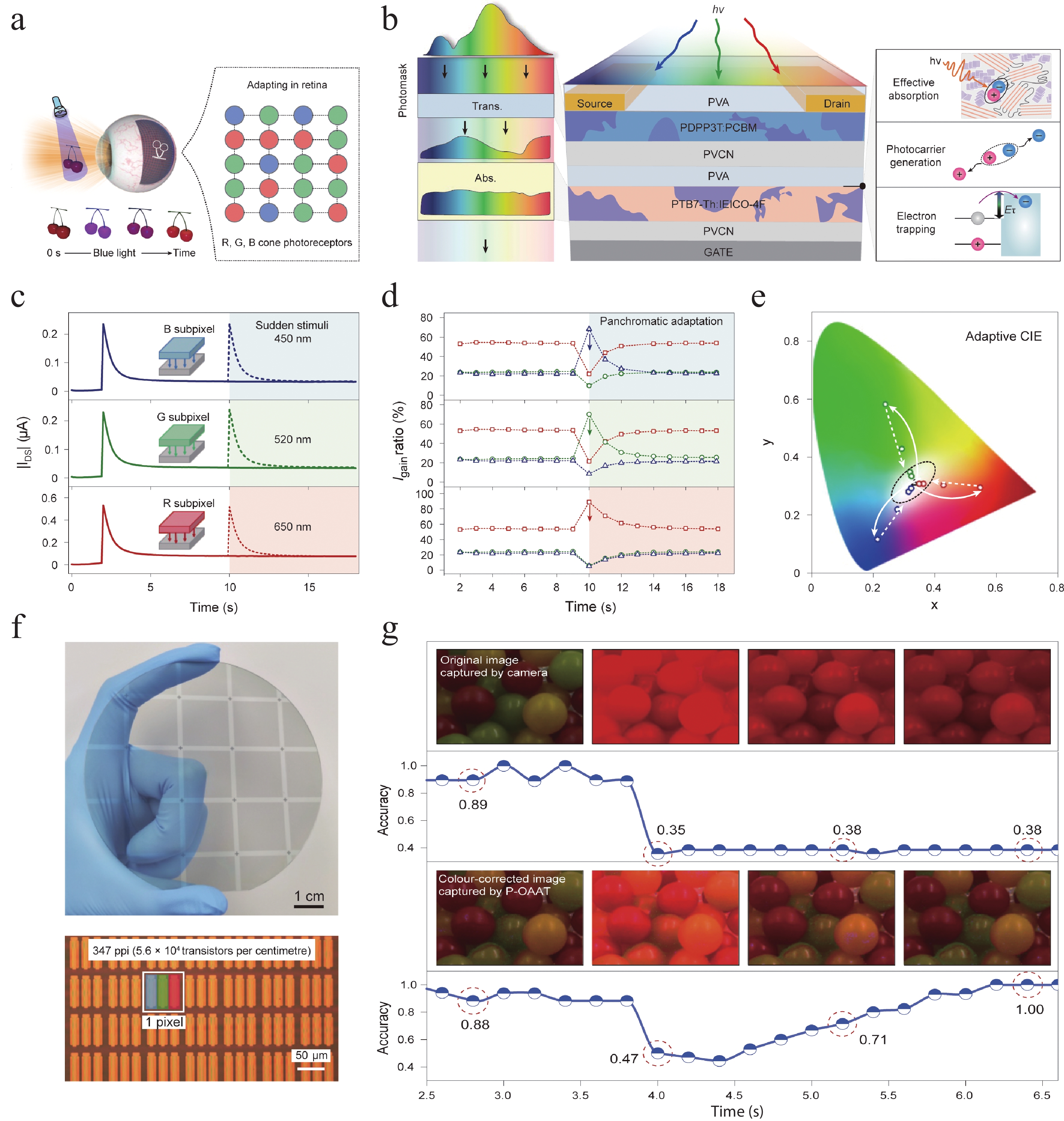
 DownLoad: