J. Semicond. >  Just Accepted

REVIEWS

Recent progress of flexible tactile electronic skins incorporating proximity sensing capabilities

Wenqiang He1, 2, 3, Cheng Yang1, 2, 3 and Desheng Kong1, 2, 3,

+ Author Affiliations

 Corresponding author: Desheng Kong, dskong@nju.edu.cn

DOI: 10.1088/1674-4926/26030022CSTR: 32376.14.1674-4926.26030022

PDF

Turn off MathJax

Abstract: The integration of proximity sensing into flexible tactile electronic skins (e-skins) represents a fundamental shift from conventional contact-only interfaces toward anticipatory perception systems. This mini-review provides a systematic examination of recent advances in proximity-augmented e-skins, which overcome the inherent latency of tactile sensors by extending sensory awareness into the pre-contact domain. We provide a comprehensive overview of five key sensing modalities—capacitive, triboelectric, magnetic, temperature-based, and humidity-based—detailing their operating principles, material innovations, and structural optimization strategies. System-level requirements for practical deployment are also critically analyzed. Representative applications in interactive surfaces, human–robot collaboration, soft robotics, healthcare monitoring, and integrated multifunctional e-skins are highlighted to illustrate the transformative potential of this technology. Despite substantial progress, challenges persist in seamless multimodal integration, scalable manufacturing, and intelligent data fusion. Future directions are discussed to realize robust, perceptually intelligent e-skins that bridge the gap between laboratory innovations and real-world applications.

Key words: electronic skinsflexible sensorsproximity sensorspressure sensors


[1]
Kim J O, Kwon S Y, Kim Y, et al. Highly ordered 3D microstructure-based electronic skin capable of differentiating pressure, temperature, and proximity. ACS Appl Mater Interfaces, 2019, 11(1): 1503 doi: 10.1021/acsami.8b19214
[2]
Hua Q L, Sun J L, Liu H T, et al. Skin-inspired highly stretchable and conformable matrix networks for multifunctional sensing. Nat Commun, 2018, 9: 244 doi: 10.1038/s41467-017-02685-9
[3]
Dong K, Peng X, An J, et al. Shape adaptable and highly resilient 3D braided triboelectric nanogenerators as e-textiles for power and sensing. Nat Commun, 2020, 11: 2868 doi: 10.1038/s41467-020-16642-6
[4]
Xiang S X, Liu D J, Jiang C C, et al. Liquid-metal-based dynamic thermoregulating and self-powered electronic skin. Adv Funct Mater, 2021, 31(26): 2100940 doi: 10.1002/adfm.202100940
[5]
Gong S, Wang Y, Yap L W, et al. A location- and sharpness-specific tactile electronic skin based on staircase-like nanowire patches. Nanoscale Horiz, 2018, 3(6): 640 doi: 10.1039/C8NH00125A
[6]
Wang J Y, Wang Z D, Wang Q S, et al. Passive electronic skin with highly sensitive tactile sensory capabilities. ACS Appl Electron Mater, 2021, 3(10): 4517 doi: 10.1021/acsaelm.1c00648
[7]
Yang C, Ma X H, Zhou X Y, et al. Ultrastretchable transparent electrodes of liquid metal serpentine micromeshes. ACS Materials Lett, 2024, 6(7): 3124 doi: 10.1021/acsmaterialslett.4c00385
[8]
Yang J C, Mun J, Kwon S Y, et al. Electronic skin: Recent progress and future prospects for skin-attachable devices for health monitoring, robotics, and prosthetics. Adv Mater, 2019, 31(48): 1904765 doi: 10.1002/adma.201904765
[9]
Wu B W, Jiang T, Yu Z X, et al. Proximity sensing electronic skin: Principles, characteristics, and applications (adv. sci. 13/2024). Adv Sci, 2024, 11(13): 2470075 doi: 10.1002/advs.202470075
[10]
Niu H S, Li H, Zhang Q C, et al. Intuition-and-tactile bimodal sensing based on artificial-intelligence-motivated all-fabric bionic electronic skin for intelligent material perception. Small, 2024, 20(14): 2308127 doi: 10.1002/smll.202308127
[11]
Ge C Y, An X Y, He X X, et al. Integrated multifunctional electronic skins with low-coupling for complicated and accurate human–robot collaboration. Adv Sci, 2023, 10(20): 2301341 doi: 10.1002/advs.202301341
[12]
Chen A B, Lu S T, Jiao J, et al. Highly flexible and sensitive proximity sensor based on liquid metal microfluidic fibers. 2024 IEEE International Conference on Robotics and Biomimetics (ROBIO). Bangkok, Thailand. IEEE, 2025: 1066
[13]
Chen Z H, Luo R C. Design and implementation of capacitive proximity sensor using microelectromechanical systems technology. IEEE Trans Ind Electron, 1998, 45(6): 886 doi: 10.1109/41.735332
[14]
Zhang B, Xiang Z M, Zhu S W, et al. Dual functional transparent film for proximity and pressure sensing. Nano Res, 2014, 7(10): 1488 doi: 10.1007/s12274-014-0510-3
[15]
Victores J G, Martínez S, Jardón A, et al. Robot-aided tunnel inspection and maintenance system by vision and proximity sensor integration. Autom Constr, 2011, 20(5): 629 doi: 10.1016/j.autcon.2010.12.005
[16]
Qiu S H, Huang Y, He X Y, et al. A dual-mode proximity sensor with integrated capacitive and temperature sensing units. Meas Sci Technol, 2015, 26(10): 105101 doi: 10.1088/0957-0233/26/10/105101
[17]
Chen Y, Sun Y L, Wei Y Y, et al. How far for the electronic skin: From multifunctional material to advanced applications. Adv Mater Technol, 2023, 8(8): 2201352 doi: 10.1002/admt.202201352
[18]
Chou H H, Nguyen A, Chortos A, et al. A chameleon-inspired stretchable electronic skin with interactive colour changing controlled by tactile sensing. Nat Commun, 2015, 6: 8011 doi: 10.1038/ncomms9011
[19]
Zhou Y, Dai D F, Gao Y, et al. Recent advances in graphene electronic skin and its future prospects. ChemNanoMat, 2021, 7(9): 982 doi: 10.1002/cnma.202100198
[20]
Dąbrowska A K, Rotaru G M, Derler S, et al. Materials used to simulate physical properties of human skin. Skin Res Technol, 2016, 22(1): 3 doi: 10.1111/srt.12235
[21]
Zhao P F, Zhang R M, Tong Y H, et al. Strain-discriminable pressure/proximity sensing of transparent stretchable electronic skin based on PEDOT: PSS/SWCNT electrodes. ACS Appl Mater Interfaces, 2020, 12(49): 55083 doi: 10.1021/acsami.0c16546
[22]
Niu H S, Li H, Li N, et al. Fringing-effect-based capacitive proximity sensors. Adv Funct Mater, 2024, 34(51): 2409820 doi: 10.1002/adfm.202409820
[23]
Ye X R, Shi B H, Li M, et al. All-textile sensors for boxing punch force and velocity detection. Nano Energy, 2022, 97: 107114 doi: 10.1016/j.nanoen.2022.107114
[24]
Sarwar M S, Dobashi Y, Preston C, et al. Bend, stretch, and touch: Locating a finger on an actively deformed transparent sensor array. Sci Adv, 2017, 3(3): e1602200 doi: 10.1126/sciadv.1602200
[25]
Lee H K, Chang S I, Yoon E. Dual-mode capacitive proximity sensor for robot application: Implementation of tactile and proximity sensing capability on a single polymer platform using shared electrodes. IEEE Sens J, 2009, 9(12): 1748 doi: 10.1109/JSEN.2009.2030660
[26]
Liu J Y, Tong Y H, Xian D, et al. Handwriting character recognition based on conductor/insulator-identifiable E-tattoo proximity sensors for blinds. Adv Funct Mater, 2024, 34(1): 2306704 doi: 10.1002/adfm.202306704
[27]
Ye X R, Tian M W, Li M, et al. All-fabric-based flexible capacitive sensors with pressure detection and non-contact instruction capability. Coatings, 2022, 12(3): 302. doi: 10.3390/coatings12030302
[28]
Nguyen T D, Kim T, Han H, et al. Characterization and optimization of flexible dual mode sensor based on Carbon Micro Coils. Mater Res Express, 2018, 5(1): 015604 doi: 10.1088/2053-1591/aaa503
[29]
Moheimani R, Aliahmad N, Aliheidari N, et al. Thermoplastic polyurethane flexible capacitive proximity sensor reinforced by CNTs for applications in the creative industries. Sci Rep, 2021, 11: 1104 doi: 10.1038/s41598-020-80071-0
[30]
Igreja R, Dias C J. Analytical evaluation of the interdigital electrodes capacitance for a multi-layered structure. Sens Actuat A Phys, 2004, 112(2/3): 291 doi: 10.1016/j.sna.2004.01.040
[31]
Huang J R, Wang H T, Li J A, et al. High-performance flexible capacitive proximity and pressure sensors with spiral electrodes for continuous human–machine interaction. ACS Mater Lett, 2022, 4(11): 2261 doi: 10.1021/acsmaterialslett.2c00860
[32]
Ruth S R A, Feig V R, Kim M G, et al. Flexible fringe effect capacitive sensors with simultaneous high-performance contact and non-contact sensing capabilities. Small Struct, 2021, 2(2): 2000079 doi: 10.1002/sstr.202000079
[33]
Tang Y J, Zhou H, Sun X P, et al. Triboelectric touch-free screen sensor for noncontact gesture recognizing. Adv Funct Mater, 2020, 30(5): 1907893 doi: 10.1002/adfm.201907893
[34]
Ma J M, Zhu J Q, Ma P, et al. Fish bladder film-based triboelectric nanogenerator for noncontact position monitoring. ACS Energy Lett, 2020, 5(9): 3005 doi: 10.1021/acsenergylett.0c01062
[35]
Fan F R, Tang W, Wang Z L. Flexible nanogenerators for energy harvesting and self-powered electronics. Adv Mater, 2016, 28(22): 4283 doi: 10.1002/adma.201504299
[36]
Pan S H, Zhang Z N. Fundamental theories and basic principles of triboelectric effect: A review. Friction, 2019, 7(1): 2 doi: 10.1007/s40544-018-0217-7
[37]
Chen Q, Shang H F, Cheng B X, et al. Quantifying triboelectric series of polymers based on the measurement of triboelectrification with NaCl solution. Chem Eng J, 2024, 488: 150871 doi: 10.1016/j.cej.2024.150871
[38]
Wang Z L. From contact electrification to triboelectric nanogenerators. Rep Prog Phys, 2021, 84(9): 096502 doi: 10.1088/1361-6633/ac0a50
[39]
Lu P, Liao X F, Guo X Y, et al. Gel-based triboelectric nanogenerators for flexible sensing: Principles, properties, and applications. Nano Micro Lett, 2024, 16(1): 206 doi: 10.1007/s40820-024-01432-2
[40]
Li Y H, Li G Z, Zhang P L, et al. Contribution of ferromagnetic medium to the output of triboelectric nanogenerators derived from Maxwell’s equations. Adv Energy Mater, 2021, 11(21): 2003921 doi: 10.1002/aenm.202003921
[41]
Chen S C, Wang Y F, Yang L, et al. Flexible and transparent sensors with hierarchically micro-nano texture for touchless sensing and controlling. Nano Energy, 2021, 82: 105719 doi: 10.1016/j.nanoen.2020.105719
[42]
Zhang W L, Lu Y X, Liu T, et al. Spheres multiple physical network-based triboelectric materials for self-powered contactless sensing. Small, 2022, 18(25): 2200577 doi: 10.1002/smll.202200577
[43]
Özer B, Pişkin H, Akdoğan N. Shapeable planar hall sensor with a stable sensitivity under concave and convex bending. IEEE Sens J, 2019, 19(14): 5493 doi: 10.1109/JSEN.2019.2907616
[44]
Cañón Bermúdez G S, Karnaushenko D D, Karnaushenko D, et al. Magnetosensitive e-skins with directional perception for augmented reality. Sci Adv, 2018, 4: eaao2623 doi: 10.1126/sciadv.aao2623
[45]
Kondo M, Melzer M, Karnaushenko D, et al. Imperceptible magnetic sensor matrix system integrated with organic driver and amplifier circuits. Sci Adv, 2020, 6(4): eaay6094 doi: 10.1126/sciadv.aay6094
[46]
Khan M A, Sun J, Li B D, et al. Magnetic sensors-a review and recent technologies. Eng Res Express, 2021, 3(2): 022005 doi: 10.1088/2631-8695/ac0838
[47]
Zhu Y N, Jiang Q L, Zhang J, et al. Recent progress of organic semiconductor materials in spintronics. Chem, 2023, 18(3): e202201125
[48]
Zhang W G, Guo Q H, Duan Y, et al. Touchless sensing interface based on the magneto-piezoresistive effect of magnetic microstructures with stacked conductive coating. ACS Appl Mater Interfaces, 2021, 13(51): 61422 doi: 10.1021/acsami.1c19137
[49]
Huang L S, Wang S, Zhang K, et al. Research progress of multifunctional flexible proximity sensors. Sens Actuat A Phys, 2023, 360: 114500 doi: 10.1016/j.sna.2023.114500
[50]
Tao R, Hasan S A, Wang H Z, et al. Bimorph material/structure designs for high sensitivity flexible surface acoustic wave temperature sensors. Sci Rep, 2018, 8: 9052 doi: 10.1038/s41598-018-27324-1
[51]
Su Y, Ma C S, Chen J, et al. Printable, highly sensitive flexible temperature sensors for human body temperature monitoring: A review. Nanoscale Res Lett, 2020, 15(1): 200 doi: 10.1186/s11671-020-03428-4
[52]
Huang Y, Zeng X, Wang W D, et al. High-resolution flexible temperature sensor based graphite-filled polyethylene oxide and polyvinylidene fluoride composites for body temperature monitoring. Sens Actuat A Phys, 2018, 278: 1 doi: 10.1016/j.sna.2018.05.024
[53]
Yu Y Y, Peng S H, Blanloeuil P, et al. Wearable temperature sensors with enhanced sensitivity by engineering microcrack morphology in PEDOT: PSS–PDMS sensors. ACS Appl Mater Interfaces, 2020, 12(32): 36578 doi: 10.1021/acsami.0c07649
[54]
Ding H J, Wei Y M, Wu Z X, et al. Recent advances in gas and humidity sensors based on 3D structured and porous graphene and its derivatives. ACS Materials Lett, 2020, 2(11): 1381 doi: 10.1021/acsmaterialslett.0c00355
[55]
Feng J, Peng L L, Wu C Z, et al. Giant moisture responsiveness of VS2 ultrathin nanosheets for novel touchless positioning interface. Adv Mater, 2012, 24(15): 1969 doi: 10.1002/adma.201104681
[56]
Xie T H, Abdul Rahman A F, Abu Bakar A, et al. Design and optimization of metal oxide-based humidity sensors: A review on mechanisms and material engineering. J Clust Sci, 2025, 36(4): 148 doi: 10.1007/s10876-025-02869-0
[57]
Wang Y M, Liu A P, Han Y Q, et al. Sensors based on conductive polymers and their composites: A review. Polym Int, 2020, 69(1): 7 doi: 10.1002/pi.5907
[58]
Dai J X, Zhao H R, Lin X Z, et al. Humidity sensors based on 3D porous polyelectrolytes via breath figure method. Adv Electron Mater, 2020, 6(1): 1900846 doi: 10.1002/aelm.201900846
[59]
Wang Z H, Fan X X, Li C J, et al. Humidity-sensing performance of 3DOM WO3 with controllable structural modification. ACS Appl Mater Interfaces, 2018, 10(4): 3776 doi: 10.1021/acsami.7b17048
[60]
Lu Y Y, Xu K C, Zhang L S, et al. Multimodal plant healthcare flexible sensor system. ACS Nano, 2020, 14(9): 10966 doi: 10.1021/acsnano.0c03757
[61]
Niu H S, Yue W J, Li Y, et al. Ultrafast-response/recovery capacitive humidity sensor based on arc-shaped hollow structure with nanocone arrays for human physiological signals monitoring. Sens Actuat B Chem, 2021, 334: 129637 doi: 10.1016/j.snb.2021.129637
[62]
Li G Z, Liu S Q, Mao Q, et al. Multifunctional electronic skins enable robots to safely and dexterously interact with human. Adv Sci, 2022, 9(11): 2104969 doi: 10.1002/advs.202104969
[63]
Zhang C, Liu S Y, Huang X, et al. A stretchable dual-mode sensor array for multifunctional robotic electronic skin. Nano Energy, 2019, 62: 164 doi: 10.1016/j.nanoen.2019.05.046
[64]
Anaya D V, Zhan K, Tao L, et al. Contactless tracking of humans using non-contact triboelectric sensing technology: Enabling new assistive applications for the elderly and the visually impaired. Nano Energy, 2021, 90: 106486 doi: 10.1016/j.nanoen.2021.106486
[65]
Guo Y J, Gao S, Yue W J, et al. Anodized aluminum oxide-assisted low-cost flexible capacitive pressure sensors based on double-sided nanopillars by a facile fabrication method. ACS Appl Mater Interfaces, 2019, 11(51): 48594 doi: 10.1021/acsami.9b17966
[66]
Lu L J, Jiang C P, Hu G S, et al. Flexible noncontact sensing for human–machine interaction. Adv Mater, 2021, 33(16): 2100218 doi: 10.1002/adma.202100218
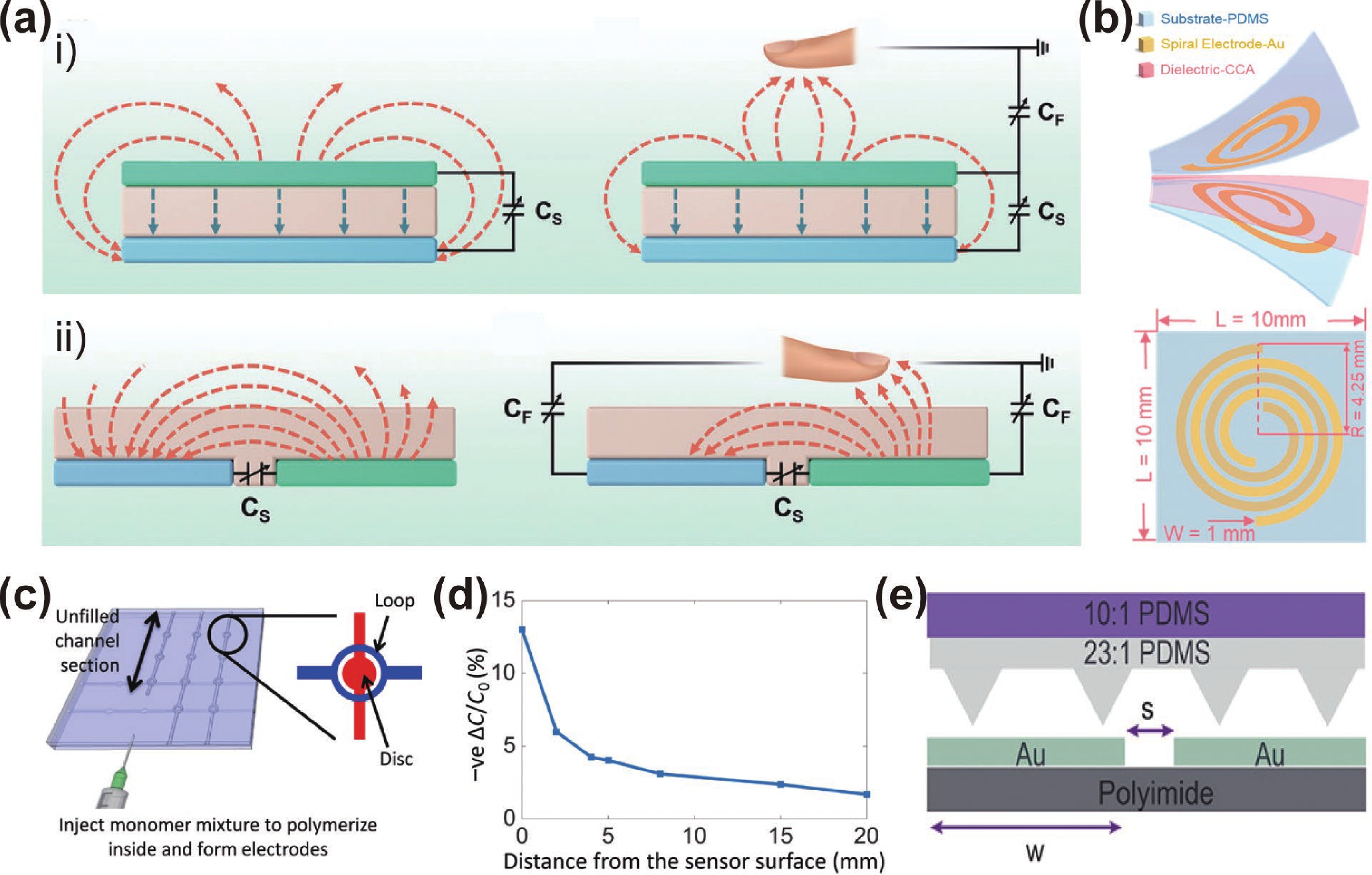
Fig. 1.  (Color online) (a) Typical structures of capacitive proximity sensors: (i) parallel plate configuration and (ii) coplanar electrode design[22]. (b) Schematic illustration of the flexible proximity and pressure dual-mode sensor (PPDS) and top view of the Archimedean spiral electrode design. “L” represents the peripheral dimension of the device, “W” is the electrode width, and “R” denotes the starting spiral radius[31]. (c) Monomer mixture injected into microchannels and polymerized in situ to form capacitive sensors and arrays featuring a ring-disk electrode structure[24]. (d) Capacitance variation as a function of the distance between a hovering finger and the sensor’s top surface[24]. (e) Schematic illustration of a multifunctional capacitive pressure sensor employing coplanar interdigital electrodes.[32]

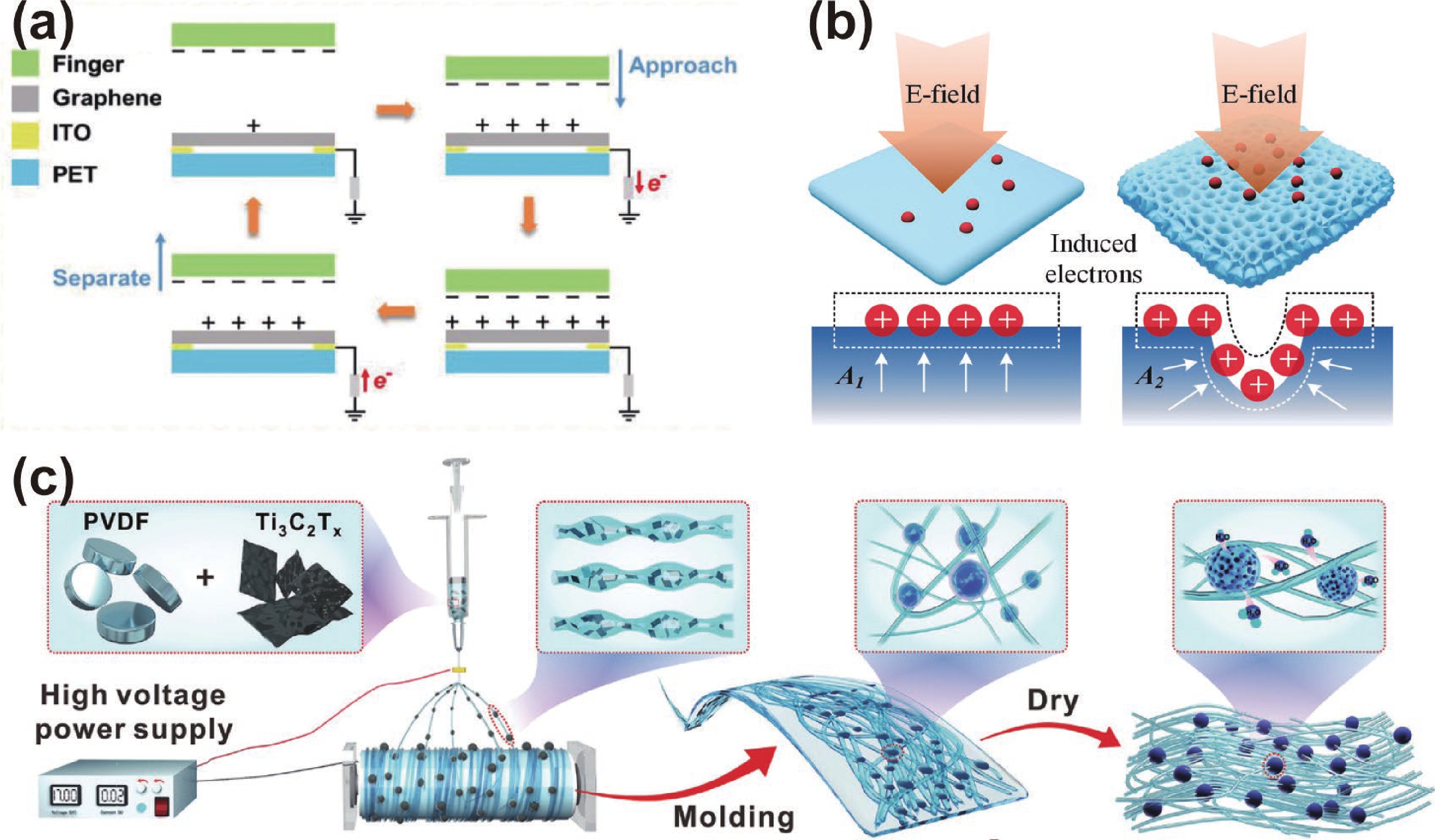
Fig. 2.  (Color online) (a) Working mechanism of flexible triboelectric proximity sensors.[33] (b) Schematic diagram of charge accumulation mechanisms on flat and rough surfaces under external electric fields[41]. (c) Schematic representation of PVDF@Ti3C2Tx film fabrication via electrospinning[42].

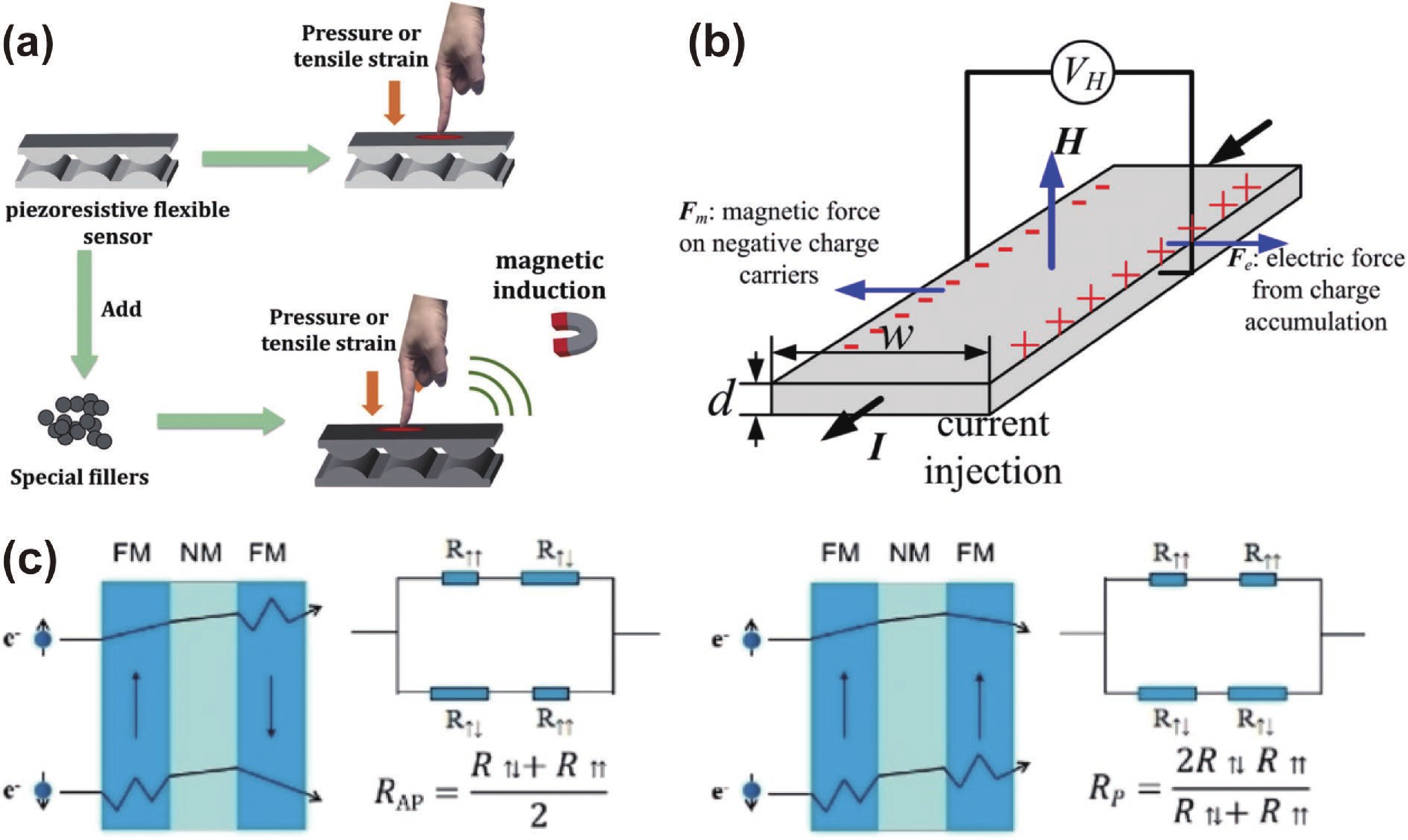
Fig. 3.  (Color online) (a) Integration of magnetically sensitive materials enabling proximity detection capability in flexible piezoresistive sensors[49]. (b) Operating principle of the Hall effect[46]. (c) Working mechanism of the GMR effect[47].

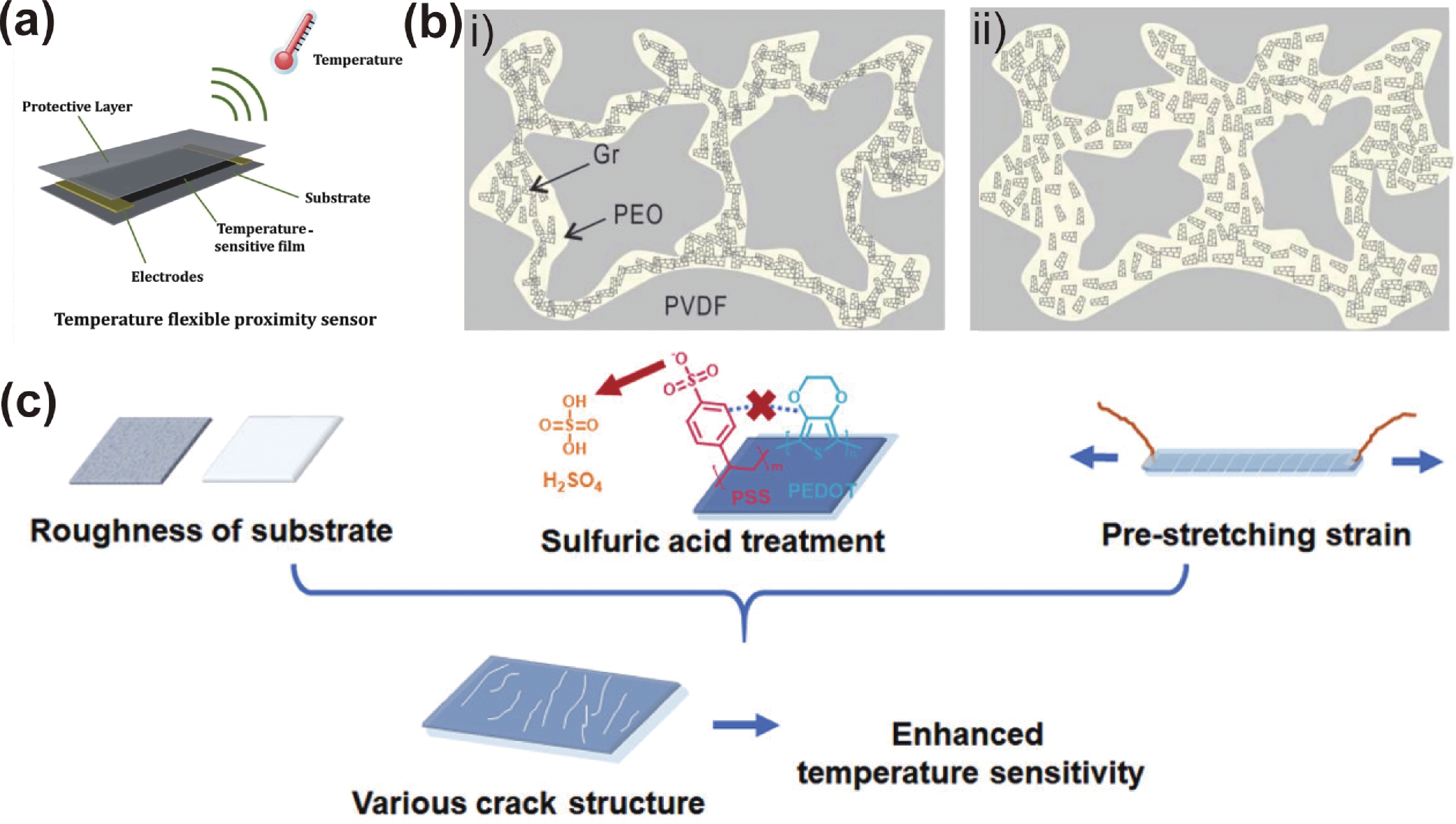
Fig. 4.  (Color online) (a) Structure configuration of a temperature-sensitive proximity sensor[49]. (b) Evolution of conductive networks during thermal cycling: (i) at room temperature and (ii) at melting temperature[52]. (c) Conceptual design of PEDOT:PSS–PDMS temperature sensors[53].

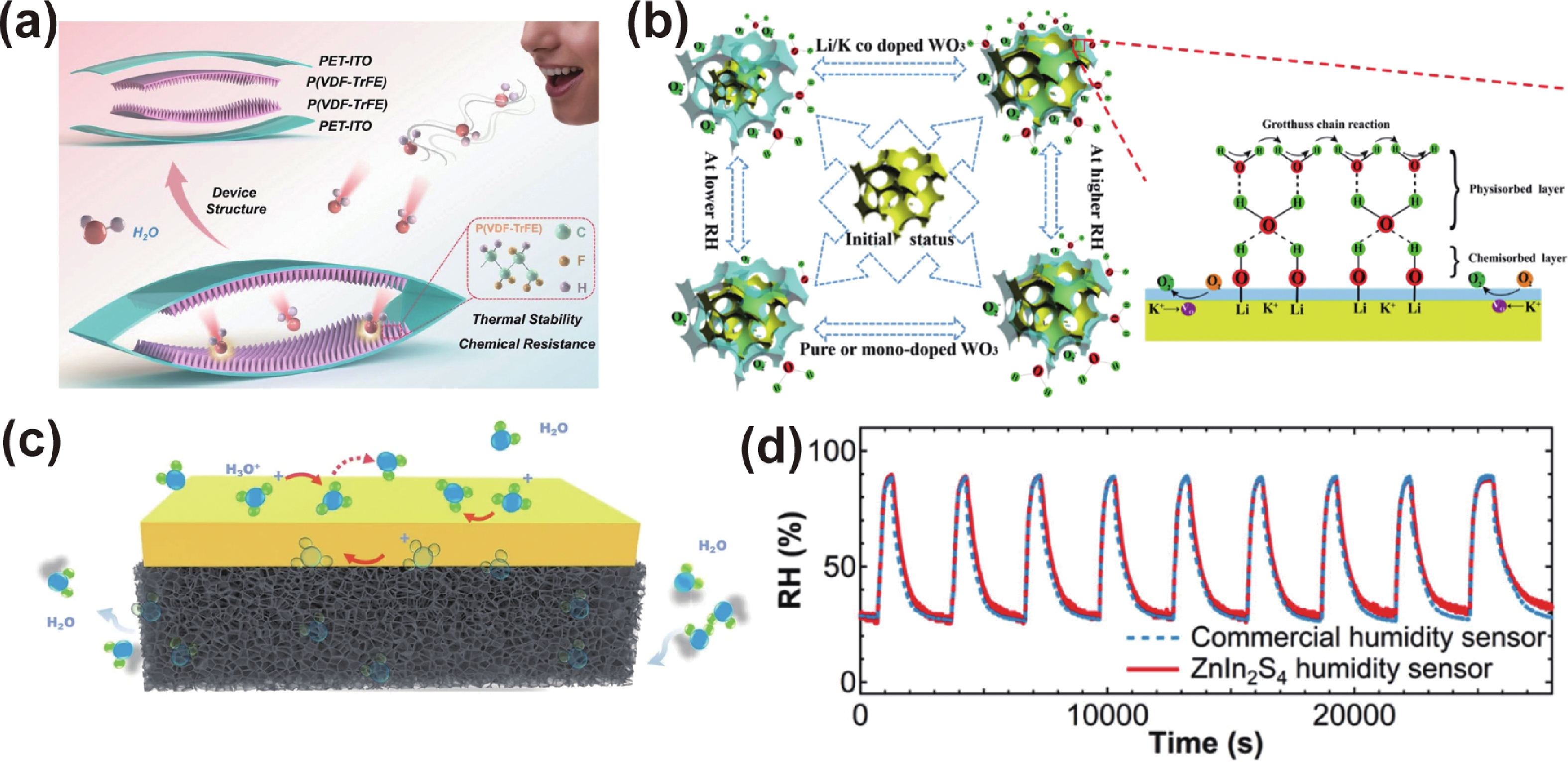
Fig. 5.  (Color online) (a) Schematic illustration of a humidity-sensitive proximity sensor[61]. (b) Humidity-sensing mechanism of 3D ordered macroporous materials[59]. (c) ZnIn2S4 humidity sensor based on LIG porous substrates. (d) Long-term cyclic humidity measurements comparing a commercial sensor with the proposed sensor under varying humidity conditions (30–90%)[60].

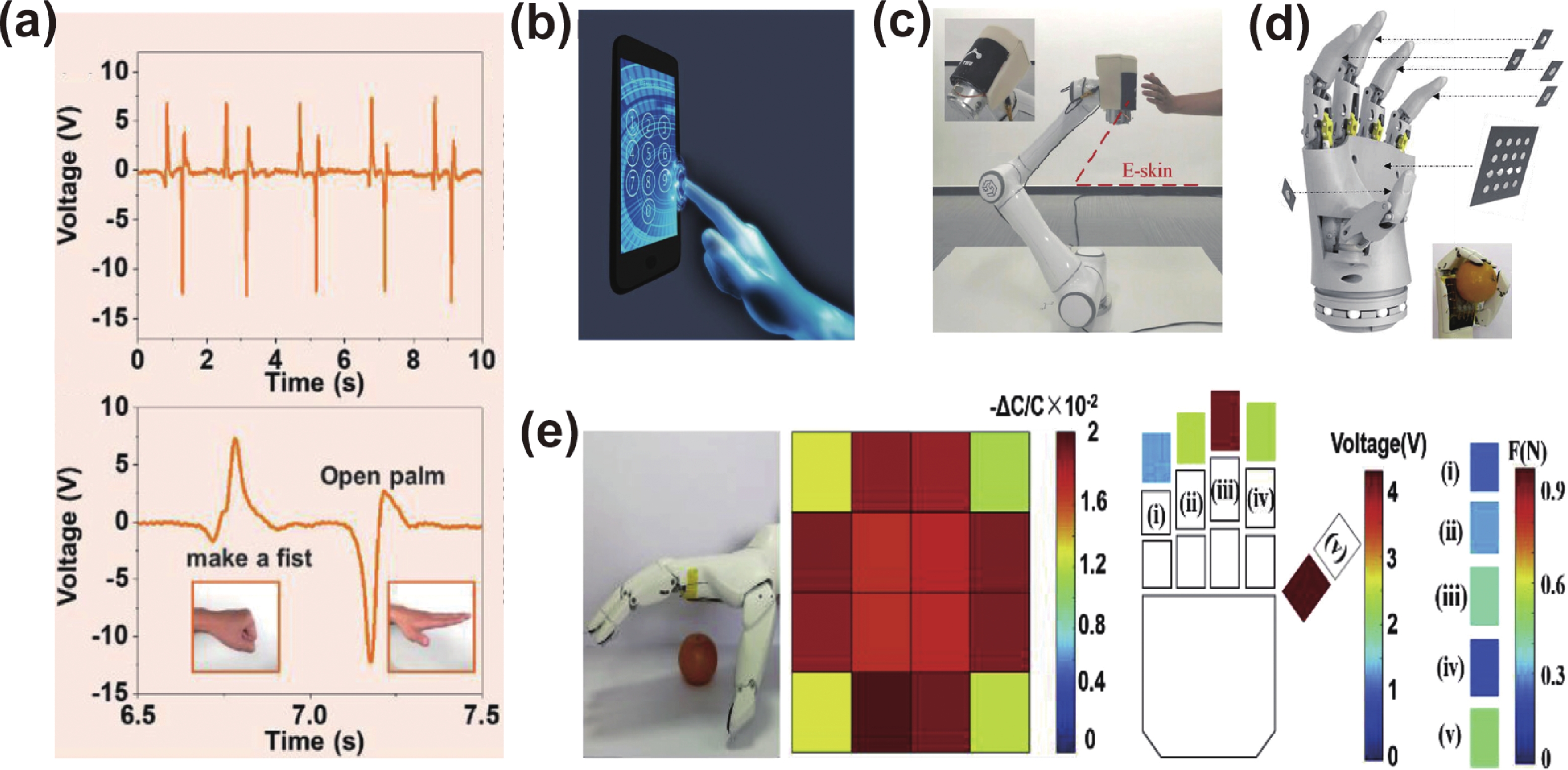
Fig. 6.  (Color online) (a) Output voltage signals recorded from a touch-free sensor unit in response to various gesture movements. (b) Schematic of a triboelectric touch-free screen sensor integrated into a smartphone for non-contact operation[33]. (c) Application of e-skin on a multi-degree-of-freedom robotic arm to avoid obstacles[62]. (d) Integration of the sensors into a bionic hand. (e) Capacitance outputs from a sensor array on the palm region during gentle grasping of an orange; the corresponding forces on each fingertip measured simultaneously are shown on the right[63].

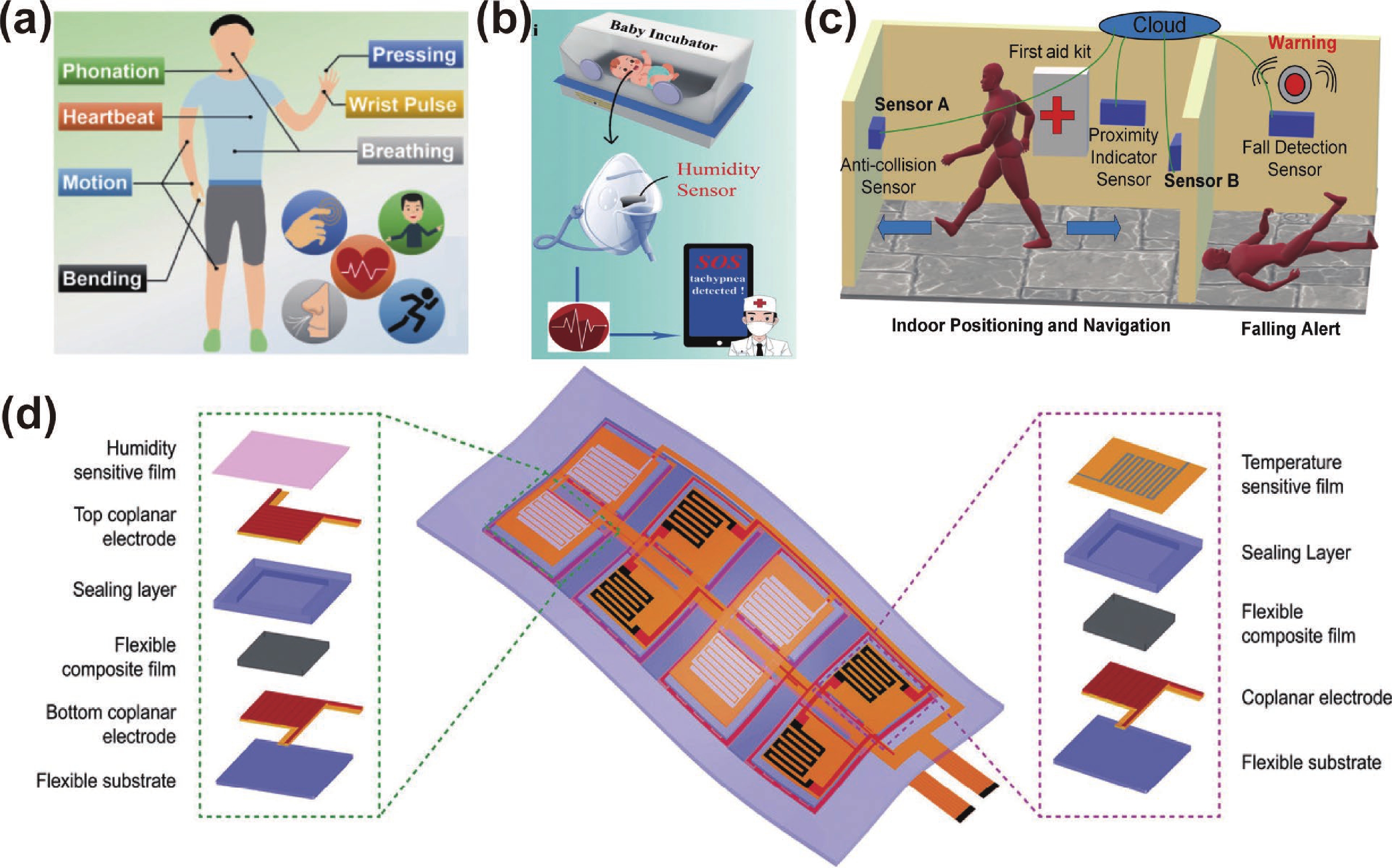
Fig. 7.  (Color online) (a) Physiological signal monitoring application[65]. (b) Asthma detection and alarm system[66]. (c) Collision avoidance system, fall detector, and indoor positioning solution designed for the blind and elderly using non-contact triboelectric sensing technology[64]. (d) Multifunctional e‐skin capable of sensing proximity distance, contact pressure, temperature, and relative humidity[11].

[1]
Kim J O, Kwon S Y, Kim Y, et al. Highly ordered 3D microstructure-based electronic skin capable of differentiating pressure, temperature, and proximity. ACS Appl Mater Interfaces, 2019, 11(1): 1503 doi: 10.1021/acsami.8b19214
[2]
Hua Q L, Sun J L, Liu H T, et al. Skin-inspired highly stretchable and conformable matrix networks for multifunctional sensing. Nat Commun, 2018, 9: 244 doi: 10.1038/s41467-017-02685-9
[3]
Dong K, Peng X, An J, et al. Shape adaptable and highly resilient 3D braided triboelectric nanogenerators as e-textiles for power and sensing. Nat Commun, 2020, 11: 2868 doi: 10.1038/s41467-020-16642-6
[4]
Xiang S X, Liu D J, Jiang C C, et al. Liquid-metal-based dynamic thermoregulating and self-powered electronic skin. Adv Funct Mater, 2021, 31(26): 2100940 doi: 10.1002/adfm.202100940
[5]
Gong S, Wang Y, Yap L W, et al. A location- and sharpness-specific tactile electronic skin based on staircase-like nanowire patches. Nanoscale Horiz, 2018, 3(6): 640 doi: 10.1039/C8NH00125A
[6]
Wang J Y, Wang Z D, Wang Q S, et al. Passive electronic skin with highly sensitive tactile sensory capabilities. ACS Appl Electron Mater, 2021, 3(10): 4517 doi: 10.1021/acsaelm.1c00648
[7]
Yang C, Ma X H, Zhou X Y, et al. Ultrastretchable transparent electrodes of liquid metal serpentine micromeshes. ACS Materials Lett, 2024, 6(7): 3124 doi: 10.1021/acsmaterialslett.4c00385
[8]
Yang J C, Mun J, Kwon S Y, et al. Electronic skin: Recent progress and future prospects for skin-attachable devices for health monitoring, robotics, and prosthetics. Adv Mater, 2019, 31(48): 1904765 doi: 10.1002/adma.201904765
[9]
Wu B W, Jiang T, Yu Z X, et al. Proximity sensing electronic skin: Principles, characteristics, and applications (adv. sci. 13/2024). Adv Sci, 2024, 11(13): 2470075 doi: 10.1002/advs.202470075
[10]
Niu H S, Li H, Zhang Q C, et al. Intuition-and-tactile bimodal sensing based on artificial-intelligence-motivated all-fabric bionic electronic skin for intelligent material perception. Small, 2024, 20(14): 2308127 doi: 10.1002/smll.202308127
[11]
Ge C Y, An X Y, He X X, et al. Integrated multifunctional electronic skins with low-coupling for complicated and accurate human–robot collaboration. Adv Sci, 2023, 10(20): 2301341 doi: 10.1002/advs.202301341
[12]
Chen A B, Lu S T, Jiao J, et al. Highly flexible and sensitive proximity sensor based on liquid metal microfluidic fibers. 2024 IEEE International Conference on Robotics and Biomimetics (ROBIO). Bangkok, Thailand. IEEE, 2025: 1066
[13]
Chen Z H, Luo R C. Design and implementation of capacitive proximity sensor using microelectromechanical systems technology. IEEE Trans Ind Electron, 1998, 45(6): 886 doi: 10.1109/41.735332
[14]
Zhang B, Xiang Z M, Zhu S W, et al. Dual functional transparent film for proximity and pressure sensing. Nano Res, 2014, 7(10): 1488 doi: 10.1007/s12274-014-0510-3
[15]
Victores J G, Martínez S, Jardón A, et al. Robot-aided tunnel inspection and maintenance system by vision and proximity sensor integration. Autom Constr, 2011, 20(5): 629 doi: 10.1016/j.autcon.2010.12.005
[16]
Qiu S H, Huang Y, He X Y, et al. A dual-mode proximity sensor with integrated capacitive and temperature sensing units. Meas Sci Technol, 2015, 26(10): 105101 doi: 10.1088/0957-0233/26/10/105101
[17]
Chen Y, Sun Y L, Wei Y Y, et al. How far for the electronic skin: From multifunctional material to advanced applications. Adv Mater Technol, 2023, 8(8): 2201352 doi: 10.1002/admt.202201352
[18]
Chou H H, Nguyen A, Chortos A, et al. A chameleon-inspired stretchable electronic skin with interactive colour changing controlled by tactile sensing. Nat Commun, 2015, 6: 8011 doi: 10.1038/ncomms9011
[19]
Zhou Y, Dai D F, Gao Y, et al. Recent advances in graphene electronic skin and its future prospects. ChemNanoMat, 2021, 7(9): 982 doi: 10.1002/cnma.202100198
[20]
Dąbrowska A K, Rotaru G M, Derler S, et al. Materials used to simulate physical properties of human skin. Skin Res Technol, 2016, 22(1): 3 doi: 10.1111/srt.12235
[21]
Zhao P F, Zhang R M, Tong Y H, et al. Strain-discriminable pressure/proximity sensing of transparent stretchable electronic skin based on PEDOT: PSS/SWCNT electrodes. ACS Appl Mater Interfaces, 2020, 12(49): 55083 doi: 10.1021/acsami.0c16546
[22]
Niu H S, Li H, Li N, et al. Fringing-effect-based capacitive proximity sensors. Adv Funct Mater, 2024, 34(51): 2409820 doi: 10.1002/adfm.202409820
[23]
Ye X R, Shi B H, Li M, et al. All-textile sensors for boxing punch force and velocity detection. Nano Energy, 2022, 97: 107114 doi: 10.1016/j.nanoen.2022.107114
[24]
Sarwar M S, Dobashi Y, Preston C, et al. Bend, stretch, and touch: Locating a finger on an actively deformed transparent sensor array. Sci Adv, 2017, 3(3): e1602200 doi: 10.1126/sciadv.1602200
[25]
Lee H K, Chang S I, Yoon E. Dual-mode capacitive proximity sensor for robot application: Implementation of tactile and proximity sensing capability on a single polymer platform using shared electrodes. IEEE Sens J, 2009, 9(12): 1748 doi: 10.1109/JSEN.2009.2030660
[26]
Liu J Y, Tong Y H, Xian D, et al. Handwriting character recognition based on conductor/insulator-identifiable E-tattoo proximity sensors for blinds. Adv Funct Mater, 2024, 34(1): 2306704 doi: 10.1002/adfm.202306704
[27]
Ye X R, Tian M W, Li M, et al. All-fabric-based flexible capacitive sensors with pressure detection and non-contact instruction capability. Coatings, 2022, 12(3): 302. doi: 10.3390/coatings12030302
[28]
Nguyen T D, Kim T, Han H, et al. Characterization and optimization of flexible dual mode sensor based on Carbon Micro Coils. Mater Res Express, 2018, 5(1): 015604 doi: 10.1088/2053-1591/aaa503
[29]
Moheimani R, Aliahmad N, Aliheidari N, et al. Thermoplastic polyurethane flexible capacitive proximity sensor reinforced by CNTs for applications in the creative industries. Sci Rep, 2021, 11: 1104 doi: 10.1038/s41598-020-80071-0
[30]
Igreja R, Dias C J. Analytical evaluation of the interdigital electrodes capacitance for a multi-layered structure. Sens Actuat A Phys, 2004, 112(2/3): 291 doi: 10.1016/j.sna.2004.01.040
[31]
Huang J R, Wang H T, Li J A, et al. High-performance flexible capacitive proximity and pressure sensors with spiral electrodes for continuous human–machine interaction. ACS Mater Lett, 2022, 4(11): 2261 doi: 10.1021/acsmaterialslett.2c00860
[32]
Ruth S R A, Feig V R, Kim M G, et al. Flexible fringe effect capacitive sensors with simultaneous high-performance contact and non-contact sensing capabilities. Small Struct, 2021, 2(2): 2000079 doi: 10.1002/sstr.202000079
[33]
Tang Y J, Zhou H, Sun X P, et al. Triboelectric touch-free screen sensor for noncontact gesture recognizing. Adv Funct Mater, 2020, 30(5): 1907893 doi: 10.1002/adfm.201907893
[34]
Ma J M, Zhu J Q, Ma P, et al. Fish bladder film-based triboelectric nanogenerator for noncontact position monitoring. ACS Energy Lett, 2020, 5(9): 3005 doi: 10.1021/acsenergylett.0c01062
[35]
Fan F R, Tang W, Wang Z L. Flexible nanogenerators for energy harvesting and self-powered electronics. Adv Mater, 2016, 28(22): 4283 doi: 10.1002/adma.201504299
[36]
Pan S H, Zhang Z N. Fundamental theories and basic principles of triboelectric effect: A review. Friction, 2019, 7(1): 2 doi: 10.1007/s40544-018-0217-7
[37]
Chen Q, Shang H F, Cheng B X, et al. Quantifying triboelectric series of polymers based on the measurement of triboelectrification with NaCl solution. Chem Eng J, 2024, 488: 150871 doi: 10.1016/j.cej.2024.150871
[38]
Wang Z L. From contact electrification to triboelectric nanogenerators. Rep Prog Phys, 2021, 84(9): 096502 doi: 10.1088/1361-6633/ac0a50
[39]
Lu P, Liao X F, Guo X Y, et al. Gel-based triboelectric nanogenerators for flexible sensing: Principles, properties, and applications. Nano Micro Lett, 2024, 16(1): 206 doi: 10.1007/s40820-024-01432-2
[40]
Li Y H, Li G Z, Zhang P L, et al. Contribution of ferromagnetic medium to the output of triboelectric nanogenerators derived from Maxwell’s equations. Adv Energy Mater, 2021, 11(21): 2003921 doi: 10.1002/aenm.202003921
[41]
Chen S C, Wang Y F, Yang L, et al. Flexible and transparent sensors with hierarchically micro-nano texture for touchless sensing and controlling. Nano Energy, 2021, 82: 105719 doi: 10.1016/j.nanoen.2020.105719
[42]
Zhang W L, Lu Y X, Liu T, et al. Spheres multiple physical network-based triboelectric materials for self-powered contactless sensing. Small, 2022, 18(25): 2200577 doi: 10.1002/smll.202200577
[43]
Özer B, Pişkin H, Akdoğan N. Shapeable planar hall sensor with a stable sensitivity under concave and convex bending. IEEE Sens J, 2019, 19(14): 5493 doi: 10.1109/JSEN.2019.2907616
[44]
Cañón Bermúdez G S, Karnaushenko D D, Karnaushenko D, et al. Magnetosensitive e-skins with directional perception for augmented reality. Sci Adv, 2018, 4: eaao2623 doi: 10.1126/sciadv.aao2623
[45]
Kondo M, Melzer M, Karnaushenko D, et al. Imperceptible magnetic sensor matrix system integrated with organic driver and amplifier circuits. Sci Adv, 2020, 6(4): eaay6094 doi: 10.1126/sciadv.aay6094
[46]
Khan M A, Sun J, Li B D, et al. Magnetic sensors-a review and recent technologies. Eng Res Express, 2021, 3(2): 022005 doi: 10.1088/2631-8695/ac0838
[47]
Zhu Y N, Jiang Q L, Zhang J, et al. Recent progress of organic semiconductor materials in spintronics. Chem, 2023, 18(3): e202201125
[48]
Zhang W G, Guo Q H, Duan Y, et al. Touchless sensing interface based on the magneto-piezoresistive effect of magnetic microstructures with stacked conductive coating. ACS Appl Mater Interfaces, 2021, 13(51): 61422 doi: 10.1021/acsami.1c19137
[49]
Huang L S, Wang S, Zhang K, et al. Research progress of multifunctional flexible proximity sensors. Sens Actuat A Phys, 2023, 360: 114500 doi: 10.1016/j.sna.2023.114500
[50]
Tao R, Hasan S A, Wang H Z, et al. Bimorph material/structure designs for high sensitivity flexible surface acoustic wave temperature sensors. Sci Rep, 2018, 8: 9052 doi: 10.1038/s41598-018-27324-1
[51]
Su Y, Ma C S, Chen J, et al. Printable, highly sensitive flexible temperature sensors for human body temperature monitoring: A review. Nanoscale Res Lett, 2020, 15(1): 200 doi: 10.1186/s11671-020-03428-4
[52]
Huang Y, Zeng X, Wang W D, et al. High-resolution flexible temperature sensor based graphite-filled polyethylene oxide and polyvinylidene fluoride composites for body temperature monitoring. Sens Actuat A Phys, 2018, 278: 1 doi: 10.1016/j.sna.2018.05.024
[53]
Yu Y Y, Peng S H, Blanloeuil P, et al. Wearable temperature sensors with enhanced sensitivity by engineering microcrack morphology in PEDOT: PSS–PDMS sensors. ACS Appl Mater Interfaces, 2020, 12(32): 36578 doi: 10.1021/acsami.0c07649
[54]
Ding H J, Wei Y M, Wu Z X, et al. Recent advances in gas and humidity sensors based on 3D structured and porous graphene and its derivatives. ACS Materials Lett, 2020, 2(11): 1381 doi: 10.1021/acsmaterialslett.0c00355
[55]
Feng J, Peng L L, Wu C Z, et al. Giant moisture responsiveness of VS2 ultrathin nanosheets for novel touchless positioning interface. Adv Mater, 2012, 24(15): 1969 doi: 10.1002/adma.201104681
[56]
Xie T H, Abdul Rahman A F, Abu Bakar A, et al. Design and optimization of metal oxide-based humidity sensors: A review on mechanisms and material engineering. J Clust Sci, 2025, 36(4): 148 doi: 10.1007/s10876-025-02869-0
[57]
Wang Y M, Liu A P, Han Y Q, et al. Sensors based on conductive polymers and their composites: A review. Polym Int, 2020, 69(1): 7 doi: 10.1002/pi.5907
[58]
Dai J X, Zhao H R, Lin X Z, et al. Humidity sensors based on 3D porous polyelectrolytes via breath figure method. Adv Electron Mater, 2020, 6(1): 1900846 doi: 10.1002/aelm.201900846
[59]
Wang Z H, Fan X X, Li C J, et al. Humidity-sensing performance of 3DOM WO3 with controllable structural modification. ACS Appl Mater Interfaces, 2018, 10(4): 3776 doi: 10.1021/acsami.7b17048
[60]
Lu Y Y, Xu K C, Zhang L S, et al. Multimodal plant healthcare flexible sensor system. ACS Nano, 2020, 14(9): 10966 doi: 10.1021/acsnano.0c03757
[61]
Niu H S, Yue W J, Li Y, et al. Ultrafast-response/recovery capacitive humidity sensor based on arc-shaped hollow structure with nanocone arrays for human physiological signals monitoring. Sens Actuat B Chem, 2021, 334: 129637 doi: 10.1016/j.snb.2021.129637
[62]
Li G Z, Liu S Q, Mao Q, et al. Multifunctional electronic skins enable robots to safely and dexterously interact with human. Adv Sci, 2022, 9(11): 2104969 doi: 10.1002/advs.202104969
[63]
Zhang C, Liu S Y, Huang X, et al. A stretchable dual-mode sensor array for multifunctional robotic electronic skin. Nano Energy, 2019, 62: 164 doi: 10.1016/j.nanoen.2019.05.046
[64]
Anaya D V, Zhan K, Tao L, et al. Contactless tracking of humans using non-contact triboelectric sensing technology: Enabling new assistive applications for the elderly and the visually impaired. Nano Energy, 2021, 90: 106486 doi: 10.1016/j.nanoen.2021.106486
[65]
Guo Y J, Gao S, Yue W J, et al. Anodized aluminum oxide-assisted low-cost flexible capacitive pressure sensors based on double-sided nanopillars by a facile fabrication method. ACS Appl Mater Interfaces, 2019, 11(51): 48594 doi: 10.1021/acsami.9b17966
[66]
Lu L J, Jiang C P, Hu G S, et al. Flexible noncontact sensing for human–machine interaction. Adv Mater, 2021, 33(16): 2100218 doi: 10.1002/adma.202100218
  • Search

    Advanced Search >>

    GET CITATION

    shu

    Export: BibTex EndNote

    Article Metrics

    Article views: 9 Times PDF downloads: 0 Times Cited by: 0 Times

    History

    Received: 12 March 2026 Revised: 21 April 2026 Online: Accepted Manuscript: 18 May 2026

    Catalog

      Email This Article

      User name:
      Email:*请输入正确邮箱
      Code:*验证码错误
      Wenqiang He, Cheng Yang, Desheng Kong. Recent progress of flexible tactile electronic skins incorporating proximity sensing capabilities[J]. Journal of Semiconductors, 2026, In Press. doi: 10.1088/1674-4926/26030022 ****W Q He, C Yang, and D S Kong, Recent progress of flexible tactile electronic skins incorporating proximity sensing capabilities[J]. J. Semicond., 2026, accepted doi: 10.1088/1674-4926/26030022
      Citation:
      Wenqiang He, Cheng Yang, Desheng Kong. Recent progress of flexible tactile electronic skins incorporating proximity sensing capabilities[J]. Journal of Semiconductors, 2026, In Press. doi: 10.1088/1674-4926/26030022 ****
      W Q He, C Yang, and D S Kong, Recent progress of flexible tactile electronic skins incorporating proximity sensing capabilities[J]. J. Semicond., 2026, accepted doi: 10.1088/1674-4926/26030022

      Recent progress of flexible tactile electronic skins incorporating proximity sensing capabilities

      DOI: 10.1088/1674-4926/26030022
      CSTR: 32376.14.1674-4926.26030022
      More Information
      • Wenqiang He got his B.S. from Jiangsu University in 2021. Now he is an MS student at Nanjing University under the supervision of Prof. Desheng Kong. His research focuses on flexible pressure sensors
      • Cheng Yang got her B.S. from Shijiazhuang Tiedao University in 2019. Now she is a PHD student at Nanjing University under the supervision of Prof. Desheng Kong. Her research focuses on wearable functional materials and devices
      • Dr. Desheng Kong is a Professor at the College of Engineering and Applied Sciences at Nanjing University. He also serves as an Associate Editor for npj Flexible Electronics. He earned his B.S. in Physics from Peking University and holds a Ph.D. in Materials Science and Engineering from Stanford University. Following his graduate studies, he undertook postdoctoral research in the Department of Chemical Engineering at Stanford University. Dr. Kong's current research is centered on the development of advanced materials, novel device designs, and integration strategies for stretchable electronic systems
      • Corresponding author: dskong@nju.edu.cn
      • Received Date: 2026-03-12
      • Revised Date: 2026-04-21
      • Available Online: 2026-05-18

      Catalog

        /

        DownLoad:  Full-Size Img  PowerPoint
        Return
        Return