


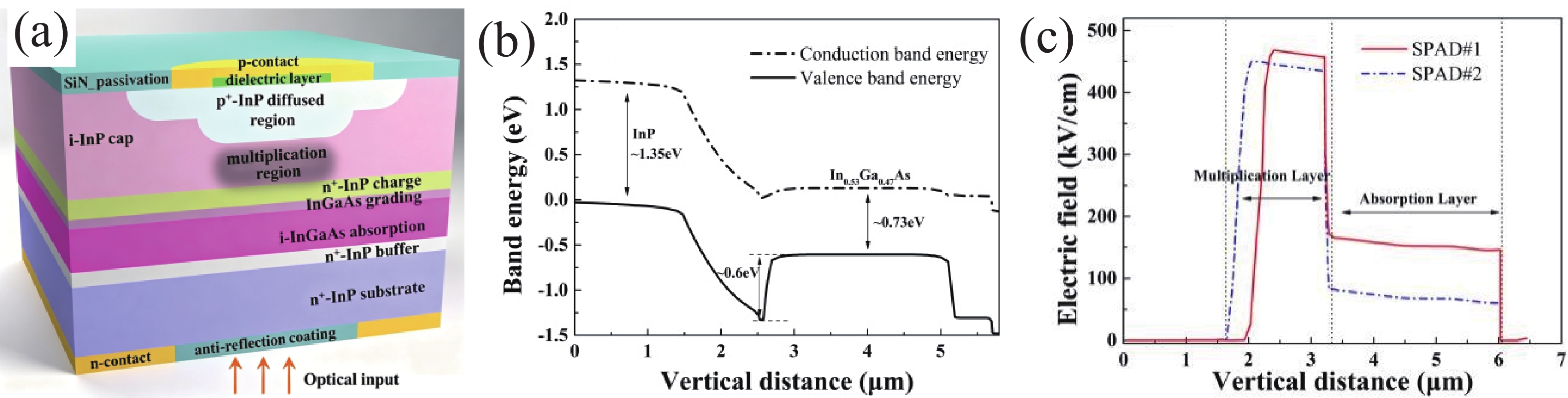
Fig. 1.
(Color online) (a) Device structure of the InGaAs/InP SPAD. (b) Simulated energy band structure and (c) longitudinal electric field intensity distribution along the active area center under breakdown voltage.
ARTICLES
Dajian Cui1, 2, 3, 4, , Wei Chen2, 3, 4, Yong Lei3, 4, Qixia Tong3, 4, Jianglin Zhao3, 4, Xuefeng Yan3, 4, Yinlin Yan3, 4, Li Ren3, 4 and Chunhui Wang1
Corresponding author: Dajian Cui, cuidj@cetccq.com.cn
Abstract: InGaAs/InP single photon diodes (SPADs) are widely used in quantum communication systems. The dark count rate (DCR), which describes the noise level, is one of the most important parameters of SPAD performance. Here, we demonstrate the technology computer-aided design and experimental test of low DCR InGaAs/InP SPAD to be applicable to the fiber quantum key distribution system under high-frequency gating. In order to achieve a lower DCR at higher operating temperature, the device structure is optimized by increasing the doping concentration of the charge layer and expanding the width of the multiplier layer. At the same time, the charge persistence effect is limited by optimizing the double Zn diffusion process. The results show that our InGaAs/InP SPAD can achieve an extremely low DCR of 0.1 kcps, 30% photon detection efficiency and 4.7% afterpluse probability at an operating frequency of 1.25 GHz, an operation temperature of 213 K and an excess bias voltage of 4.6 V.
Keywords: InGaAs/InP, single-photon avalanche diode (SPAD), dark count rate (DCR), detection efficiency, quantum key distribution (QKD), quantum communications
| [1] |
Hadfield R H. Single-photon detectors for optical quantum information applications. Nat Photonics, 2009, 3(12): 696 doi: 10.1038/nphoton.2009.230
|
| [2] |
Eisaman M D, Fan J, Migdall A, et al. Invited review article: Single-photon sources and detectors. Rev Sci Instrum, 2011, 82(7): 071101 doi: 10.1063/1.3610677
|
| [3] |
Acerbi F, Anti M, Tosi A, et al. Design criteria for InGaAs/InP single-photon avalanche diode. IEEE Photonics J, 2013, 5(2): 6800209 doi: 10.1109/JPHOT.2013.2258664
|
| [4] |
Zhang J, Itzler M A, Zbinden H, et al. Advances in InGaAs/InP single-photon detector systems for quantum communication. Light Sci Appl, 2015, 4(5): e286 doi: 10.1038/lsa.2015.59
|
| [5] |
Boroson D M, Robinson B S, Murphy D V, et al. Overview and results of the lunar laser communication demonstration. Free Space Laser Commun Atmos Propag XXVI, 2014, 8971: 89710S doi: 10.1117/12.2045508
|
| [6] |
Marsili F, Verma V B, Stern J A, et al. Detecting single infrared photons with 93% system efficiency. Nat Photonics, 2013, 7(3): 210 doi: 10.1038/nphoton.2013.13
|
| [7] |
Shibata H, Shimizu K, Takesue H, et al. Superconducting nanowire single-photon detector with ultralow dark count rate using cold optical filters. Appl Phys Express, 2013, 6(7): 072801 doi: 10.7567/APEX.6.072801
|
| [8] |
Verma V B, Korzh B, Bussières F, et al. High-efficiency WSi superconducting nanowire single-photon detectors operating at 2.5 K. Appl Phys Lett, 2014, 105(12): 122601 doi: 10.1063/1.4896045
|
| [9] |
Shentu G L, Pelc J S, Wang X D, et al. Ultralow noise up-conversion detector and spectrometer for the telecom band. Opt Express, 2013, 21(12): 13986 doi: 10.1364/OE.21.013986
|
| [10] |
Tada A, Namekata N, Inoue S. Saturated detection efficiency of single-photon detector based on an InGaAs/InP single-photon avalanche diode gated with a large-amplitude sinusoidal voltage. Jpn J Appl Phys, 2020, 59(7): 072004 doi: 10.35848/1347-4065/ab9625
|
| [11] |
He T T, Yang X H, Tang Y S, et al. High photon detection efficiency InGaAs/InP single photon avalanche diode at 250 K. J Semicond, 2022, 43(10): 102301 doi: 10.1088/1674-4926/43/10/102301
|
| [12] |
Lunghi T, Barreiro C, Guinnard O, et al. Free-running single-photon detection based on a negative feedback InGaAs APD. J Mod Optic, 2012, 59(17): 1481 doi: 10.1080/09500340.2012.690050
|
| [13] |
Xu Q, Yu C, Chen W, et al. Compact free-running InGaAs/InP single-photon detector with 40% detection efficiency and 2.3 kcps dark count rate. IEEE J Sel Top Quantum Electron, 2024, 30: 6400107 doi: 10.1109/jstqe.2023.3328870
|
| [14] |
Restelli A, Bienfang J C, Migdall A L. Single-photon detection efficiency up to 50% at 1310 nm with an InGaAs/InP avalanche diode gated at 1.25 GHz. Appl Phys Lett, 2013, 102(14): 141104 doi: 10.1063/1.4801939
|
| [15] |
Gisin N, Thew R. Quantum communication. Nat Photonics, 2007, 1(3): 165 doi: 10.1038/nphoton.2007.22
|
| [16] |
Stoker J, Abdullah Q, Nayegandhi A, et al. Evaluation of single photon and geiger mode lidar for the 3D elevation program. Remote Sens, 2016, 8(9): 767 doi: 10.3390/rs8090767
|
| [17] |
Tobin R, Halimi A, McCarthy A, et al. Three-dimensional single-photon imaging through obscurants. Opt Express, 2019, 27(4): 4590 doi: 10.1364/OE.27.004590
|
| [18] |
Yu C, Shangguan M J, Xia H Y, et al. Fully integrated free-running InGaAs/InP single-photon detector for accurate lidar applications. Opt Express, 2017, 25(13): 14611 doi: 10.1364/OE.25.014611
|
| [19] |
Wang L, Liu B, Li Z K, et al. Target recognition and tracking method based on single pixel single photon detection. Semicond Optoelectron, 2023, 44(2): 272 (in Chinese)
|
| [20] |
Mendenhall J A, Candell L M, Hopman P I, et al. Design of an optical photon counting array receiver system for deep-space communications. Proc IEEE, 2007, 95(10): 2059 doi: 10.1109/JPROC.2007.905098
|
| [21] |
Wang C, Wang J Y, Xu Z Y, et al. BER improvement in SPAD-based photon-counting optical communication system by using automatic attenuation control technique. Opt Lett, 2022, 47(8): 1956 doi: 10.1364/OL.454370
|
| [22] |
Donnelly J P, Duerr E K, McIntosh K A, et al. Design considerations for 1.06-μm InGaAsP–InP geiger-mode avalanche photodiodes. IEEE J Quantum Electron, 2006, 42(8): 797 doi: 10.1109/JQE.2006.877300
|
| [23] |
Jiang X D, Itzler M A, Ben-Michael R, et al. Afterpulsing effects in free-running InGaAsP single-photon avalanche diodes. IEEE J Quantum Electron, 2008, 44(1): 3 doi: 10.1109/JQE.2007.906996
|
| [24] |
Calandri N, Sanzaro M, Tosi A, et al. Charge persistence in InGaAs/InP single-photon avalanche diodes. IEEE J Quantum Electron, 2016, 52(3): 4500107 doi: 10.1109/jqe.2016.2526608
|
| [25] |
Lee Y S, Chen K Y, Chien S Y, et al. Characteristics of charge persistence in InGaAs/InP single-photon avalanche diode. IEEE Photonics Technol Lett, 2018, 30(22): 1980 doi: 10.1109/LPT.2018.2874041
|
| [26] |
Ao T H, Zhao J L, Tong Q X, et al. A study of temperature characteristics in In0.53Ga0.47As single photon avalanche diodes detector. Semicond Optoelectron, 2022, 43(4): 765 (in Chinese)
|
| [27] |
Korzh B, Walenta N, Lunghi T, et al. Free-running InGaAs single photon detector with 1 dark count per second at 10% efficiency. Appl Phys Lett, 2014, 104(8): 081108 doi: 10.1063/1.4866582
|
| [28] |
Signorelli F, Telesca F, Conca E, et al. Low-noise InGaAs/InP single-photon avalanche diodes for fiber-based and free-space applications. IEEE J Sel Top Quantum Electron, 2022, 28( 2: Optical Detectors): 3801310 doi: 10.1109/JSTQE.2021.3104962
|
| [29] |
Telesca F, Signorelli F, Tosi A. Double zinc diffusion optimization for charge persistence reduction in InGaAs/InP SPADs. IEEE J Sel Top Quantum Electron, 2024, 30(1: Single-Photon Technologies and Applications): 3801207 doi: 10.1109/jstqe.2023.3332767
|
| [30] |
Fang Y Q, Chen W, Ao T H, et al. InGaAs/InP single-photon detectors with 60% detection efficiency at 1550 nm. Rev Sci Instrum, 2020, 91(8): 083102 doi: 10.1063/5.0014123
|
| [31] |
Jiang W H, Liu J H, Liu Y, et al. 1.25GHz sine wave gating InGaAs/InP single-photon detector with a monolithically integrated readout circuit. Opt Lett, 2017, 42(24): 5090 doi: 10.1364/OL.42.005090
|
| [32] |
Jiang W H, Gao X J, Fang Y Q, et al. Miniaturized high-frequency sine wave gating InGaAs/InP single-photon detector. Rev Sci Instrum, 2018, 89(12): 123104 doi: 10.1063/1.5055376
|
| [33] |
Xu Q, Yu C, Cui D J, et al. Compact and fully functional high-frequency sine wave gating InGaAs/InP single-photon detector module. IEEE J Sel Top Quantum Electron, 2025, 31(5): 3801007 doi: 10.1109/JSTQE.2024.3522205
|
| [34] |
Erfanian A, Rahmanpour M, Khaje M, et al. Reduction of afterpulse and dark count effects on SPAD detectors using processing methods. Results Opt, 2024, 15: 100617 doi: 10.1016/j.rio.2024.100617
|
| [35] |
Zielinski E, Schweizer H, Streubel K, et al. Excitonic transitions and exciton damping processes in InGaAs/InP. J Appl Phys, 1986, 59(6): 2196 doi: 10.1063/1.336358
|
| [36] |
Ben-Michael R, Itzler M A, Nyman B, et al. Afterpulsing in InGaAs/InP single photon avalanche photodetectors. 2006 Digest of the LEOS Summer Topical Meetings, 2006: 15 doi: 10.1109/LEOSST.2006.1694045
|
| [37] |
Jensen K E, Hopman P I, Duerr E K, et al. Predicting afterpulsing in free-running, Geiger-mode avalanche photodiodes at 1.06 μm wavelength. 2006 Conference on Lasers and Electro-Optics and 2006 Quantum Electronics and Laser Science Conference, 2006: 1 doi: 10.1109/CLEO.2006.4627963
|
| [38] |
Fan Y B, Shi T T, Ji W J, et al. Ultra-narrowband interference circuits enable low-noise and high-rate photon counting for InGaAs/InP avalanche photodiodes. Opt Express, 2023, 31(5): 7515 doi: 10.1364/OE.478828
|
| [39] |
Zhang B J, Yin S Z, Liu Y J, et al. High performance InGaAs/InP single-photon avalanche diode using DBR-metal reflector and backside micro-lens. J Lightwave Technol, 2022, 40(12): 3832 doi: 10.1109/JLT.2022.3153455
|
| [40] |
Li B, Niu Y X, Feng Y D, et al. Ultra-low dark count InGaAs/InP single photon avalanche diode. Optoelectron Lett, 2022, 18(11): 647 doi: 10.1007/s11801-022-2036-3
|
| [41] |
Baek S H, Yang S C, Park C Y, et al. Room temperature quantum key distribution characteristics of low-noise InGaAs/InP single-photon avalanche diode. J Korean Phys Soc, 2021, 78(7): 634 doi: 10.1007/s40042-021-00111-4
|
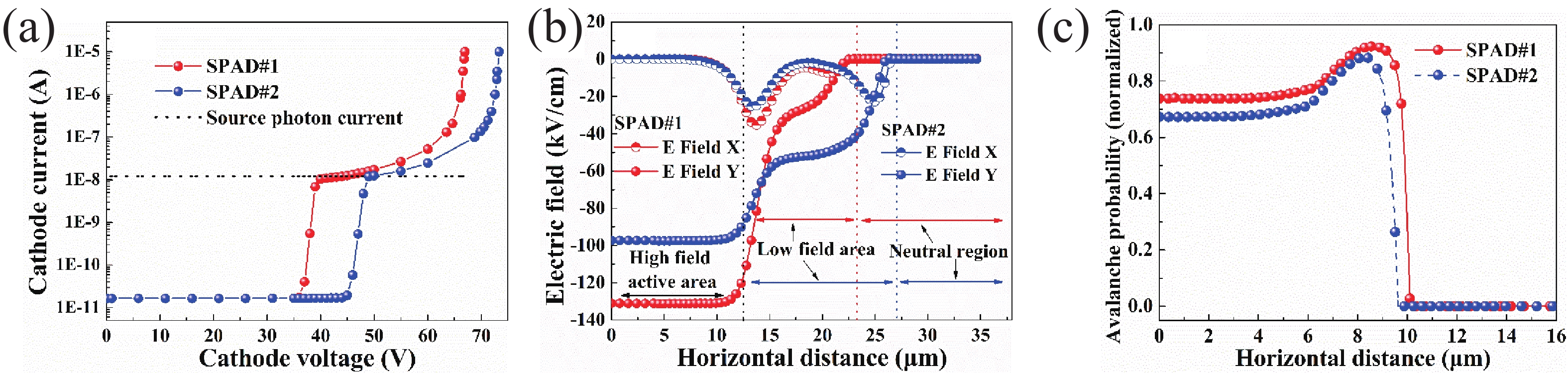
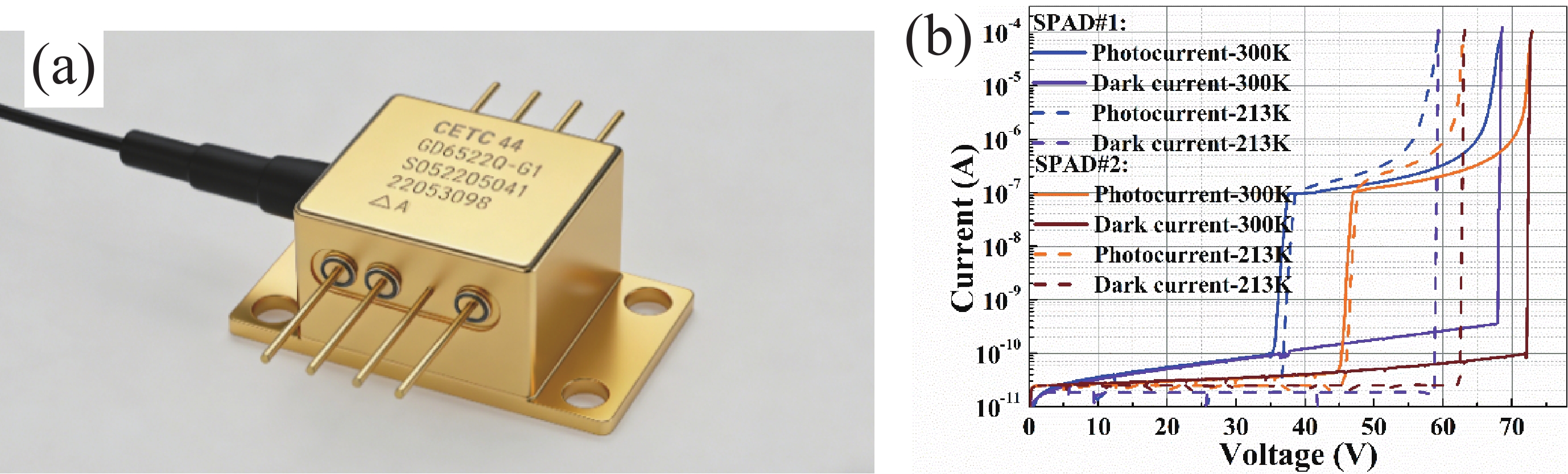
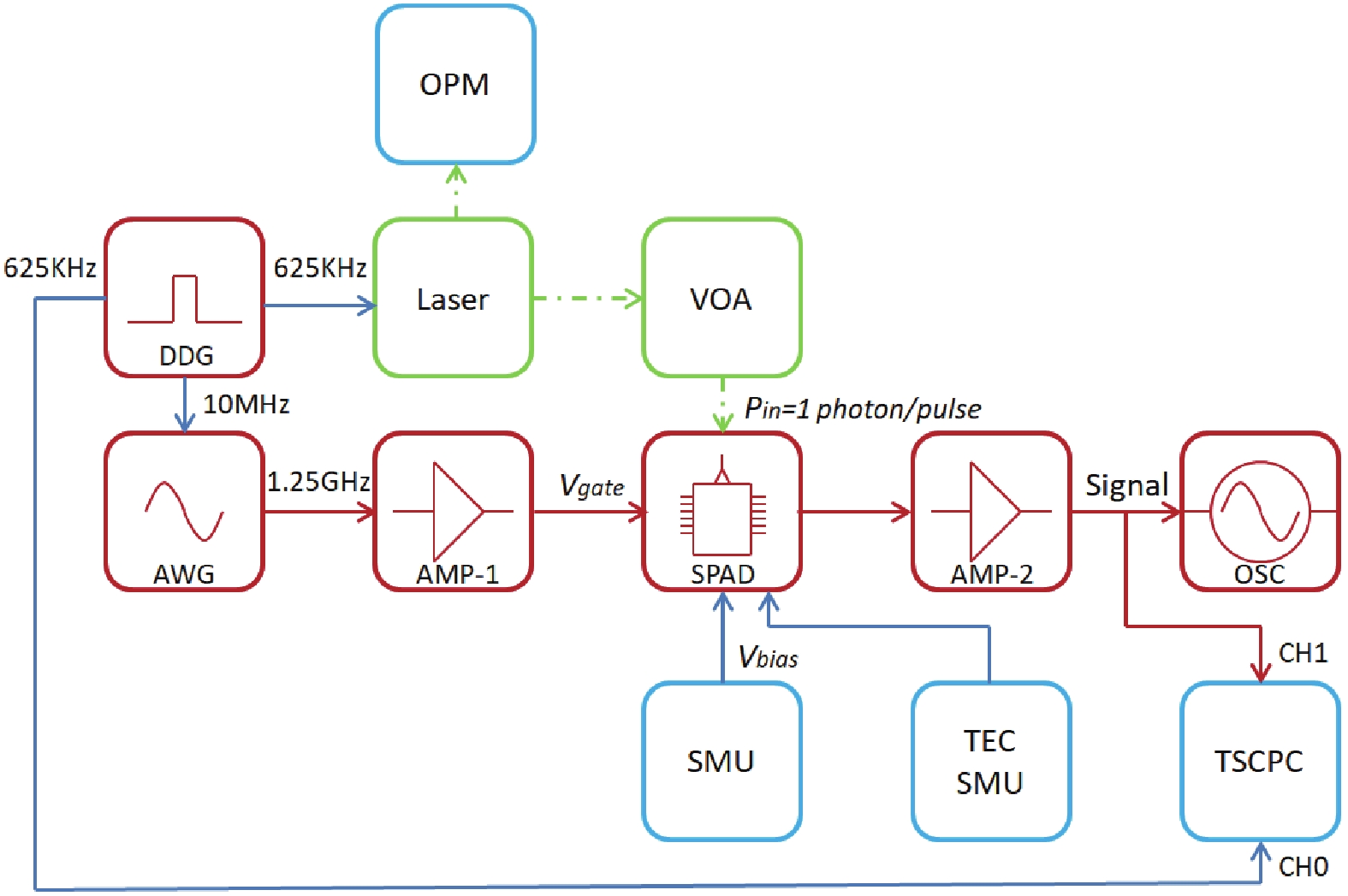
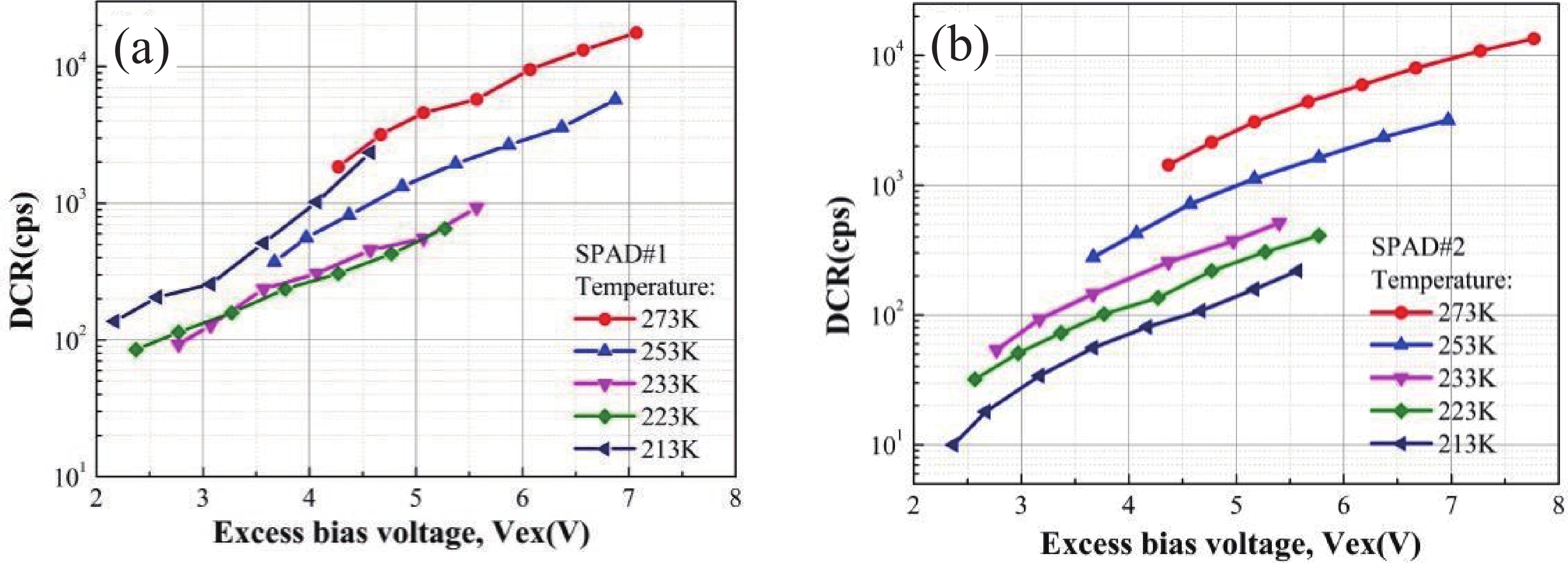
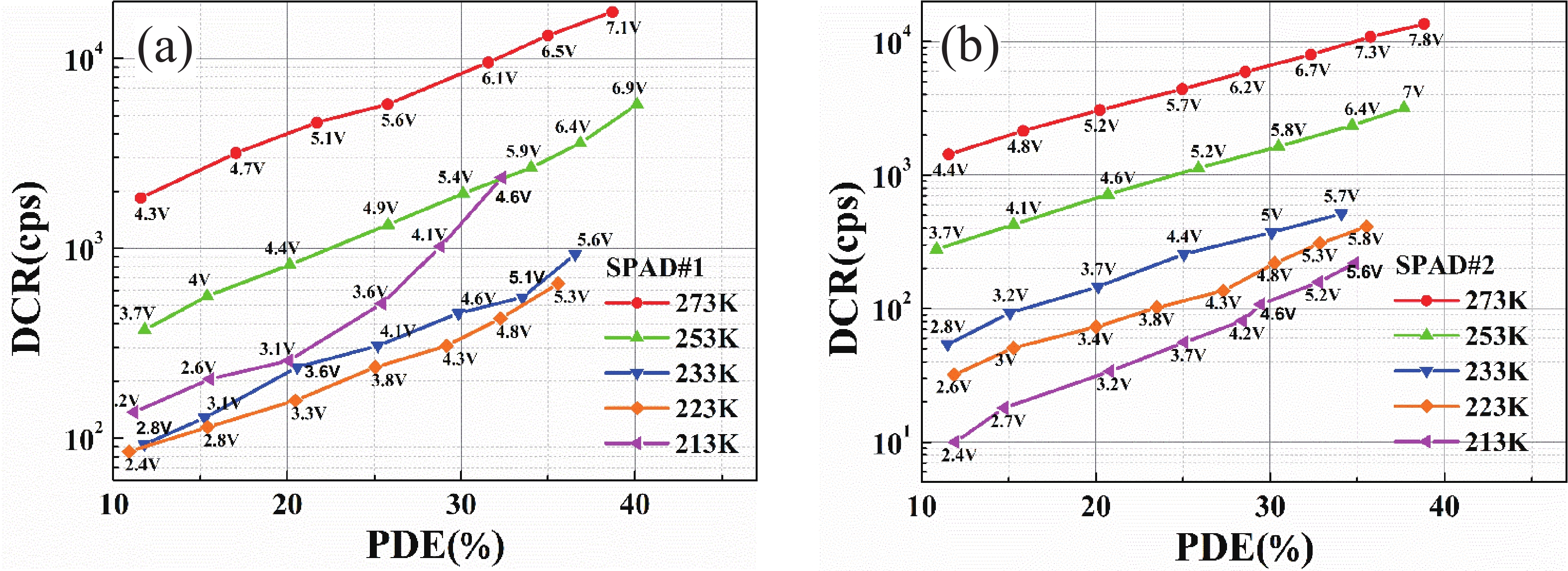
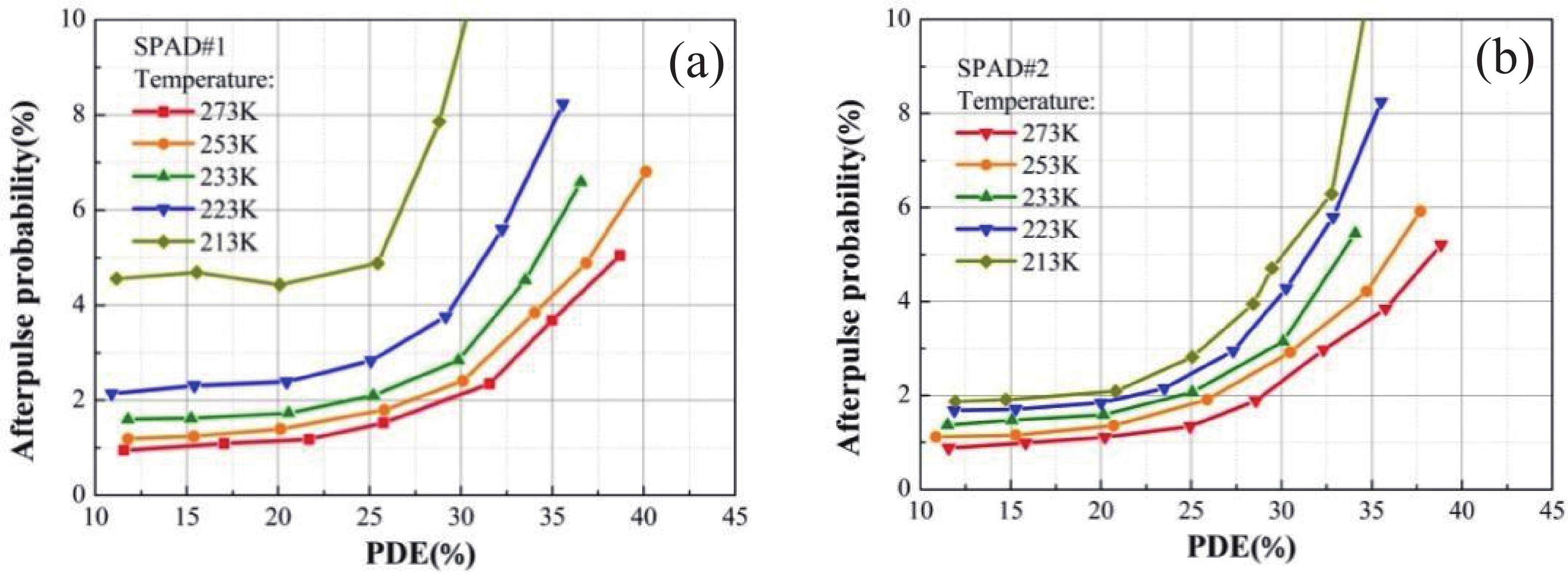
Table 1. Material parameters used in simulation.
| Name | Type | SPAD#1 | SPAD#2 | |||
| Concentration (cm−3) | Thick (μm) | Concentration (cm−3) | Thick (μm) | |||
| Substrate | n+-InP | ~5 × 10¹⁸ | − | ~5 × 10¹⁸ | − | |
| Buffer1 | n+-InP | ~5 × 10¹⁷ | 0.2−0.5 | ~5 × 10¹⁷ | 0.2−0.5 | |
| Buffer2 | n−-InGaAs | ~1 × 10¹⁶ | 0.4−0.7 | ~1 × 10¹⁶ | 0.4−0.7 | |
| Absorption layer | i-InGaAs | ~1 × 10¹⁵ | 1.3−1.6 | ~1 × 10¹⁵ | 1.3−1.6 | |
| Grading layer | i-InGaAsP | ~1 × 10¹⁶ | 0.2−0.4 | ~1 × 10¹⁶ | 0.1−0.2 | |
| Charge layer | n+-InP | ~1 × 10¹⁷ | 0.1−0.2 | ~2 × 10¹⁷ | 0.2−0.4 | |
| Multiplication layer | i-InP | ~1 × 10¹⁵ | 0.7−1.2 | ~1 × 10¹⁵ | 1.5−2.0 | |
| Cap layer | i-InP | ~1 × 10¹⁵ | 4.3−4.8 | ~1 × 10¹⁵ | 4.3−4.8 | |
| Double Zn diffusion process | P+-InP | ~5 × 10¹⁷ | Depth1: ~2.3 Width1: 40−50 Depth2: ~3.6 Width2: ~25 |
~5 × 10¹⁷ | Depth1: ~2.6 Width1: 50−60 Depth2: ~2.8 Width2: ~25 |
|
 DownLoad: CSV
Table 2. Summary of performance and comparison with state-of-the-art InGaAs/InP SPADs.
| Ref. | Gate frequency | Active area diameter (µm) |
Temperature (K) |
PDE @ 1550 nm (%) |
DCR (cps) |
Hold-off time (ns) |
Afterpulse probability (%) |
| This work (SPAD#1) | 1.25 GHz | 25 | 223 | 30 | 310 | 100 | 3.7 |
| This work (SPAD#2) | 1.25 GHz | 25 | 213 | 30 | 108 | 100 | 4.7 |
| Fan et al.[38] | 1.25 GHz | − | 243 | 30 | 1.6k | 100 | 2.30 |
| Zhang et al.[39] | 50 MHz | 12 | 233 | 30 | 665 | 200 | 15 |
| Li et al.[40] | 1 MHz | − | 233 | 20 | 320 | 1000 | 0.57 |
| Fabio et al.[28] | 100 MHz | 10 | 225 | 30 | 1.3k | 1000 | 4.4 |
| 100 MHz | 25 | 225 | 11 | 1.4k | 1000 | 1 | |
| Baek et al.[41] | 10 MHz | 16 | 233 | 21 | 1.4k | − | 2 |
| Fang et al.[30] | 1.25 GHz | 25 | 233 | 37 | 2.5k | − | 12.6 |
DownLoad: CSV
| [1] |
Hadfield R H. Single-photon detectors for optical quantum information applications. Nat Photonics, 2009, 3(12): 696 doi: 10.1038/nphoton.2009.230
|
| [2] |
Eisaman M D, Fan J, Migdall A, et al. Invited review article: Single-photon sources and detectors. Rev Sci Instrum, 2011, 82(7): 071101 doi: 10.1063/1.3610677
|
| [3] |
Acerbi F, Anti M, Tosi A, et al. Design criteria for InGaAs/InP single-photon avalanche diode. IEEE Photonics J, 2013, 5(2): 6800209 doi: 10.1109/JPHOT.2013.2258664
|
| [4] |
Zhang J, Itzler M A, Zbinden H, et al. Advances in InGaAs/InP single-photon detector systems for quantum communication. Light Sci Appl, 2015, 4(5): e286 doi: 10.1038/lsa.2015.59
|
| [5] |
Boroson D M, Robinson B S, Murphy D V, et al. Overview and results of the lunar laser communication demonstration. Free Space Laser Commun Atmos Propag XXVI, 2014, 8971: 89710S doi: 10.1117/12.2045508
|
| [6] |
Marsili F, Verma V B, Stern J A, et al. Detecting single infrared photons with 93% system efficiency. Nat Photonics, 2013, 7(3): 210 doi: 10.1038/nphoton.2013.13
|
| [7] |
Shibata H, Shimizu K, Takesue H, et al. Superconducting nanowire single-photon detector with ultralow dark count rate using cold optical filters. Appl Phys Express, 2013, 6(7): 072801 doi: 10.7567/APEX.6.072801
|
| [8] |
Verma V B, Korzh B, Bussières F, et al. High-efficiency WSi superconducting nanowire single-photon detectors operating at 2.5 K. Appl Phys Lett, 2014, 105(12): 122601 doi: 10.1063/1.4896045
|
| [9] |
Shentu G L, Pelc J S, Wang X D, et al. Ultralow noise up-conversion detector and spectrometer for the telecom band. Opt Express, 2013, 21(12): 13986 doi: 10.1364/OE.21.013986
|
| [10] |
Tada A, Namekata N, Inoue S. Saturated detection efficiency of single-photon detector based on an InGaAs/InP single-photon avalanche diode gated with a large-amplitude sinusoidal voltage. Jpn J Appl Phys, 2020, 59(7): 072004 doi: 10.35848/1347-4065/ab9625
|
| [11] |
He T T, Yang X H, Tang Y S, et al. High photon detection efficiency InGaAs/InP single photon avalanche diode at 250 K. J Semicond, 2022, 43(10): 102301 doi: 10.1088/1674-4926/43/10/102301
|
| [12] |
Lunghi T, Barreiro C, Guinnard O, et al. Free-running single-photon detection based on a negative feedback InGaAs APD. J Mod Optic, 2012, 59(17): 1481 doi: 10.1080/09500340.2012.690050
|
| [13] |
Xu Q, Yu C, Chen W, et al. Compact free-running InGaAs/InP single-photon detector with 40% detection efficiency and 2.3 kcps dark count rate. IEEE J Sel Top Quantum Electron, 2024, 30: 6400107 doi: 10.1109/jstqe.2023.3328870
|
| [14] |
Restelli A, Bienfang J C, Migdall A L. Single-photon detection efficiency up to 50% at 1310 nm with an InGaAs/InP avalanche diode gated at 1.25 GHz. Appl Phys Lett, 2013, 102(14): 141104 doi: 10.1063/1.4801939
|
| [15] |
Gisin N, Thew R. Quantum communication. Nat Photonics, 2007, 1(3): 165 doi: 10.1038/nphoton.2007.22
|
| [16] |
Stoker J, Abdullah Q, Nayegandhi A, et al. Evaluation of single photon and geiger mode lidar for the 3D elevation program. Remote Sens, 2016, 8(9): 767 doi: 10.3390/rs8090767
|
| [17] |
Tobin R, Halimi A, McCarthy A, et al. Three-dimensional single-photon imaging through obscurants. Opt Express, 2019, 27(4): 4590 doi: 10.1364/OE.27.004590
|
| [18] |
Yu C, Shangguan M J, Xia H Y, et al. Fully integrated free-running InGaAs/InP single-photon detector for accurate lidar applications. Opt Express, 2017, 25(13): 14611 doi: 10.1364/OE.25.014611
|
| [19] |
Wang L, Liu B, Li Z K, et al. Target recognition and tracking method based on single pixel single photon detection. Semicond Optoelectron, 2023, 44(2): 272 (in Chinese)
|
| [20] |
Mendenhall J A, Candell L M, Hopman P I, et al. Design of an optical photon counting array receiver system for deep-space communications. Proc IEEE, 2007, 95(10): 2059 doi: 10.1109/JPROC.2007.905098
|
| [21] |
Wang C, Wang J Y, Xu Z Y, et al. BER improvement in SPAD-based photon-counting optical communication system by using automatic attenuation control technique. Opt Lett, 2022, 47(8): 1956 doi: 10.1364/OL.454370
|
| [22] |
Donnelly J P, Duerr E K, McIntosh K A, et al. Design considerations for 1.06-μm InGaAsP–InP geiger-mode avalanche photodiodes. IEEE J Quantum Electron, 2006, 42(8): 797 doi: 10.1109/JQE.2006.877300
|
| [23] |
Jiang X D, Itzler M A, Ben-Michael R, et al. Afterpulsing effects in free-running InGaAsP single-photon avalanche diodes. IEEE J Quantum Electron, 2008, 44(1): 3 doi: 10.1109/JQE.2007.906996
|
| [24] |
Calandri N, Sanzaro M, Tosi A, et al. Charge persistence in InGaAs/InP single-photon avalanche diodes. IEEE J Quantum Electron, 2016, 52(3): 4500107 doi: 10.1109/jqe.2016.2526608
|
| [25] |
Lee Y S, Chen K Y, Chien S Y, et al. Characteristics of charge persistence in InGaAs/InP single-photon avalanche diode. IEEE Photonics Technol Lett, 2018, 30(22): 1980 doi: 10.1109/LPT.2018.2874041
|
| [26] |
Ao T H, Zhao J L, Tong Q X, et al. A study of temperature characteristics in In0.53Ga0.47As single photon avalanche diodes detector. Semicond Optoelectron, 2022, 43(4): 765 (in Chinese)
|
| [27] |
Korzh B, Walenta N, Lunghi T, et al. Free-running InGaAs single photon detector with 1 dark count per second at 10% efficiency. Appl Phys Lett, 2014, 104(8): 081108 doi: 10.1063/1.4866582
|
| [28] |
Signorelli F, Telesca F, Conca E, et al. Low-noise InGaAs/InP single-photon avalanche diodes for fiber-based and free-space applications. IEEE J Sel Top Quantum Electron, 2022, 28( 2: Optical Detectors): 3801310 doi: 10.1109/JSTQE.2021.3104962
|
| [29] |
Telesca F, Signorelli F, Tosi A. Double zinc diffusion optimization for charge persistence reduction in InGaAs/InP SPADs. IEEE J Sel Top Quantum Electron, 2024, 30(1: Single-Photon Technologies and Applications): 3801207 doi: 10.1109/jstqe.2023.3332767
|
| [30] |
Fang Y Q, Chen W, Ao T H, et al. InGaAs/InP single-photon detectors with 60% detection efficiency at 1550 nm. Rev Sci Instrum, 2020, 91(8): 083102 doi: 10.1063/5.0014123
|
| [31] |
Jiang W H, Liu J H, Liu Y, et al. 1.25GHz sine wave gating InGaAs/InP single-photon detector with a monolithically integrated readout circuit. Opt Lett, 2017, 42(24): 5090 doi: 10.1364/OL.42.005090
|
| [32] |
Jiang W H, Gao X J, Fang Y Q, et al. Miniaturized high-frequency sine wave gating InGaAs/InP single-photon detector. Rev Sci Instrum, 2018, 89(12): 123104 doi: 10.1063/1.5055376
|
| [33] |
Xu Q, Yu C, Cui D J, et al. Compact and fully functional high-frequency sine wave gating InGaAs/InP single-photon detector module. IEEE J Sel Top Quantum Electron, 2025, 31(5): 3801007 doi: 10.1109/JSTQE.2024.3522205
|
| [34] |
Erfanian A, Rahmanpour M, Khaje M, et al. Reduction of afterpulse and dark count effects on SPAD detectors using processing methods. Results Opt, 2024, 15: 100617 doi: 10.1016/j.rio.2024.100617
|
| [35] |
Zielinski E, Schweizer H, Streubel K, et al. Excitonic transitions and exciton damping processes in InGaAs/InP. J Appl Phys, 1986, 59(6): 2196 doi: 10.1063/1.336358
|
| [36] |
Ben-Michael R, Itzler M A, Nyman B, et al. Afterpulsing in InGaAs/InP single photon avalanche photodetectors. 2006 Digest of the LEOS Summer Topical Meetings, 2006: 15 doi: 10.1109/LEOSST.2006.1694045
|
| [37] |
Jensen K E, Hopman P I, Duerr E K, et al. Predicting afterpulsing in free-running, Geiger-mode avalanche photodiodes at 1.06 μm wavelength. 2006 Conference on Lasers and Electro-Optics and 2006 Quantum Electronics and Laser Science Conference, 2006: 1 doi: 10.1109/CLEO.2006.4627963
|
| [38] |
Fan Y B, Shi T T, Ji W J, et al. Ultra-narrowband interference circuits enable low-noise and high-rate photon counting for InGaAs/InP avalanche photodiodes. Opt Express, 2023, 31(5): 7515 doi: 10.1364/OE.478828
|
| [39] |
Zhang B J, Yin S Z, Liu Y J, et al. High performance InGaAs/InP single-photon avalanche diode using DBR-metal reflector and backside micro-lens. J Lightwave Technol, 2022, 40(12): 3832 doi: 10.1109/JLT.2022.3153455
|
| [40] |
Li B, Niu Y X, Feng Y D, et al. Ultra-low dark count InGaAs/InP single photon avalanche diode. Optoelectron Lett, 2022, 18(11): 647 doi: 10.1007/s11801-022-2036-3
|
| [41] |
Baek S H, Yang S C, Park C Y, et al. Room temperature quantum key distribution characteristics of low-noise InGaAs/InP single-photon avalanche diode. J Korean Phys Soc, 2021, 78(7): 634 doi: 10.1007/s40042-021-00111-4
|





Article views: 218 Times PDF downloads: 74 Times Cited by: 0 Times
Received: 25 March 2026 Revised: 22 May 2026 Online: Uncorrected proof: 26 June 2026Accepted Manuscript: 26 June 2026Published: 12 September 2026
| Citation: |
Dajian Cui, Wei Chen, Yong Lei, Qixia Tong, Jianglin Zhao, Xuefeng Yan, Yinlin Yan, Li Ren, Chunhui Wang. Low-noise InGaAs/InP single-photon diodes with 30% detection efficiency and 0.1 kcps dark count rate[J]. Journal of Semiconductors, 2026, 47(9): 092101. doi: 10.1088/1674-4926/26030043
****
D J Cui, W Chen, Y Lei, Q X Tong, J L Zhao, X F Yan, Y L Yan, L Ren, and C H Wang, Low-noise InGaAs/InP single-photon diodes with 30% detection efficiency and 0.1 kcps dark count rate[J]. J. Semicond., 2026, 47(9): 092101 doi: 10.1088/1674-4926/26030043

|
 Dajian Cui, born in 1982, obtained his Master’s degree from the Institute of Physics, Chinese Academy of Sciences. Currently a Full Senior Engineer, he serves as Director of the Compound Semiconductor Photodetector R & D Center at the 44th Research Institute of China Electronics Technology Group Corporation (CETC 44), Director of the Chongqing Key Laboratory of Quantum Information Chips and Devices, Director of the Single-Photon Detector Research Laboratory at Hefei National Laboratory for Physical Sciences at the Microscale, Council Member of the Chongqing Optical Society, Member of the Quantum Communication Special Committee of the China Institute of Communications, Member of the Expert Committee on Wide Bandgap Semiconductor Materials and Devices of the Chongqing Institute of Electronics, and Member of the Academic Working Committee of the Chongqing Institute of Electronics. His primary research focuses on the technological investigation and application development of Ⅲ−Ⅴ compound semiconductor optoelectronic devices. He has led the development of products such as InGaAs single-photon detector APD focal plane arrays, which have been deployed in diverse fields including quantum secure communication, LiDAR, non-line-of-sight imaging, and topographic surveying and mapping
| [1] |
Hadfield R H. Single-photon detectors for optical quantum information applications. Nat Photonics, 2009, 3(12): 696 doi: 10.1038/nphoton.2009.230
|
| [2] |
Eisaman M D, Fan J, Migdall A, et al. Invited review article: Single-photon sources and detectors. Rev Sci Instrum, 2011, 82(7): 071101 doi: 10.1063/1.3610677
|
| [3] |
Acerbi F, Anti M, Tosi A, et al. Design criteria for InGaAs/InP single-photon avalanche diode. IEEE Photonics J, 2013, 5(2): 6800209 doi: 10.1109/JPHOT.2013.2258664
|
| [4] |
Zhang J, Itzler M A, Zbinden H, et al. Advances in InGaAs/InP single-photon detector systems for quantum communication. Light Sci Appl, 2015, 4(5): e286 doi: 10.1038/lsa.2015.59
|
| [5] |
Boroson D M, Robinson B S, Murphy D V, et al. Overview and results of the lunar laser communication demonstration. Free Space Laser Commun Atmos Propag XXVI, 2014, 8971: 89710S doi: 10.1117/12.2045508
|
| [6] |
Marsili F, Verma V B, Stern J A, et al. Detecting single infrared photons with 93% system efficiency. Nat Photonics, 2013, 7(3): 210 doi: 10.1038/nphoton.2013.13
|
| [7] |
Shibata H, Shimizu K, Takesue H, et al. Superconducting nanowire single-photon detector with ultralow dark count rate using cold optical filters. Appl Phys Express, 2013, 6(7): 072801 doi: 10.7567/APEX.6.072801
|
| [8] |
Verma V B, Korzh B, Bussières F, et al. High-efficiency WSi superconducting nanowire single-photon detectors operating at 2.5 K. Appl Phys Lett, 2014, 105(12): 122601 doi: 10.1063/1.4896045
|
| [9] |
Shentu G L, Pelc J S, Wang X D, et al. Ultralow noise up-conversion detector and spectrometer for the telecom band. Opt Express, 2013, 21(12): 13986 doi: 10.1364/OE.21.013986
|
| [10] |
Tada A, Namekata N, Inoue S. Saturated detection efficiency of single-photon detector based on an InGaAs/InP single-photon avalanche diode gated with a large-amplitude sinusoidal voltage. Jpn J Appl Phys, 2020, 59(7): 072004 doi: 10.35848/1347-4065/ab9625
|
| [11] |
He T T, Yang X H, Tang Y S, et al. High photon detection efficiency InGaAs/InP single photon avalanche diode at 250 K. J Semicond, 2022, 43(10): 102301 doi: 10.1088/1674-4926/43/10/102301
|
| [12] |
Lunghi T, Barreiro C, Guinnard O, et al. Free-running single-photon detection based on a negative feedback InGaAs APD. J Mod Optic, 2012, 59(17): 1481 doi: 10.1080/09500340.2012.690050
|
| [13] |
Xu Q, Yu C, Chen W, et al. Compact free-running InGaAs/InP single-photon detector with 40% detection efficiency and 2.3 kcps dark count rate. IEEE J Sel Top Quantum Electron, 2024, 30: 6400107 doi: 10.1109/jstqe.2023.3328870
|
| [14] |
Restelli A, Bienfang J C, Migdall A L. Single-photon detection efficiency up to 50% at 1310 nm with an InGaAs/InP avalanche diode gated at 1.25 GHz. Appl Phys Lett, 2013, 102(14): 141104 doi: 10.1063/1.4801939
|
| [15] |
Gisin N, Thew R. Quantum communication. Nat Photonics, 2007, 1(3): 165 doi: 10.1038/nphoton.2007.22
|
| [16] |
Stoker J, Abdullah Q, Nayegandhi A, et al. Evaluation of single photon and geiger mode lidar for the 3D elevation program. Remote Sens, 2016, 8(9): 767 doi: 10.3390/rs8090767
|
| [17] |
Tobin R, Halimi A, McCarthy A, et al. Three-dimensional single-photon imaging through obscurants. Opt Express, 2019, 27(4): 4590 doi: 10.1364/OE.27.004590
|
| [18] |
Yu C, Shangguan M J, Xia H Y, et al. Fully integrated free-running InGaAs/InP single-photon detector for accurate lidar applications. Opt Express, 2017, 25(13): 14611 doi: 10.1364/OE.25.014611
|
| [19] |
Wang L, Liu B, Li Z K, et al. Target recognition and tracking method based on single pixel single photon detection. Semicond Optoelectron, 2023, 44(2): 272 (in Chinese)
|
| [20] |
Mendenhall J A, Candell L M, Hopman P I, et al. Design of an optical photon counting array receiver system for deep-space communications. Proc IEEE, 2007, 95(10): 2059 doi: 10.1109/JPROC.2007.905098
|
| [21] |
Wang C, Wang J Y, Xu Z Y, et al. BER improvement in SPAD-based photon-counting optical communication system by using automatic attenuation control technique. Opt Lett, 2022, 47(8): 1956 doi: 10.1364/OL.454370
|
| [22] |
Donnelly J P, Duerr E K, McIntosh K A, et al. Design considerations for 1.06-μm InGaAsP–InP geiger-mode avalanche photodiodes. IEEE J Quantum Electron, 2006, 42(8): 797 doi: 10.1109/JQE.2006.877300
|
| [23] |
Jiang X D, Itzler M A, Ben-Michael R, et al. Afterpulsing effects in free-running InGaAsP single-photon avalanche diodes. IEEE J Quantum Electron, 2008, 44(1): 3 doi: 10.1109/JQE.2007.906996
|
| [24] |
Calandri N, Sanzaro M, Tosi A, et al. Charge persistence in InGaAs/InP single-photon avalanche diodes. IEEE J Quantum Electron, 2016, 52(3): 4500107 doi: 10.1109/jqe.2016.2526608
|
| [25] |
Lee Y S, Chen K Y, Chien S Y, et al. Characteristics of charge persistence in InGaAs/InP single-photon avalanche diode. IEEE Photonics Technol Lett, 2018, 30(22): 1980 doi: 10.1109/LPT.2018.2874041
|
| [26] |
Ao T H, Zhao J L, Tong Q X, et al. A study of temperature characteristics in In0.53Ga0.47As single photon avalanche diodes detector. Semicond Optoelectron, 2022, 43(4): 765 (in Chinese)
|
| [27] |
Korzh B, Walenta N, Lunghi T, et al. Free-running InGaAs single photon detector with 1 dark count per second at 10% efficiency. Appl Phys Lett, 2014, 104(8): 081108 doi: 10.1063/1.4866582
|
| [28] |
Signorelli F, Telesca F, Conca E, et al. Low-noise InGaAs/InP single-photon avalanche diodes for fiber-based and free-space applications. IEEE J Sel Top Quantum Electron, 2022, 28( 2: Optical Detectors): 3801310 doi: 10.1109/JSTQE.2021.3104962
|
| [29] |
Telesca F, Signorelli F, Tosi A. Double zinc diffusion optimization for charge persistence reduction in InGaAs/InP SPADs. IEEE J Sel Top Quantum Electron, 2024, 30(1: Single-Photon Technologies and Applications): 3801207 doi: 10.1109/jstqe.2023.3332767
|
| [30] |
Fang Y Q, Chen W, Ao T H, et al. InGaAs/InP single-photon detectors with 60% detection efficiency at 1550 nm. Rev Sci Instrum, 2020, 91(8): 083102 doi: 10.1063/5.0014123
|
| [31] |
Jiang W H, Liu J H, Liu Y, et al. 1.25GHz sine wave gating InGaAs/InP single-photon detector with a monolithically integrated readout circuit. Opt Lett, 2017, 42(24): 5090 doi: 10.1364/OL.42.005090
|
| [32] |
Jiang W H, Gao X J, Fang Y Q, et al. Miniaturized high-frequency sine wave gating InGaAs/InP single-photon detector. Rev Sci Instrum, 2018, 89(12): 123104 doi: 10.1063/1.5055376
|
| [33] |
Xu Q, Yu C, Cui D J, et al. Compact and fully functional high-frequency sine wave gating InGaAs/InP single-photon detector module. IEEE J Sel Top Quantum Electron, 2025, 31(5): 3801007 doi: 10.1109/JSTQE.2024.3522205
|
| [34] |
Erfanian A, Rahmanpour M, Khaje M, et al. Reduction of afterpulse and dark count effects on SPAD detectors using processing methods. Results Opt, 2024, 15: 100617 doi: 10.1016/j.rio.2024.100617
|
| [35] |
Zielinski E, Schweizer H, Streubel K, et al. Excitonic transitions and exciton damping processes in InGaAs/InP. J Appl Phys, 1986, 59(6): 2196 doi: 10.1063/1.336358
|
| [36] |
Ben-Michael R, Itzler M A, Nyman B, et al. Afterpulsing in InGaAs/InP single photon avalanche photodetectors. 2006 Digest of the LEOS Summer Topical Meetings, 2006: 15 doi: 10.1109/LEOSST.2006.1694045
|
| [37] |
Jensen K E, Hopman P I, Duerr E K, et al. Predicting afterpulsing in free-running, Geiger-mode avalanche photodiodes at 1.06 μm wavelength. 2006 Conference on Lasers and Electro-Optics and 2006 Quantum Electronics and Laser Science Conference, 2006: 1 doi: 10.1109/CLEO.2006.4627963
|
| [38] |
Fan Y B, Shi T T, Ji W J, et al. Ultra-narrowband interference circuits enable low-noise and high-rate photon counting for InGaAs/InP avalanche photodiodes. Opt Express, 2023, 31(5): 7515 doi: 10.1364/OE.478828
|
| [39] |
Zhang B J, Yin S Z, Liu Y J, et al. High performance InGaAs/InP single-photon avalanche diode using DBR-metal reflector and backside micro-lens. J Lightwave Technol, 2022, 40(12): 3832 doi: 10.1109/JLT.2022.3153455
|
| [40] |
Li B, Niu Y X, Feng Y D, et al. Ultra-low dark count InGaAs/InP single photon avalanche diode. Optoelectron Lett, 2022, 18(11): 647 doi: 10.1007/s11801-022-2036-3
|
| [41] |
Baek S H, Yang S C, Park C Y, et al. Room temperature quantum key distribution characteristics of low-noise InGaAs/InP single-photon avalanche diode. J Korean Phys Soc, 2021, 78(7): 634 doi: 10.1007/s40042-021-00111-4
|

 WeChat ID
Journal of Semiconductors © 2017 All Rights Reserved 京ICP备05085259号-2