J. Semicond. >  Just Accepted

ARTICLES

Charge balance strategy for stable QLEDs: p-type doping design in quantum dot shells

Yang Huang1, §, Yangzhi Tan1, 2, §, Zhongyuan Guan1, Yiguo Xu3, Lars Samuelson1, Kai Wang1, and Xiao Wei Sun1,

+ Author Affiliations

 Corresponding author: Kai Wang, wangk@sustech.edu.cn; Xiao Wei Sun, sunxw@sustech.edu.cn

DOI: 10.1088/1674-4926/26030050CSTR: 32376.14.1674-4926.26030050

PDF

Turn off MathJax

Abstract: The efficiency degradation of quantum dot light-emitting diodes (QLEDs) is tied to dynamic charge imbalance in hybrid architectures, where excess electron accumulation in quantum dots (QDs) enhances non-radiative recombination and interfacial degradation. To address this, we propose a charge balance strategy via p-type-like doping modulation of QD shells. First-principles calculations on ZnS-shelled QDs identify sodium as the most favorable acceptor among the dopants considered in this work, owing to its shallow acceptor levels and minimal lattice distortion compared with copper and potassium, which are associated with deep mid-gap states and pronounced structural distortion, respectively. Further analysis of the InP-based QD density of states combined with device simulations shows that acceptor engineering of the ZnS shell enhances hole injection. By improving the simulated charge balance, this strategy is expected to suppress nonradiative Auger-Meitner recombination within the QDs and reduce electron leakage into the HTL, thereby potentially mitigating charge-imbalance-related interfacial losses; however, explicit degradation or lifetime simulations are not included in the present work. Experimental realization requires overcoming nanocrystal self-purification and dopant localization through molecular engineering of surface ligands. This work emphasizes quantum-confined doping effects, carrier dynamics, and interfacial energy alignment for balanced charge transport.

Keywords: QLEDcharge injection balancep-type dopingdevice simulations


[1]
Chang J H, Park P, Jung H, et al. Unraveling the origin of operational instability of quantum dot based light-emitting diodes. ACS Nano, 2018, 12(10): 10231 doi: 10.1021/acsnano.8b03386
[2]
Bae W K, Padilha L A, Park Y S, et al. Controlled alloying of the core-shell interface in CdSe/CdS quantum dots for suppression of Auger recombination. ACS Nano, 2013, 7(4): 3411 doi: 10.1021/nn4002825
[3]
Bae W K, Park Y S, Lim J, et al. Controlling the influence of Auger recombination on the performance of quantum-dot light-emitting diodes. Nat Commun, 2013, 4: 2661 doi: 10.1038/ncomms3661
[4]
Zhao S Q, Bai P, Zhao X F, et al. Transient leakage electroluminescence of quantum-dot light-emitting diodes. Nano Lett, 2024, 24(41): 12981 doi: 10.1021/acs.nanolett.4c03673.s001
[5]
Deng Y Z, Peng F, Li Y, et al. Solution-processed green and blue quantum-dot light-emitting diodes with eliminated charge leakage. Nat Photonics, 2022, 16(7): 505 doi: 10.1038/s41566-022-00999-9
[6]
Su Q, Chen Z N, Chen S M. Tracing the electron transport behavior in quantum-dot light-emitting diodes via single photon counting technique. Nat Commun, 2024, 15: 8150 doi: 10.1038/s41467-024-52521-0
[7]
Han M G, Lee Y, Kwon H I, et al. InP-based quantum dot light-emitting diode with a blended emissive layer. ACS Energy Lett, 2021, 6(4): 1577 doi: 10.1021/acsenergylett.1c00351
[8]
Chen S, Cao W R, Liu T L, et al. On the degradation mechanisms of quantum-dot light-emitting diodes. Nat Commun, 2019, 10: 765 doi: 10.1038/s41467-019-08749-2
[9]
Dai X L, Zhang Z X, Jin Y Z, et al. Solution-processed, high-performance light-emitting diodes based on quantum dots. Nature, 2014, 515(7525): 96 doi: 10.1038/nature13829
[10]
Jiang Y R, Cho S Y, Shim M. Light-emitting diodes of colloidal quantum dots and nanorod heterostructures for future emissive displays. J Mater Chem C, 2018, 6(11): 2618 doi: 10.1039/C7TC05972H
[11]
Matsakis D, Coster A, Laster B, et al. A renaming proposal: “The Auger-Meitner effect”. Phys Today, 2019, 72(9): 10
[12]
Cao W R, Xiang C Y, Yang Y X, et al. Highly stable QLEDs with improved hole injection via quantum dot structure tailoring. Nat Commun, 2018, 9: 2608 doi: 10.1038/s41467-018-04986-z
[13]
Shen H B, Gao Q, Zhang Y B, et al. Visible quantum dot light-emitting diodes with simultaneous high brightness and efficiency. Nat Photonics, 2019, 13(3): 192 doi: 10.1038/s41566-019-0364-z
[14]
Wang T, Zhu B Y, Wang S P, et al. Influence of shell thickness on the performance of NiO-based all-inorganic quantum dot light-emitting diodes. ACS Appl Mater Interfaces, 2018, 10(17): 14894 doi: 10.1021/acsami.8b01814
[15]
Lany S, Osorio-Guillén J, Zunger A. Origins of the doping asymmetry in oxides: Hole doping in NiO versus electron doping in ZnO. Phys Rev B, 2007, 75(24): 241203 doi: 10.1103/PhysRevB.75.241203
[16]
Jain A, Ong S P, Hautier G, et al. Commentary: The Materials Project: A materials genome approach to accelerating materials innovation. APL Mater, 2013, 1: 011002 doi: 10.1063/1.4812323
[17]
Kirklin S, Saal J E, Meredig B, et al. The Open Quantum Materials Database (OQMD): Assessing the accuracy of DFT formation energies. npj Comput Mater, 2015, 1: 15010 doi: 10.1038/npjcompumats.2015.10
[18]
Woods-Robinson R, Broberg D, Faghaninia A, et al. Assessing high-throughput descriptors for prediction of transparent conductors. Chem Mater, 2018, 30(22): 8375 doi: 10.1021/acs.chemmater.8b03529
[19]
Jung S M, Lee T H, Bang S Y, et al. Modelling charge transport and electro-optical characteristics of quantum dot light-emitting diodes. npj Comput Mater, 2021, 7: 122 doi: 10.1038/s41524-021-00591-9
[20]
Park C H, Zhang S B, Wei S H. Origin of p-type doping difficulty in ZnO: The impurity perspective. Phys Rev B, 2002, 66(7): 073202 doi: 10.1103/PhysRevB.66.073202
[21]
Cao R Y, Deng H X, Luo J W. Design principles of p-type transparent conductive materials. ACS Appl Mater Interfaces, 2019, 11(28): 24837 doi: 10.1021/acsami.9b01255
[22]
Li J B, Wei S H, Wang L W. Stability of the DX center in GaAs quantum dots. Phys Rev Lett, 2005, 94(18): 185501 doi: 10.1103/PhysRevLett.94.185501
[23]
Li J B, Wei S H, Li S S, et al. Origin of the doping bottleneck in semiconductor quantum dots: A first-principles study. Phys Rev B, 2008, 77(11): 113304 doi: 10.1103/PhysRevB.77.113304
[24]
Norris D J, Efros A L, Erwin S C. Doped nanocrystals. Science, 2008, 319(5871): 1776 doi: 10.1126/science.1143802
[25]
Schimpf A M, Knowles K E, Carroll G M, et al. Electronic doping and redox-potential tuning in colloidal semiconductor nanocrystals. Acc Chem Res, 2015, 48(7): 1929 doi: 10.1021/acs.accounts.5b00181
[26]
Buonsanti R, Milliron D J. Chemistry of doped colloidal nanocrystals. Chem Mater, 2013, 25(8): 1305 doi: 10.1021/cm304104m
[27]
Srivastava B B, Jana S, Pradhan N. Doping Cu in semiconductor nanocrystals: Some old and some new physical insights. J Am Chem Soc, 2011, 133(4): 1007 doi: 10.1021/ja1089809
[28]
Bang J, Das S, Yu E J, et al. Controlled photoinduced electron transfer from InP/ZnS quantum dots through Cu doping: A new prototype for the visible-light photocatalytic hydrogen evolution reaction. Nano Lett, 2020, 20(9): 6263 doi: 10.1021/acs.nanolett.0c00983
[29]
Zhao H Y, Li X, Cai M K, et al. Role of copper doping in heavy metal-free InP/ZnSe core/shell quantum dots for highly efficient and stable photoelectrochemical cell. Adv Energy Mater, 2021, 11(31): 2101230 doi: 10.1002/aenm.202101230
[30]
Kormath Madam Raghupathy R, Kühne T D, Felser C, et al. Rational design of transparent p-type conducting non-oxide materials from high-throughput calculations. J Mater Chem C, 2018, 6(3): 541 doi: 10.1039/C7TC05311H
[31]
Dalpian G M, Chelikowsky J R. Self-purification in semiconductor nanocrystals. Phys Rev Lett, 2006, 96(22): 226802 doi: 10.1103/PhysRevLett.96.226802
[32]
Du M H, Erwin S C, Efros A L, et al. Comment on “Self-purification in semiconductor nanocrystals”. Phys Rev Lett, 2008, 100(17): 179702 doi: 10.1103/PhysRevLett.100.179702
[33]
Shannon R D. Revised effective ionic radii and systematic studies of interatomic distances in halides and chalcogenides. Acta Crystallogr Sect A, 1976, 32(5): 751 doi: 10.1107/s0567739476001551
[34]
Pauling L. The nature of the chemical bond. iv. The energy of single bonds and the relative electronegativity of atoms. J Am Chem Soc, 1932, 54(9): 3570 doi: 10.1016/b978-0-08-092669-8.50006-0
[35]
Allred A L. Electronegativity values from thermochemical data. J Inorg Nucl Chem, 1961, 17(3/4): 215 doi: 10.1016/0022-1902(61)80142-5
[36]
Huang Y, Zhang T, Yu R X, et al. Theoretical design of inorganic flexible bulk photovoltaic materials. J Phys Chem Lett, 2021, 12(41): 10182 doi: 10.1021/acs.jpclett.1c02886
[37]
Cho E, Kim T, Choi S-M, et al. Optical characteristics of the surface defects in InP colloidal quantum dots for highly efficient light-emitting applications. ACS Appl Nano Mater, 2018, 1(12): 7106 doi: 10.1021/acsanm.8b01947
[38]
Aubert T, Golovatenko A A, Samoli M, et al. General expression for the size-dependent optical properties of quantum dots. Nano Lett, 2022, 22(4): 1778 doi: 10.1021/acs.nanolett.2c00056
[39]
Cho E, Jang H, Lee J, et al. Modeling on the size dependent properties of InP quantum dots: A hybrid functional study. Nanotechnology, 2013, 24(21): 215201 doi: 10.1088/0957-4484/24/21/215201
[40]
Xiao X T, Wang K, Ye T K, et al. Enhanced hole injection assisted by electric dipoles for efficient perovskite light-emitting diodes. Commun Mater, 2020, 1: 81 doi: 10.1038/s43246-020-00084-0
[41]
Mei G D, Tan Y Z, Sun J Y, et al. Light extraction employing optical tunneling in blue InP quantum dot light-emitting diodes. Appl Phys Lett, 2022, 120(9): 091101 doi: 10.1063/5.0084416
[42]
Sze S M, Li Y, Ng K K. Physics of Semiconductor Devices. John Wiley & Sons, 2021
[43]
Chen D A, Viswanatha R, Ong G L, et al. Temperature dependence of “elementary processes” in doping semiconductor nanocrystals. J Am Chem Soc, 2009, 131(26): 9333 doi: 10.1021/ja9018644
[44]
Jawaid A M, Chattopadhyay S, Wink D J, et al. Cluster-seeded synthesis of doped CdSe: Cu4 quantum dots. ACS Nano, 2013, 7(4): 3190 doi: 10.1021/nn305697q
[45]
Kroupa D M, Hughes B K, Miller E M, et al. Synthesis and spectroscopy of silver-doped PbSe quantum dots. J Am Chem Soc, 2017, 139(30): 10382 doi: 10.1021/jacs.7b04551
[46]
Vlaskin V A, Barrows C J, Erickson C S, et al. Nanocrystal diffusion doping. J Am Chem Soc, 2013, 135(38): 14380 doi: 10.1021/ja4072207
[47]
Lu H P, Carroll G M, Chen X H, et al. N-type PbSe quantum dots via post-synthetic indium doping. J Am Chem Soc, 2018, 140(42): 13753 doi: 10.1021/jacs.8b07910
[48]
Mikulec F V, Kuno M, Bennati M, et al. Organometallic synthesis and spectroscopic characterization of manganese-doped CdSe nanocrystals. J Am Chem Soc, 2000, 122(11): 2532 doi: 10.1021/ja991249n
[49]
Du M H, Erwin S C, Efros A L. Trapped-dopant model of doping in semiconductor nanocrystals. Nano Lett, 2008, 8(9): 2878 doi: 10.1021/nl8016169
[50]
Ang E H, Zeng J L, Subramanian G S, et al. Silica-coated Mn-doped ZnS nanocrystals for cancer theranostics. ACS Appl Nano Mater, 2020, 3(3): 3088 doi: 10.1021/acsanm.0c00598
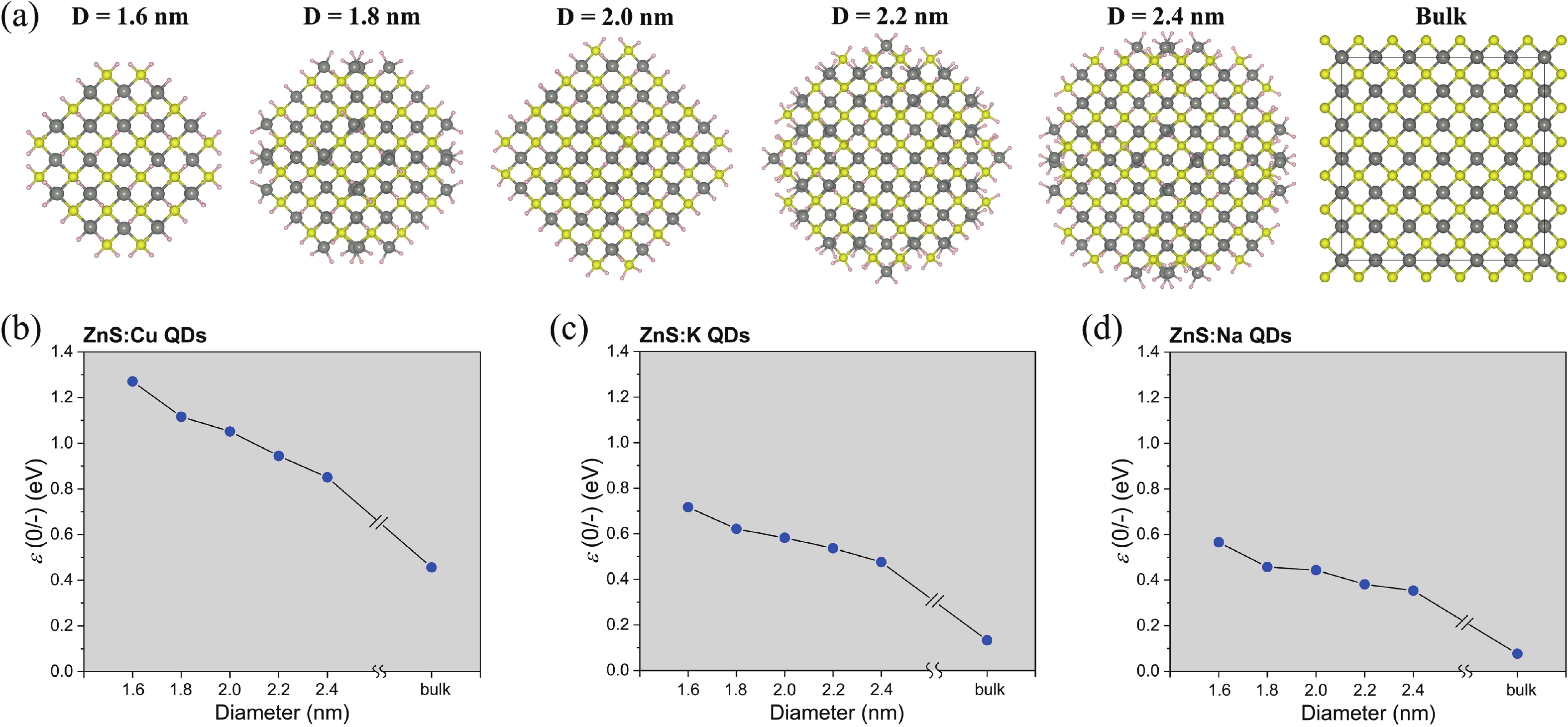
Fig. 1.  (Color online) (a) Crystal structures of ZnS QDs with different sizes considered in this work. The substituted Zn atom is located at the core sites of the structure. D represents the diameter in nanometers. Gray, yellow, and white spheres correspond to Zn, S, and pseudo-H atoms, respectively. (b) Transition energies ε(0/-) relative to the HOMO for (b) CuZn, (c) KZn, and (d) NaZn as a function of the ZnS QD diameter.

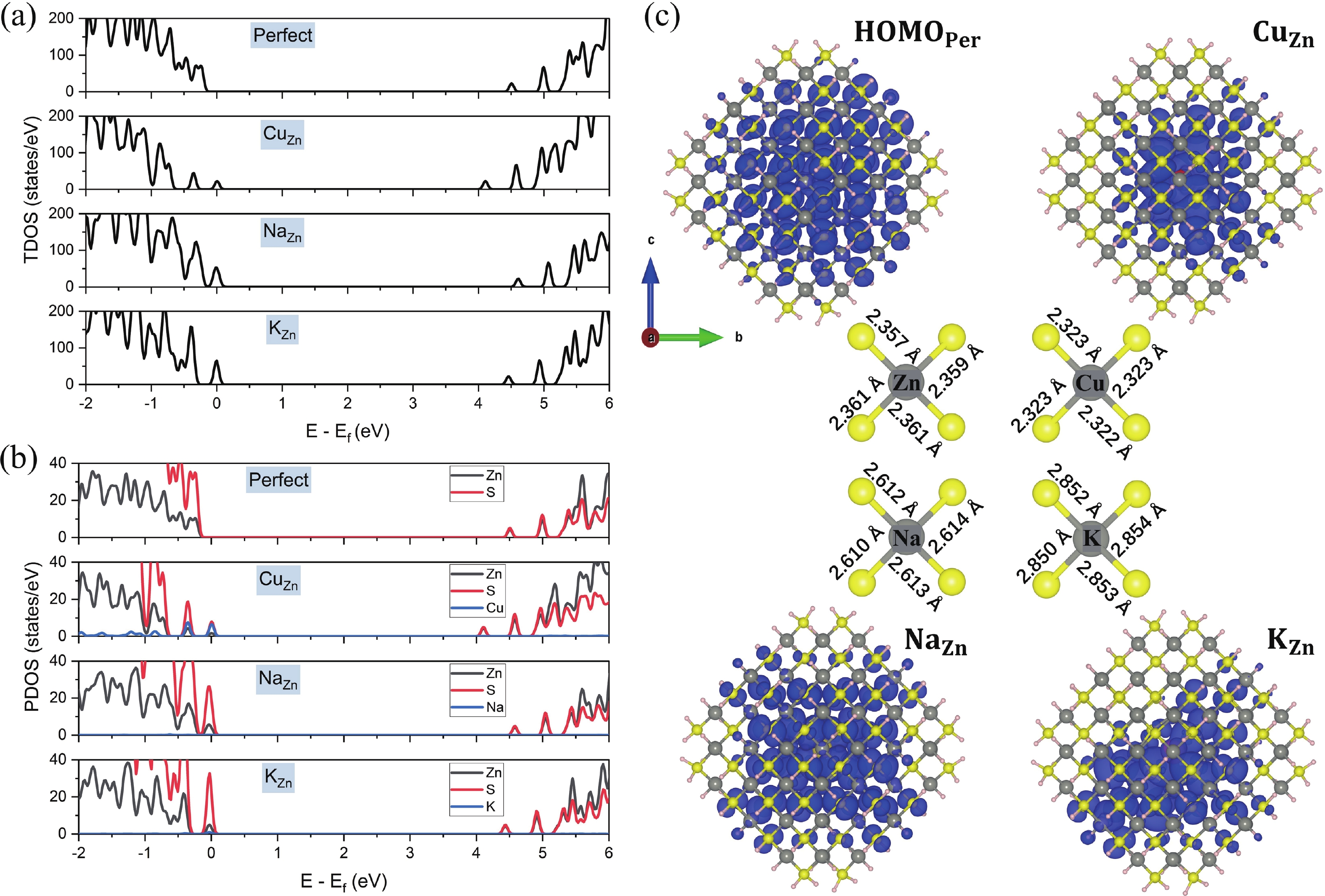
Fig. 2.  (Color online) (a) Calculated total DOS and (b) partial PDOS for a 2 nm diameter ZnS QD, both without doping and with doping. (c) Partial charge density distributions of the HOMO, CuZn0, NaZn0, and KZn0 energy levels in the ZnS QD. The isosurface value is set to 0.0002|e|/bohr3.

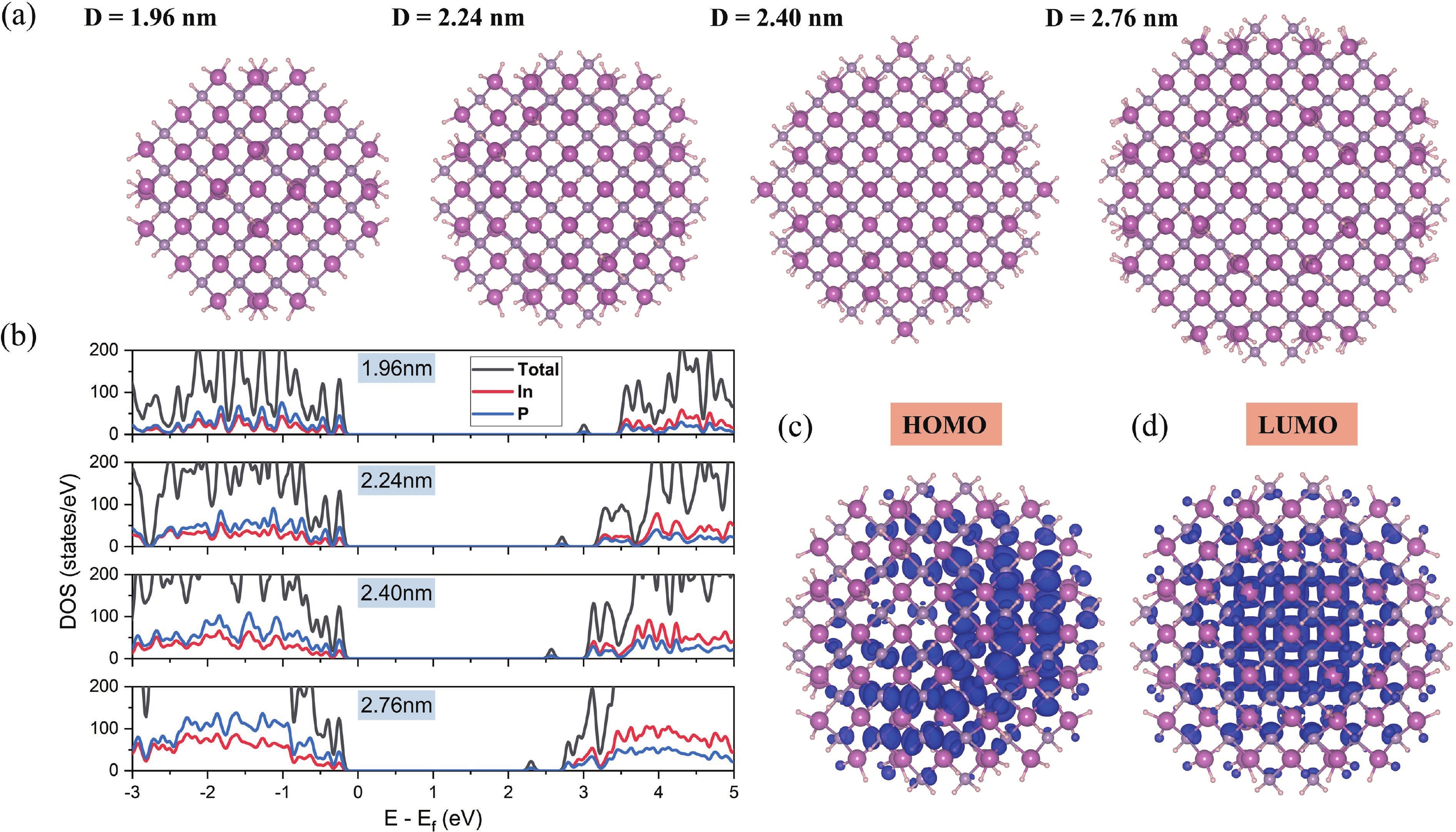
Fig. 3.  (Color online) (a) Crystal structures of InP QD with different sizes considered in this work. D represents the diameter in nanometers. Pink, light purple, and white spheres correspond to In, P, and pseudo-H atoms, respectively. (b) Calculated densities of states for a 2.24 nm diameter InP QD. (c) Partial charge density distributions of the HOMO and LUMO energy levels in the InP QD. The isosurface value is set to 0.0002 |e|/bohr3.

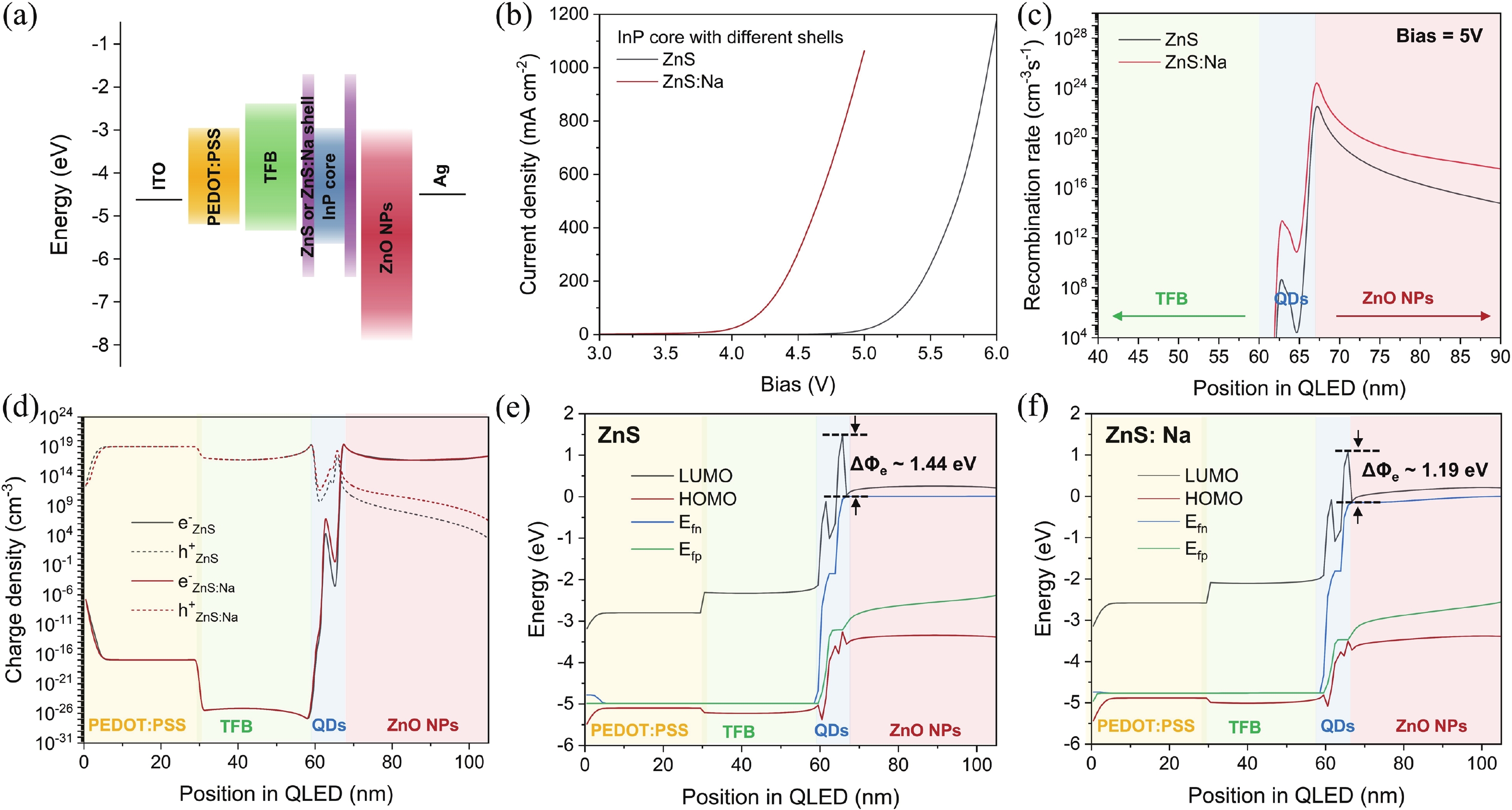
Fig. 4.  (Color online) (a) Device architecture and energy level diagram of the InP QLEDs. (b) Simulated current density-voltage (J-V) characteristics of QLEDs employing InP/ZnS and InP/ZnS:Na QDs. Simulated (c) recombination rate distribution, (d) electron and hole distribution, and (e, f) energy level profiles within QLEDs incorporating InP/ZnS and InP/ZnS:Na QDs, respectively. The applied bias is 5 V.

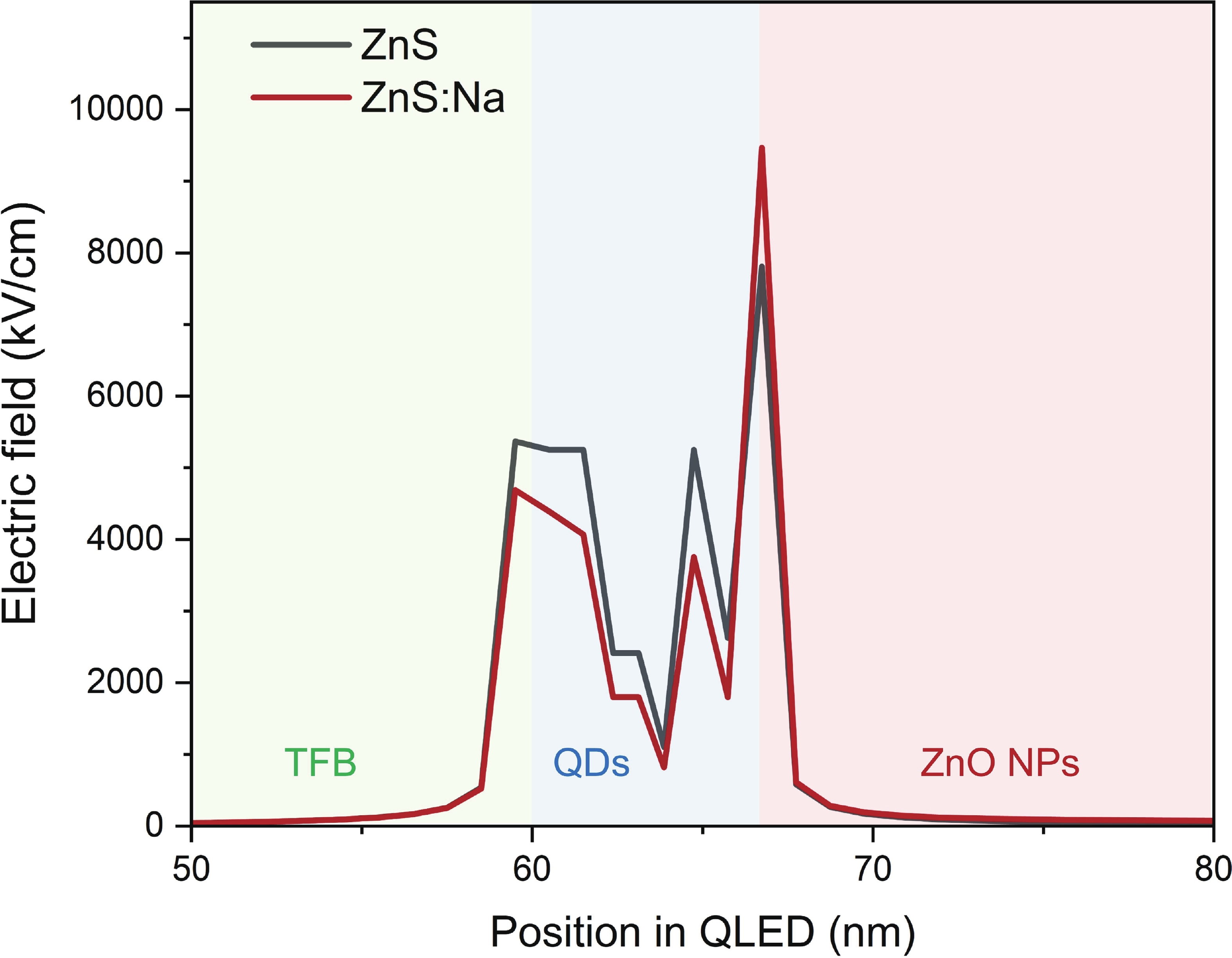
Fig. 5.  (Color online) The electric field distribution in QLEDs with InP/ZnS and InP/ZnS:Na QDs.

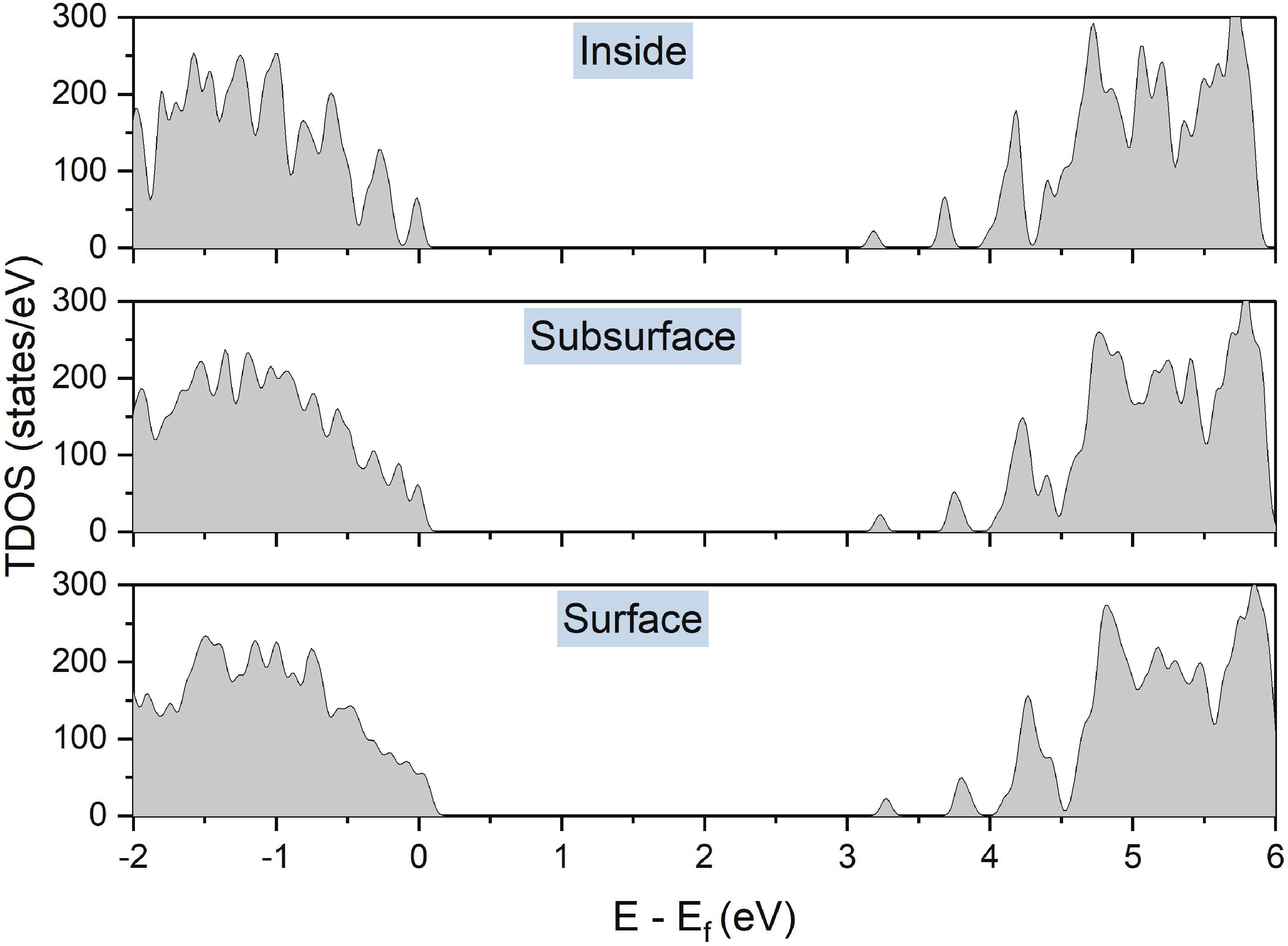
Fig. 6.  (Color online) Comparative investigation of the TDOS resulting from Na substitution at distinct Zn lattice positions in 2.0 nm ZnS QD.

[1]
Chang J H, Park P, Jung H, et al. Unraveling the origin of operational instability of quantum dot based light-emitting diodes. ACS Nano, 2018, 12(10): 10231 doi: 10.1021/acsnano.8b03386
[2]
Bae W K, Padilha L A, Park Y S, et al. Controlled alloying of the core-shell interface in CdSe/CdS quantum dots for suppression of Auger recombination. ACS Nano, 2013, 7(4): 3411 doi: 10.1021/nn4002825
[3]
Bae W K, Park Y S, Lim J, et al. Controlling the influence of Auger recombination on the performance of quantum-dot light-emitting diodes. Nat Commun, 2013, 4: 2661 doi: 10.1038/ncomms3661
[4]
Zhao S Q, Bai P, Zhao X F, et al. Transient leakage electroluminescence of quantum-dot light-emitting diodes. Nano Lett, 2024, 24(41): 12981 doi: 10.1021/acs.nanolett.4c03673.s001
[5]
Deng Y Z, Peng F, Li Y, et al. Solution-processed green and blue quantum-dot light-emitting diodes with eliminated charge leakage. Nat Photonics, 2022, 16(7): 505 doi: 10.1038/s41566-022-00999-9
[6]
Su Q, Chen Z N, Chen S M. Tracing the electron transport behavior in quantum-dot light-emitting diodes via single photon counting technique. Nat Commun, 2024, 15: 8150 doi: 10.1038/s41467-024-52521-0
[7]
Han M G, Lee Y, Kwon H I, et al. InP-based quantum dot light-emitting diode with a blended emissive layer. ACS Energy Lett, 2021, 6(4): 1577 doi: 10.1021/acsenergylett.1c00351
[8]
Chen S, Cao W R, Liu T L, et al. On the degradation mechanisms of quantum-dot light-emitting diodes. Nat Commun, 2019, 10: 765 doi: 10.1038/s41467-019-08749-2
[9]
Dai X L, Zhang Z X, Jin Y Z, et al. Solution-processed, high-performance light-emitting diodes based on quantum dots. Nature, 2014, 515(7525): 96 doi: 10.1038/nature13829
[10]
Jiang Y R, Cho S Y, Shim M. Light-emitting diodes of colloidal quantum dots and nanorod heterostructures for future emissive displays. J Mater Chem C, 2018, 6(11): 2618 doi: 10.1039/C7TC05972H
[11]
Matsakis D, Coster A, Laster B, et al. A renaming proposal: “The Auger-Meitner effect”. Phys Today, 2019, 72(9): 10
[12]
Cao W R, Xiang C Y, Yang Y X, et al. Highly stable QLEDs with improved hole injection via quantum dot structure tailoring. Nat Commun, 2018, 9: 2608 doi: 10.1038/s41467-018-04986-z
[13]
Shen H B, Gao Q, Zhang Y B, et al. Visible quantum dot light-emitting diodes with simultaneous high brightness and efficiency. Nat Photonics, 2019, 13(3): 192 doi: 10.1038/s41566-019-0364-z
[14]
Wang T, Zhu B Y, Wang S P, et al. Influence of shell thickness on the performance of NiO-based all-inorganic quantum dot light-emitting diodes. ACS Appl Mater Interfaces, 2018, 10(17): 14894 doi: 10.1021/acsami.8b01814
[15]
Lany S, Osorio-Guillén J, Zunger A. Origins of the doping asymmetry in oxides: Hole doping in NiO versus electron doping in ZnO. Phys Rev B, 2007, 75(24): 241203 doi: 10.1103/PhysRevB.75.241203
[16]
Jain A, Ong S P, Hautier G, et al. Commentary: The Materials Project: A materials genome approach to accelerating materials innovation. APL Mater, 2013, 1: 011002 doi: 10.1063/1.4812323
[17]
Kirklin S, Saal J E, Meredig B, et al. The Open Quantum Materials Database (OQMD): Assessing the accuracy of DFT formation energies. npj Comput Mater, 2015, 1: 15010 doi: 10.1038/npjcompumats.2015.10
[18]
Woods-Robinson R, Broberg D, Faghaninia A, et al. Assessing high-throughput descriptors for prediction of transparent conductors. Chem Mater, 2018, 30(22): 8375 doi: 10.1021/acs.chemmater.8b03529
[19]
Jung S M, Lee T H, Bang S Y, et al. Modelling charge transport and electro-optical characteristics of quantum dot light-emitting diodes. npj Comput Mater, 2021, 7: 122 doi: 10.1038/s41524-021-00591-9
[20]
Park C H, Zhang S B, Wei S H. Origin of p-type doping difficulty in ZnO: The impurity perspective. Phys Rev B, 2002, 66(7): 073202 doi: 10.1103/PhysRevB.66.073202
[21]
Cao R Y, Deng H X, Luo J W. Design principles of p-type transparent conductive materials. ACS Appl Mater Interfaces, 2019, 11(28): 24837 doi: 10.1021/acsami.9b01255
[22]
Li J B, Wei S H, Wang L W. Stability of the DX center in GaAs quantum dots. Phys Rev Lett, 2005, 94(18): 185501 doi: 10.1103/PhysRevLett.94.185501
[23]
Li J B, Wei S H, Li S S, et al. Origin of the doping bottleneck in semiconductor quantum dots: A first-principles study. Phys Rev B, 2008, 77(11): 113304 doi: 10.1103/PhysRevB.77.113304
[24]
Norris D J, Efros A L, Erwin S C. Doped nanocrystals. Science, 2008, 319(5871): 1776 doi: 10.1126/science.1143802
[25]
Schimpf A M, Knowles K E, Carroll G M, et al. Electronic doping and redox-potential tuning in colloidal semiconductor nanocrystals. Acc Chem Res, 2015, 48(7): 1929 doi: 10.1021/acs.accounts.5b00181
[26]
Buonsanti R, Milliron D J. Chemistry of doped colloidal nanocrystals. Chem Mater, 2013, 25(8): 1305 doi: 10.1021/cm304104m
[27]
Srivastava B B, Jana S, Pradhan N. Doping Cu in semiconductor nanocrystals: Some old and some new physical insights. J Am Chem Soc, 2011, 133(4): 1007 doi: 10.1021/ja1089809
[28]
Bang J, Das S, Yu E J, et al. Controlled photoinduced electron transfer from InP/ZnS quantum dots through Cu doping: A new prototype for the visible-light photocatalytic hydrogen evolution reaction. Nano Lett, 2020, 20(9): 6263 doi: 10.1021/acs.nanolett.0c00983
[29]
Zhao H Y, Li X, Cai M K, et al. Role of copper doping in heavy metal-free InP/ZnSe core/shell quantum dots for highly efficient and stable photoelectrochemical cell. Adv Energy Mater, 2021, 11(31): 2101230 doi: 10.1002/aenm.202101230
[30]
Kormath Madam Raghupathy R, Kühne T D, Felser C, et al. Rational design of transparent p-type conducting non-oxide materials from high-throughput calculations. J Mater Chem C, 2018, 6(3): 541 doi: 10.1039/C7TC05311H
[31]
Dalpian G M, Chelikowsky J R. Self-purification in semiconductor nanocrystals. Phys Rev Lett, 2006, 96(22): 226802 doi: 10.1103/PhysRevLett.96.226802
[32]
Du M H, Erwin S C, Efros A L, et al. Comment on “Self-purification in semiconductor nanocrystals”. Phys Rev Lett, 2008, 100(17): 179702 doi: 10.1103/PhysRevLett.100.179702
[33]
Shannon R D. Revised effective ionic radii and systematic studies of interatomic distances in halides and chalcogenides. Acta Crystallogr Sect A, 1976, 32(5): 751 doi: 10.1107/s0567739476001551
[34]
Pauling L. The nature of the chemical bond. iv. The energy of single bonds and the relative electronegativity of atoms. J Am Chem Soc, 1932, 54(9): 3570 doi: 10.1016/b978-0-08-092669-8.50006-0
[35]
Allred A L. Electronegativity values from thermochemical data. J Inorg Nucl Chem, 1961, 17(3/4): 215 doi: 10.1016/0022-1902(61)80142-5
[36]
Huang Y, Zhang T, Yu R X, et al. Theoretical design of inorganic flexible bulk photovoltaic materials. J Phys Chem Lett, 2021, 12(41): 10182 doi: 10.1021/acs.jpclett.1c02886
[37]
Cho E, Kim T, Choi S-M, et al. Optical characteristics of the surface defects in InP colloidal quantum dots for highly efficient light-emitting applications. ACS Appl Nano Mater, 2018, 1(12): 7106 doi: 10.1021/acsanm.8b01947
[38]
Aubert T, Golovatenko A A, Samoli M, et al. General expression for the size-dependent optical properties of quantum dots. Nano Lett, 2022, 22(4): 1778 doi: 10.1021/acs.nanolett.2c00056
[39]
Cho E, Jang H, Lee J, et al. Modeling on the size dependent properties of InP quantum dots: A hybrid functional study. Nanotechnology, 2013, 24(21): 215201 doi: 10.1088/0957-4484/24/21/215201
[40]
Xiao X T, Wang K, Ye T K, et al. Enhanced hole injection assisted by electric dipoles for efficient perovskite light-emitting diodes. Commun Mater, 2020, 1: 81 doi: 10.1038/s43246-020-00084-0
[41]
Mei G D, Tan Y Z, Sun J Y, et al. Light extraction employing optical tunneling in blue InP quantum dot light-emitting diodes. Appl Phys Lett, 2022, 120(9): 091101 doi: 10.1063/5.0084416
[42]
Sze S M, Li Y, Ng K K. Physics of Semiconductor Devices. John Wiley & Sons, 2021
[43]
Chen D A, Viswanatha R, Ong G L, et al. Temperature dependence of “elementary processes” in doping semiconductor nanocrystals. J Am Chem Soc, 2009, 131(26): 9333 doi: 10.1021/ja9018644
[44]
Jawaid A M, Chattopadhyay S, Wink D J, et al. Cluster-seeded synthesis of doped CdSe: Cu4 quantum dots. ACS Nano, 2013, 7(4): 3190 doi: 10.1021/nn305697q
[45]
Kroupa D M, Hughes B K, Miller E M, et al. Synthesis and spectroscopy of silver-doped PbSe quantum dots. J Am Chem Soc, 2017, 139(30): 10382 doi: 10.1021/jacs.7b04551
[46]
Vlaskin V A, Barrows C J, Erickson C S, et al. Nanocrystal diffusion doping. J Am Chem Soc, 2013, 135(38): 14380 doi: 10.1021/ja4072207
[47]
Lu H P, Carroll G M, Chen X H, et al. N-type PbSe quantum dots via post-synthetic indium doping. J Am Chem Soc, 2018, 140(42): 13753 doi: 10.1021/jacs.8b07910
[48]
Mikulec F V, Kuno M, Bennati M, et al. Organometallic synthesis and spectroscopic characterization of manganese-doped CdSe nanocrystals. J Am Chem Soc, 2000, 122(11): 2532 doi: 10.1021/ja991249n
[49]
Du M H, Erwin S C, Efros A L. Trapped-dopant model of doping in semiconductor nanocrystals. Nano Lett, 2008, 8(9): 2878 doi: 10.1021/nl8016169
[50]
Ang E H, Zeng J L, Subramanian G S, et al. Silica-coated Mn-doped ZnS nanocrystals for cancer theranostics. ACS Appl Nano Mater, 2020, 3(3): 3088 doi: 10.1021/acsanm.0c00598
  • Search

    Advanced Search >>

    GET CITATION

    shu

    Export: BibTex EndNote

    Article Metrics

    Article views: 2 Times PDF downloads: 0 Times Cited by: 0 Times

    History

    Received: 20 March 2026 Revised: 20 June 2026 Online: Accepted Manuscript: 11 August 2026

    Catalog

      Email This Article

      User name:
      Email:*请输入正确邮箱
      Code:*验证码错误
      Yang Huang, Yangzhi Tan, Zhongyuan Guan, Yiguo Xu, Lars Samuelson, Kai Wang, Xiao Wei Sun. Charge balance strategy for stable QLEDs: p-type doping design in quantum dot shells[J]. Journal of Semiconductors, 2026, In Press. doi: 10.1088/1674-4926/26030050 ****Y Huang, Y Z Tan, Z Y Guan, Y G Xu, L Samuelson, K Wang, and X W Sun, Charge balance strategy for stable QLEDs: p-type doping design in quantum dot shells[J]. J. Semicond., 2026, accepted doi: 10.1088/1674-4926/26030050
      Citation:
      Yang Huang, Yangzhi Tan, Zhongyuan Guan, Yiguo Xu, Lars Samuelson, Kai Wang, Xiao Wei Sun. Charge balance strategy for stable QLEDs: p-type doping design in quantum dot shells[J]. Journal of Semiconductors, 2026, In Press. doi: 10.1088/1674-4926/26030050 ****
      Y Huang, Y Z Tan, Z Y Guan, Y G Xu, L Samuelson, K Wang, and X W Sun, Charge balance strategy for stable QLEDs: p-type doping design in quantum dot shells[J]. J. Semicond., 2026, accepted doi: 10.1088/1674-4926/26030050

      Charge balance strategy for stable QLEDs: p-type doping design in quantum dot shells

      DOI: 10.1088/1674-4926/26030050
      CSTR: 32376.14.1674-4926.26030050
      More Information
      • Yang Huang is a Research Assistant Professor at the Institute of Nanoscience and Applications, Southern University of Science and Technology, Shenzhen, China. He received his Ph.D. in Condensed Matter Physics from Yunnan University in 2018. His current research focuses on the theoretical design of optoelectronic materials, semiconductor defects, and optoelectronic device simulations
      • Yangzhi Tan received his doctoral degree from the joint program of The University of Hong Kong and Southern University of Science and Technology. Now he is a postdoctoral researcher at the Department of Physics at Linköping University. His research focuses on electrically driven colloidal quantum dots and perovskite lasers
      • Kai Wang is a Professor in the Department of Electronic and Electrical Engineering at the Southern University of Science and Technology, Shenzhen, China. He received his Ph.D. in Optical Engineering from Huazhong University of Science and Technology in 2011. His research focuses on quantum-dot optoelectronic devices and their applications in advanced displays, optical information technologies, and optical interconnects
      • Xiao Wei Sun:Xiao Wei Sun is a Chair Professor and the Executive Dean of the Institute of Nanoscience and Applications at the Southern University of Science and Technology, Shenzhen, China. He is a Foreign Member of the Russian Academy of Sciences, an Academician of the Asia-Pacific Academy of Materials, and a Fellow of IEEE, Optica, SPIE, SID, and the Institute of Physics. His current research focuses on wide-bandgap semiconductors, display technologies, AR/VR and 3D displays
      • Corresponding author: wangk@sustech.edu.cnsunxw@sustech.edu.cn
      • Received Date: 2026-03-20
      • Revised Date: 2026-06-20
      • Available Online: 2026-08-11

      Catalog

        /

        DownLoad:  Full-Size Img  PowerPoint
        Return
        Return