J. Semicond. >  Just Accepted

ARTICLES

Enhanced breakdown performance in copolymer-based Schottky junctions through doping-induced bandgap broadening effect

Hengdian Chang1, 2, Jun Zhang1, 2, , Qiushi Zhang1, 2, Haonan Lin1, 2, Haowen Qian3, Jiafei Yao1, 2, Kemeng Yang1, 2, Jing Chen1, 2, Man Li1, 2, Wen Li3, Mingdong Yi3, Song Bai4 and Yufeng Guo1, 2,

+ Author Affiliations

 Corresponding author: Jun Zhang, bravaisxx@163.com; Yufeng Guo, yfguo@njupt.edu.cn

DOI: 10.1088/1674-4926/26050021CSTR: 32376.14.1674-4926.26050021

PDF

Turn off MathJax

Abstract: Copolymer organic semiconductors (OSCs) are promising for flexible and low-cost electronics. Although doping is commonly used to improve their charge transport properties, its effect on breakdown behavior remains unclear. This work systematically investigates the breakdown characteristics of doped copolymer-based Schottky junctions, employing two representative copolymers and dopants with distinct mechanisms. The results reveal that doping leads to an enhancement in breakdown voltage (BV), which contradicts the behavior of conventional semiconductors. Concurrently, the reduced Schottky barrier height accounts for the observed increase in leakage current. Subsequently, through UV-VIS-NIR absorption spectroscopy, we uncover the doping-induced bandgap broadening (DBB) effect, which raises the energy threshold for impact ionization and thereby accounts for the enhanced BV. To bridge the device performance with DBB effect, SILVACO simulations are employed, and the simulation results confirm that the DBB effect is pivotal to the enhanced BV. This work provides new insights into the doping modulated breakdown mechanism in copolymer OSCs and highlights their potential for high performance organic power devices.

Keywords: copolymer organic semiconductorsband gapSchottky junctionbreakdown voltagedoping


[1]
Zhao C Z, Park J, Maulà D, et al. Skin-like drift-free biosensors with stretchable diode-connected organic field-effect transistors. Nat Electron, 2025, 8(10): 981 doi: 10.1038/s41928-025-01465-4
[2]
Liu H R, Liu D, Yang J C, et al. Flexible electronics based on organic semiconductors: From patterned assembly to integrated applications. Small, 2023, 19(11): 2206938 doi: 10.1002/smll.202206938
[3]
Liu W R, Zhang G M, Jin C X, et al. Low-voltage-operation of flexible organic C8-BTBT thin-film transistors with a reactively sputtered AlOx gate dielectric. Appl Phys Lett, 2022, 121(7): 073301 doi: 10.1063/5.0092988
[4]
Park H, Kim S, Lee J, et al. Organic flexible electronics with closed-loop recycling for sustainable wearable technology. Nat Electron, 2024, 7(1): 39 doi: 10.1038/s41928-023-01078-9
[5]
Qin Z S, Zhang Y, Wang T Y, et al. Intrinsically white organic polarized emissive semiconductors. Nat Photonics, 2025, 19(4): 378 doi: 10.1038/s41566-024-01609-6
[6]
Lu L K, Wang D Z, Pu C C, et al. High-performance flexible organic field effect transistors with print-based nanowires. Microsyst Nanoeng, 2023, 9: 80 doi: 10.1038/s41378-023-00551-x
[7]
Wang P S, Yang J X, Zhang Y H, et al. Near-amorphous conjugated polymers: An emerging class of semiconductors for flexible electronics. ACS Mater Lett, 2022, 4(6): 1112 doi: 10.1021/acsmaterialslett.2c00138
[8]
Zhao L F, Xie H H, Xia J N, et al. High-performance near-infrared vertical organic phototransistors through bulk heterojunction integration. Appl Phys Lett, 2024, 124(24): 243301 doi: 10.1063/5.0210727
[9]
Mou Y B, Zhang J, Ma Y W, et al. Revealing two-dimensional electric field crowding effect in breakdown performance of DPPT-TT polymer-based OFETs. Appl Phys Lett, 2024, 125(12): 123504 doi: 10.1063/5.0230862
[10]
Wang F B, Zhang J, Zhang H, et al. A 121 A/cm2 high current density copolymer OSC-based thin-film power OFET with 300 V off-state breakdown voltage. IEEE J Electron Devices Soc, 2023, 11: 579 doi: 10.1109/JEDS.2023.3325465
[11]
Zhang J, Li M, Chen J, et al. Avalanche-like breakdown behavior of copolymer organic semiconductor-based Schottky junction structure. Appl Phys Lett, 2022, 121(12): 123502 doi: 10.1063/5.0104970
[12]
Zhang J, Zhou J Y, Wang Y H, et al. A 2.2kV organic semiconductor- based lateral power device. IEEE Electron Device Lett, 2022, 43(2): 276 doi: 10.1109/LED.2021.3135699
[13]
Xu Y, Sun H B, Liu A, et al. Doping: A key enabler for organic transistors. Adv Mater, 2019, 31(35): 1903846 doi: 10.1002/adma.201903846
[14]
Scaccabarozzi A D, Basu A, Aniés F, et al. Doping approaches for organic semiconductors. Chem Rev, 2022, 122(4): 4420 doi: 10.1021/acs.chemrev.1c00581
[15]
Chang H D, Zhang J, Bian J T, et al. On-state performance enhancement of copolymer-based organic field effect transistors enabled by an organic metal salt dopant. Appl Phys Lett, 2026, 128(12): 122106 doi: 10.1063/5.0318899
[16]
Camacho-Aguilera R, Han Z H, Cai Y, et al. Direct band gap narrowing in highly doped Ge. Appl Phys Lett, 2013, 102(15): 152106 doi: 10.1063/1.4802199
[17]
Camuso G, Napoli E, Pathirana V, et al. Effect of bandgap narrowing on performance of modern power devices. IEEE Trans Electron Devices, 2013, 60(12): 4185 doi: 10.1109/TED.2013.2286528
[18]
van Vliet C M, Vasilopoulos P. Electrical and optical bandgap narrowing due to heavy doping in silicon. Phys Stat Sol (a), 1986, 94(2): 635 doi: 10.1002/pssa.2210940226
[19]
Yan D, Cuevas A. Empirical determination of the energy band gap narrowing in highly doped n+ silicon. J Appl Phys, 2013, 114(4): 044508 doi: 10.1063/1.4816694
[20]
Nikolka M. A perspective on overcoming water-related stability challenges in molecular and hybrid semiconductors. MRS Commun, 2020, 10(1): 98 doi: 10.1557/mrc.2019.161
[21]
Xu J, Wang S H, Wang G N, et al. Highly stretchable polymer semiconductor films through the nanoconfinement effect. Science, 2017, 355(6320): 59 doi: 10.1126/science.aah4496
[22]
Xu Y, Sun H B, Li W W, et al. Exploring the charge transport in conjugated polymers. Adv Mater, 2017, 29(41): 1702729 doi: 10.1002/adma.201702729
[23]
Lu D Y, Huang F M, Gao C F, et al. Pursuing high-performance organic field-effect transistors through organic salt doping. Adv Funct Mater, 2022, 32(18): 2111285 doi: 10.1002/adfm.202111285
[24]
Pecunia V, Nikolka M, Sou A, et al. Trap healing for high-performance low-voltage polymer transistors and solution-based analog amplifiers on foil. Adv Mater, 2017, 29(23): 1606938 doi: 10.1002/adma.201606938
[25]
Zhang F J, Dai X J, Zhu W K, et al. Large modulation of charge carrier mobility in doped nanoporous organic transistors. Adv Mater, 2017, 29(27): 1700411 doi: 10.1002/adma.201700411
[26]
Hu Y Y, Rengert Z D, McDowell C, et al. Doping polymer semiconductors by organic salts: Toward high-performance solution-processed organic field-effect transistors. ACS Nano, 2018, 12(4): 3938 doi: 10.1021/acsnano.8b01460
[27]
Guo J, Liu Y, Chen P A, et al. Revealing the electrophilic-attack doping mechanism for efficient and universal p-doping of organic semiconductors. Adv Sci, 2022, 9(32): 2203111 doi: 10.1002/advs.202203111
[28]
Liu C, Jang J, Xu Y, et al. Effect of doping concentration on microstructure of conjugated polymers and characteristics in N-type polymer field-effect transistors. Adv Funct Mater, 2015, 25(5): 758 doi: 10.1002/adfm.201402321
[29]
Huseynova G, Xu Y, Nketia Yawson B, et al. P-type doped ambipolar polymer transistors by direct charge transfer from a cationic organic dye Pyronin B ferric chloride. Org Electron, 2016, 39: 229 doi: 10.1016/j.orgel.2016.10.012
[30]
Ji X Z, Cheng H-W, Schuster N J, et al. Tuning the mobility of indacenodithiophene-based conjugated polymers via coplanar backbone engineering. Chem Mater, 2024, 36(1): 256 doi: 10.1021/acs.chemmater.3c02006
[31]
Khim D, Baeg K J, Caironi M, et al. Control of ambipolar and unipolar transport in organic transistors by selective inkjet-printed chemical doping for high performance complementary circuits. Adv Funct Mater, 2014, 24(40): 6252 doi: 10.1002/adfm.201400850
[32]
Xu Y, Sun H B, Noh Y Y. Schottky barrier in organic transistors. IEEE Trans Electron Devices, 2017, 64(5): 1932 doi: 10.1109/TED.2017.2650216
[33]
Costa J C S, Taveira R J S, Lima C F R A C, et al. Optical band gaps of organic semiconductor materials. Opt Mater, 2016, 58: 51 doi: 10.1016/j.optmat.2016.03.041
[34]
Tauc J, Grigorovici R, Vancu A. Optical properties and electronic structure of amorphous germanium. Phys Status Solidi B: , 1966, 15(2): 627 doi: 10.1002/pssb.19660150224
[35]
Zhou W Y, Xie S S, Qian S F, et al. Optical absorption spectra of C70 thin films. J Appl Phys, 1996, 80(1): 459 doi: 10.1063/1.362747
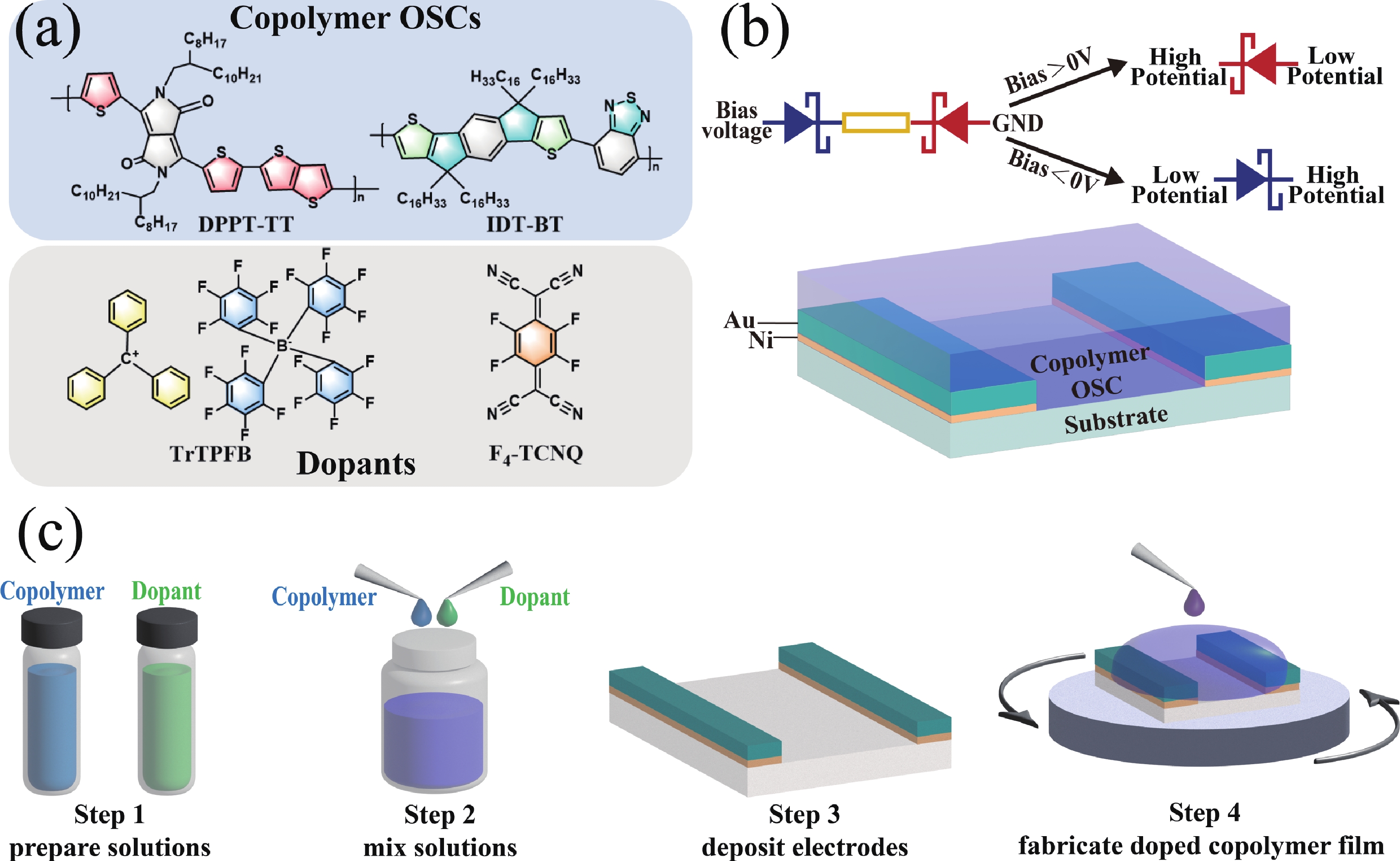
Fig. 1.  (Color online) Materials, device structure and fabrication process. (a) Molecular structures of DPPT-TT, IDT-BT, TrTPFB and F4-TCNQ. (b) Structure of lateral back-to-back Schottky junction. (c) Fabrication process of the lateral back-to-back Schottky junction.

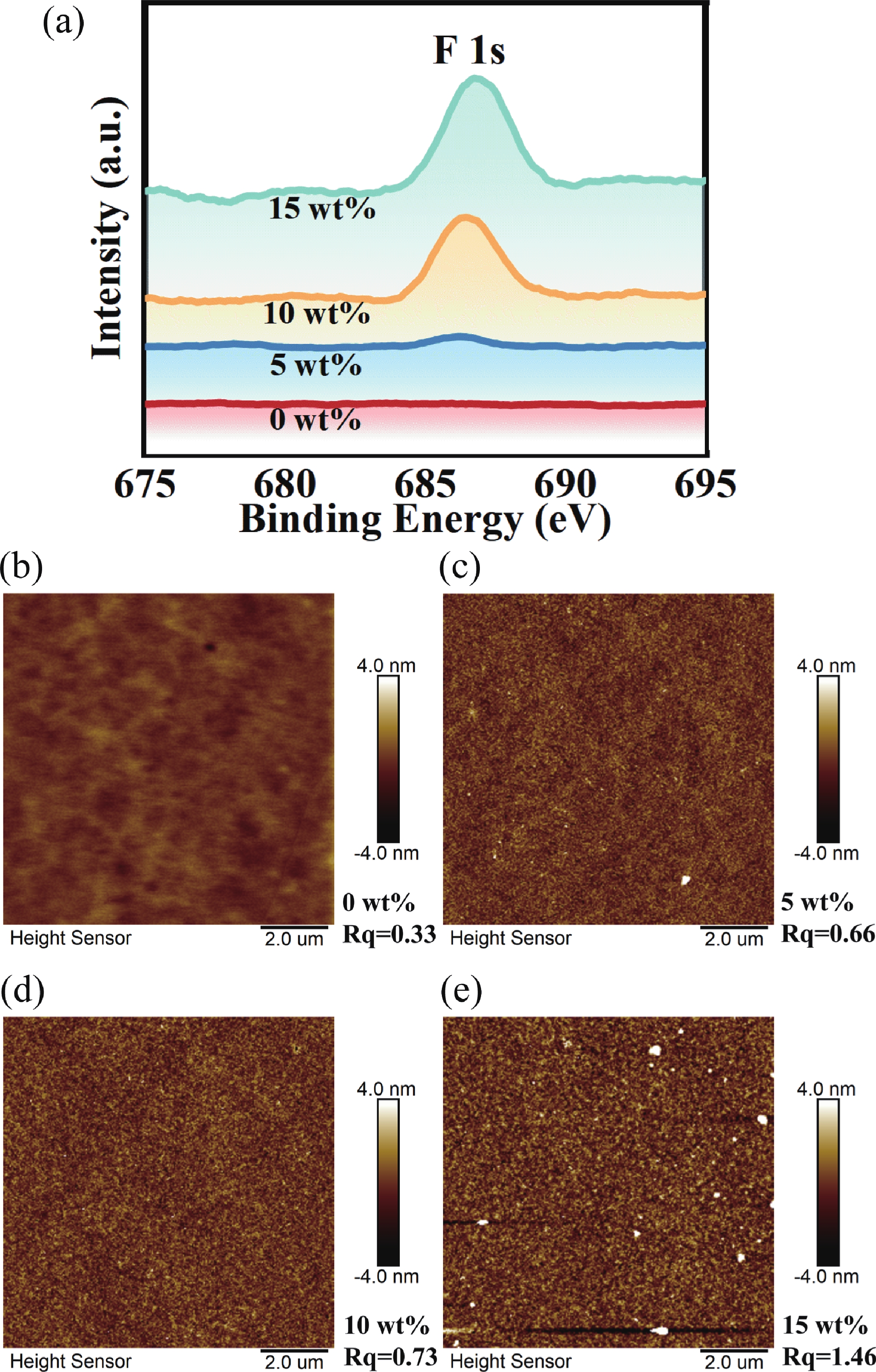
Fig. 2.  (Color online) Characterization of copolymer OSC films. (a) XPS of copolymer OSC films with different doping ratios. (b) AFM image of film without dopant. (c) AFM image of film with 5 wt% doping ratios. (d) AFM image of film with 10 wt% doping ratios. (e) AFM image of film with 15 wt% doping ratios.

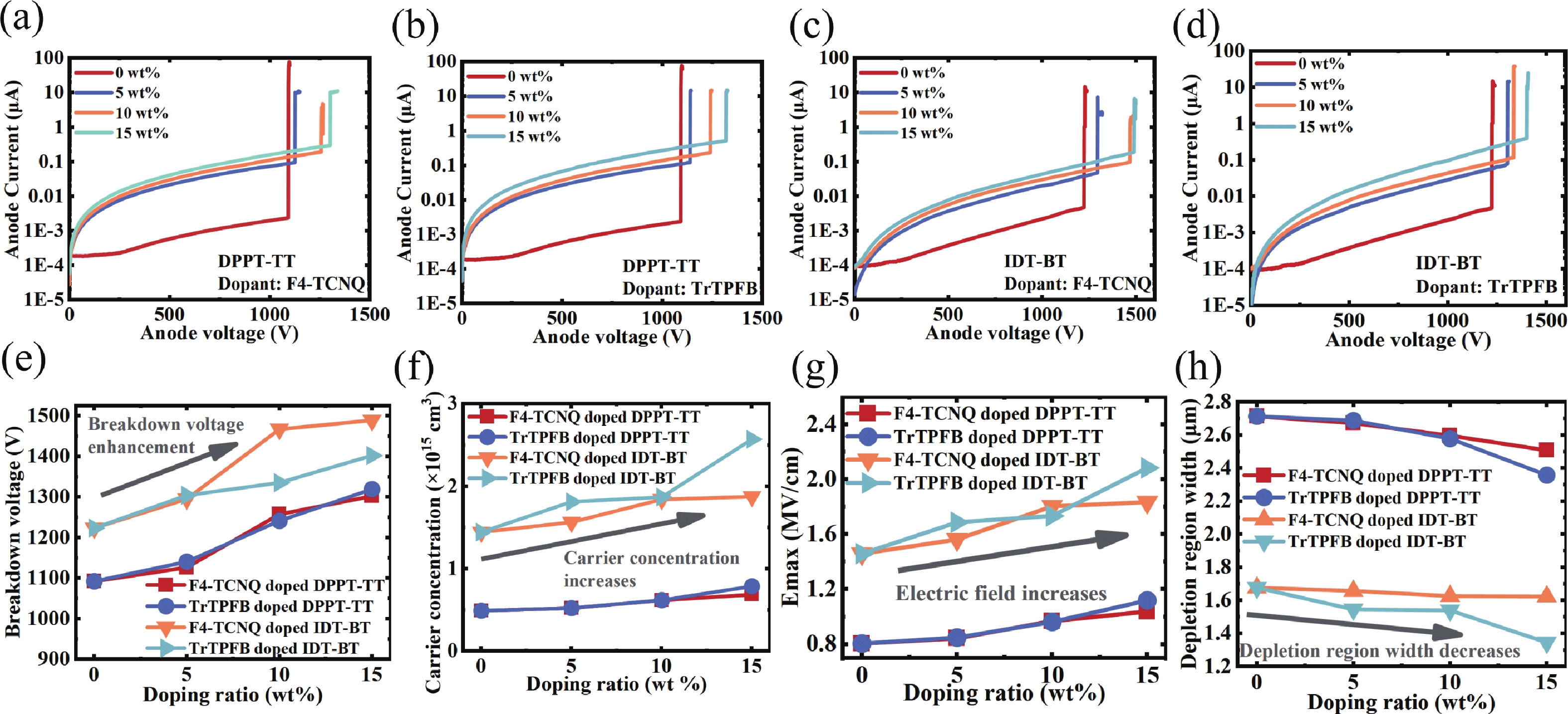
Fig. 3.  (Color online) The breakdown behavior and key parameters of copolymer OSCs Schottky junctions. (a) Breakdown behavior of F4-TCNQ doped DPPT-TT Schottky junction. (b) Breakdown behavior of TrTPFB doped DPPT-TT Schottky junction. (c) Breakdown behavior of F4-TCNQ doped IDT-BT Schottky junction. (d) Breakdown behavior of TrTPFB doped IDT-BT Schottky junction. (e) Dependence of BV on the doping ratios. (f) Dependence of carrier concentration on the doping ratios. (g) Dependence of maximum electric field on the doping ratios. (h) Dependence of depletion region width on the doping ratios.

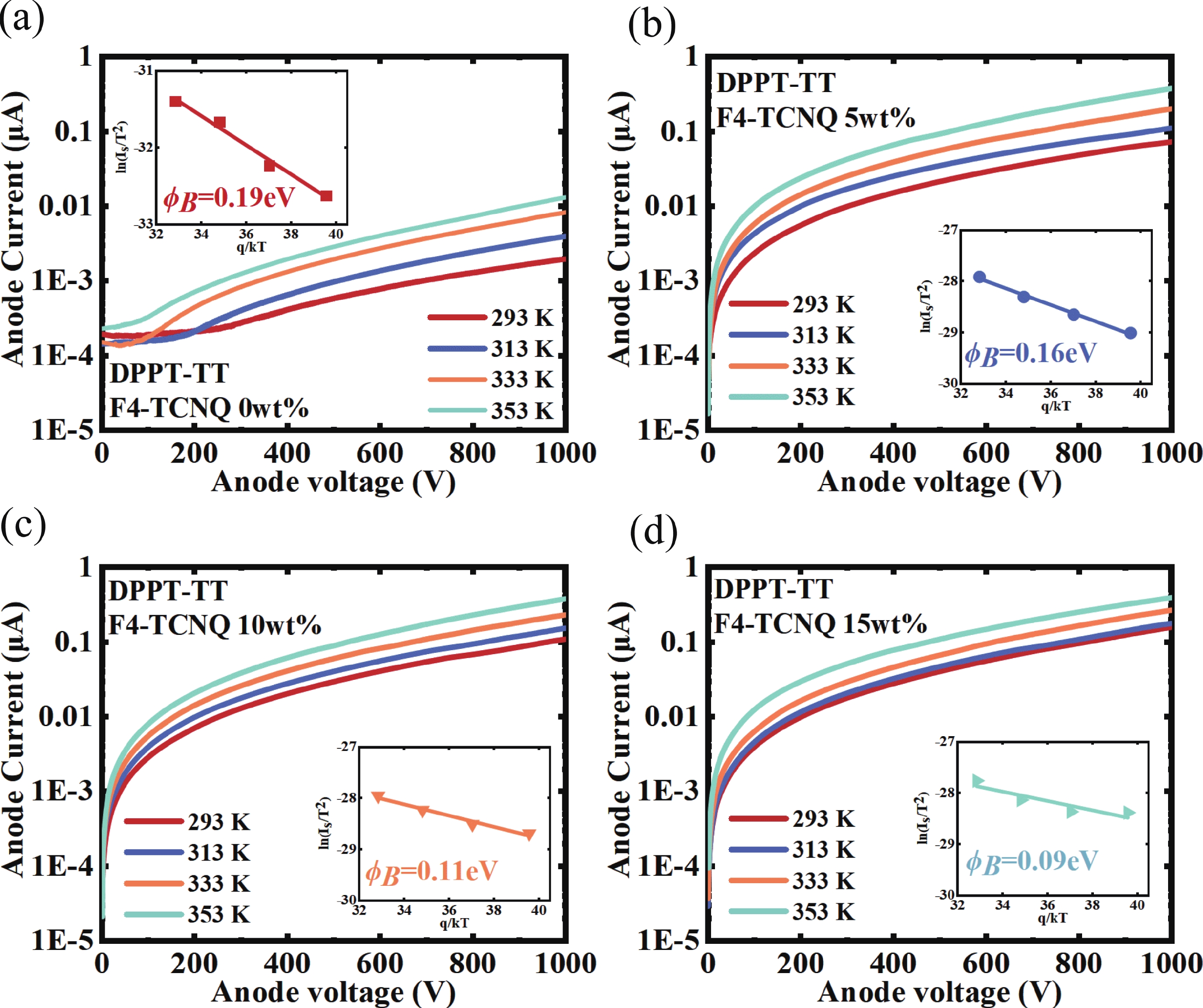
Fig. 4.  (Color online) The leakage currents and key parameters of copolymer OSC Schottky junctions. (a) The leakage currents with 0 wt% doping ratio. (b) The leakage currents with 5 wt% doping ratio. (c) The leakage currents with 10 wt% doping ratio. (d) The leakage currents with 15 wt% doping ratio. The insets display the extracted Schottky barrier height.

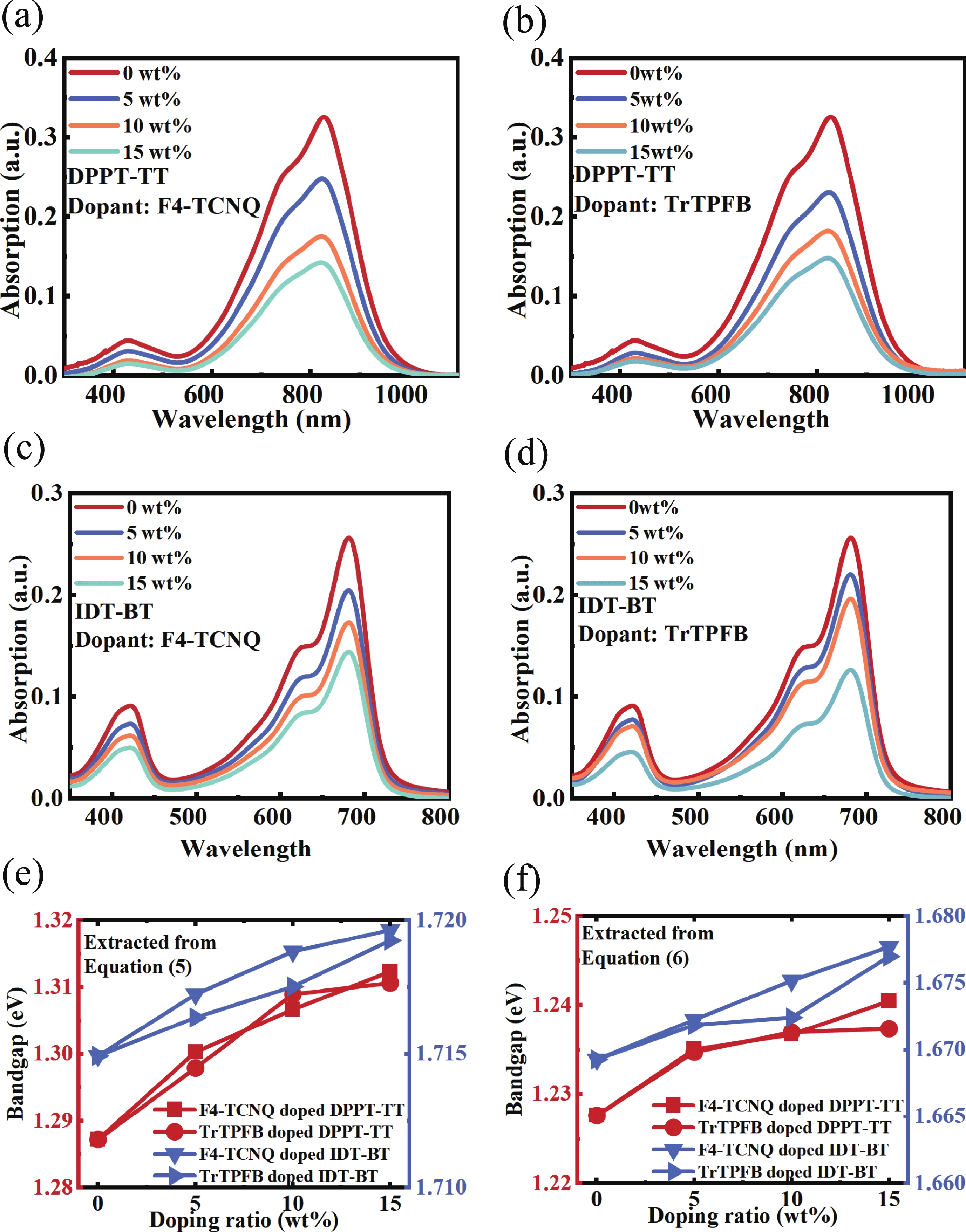
Fig. 5.  (Color online) Absorption spectra and bandgaps of copolymer OSC films. (a) Absorption spectra of F4-TCNQ doped DPPT-TT films. (b) Absorption spectra of TrTPFB doped DPPT-TT films. (c) Absorption spectra of F4-TCNQ doped IDT-BT films. (d) Absorption spectra of TrTPFB doped IDT-BT films. (e) Bandgaps of copolymer OSCs extracted using Eq. (5). (f) Bandgaps of copolymer OSCs extracted using Eq. (6).

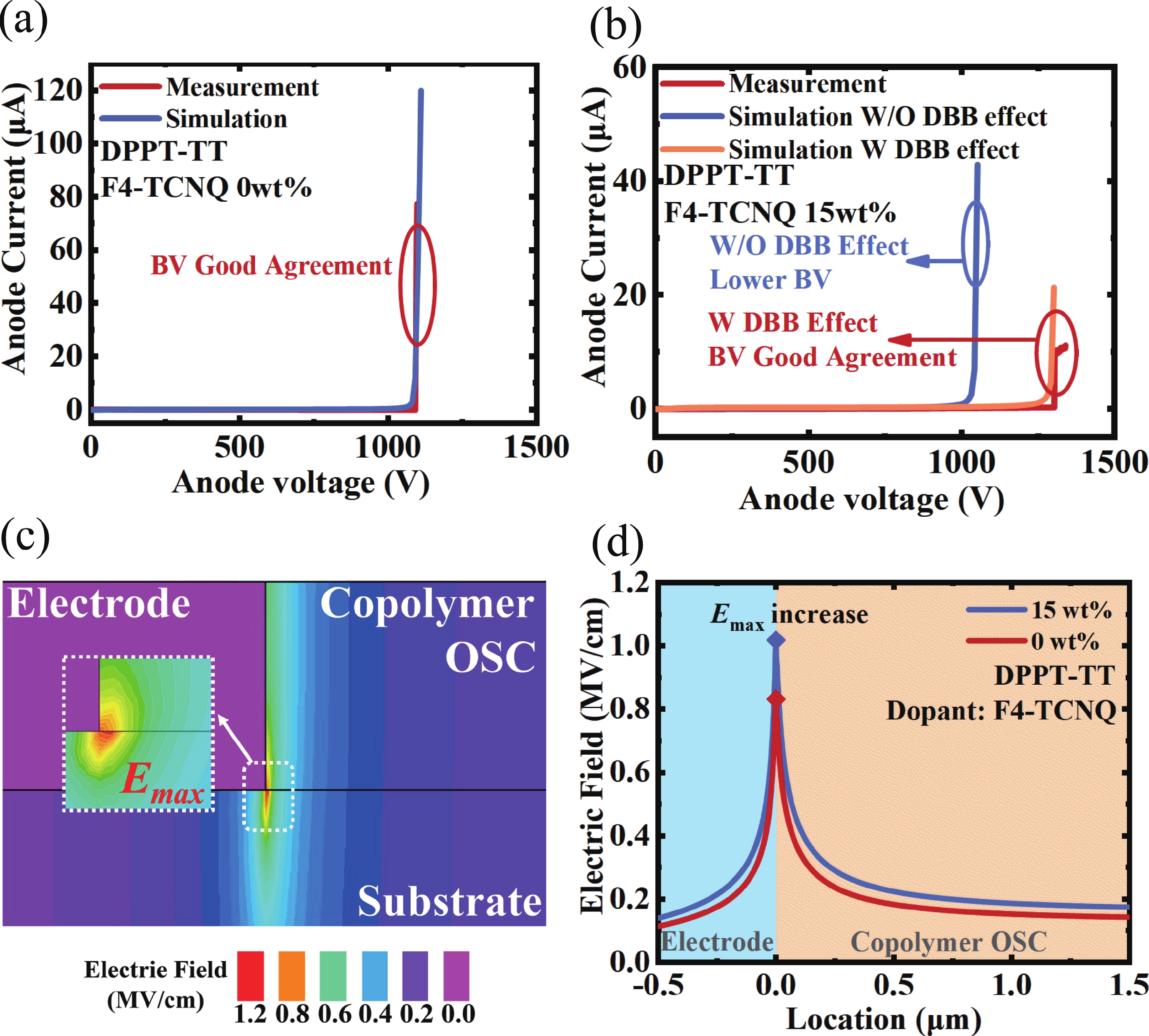
Fig. 6.  (Color online) Simulation of breakdown characteristics under different doping conditions. (a) Simulated breakdown curve of the undoped device. (b) Simulated breakdown curves under doped conditions. (c) Schematic of the 2D electric field distribution within the device. (d) Electric field curves at the electrode–copolymer OSC interface.

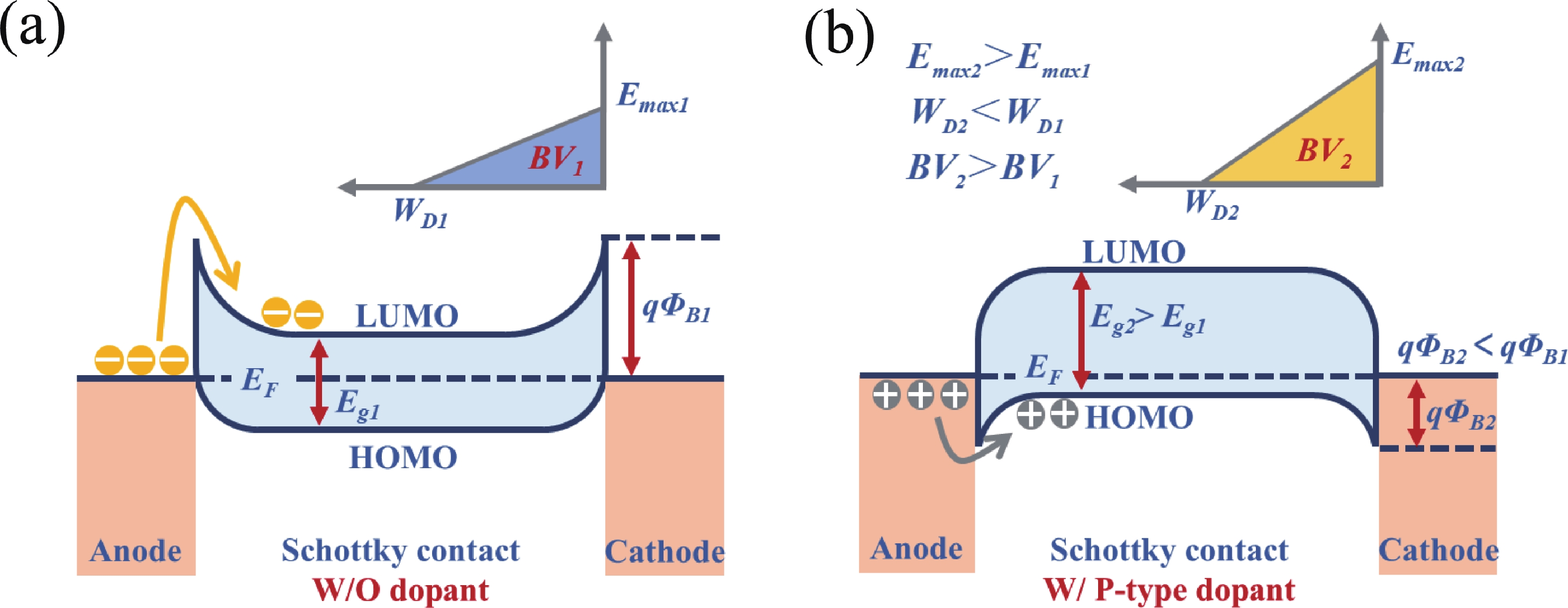
Fig. 7.  (Color online) Energy band diagrams of metal–semiconductor contacts at different doping conditions. (a) Energy band diagrams of metal–semiconductor contacts without dopant. (b) Energy band diagrams of metal–semiconductor contacts with dopant.

[1]
Zhao C Z, Park J, Maulà D, et al. Skin-like drift-free biosensors with stretchable diode-connected organic field-effect transistors. Nat Electron, 2025, 8(10): 981 doi: 10.1038/s41928-025-01465-4
[2]
Liu H R, Liu D, Yang J C, et al. Flexible electronics based on organic semiconductors: From patterned assembly to integrated applications. Small, 2023, 19(11): 2206938 doi: 10.1002/smll.202206938
[3]
Liu W R, Zhang G M, Jin C X, et al. Low-voltage-operation of flexible organic C8-BTBT thin-film transistors with a reactively sputtered AlOx gate dielectric. Appl Phys Lett, 2022, 121(7): 073301 doi: 10.1063/5.0092988
[4]
Park H, Kim S, Lee J, et al. Organic flexible electronics with closed-loop recycling for sustainable wearable technology. Nat Electron, 2024, 7(1): 39 doi: 10.1038/s41928-023-01078-9
[5]
Qin Z S, Zhang Y, Wang T Y, et al. Intrinsically white organic polarized emissive semiconductors. Nat Photonics, 2025, 19(4): 378 doi: 10.1038/s41566-024-01609-6
[6]
Lu L K, Wang D Z, Pu C C, et al. High-performance flexible organic field effect transistors with print-based nanowires. Microsyst Nanoeng, 2023, 9: 80 doi: 10.1038/s41378-023-00551-x
[7]
Wang P S, Yang J X, Zhang Y H, et al. Near-amorphous conjugated polymers: An emerging class of semiconductors for flexible electronics. ACS Mater Lett, 2022, 4(6): 1112 doi: 10.1021/acsmaterialslett.2c00138
[8]
Zhao L F, Xie H H, Xia J N, et al. High-performance near-infrared vertical organic phototransistors through bulk heterojunction integration. Appl Phys Lett, 2024, 124(24): 243301 doi: 10.1063/5.0210727
[9]
Mou Y B, Zhang J, Ma Y W, et al. Revealing two-dimensional electric field crowding effect in breakdown performance of DPPT-TT polymer-based OFETs. Appl Phys Lett, 2024, 125(12): 123504 doi: 10.1063/5.0230862
[10]
Wang F B, Zhang J, Zhang H, et al. A 121 A/cm2 high current density copolymer OSC-based thin-film power OFET with 300 V off-state breakdown voltage. IEEE J Electron Devices Soc, 2023, 11: 579 doi: 10.1109/JEDS.2023.3325465
[11]
Zhang J, Li M, Chen J, et al. Avalanche-like breakdown behavior of copolymer organic semiconductor-based Schottky junction structure. Appl Phys Lett, 2022, 121(12): 123502 doi: 10.1063/5.0104970
[12]
Zhang J, Zhou J Y, Wang Y H, et al. A 2.2kV organic semiconductor- based lateral power device. IEEE Electron Device Lett, 2022, 43(2): 276 doi: 10.1109/LED.2021.3135699
[13]
Xu Y, Sun H B, Liu A, et al. Doping: A key enabler for organic transistors. Adv Mater, 2019, 31(35): 1903846 doi: 10.1002/adma.201903846
[14]
Scaccabarozzi A D, Basu A, Aniés F, et al. Doping approaches for organic semiconductors. Chem Rev, 2022, 122(4): 4420 doi: 10.1021/acs.chemrev.1c00581
[15]
Chang H D, Zhang J, Bian J T, et al. On-state performance enhancement of copolymer-based organic field effect transistors enabled by an organic metal salt dopant. Appl Phys Lett, 2026, 128(12): 122106 doi: 10.1063/5.0318899
[16]
Camacho-Aguilera R, Han Z H, Cai Y, et al. Direct band gap narrowing in highly doped Ge. Appl Phys Lett, 2013, 102(15): 152106 doi: 10.1063/1.4802199
[17]
Camuso G, Napoli E, Pathirana V, et al. Effect of bandgap narrowing on performance of modern power devices. IEEE Trans Electron Devices, 2013, 60(12): 4185 doi: 10.1109/TED.2013.2286528
[18]
van Vliet C M, Vasilopoulos P. Electrical and optical bandgap narrowing due to heavy doping in silicon. Phys Stat Sol (a), 1986, 94(2): 635 doi: 10.1002/pssa.2210940226
[19]
Yan D, Cuevas A. Empirical determination of the energy band gap narrowing in highly doped n+ silicon. J Appl Phys, 2013, 114(4): 044508 doi: 10.1063/1.4816694
[20]
Nikolka M. A perspective on overcoming water-related stability challenges in molecular and hybrid semiconductors. MRS Commun, 2020, 10(1): 98 doi: 10.1557/mrc.2019.161
[21]
Xu J, Wang S H, Wang G N, et al. Highly stretchable polymer semiconductor films through the nanoconfinement effect. Science, 2017, 355(6320): 59 doi: 10.1126/science.aah4496
[22]
Xu Y, Sun H B, Li W W, et al. Exploring the charge transport in conjugated polymers. Adv Mater, 2017, 29(41): 1702729 doi: 10.1002/adma.201702729
[23]
Lu D Y, Huang F M, Gao C F, et al. Pursuing high-performance organic field-effect transistors through organic salt doping. Adv Funct Mater, 2022, 32(18): 2111285 doi: 10.1002/adfm.202111285
[24]
Pecunia V, Nikolka M, Sou A, et al. Trap healing for high-performance low-voltage polymer transistors and solution-based analog amplifiers on foil. Adv Mater, 2017, 29(23): 1606938 doi: 10.1002/adma.201606938
[25]
Zhang F J, Dai X J, Zhu W K, et al. Large modulation of charge carrier mobility in doped nanoporous organic transistors. Adv Mater, 2017, 29(27): 1700411 doi: 10.1002/adma.201700411
[26]
Hu Y Y, Rengert Z D, McDowell C, et al. Doping polymer semiconductors by organic salts: Toward high-performance solution-processed organic field-effect transistors. ACS Nano, 2018, 12(4): 3938 doi: 10.1021/acsnano.8b01460
[27]
Guo J, Liu Y, Chen P A, et al. Revealing the electrophilic-attack doping mechanism for efficient and universal p-doping of organic semiconductors. Adv Sci, 2022, 9(32): 2203111 doi: 10.1002/advs.202203111
[28]
Liu C, Jang J, Xu Y, et al. Effect of doping concentration on microstructure of conjugated polymers and characteristics in N-type polymer field-effect transistors. Adv Funct Mater, 2015, 25(5): 758 doi: 10.1002/adfm.201402321
[29]
Huseynova G, Xu Y, Nketia Yawson B, et al. P-type doped ambipolar polymer transistors by direct charge transfer from a cationic organic dye Pyronin B ferric chloride. Org Electron, 2016, 39: 229 doi: 10.1016/j.orgel.2016.10.012
[30]
Ji X Z, Cheng H-W, Schuster N J, et al. Tuning the mobility of indacenodithiophene-based conjugated polymers via coplanar backbone engineering. Chem Mater, 2024, 36(1): 256 doi: 10.1021/acs.chemmater.3c02006
[31]
Khim D, Baeg K J, Caironi M, et al. Control of ambipolar and unipolar transport in organic transistors by selective inkjet-printed chemical doping for high performance complementary circuits. Adv Funct Mater, 2014, 24(40): 6252 doi: 10.1002/adfm.201400850
[32]
Xu Y, Sun H B, Noh Y Y. Schottky barrier in organic transistors. IEEE Trans Electron Devices, 2017, 64(5): 1932 doi: 10.1109/TED.2017.2650216
[33]
Costa J C S, Taveira R J S, Lima C F R A C, et al. Optical band gaps of organic semiconductor materials. Opt Mater, 2016, 58: 51 doi: 10.1016/j.optmat.2016.03.041
[34]
Tauc J, Grigorovici R, Vancu A. Optical properties and electronic structure of amorphous germanium. Phys Status Solidi B: , 1966, 15(2): 627 doi: 10.1002/pssb.19660150224
[35]
Zhou W Y, Xie S S, Qian S F, et al. Optical absorption spectra of C70 thin films. J Appl Phys, 1996, 80(1): 459 doi: 10.1063/1.362747
  • Search

    Advanced Search >>

    GET CITATION

    shu

    Export: BibTex EndNote

    Article Metrics

    Article views: 11 Times PDF downloads: 2 Times Cited by: 0 Times

    History

    Received: 13 May 2026 Revised: 09 July 2026 Online: Accepted Manuscript: 05 August 2026

    Catalog

      Email This Article

      User name:
      Email:*请输入正确邮箱
      Code:*验证码错误
      Hengdian Chang, Jun Zhang, Qiushi Zhang, Haonan Lin, Haowen Qian, Jiafei Yao, Kemeng Yang, Jing Chen, Man Li, Wen Li, Mingdong Yi, Song Bai, Yufeng Guo. Enhanced breakdown performance in copolymer-based Schottky junctions through doping-induced bandgap broadening effect[J]. Journal of Semiconductors, 2026, In Press. doi: 10.1088/1674-4926/26050021 ****H D Chang, J Zhang, Q S Zhang, H N Lin, H W Qian, J F Yao, K M Yang, J Chen, M Li, W Li, M D Yi, S Bai, and Y F Guo, Enhanced breakdown performance in copolymer-based Schottky junctions through doping-induced bandgap broadening effect[J]. J. Semicond., 2026, accepted doi: 10.1088/1674-4926/26050021
      Citation:
      Hengdian Chang, Jun Zhang, Qiushi Zhang, Haonan Lin, Haowen Qian, Jiafei Yao, Kemeng Yang, Jing Chen, Man Li, Wen Li, Mingdong Yi, Song Bai, Yufeng Guo. Enhanced breakdown performance in copolymer-based Schottky junctions through doping-induced bandgap broadening effect[J]. Journal of Semiconductors, 2026, In Press. doi: 10.1088/1674-4926/26050021 ****
      H D Chang, J Zhang, Q S Zhang, H N Lin, H W Qian, J F Yao, K M Yang, J Chen, M Li, W Li, M D Yi, S Bai, and Y F Guo, Enhanced breakdown performance in copolymer-based Schottky junctions through doping-induced bandgap broadening effect[J]. J. Semicond., 2026, accepted doi: 10.1088/1674-4926/26050021

      Enhanced breakdown performance in copolymer-based Schottky junctions through doping-induced bandgap broadening effect

      DOI: 10.1088/1674-4926/26050021
      CSTR: 32376.14.1674-4926.26050021
      More Information
      • Hengdian Chang received his bachelor's degree from Nanjing University of Posts and Telecommunications in 2022. Now he is a Ph. D. candidate student at Nanjing University of Posts and Telecommunications under the supervision of Prof. Yufeng Guo. He focuses on the research of copolymer organic power field-effect transistors
      • Jun Zhang is a professor and doctoral supervisor at the School of Integrated Circuit Science and Engineering, Nanjing University of Posts and Telecommunications. His current research focuses on power semiconductor devices and power integration technology, with special emphasis on the application of novel materials such as organic semiconductors in power devices. He has published over 70 papers and been granted more than 10 invention patents
      • Yufeng Guo received the Ph.D. degree in microelectronics and solid-state electronics from the University of Electronic Science and Technology of China, Chengdu, China, in 2005. He is currently a Professor with the School of Integrated Circuit Science and Engineering, Nanjing University of Posts and Telecommunications, Nanjing, China. He has published more than 250 articles in refereed journals and conferences and holding over 60 Chinese patents. His current research interests include semiconductor power devices, microelectronics devices reliability, and RF and power integrated circuits and systems
      • Corresponding author: bravaisxx@163.comyfguo@njupt.edu.cn
      • Received Date: 2026-05-13
      • Revised Date: 2026-07-09
      • Available Online: 2026-08-05

      Catalog

        /

        DownLoad:  Full-Size Img  PowerPoint
        Return
        Return