| [1] |
Stammen J A, Williams S, Ku D N, et al. Mechanical properties of a novel PVA hydrogel in shear and unconfined compression. Biomaterials, 2001, 22(8): 799 doi: 10.1016/S0142-9612(00)00242-8 |
| [2] |
|
| [3] |
Burdick J A, Murphy W L. Moving from static to dynamic complexity in hydrogel design. Nat Commun, 2012, 3: 1269 doi: 10.1038/ncomms2271 |
| [4] |
Sun X, Cui H H, Li J F, et al. An injectable shape-adaptive hydrogel system for subconjunctival injuries: in situ and permanently releases rapamycin to prevent fibrosis via promoting autophagy. Mater Today Bio, 2025, 30: 101380 doi: 10.1016/j.mtbio.2024.101380 |
| [5] |
Zhao X H. Multi-scale multi-mechanism design of tough hydrogels: Building dissipation into stretchy networks. Soft Matter, 2014, 10(5): 672 doi: 10.1039/C3SM52272E |
| [6] |
Yan M, Hu S Y, Tan H J, et al. Double-dynamic-bond cross-linked hydrogel adhesive with cohesion-adhesion enhancement for emergency tissue closure and infected wound healing. Adv Healthc Mater, 2025, 14(7): 2404447 doi: 10.1002/adhm.202404447 |
| [7] |
Zhang B, Dong Y L, Han J R, et al. Physicochemical dual cross-linking conductive polymeric networks combining high strength and high toughness enable stable operation of silicon microparticle anodes. Adv Mater, 2023, 35(29): 2301320 doi: 10.1002/adma.202301320 |
| [8] |
Wang Z B, Yang F H, Liu X X, et al. Hydrogen bonds-pinned entanglement blunting the interfacial crack of hydrogel–elastomer hybrids. Adv Mater, 2024, 36(14): 2313177 doi: 10.1002/adma.202313177 |
| [9] |
Fang Y H, Liang C, Liljeström V, et al. Toughening hydrogels with fibrillar connected double networks. Adv Mater, 2024, 36(27): 2402282 doi: 10.1002/adma.202402282 |
| [10] |
Cui H H, Li J G. Hydrogel adhesives for tissue recovery. Adv Colloid Interface Sci, 2025, 341: 103496 doi: 10.1016/j.cis.2025.103496 |
| [11] |
Yu C, Kim H, Choi J, et al. Highly tough, Notch-insensitive, and fast self-healing thermoplastic polyurethane elastomers by tailored soft segment design. Angew Chem Int Ed, 2026, 65(13): e8983737 doi: 10.1002/anie.8983737 |
| [12] |
Qureshi A T, Afrin S, Asim S, et al. Imine crosslinked, injectable, and self-healing fucoidan hydrogel with immunomodulatory properties. Adv Healthc Mater, 2025, 14(15): 2405260 doi: 10.1002/adhm.202405260 |
| [13] |
Shen J L, Fu S Y, Liu X H, et al. Fabrication of Janus-adhesion multifunctional hydrogel based on β-cyclodextrin for wound dressing. Adv Healthc Mater, 2025, 14(15): 2500600 doi: 10.1002/adhm.202500600 |
| [14] |
Yang J W, Bai R B, Suo Z G. Topological adhesion of wet materials. Adv Mater, 2018, 30(25): 1800671 doi: 10.1002/adma.201800671 |
| [15] |
Zhao X, Lang Q, Yildirimer L, et al. Photocrosslinkable gelatin hydrogel for epidermal tissue engineering. Adv Healthc Mater, 2016, 5(1): 108 doi: 10.1002/adhm.201500005 |
| [16] |
Koh E, Freedman B R, Ramazani F, et al. Controlled delivery of corticosteroids using tunable tough adhesives. Adv Healthc Mater, 2023, 12(3): 2201000 doi: 10.1002/adhm.202201000 |
| [17] |
Griffith A A. VI. The phenomena of rupture and flow in solids. Philos Trans R Soc Lond Ser A Contain Pap a Math Phys Character, 1921, 221(582/583/584/585/586/587/588/589/590/591/592/593): 163
|
| [18] |
Rivlin R S, Thomas A G. Rupture of rubber. I. Characteristic energy for tearing. J Polym Sci, 1953, 10(3): 291
|
| [19] |
Lake G J, Thomas A G. The strength of highly elastic materials. Proc R Soc Lond Ser A Math Phys Sci, 1967, 300(1460): 108
|
| [20] |
Johnson K L, Kendall K, Roberts A D. Surface energy and the contact of elastic solids. Proc R Soc Lond A Math Phys Sci, 1971, 324(1558): 301
|
| [21] |
Gent A N, Schultz J. Effect of wetting liquids on the strength of adhesion of viscoelastic material. J Adhes, 1972, 3(4): 281 doi: 10.1080/00218467208072199 |
| [22] |
|
| [23] |
Bai R B, Yang Q S, Tang J D, et al. Fatigue fracture of tough hydrogels. Extreme Mech Lett, 2017, 15: 91 doi: 10.1016/j.eml.2017.07.002 |
| [24] |
Lienemann P S, Lutolf M P, Ehrbar M. Biomimetic hydrogels for controlled biomolecule delivery to augment bone regeneration. Adv Drug Deliv Rev, 2012, 64(12): 1078 doi: 10.1016/j.addr.2012.03.010 |
| [25] |
An B Y, Cui H H, Wang M K, et al. Hydrogel tissue adhesive: Adhesion strategy and application. Colloids Surf B Biointerfaces, 2025, 253: 114755 doi: 10.1016/j.colsurfb.2025.114755 |
| [26] |
Li X Y, Gong J P. Design principles for strong and tough hydrogels. Nat Rev Mater, 2024, 9(6): 380 doi: 10.1038/s41578-024-00672-3 |
| [27] |
Liu J, Lin S T, Liu X Y, et al. Fatigue-resistant adhesion of hydrogels. Nat Commun, 2020, 11: 1071 doi: 10.1038/s41467-020-14871-3 |
| [28] |
Lake G J, Lindley P B. The mechanical fatigue limit for rubber. J Appl Polym Sci, 1965, 9(4): 1233 doi: 10.1002/app.1965.070090405 |
| [29] |
Taylor D, O’Mara N, Ryan E, et al. The fracture toughness of soft tissues. J Mech Behav Biomed Mater, 2012, 6: 139 doi: 10.1016/j.jmbbm.2011.09.018 |
| [30] |
Cui C Y, Liu W G. Recent advances in wet adhesives: Adhesion mechanism, design principle and applications. Prog Polym Sci, 2021, 116: 101388 doi: 10.1016/j.progpolymsci.2021.101388 |
| [31] |
|
| [32] |
Chu Y T, Zhang W Y, Liu D G, et al. Ligament inspired ultra-strong and tough bio-based polyurethane elastomers via dynamic hydrogen bonding induced confinement effect. Adv Funct Mater, 2026, 36(3): e10461 doi: 10.1002/adfm.202510461 |
| [33] |
Ullah I, Song Y Y, Wang C, et al. Recent advances in adhesive hydrogels for next-generation bioelectronic interfaces. Adv Compos Hybrid Mater, 2026, 9(2): 177 doi: 10.1007/s42114-026-01639-4 |
| [34] |
Hong W, Zhao X H, Zhou J X, et al. A theory of coupled diffusion and large deformation in polymeric gels. J Mech Phys Solids, 2008, 56(5): 1779 doi: 10.1016/j.jmps.2007.11.010 |
| [35] |
Yuk H, Wu J J, Zhao X H. Hydrogel interfaces for merging humans and machines. Nat Rev Mater, 2022, 7(12): 935 doi: 10.1038/s41578-022-00483-4 |
| [36] |
Kim H J, Koo J H, Lee S, et al. Materials design and integration strategies for soft bioelectronics in digital healthcare. Nat Rev Mater, 2025, 10(9): 654 doi: 10.1038/s41578-025-00819-w |
| [37] |
Sunwoo S H, Han S I, Park C S, et al. Soft bioelectronics for the management of cardiovascular diseases. Nat Rev Bioeng, 2024, 2(1): 8 doi: 10.1038/s44222-023-00102-z |
| [38] |
Wang H H, Li X N, Li M C, et al. Bioadhesion design of hydrogels: Adhesion strategies and evaluation methods for biological interfaces. J Adhes Sci Technol, 2023, 37(3): 335 doi: 10.1080/01694243.2021.2020502 |
| [39] |
He X X, Li Z Y, Huang X C, et al. Sweat-powered, skin-adhesive multimodal sensor for long-term and real-time sweat monitoring (1/2025). BMEMat, 2025, 3: e70007 doi: 10.1002/bmm2.70007 |
| [40] |
Yang J W, Bai R B, Chen B H, et al. Hydrogel adhesion: A supramolecular synergy of chemistry, topology, and mechanics. Adv Funct Mater, 2020, 30(2): 1901693 doi: 10.1002/adfm.201901693 |
| [41] |
Long R, Hui C Y. Fracture toughness of hydrogels: Measurement and interpretation. Soft Matter, 2016, 12(39): 8069 doi: 10.1039/C6SM01694D |
| [42] |
Lin S T, Liu X Y, Liu J, et al. Anti-fatigue-fracture hydrogels. Sci Adv, 2019, 5: eaau8528 doi: 10.1126/sciadv.aau8528 |
| [43] |
Qi M, Yang R Q, Wang Z, et al. Bioinspired self-healing soft electronics. Adv Funct Mater, 2023, 33(17): 2214479 doi: 10.1002/adfm.202214479 |
| [44] |
Sun H J, Qu X Y, Wang Q, et al. Dynamic regulation of interfacial adhesion in biomedical hydrogels. Chem Soc Rev, 2026, 55(1): 469 doi: 10.1039/D5CS00403A |
| [45] |
Cui C Y, Wu T L, Gao F, et al. An autolytic high strength instant adhesive hydrogel for emergency self-rescue. Adv Funct Mater, 2018, 28(42): 1804925 doi: 10.1002/adfm.201804925 |
| [46] |
Hou Y, Li Y, Li Y, et al. Tuning water-resistant networks in mussel-inspired hydrogels for robust wet tissue and bioelectronic adhesion. ACS Nano, 2023, 17(3): 2745 doi: 10.1021/acsnano.2c11053 |
| [47] |
Li J W, Ma Y N, Zhao Z H, et al. Bioinspired integrated auxetic conductive elastomer composite with high stretchability and robust interface. Small, 2025, 21(27): 2504272 doi: 10.1002/smll.202504272 |
| [48] |
Zhang Y, Ma S, Li B, et al. Gecko’s feet-inspired self-peeling switchable dry/wet adhesive. Chem Mater, 2021, 33(8): 2785 doi: 10.1021/acs.chemmater.0c04576 |
| [49] |
Stark A Y, Mitchell C T. Stick or slip: Adhesive performance of geckos and gecko-inspired synthetics in wet environments. Integr Comp Biol, 2019, 59(1): 214 doi: 10.1093/icb/icz008 |
| [50] |
Jung H, Lee D, Kim K, et al. Hydrogel–elastomer-based conductive nanomembranes for soft bioelectronics. Nat Nanotechnol, 2025, 20(12): 1822 doi: 10.1038/s41565-025-02031-x |
| [51] |
Luo S W, Yang L, Zou Q, et al. Rapid suture-free repair of arterial bleeding: A novel approach with ultra-thin bioadhesive hydrogel membrane. Chem Eng J, 2023, 472: 144865 doi: 10.1016/j.cej.2023.144865 |
| [52] |
Liu Y, Tao J, Mo Y P, et al. Ultrasensitive touch sensor for simultaneous tactile and slip sensing. Adv Mater, 2024, 36(21): 2313857 doi: 10.1002/adma.202313857 |
| [53] |
Hui Z Y, Zhang Z, Wang Y R, et al. Gradiently foaming ultrasoft hydrogel with stop holes for highly deformable, crack-resistant and sensitive conformal human-machine interfaces. Adv Mater, 2024, 36(23): 2314163 doi: 10.1002/adma.202314163 |
| [54] |
Tang H, Dong J P, Yan L J, et al. Sandcastle-worm-inspired hydrogel electronics for in situ forming, reconfigurable, and sustainable bioelectronic interface. Adv Healthc Mater, 2026, 15(11): e05269 doi: 10.1002/adhm.202505269 |
| [55] |
|
| [56] |
Webber R E, Creton C, Brown H R, et al. Large strain hysteresis and mullins effect of tough double-network hydrogels. Macromolecules, 2007, 40(8): 2919 doi: 10.1021/ma062924y |
| [57] |
Zhang K, Wei Y, Ding H, et al. Modular design of hydrogel adhesives for enhanced tissue healing. Adv Mater, 2026, 38(6): e16770 doi: 10.1002/adma.202516770 |
| [58] |
Gao M, Hao X Y, Li Y, et al. Engineering supramolecular composite hydrogels via “pH-induced ureidopyimidinone (UPy) tautomerization” strategy. Adv Funct Mater, 2025, 35(40): 2505578 doi: 10.1002/adfm.202505578 |
| [59] |
Wu T H, Jiang H, Zheng Y J, et al. Superior impact resistance in bionic nanocellulose composite supramolecular elastomers via multiple hydrogen bonding interactions. Adv Funct Mater, 2025, 35(4): 2414221 doi: 10.1002/adfm.202414221 |
| [60] |
Gong J P, Katsuyama Y, Kurokawa T, et al. Double-network hydrogels with extremely high mechanical strength. Adv Mater, 2003, 15(14): 1155 doi: 10.1002/adma.200304907 |
| [61] |
Nakayama A, Kakugo A, Gong J P, et al. High mechanical strength double-network hydrogel with bacterial cellulose. Adv Funct Mater, 2004, 14(11): 1124 doi: 10.1002/adfm.200305197 |
| [62] |
Song R J, Wang X Y, Johnson M, et al. Enhanced strength for double network hydrogel adhesive through cohesion-adhesion balance. Adv Funct Mater, 2024, 34(23): 2313322 doi: 10.1002/adfm.202313322 |
| [63] |
Xu H C, Liu Y, Mo Y P, et al. All-fiber anti-jamming capacitive pressure sensors based on liquid metals. Rare Met, 2025, 44(7): 4839 doi: 10.1007/s12598-024-03071-3 |
| [64] |
Li X X, Li L, Liu X L, et al. Hydrogel actuators: From building blocks selection, anisotropic structures design to multifunctional applications. Soft Sci, 2025, 5(3): 41
|



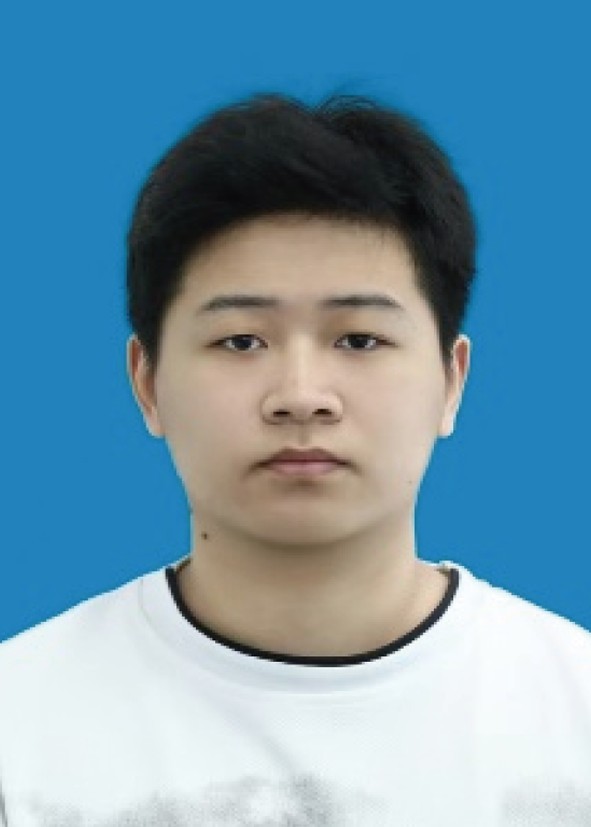 Haitao Liu received his B E degree from Wuhan University of Technology in 2025. He is currently pursuing his MS degree at Beihang University. His research focuses on flexible sensors, flexible electronics and intelligent sensing systems.
 Jing Rao is a professor at Beihang University. She received her Ph.D. from Nanyang Technological University and was a Humboldt Research Fellowship holder at the Technical University of Munich in Germany. She was also an assistant professor at the University of New South Wales in Australia. Her main research areas are non-destructive testing, flexible sensors, and structural health monitoring.
 Mengxiao Chen is an associate professor at Beihang University. She received her B.S. degree in physics from Northeastern Univer-sity 2012; and Ph. D. degree in physics from Beijing Institute of Nanoenergy and Nanosystems, CAS, in 2017. Then she joined Nanyang Technological University as a research fellow, and worked at the College of Biomedical Engineering & Instrument Science at Zhejiang University in Hangzhou as a Tenure-track Professor. Her main research interests include soft electronics, bioinspired electronics, and novel functional fiber devices.
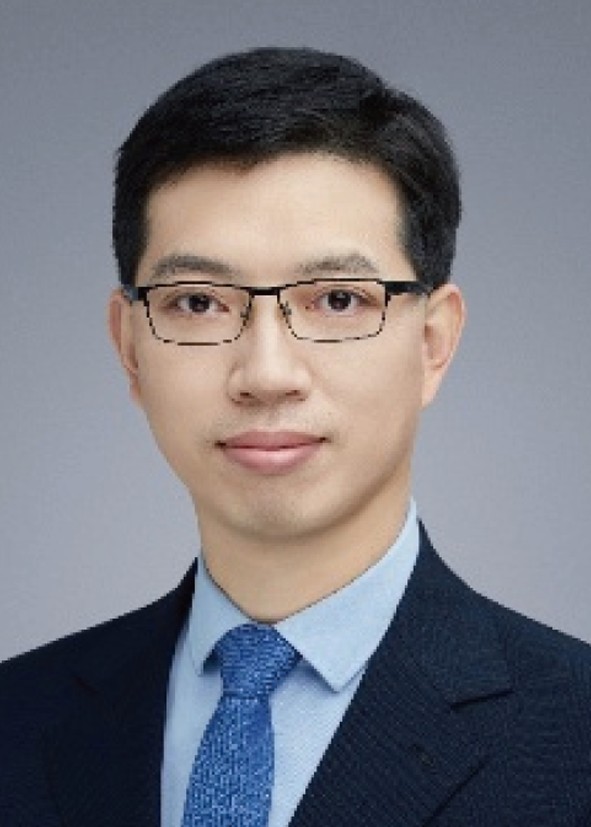 Caofeng Pan is a distinguished Professor at Beihang University, and awarded of the National Science Fund for Distinguished Young Scholars. Prof. Pan earned his bachelor's (2005) and doctoral (2010) degrees from the School of Materials Science and Engineering, Tsinghua University. He subsequently conducted postdoctoral research at the Georgia Institute of Technology, USA. From 2013 to 2023, he served as a professor and group leader at the University of Chinese Academy of Sciences and the Beijing Institute of Nanoenergy and Nanosystems, CAS. Since 2023, he has been serving as a distinguished professor and leads a research group at the Institute of Atomic Manufacturing, Beihang University. Prof. Pan’s research focuses on atomic-level manufacturing and low-dimensional semiconductor materials/device for sensing applications.
 DownLoad: