| [1] |
Song J. AI revolution driven by memory technology innovation. 2025 IEEE International Solid-State Circuits Conference (ISSCC), 2025: 26
|
| [2] |
Hung J M, Li X Q, Wu J J, et al. Challenges and trends inDeveloping nonvolatile memory-enabled computing chips for intelligent edge devices. IEEE Trans Electron Devices, 2020, 67(4): 1444 doi: 10.1109/TED.2020.2976115 |
| [3] |
Du H R, Shi T X, Wang S Y, et al. Hybrid-domain STT-MRAM compute-in-memory scheme for quantized deep neural network. 2026 IEEE International Symposium on Circuits and Systems (ISCAS), 2026: 2510
|
| [4] |
Lue H T, Hung C H, Wang K C, et al. Prospects of computing in or near flash memories. 2024 IEEE International Electron Devices Meeting (IEDM), 2024: 1
|
| [5] |
Borghetti J, Snider G S, Kuekes P J, et al. ‘Memristive’ switches enable ‘stateful’ logic operations via material implication. Nature, 2010, 464(7290): 873 doi: 10.1038/nature08940 |
| [6] |
Cai H, Bian Z J, Hou Y R, et al. 33.4 a 28nm 2mb STT-MRAM computing-in-memory macro with a refined bit-cell and 22.4-41.5TOPS/W for AI inference. 2023 IEEE International Solid-State Circuits Conference (ISSCC), 2023: 500
|
| [7] |
Pedretti G, Ielmini D. In-memory computing with resistive memory circuits: Status and outlook. Electronics, 2021, 10(9): 1063 doi: 10.3390/electronics10091063 |
| [8] |
Mannocci P, Larelli G, Bonomi M, et al. Achieving high precision in analog in-memory computing systems. npj Unconv Comput, 2026, 3(1): 1 doi: 10.1038/s44335-025-00044-2 |
| [9] |
Zhang S Z, Huang P Y, You H T, et al. Readout scheme in analog computing-in-memory: Review of design principles and recent progress. Microelectron Eng, 2026, 305: 112466 doi: 10.1016/j.mee.2026.112466 |
| [10] |
Higuchi K, Matsui C, Misawa N, et al. Computation-in-memory simulation platform to investigate inference accuracy degradation by device non-ideality interactions in deep neural network applications. Jpn J Appl Phys, 2022, 61: SC1054 doi: 10.35848/1347-4065/ac44d0 |
| [11] |
Li Y X, Wang S Q, Sun Z. Constraints on bit precision and row parallelism for reliable computing-in-memory. Electronics, 2025, 14(13): 2532 doi: 10.3390/electronics14132532 |
| [12] |
Kim D H, Jo M, Seok Kim G, et al. DPe-CIM: A 4T-1C dual-port eDRAM-based compute-in-memory for simultaneous computing and refresh with adaptive refresh and data conversion reduction scheme. IEEE J Solid State Circuits, 2026, 61(6): 2965 doi: 10.1109/JSSC.2025.3623117 |
| [13] |
Luo Y B, Zuo P S, Wang S Q, et al. Smaller, faster, lower-power analog RRAM matrix computing circuits without performance compromise. Sci China Inf Sci, 2025, 68(2): 122402 doi: 10.1007/s11432-023-3990-4 |
| [14] |
Antolini A, Lico A, Scarselli E F, et al. An embedded PCM peripheral unit adding analog MAC in-memory computing feature addressing non-linearity and time drift compensation. ESSCIRC 2022- IEEE 48th European Solid State Circuits Conference (ESSCIRC), 2022: 109
|
| [15] |
Antolini A, Lico A, Zavalloni F, et al. High-precision close-to-analog programming of PCM cells as devices for AiMC edge-AI. 2025 IEEE European Solid-State Electronics Research Conference (ESSERC), 2025: 461
|
| [16] |
Roy S K, Ou H M, Ahmed M G, et al. Compute SNDR-boosted 22-nm MRAM-based in-memory computing macro using statistical error compensation. IEEE J Solid State Circuits, 2025, 60(3): 1092 doi: 10.1109/JSSC.2024.3442013 |
| [17] |
Zhou R, Liu B, Si X, et al. Complementary series-connected STT-MTJ for time-based computing-in-memory. 2024 IEEE International Symposium on Circuits and Systems (ISCAS), 2024: 1
|
| [18] |
Sun Z, Kvatinsky S, Si X, et al. A full spectrum of computing-in-memory technologies. Nat Electron, 2023, 6(11): 823 doi: 10.1038/s41928-023-01053-4 |
| [19] |
Wan W E, Kubendran R, Schaefer C, et al. A compute-in-memory chip based on resistive random-access memory. Nature, 2022, 608(7923): 504 doi: 10.1038/s41586-022-04992-8 |
| [20] |
Wang L F, Ye W, Dou C M, et al. Efficient and robust nonvolatile computing-In-memory based on voltage division in 2T2R RRAM with input-dependent sensing control. IEEE Trans Circuits Syst II Express Briefs, 2021, 68(5): 1640
|
| [21] |
Zhou Z, Huang P, Xiang Y C, et al. A new hardware implementation approach of BNNs based on nonlinear 2T2R synaptic cell. 2018 IEEE International Electron Devices Meeting (IEDM), 2018: 20.7. 1
|
| [22] |
Bocquet M, Hirztlin T, Klein J O, et al. In-memory and error-immune differential RRAM implementation of binarized deep neural networks. 2018 IEEE International Electron Devices Meeting (IEDM), 2018: 20.6. 1
|
| [23] |
Wang B W, Yan L H, Tang X Y, et al. A scalable charge-domain CIM macro with 2T1R1C cells and capacitor reuse method. Integr Circuits Syst, 2026. doi: 10.23919/ICS.2026.3676379
|
| [24] |
Pasotti M, Zurla R, Bertolini Agnoletto J J, et al. 28 M weights ×TOPS/W/mm2 PCM-based analog in-memory computing core with 8 512 × 512-weight layers in 28 nm FD-SOI CMOS. 2025 IEEE European Solid-State Electronics Research Conference (ESSERC), 2025: 129
|
| [25] |
Xiao Z H, Naik V B, Cheung S K, et al. Device variation-aware adaptive quantization for MRAM-based accurate in-memory computing without on-chip training. 2022 International Electron Devices Meeting (IEDM), 2022: 10.5. 1
|
| [26] |
Wang J K, Gu Z K, Zhang B J, et al. RSACIM: Resistance summation analog computing in memory with accuracy optimization scheme based on MRAM. IEEE Trans Circuits Syst I Regul Pap, 2024, 71(3): 1014 doi: 10.1109/TCSI.2023.3334950 |
| [27] |
Wang S Y, Cai H. Computing-in-memory with enhanced STT-MRAM readout margin. IEEE Trans Magn, 2023, 59(11): 3401705
|
| [28] |
Wang S Y, Fang Z H, Du H R, et al. An SOT-MRAM-based Δ-bias-Σ computing paradigm for high energy efficiency computer vision applications. IEEE Trans Circuits Syst I Regul Pap, 2026, 73(7): 4748 doi: 10.1109/TCSI.2026.3674531 |
| [29] |
Wang S Y, Fang Z H, Du H R, et al. MRAM in-memory computing with periodic margin boost and INL cancellation. 2025 22nd International SoC Design Conference (ISOCC), 2025: 1
|
| [30] |
Wang W C, Zhang S D, Shamieh L, et al. MIX-ACIM: A 28-nm mixed-precision analog compute-in-memory with digital feature restoration for vector-matrix multiplication. IEEE Solid State Circuits Lett, 2025, 8: 213 doi: 10.1109/LSSC.2025.3590757 |
| [31] |
Yoon J H, Chang M Y, Khwa W S, et al. A 40-nm, 64-kb, 56.67 TOPS/W voltage-sensing computing-in-memory/digital RRAM macro supporting iterative write with verification and online read-disturb detection. IEEE J Solid State Circuits, 2022, 57(1): 68 doi: 10.1109/JSSC.2021.3101209 |
| [32] |
Li W T, Sun X Y, Jiang H W, et al. A 40nm RRAM compute-in-memory macro featuring on-chip write-verify and offset-cancelling ADC references. ESSDERC 2021 - IEEE 51st European Solid-State Device Research Conference (ESSDERC), 2021: 79
|
| [33] |
Song J H, Tang X Y, Luo H Y, et al. A 4-bit calibration-free computing-in-memory macro with 3T1C current-programed dynamic-cascode multi-level-cell eDRAM. IEEE J Solid State Circuits, 2024, 59(3): 842 doi: 10.1109/JSSC.2023.3339887 |
| [34] |
Xue C X, Chen W H, Liu J S, et al. Embedded 1-mb ReRAM-based computing-in- memory macro with multibit input and weight for CNN-based AI edge processors. IEEE J Solid State Circuits, 2020, 55(1): 203 doi: 10.1109/JSSC.2019.2951363 |
| [35] |
Spetalnick S D, Chang M Y, Konno S, et al. A 2.38 MCells/mm2 9.81-350 TOPS/W RRAM compute-in-memory macro in 40nm CMOS with hybrid offset/IOFF cancellation and ICELL RBLSL drop mitigation. 2023 IEEE Symposium on VLSI Technology and Circuits (VLSI Technology and Circuits), 2023: 1
|
| [36] |
Song B Q, Xiao C C, Gao F T, et al. MTVSM-CIM: A magnified-TMR VC-SOT-MRAM computing-in-memory macro for edge AI. 2025 IEEE International Symposium on Circuits and Systems (ISCAS), 2025: 1
|
| [37] |
You D Q, Khwa W S, Zhang B, et al. 14.1 a 22nm 104.5TOPS/W µ-NMC-Δ-IMC heterogeneous STT-MRAM CIM macro for noise-tolerant Bayesian neural networks. 2025 IEEE International Solid-State Circuits Conference (ISSCC), 2025: 1
|
| [38] |
Si X, Chen J-J, Tu Y N, et al. 24.5 a twin-8T SRAM computation-in-memory macro for multiple-bit CNN-based machine learning. 2019 IEEE International Solid-State Circuits Conference - (ISSCC), 2019: 396
|
| [39] |
Zhang K L, Zhang D M, Song M Y, et al. A novel 9T1C-SRAM compute-in-memory macro with count-less pulse-width modulation input and ADC-less charge-integration-count output. IEEE Trans Circuits Syst I Regul Pap, 2023, 70(10): 3944 doi: 10.1109/TCSI.2023.3296675 |
| [40] |
Singh A, Bishnoi R, Joshi R V, et al. Referencing-in-array scheme for RRAM-based CIM architecture. 2022 Design, Automation & Test in Europe Conference & Exhibition (DATE), 2022: 1413
|
| [41] |
Li S C, Xu C, Zou Q S, et al. Pinatubo: A processing-in-memory architecture for bulk bitwise operations in emerging non-volatile memories. Proceedings of the 53rd Annual Design Automation Conference, 2016: 1
|
| [42] |
Jain S, Ranjan A, Roy K, et al. Computing in memory with spin-transfer torque magnetic RAM. IEEE Trans Very Large Scale Integr VLSI Syst, 2018, 26(3): 470 doi: 10.1109/TVLSI.2017.2776954 |
| [43] |
Deaville P, Zhang B N, Verma N. A 22nm 128-kb MRAM row/column-parallel in-memory computing macro with memory-resistance boosting and multi-column ADC readout. 2022 IEEE Symposium on VLSI Technology and Circuits (VLSI Technology and Circuits), 2022: 268
|
| [44] |
Deaville P, Zhang B N, Verma N. A fully row/column-parallel in-memory computing macro in foundry MRAM with differential readout for noise rejection. IEEE J Solid State Circuits, 2024, 59(7): 2070 doi: 10.1109/JSSC.2024.3386462 |
| [45] |
Khwa W S, Chiu Y C, Jhang C J, et al. A 40-nm, 2M-cell, 8b-precision, hybrid SLC-MLC PCM computing-in-memory macro with 20.5 - 65.0TOPS/W for tiny-Al edge devices. 2022 IEEE International Solid-State Circuits Conference (ISSCC), 2022: 1
|
| [46] |
Cai H, Guo Y N, Liu B, et al. Proposal of analog in-memory computing with magnified tunnel magnetoresistance ratio and universal STT-MRAM cell. IEEE Trans Circuits Syst I Regul Pap, 2022, 69(4): 1519 doi: 10.1109/TCSI.2022.3140769 |
| [47] |
Hsieh S E, Wei C H, Xue C X, et al. 7.6 a 70.85-86.27TOPS/W PVT-insensitive 8b word-wise ACIM with post-processing relaxation. 2023 IEEE International Solid-State Circuits Conference (ISSCC), 2023: 136
|
| [48] |
Ananthanarayanan S, Reniwal B S, Upadhyay A. Design and analysis of multibit multiply and accumulate (MAC) unit: An analog in-memory computing approach. 2023 36th International Conference on VLSI Design and 2023 22nd International Conference on Embedded Systems (VLSID), 2023: 109
|
| [49] |
Xie W A, Sang H Y, Kwon B, et al. A 709.3 TOPS/W event-driven smart vision SoC with high-linearity and reconfigurable MRAM PIM. 2023 IEEE Symposium on VLSI Technology and Circuits (VLSI Technology and Circuits), 2023: 1
|
| [50] |
Jiang Z W, Yin S H, Seo J S, et al. C3SRAM: An in-memory-computing SRAM macro based on robust capacitive coupling computing mechanism. IEEE J Solid State Circuits, 2020, 55(7): 1888 doi: 10.1109/JSSC.2020.2992886 |
| [51] |
Yin S H, Jiang Z W, Seo J S, et al. XNOR-SRAM: In-memory computing SRAM macro for binary/ternary deep neural networks. IEEE J Solid State Circuits, 2020, 55(6): 1733
|
| [52] |
Biswas A, Chandrakasan A P. Conv-RAM: An energy-efficient SRAM with embedded convolution computation for low-power CNN-based machine learning applications. 2018 IEEE International Solid-State Circuits Conference - (ISSCC), 2018: 488
|
| [53] |
Biswas A, Chandrakasan A P. CONV-SRAM: An energy-efficient SRAM with in-memory dot-product computation for low-power convolutional neural networks. IEEE J Solid State Circuits, 2019, 54(1): 217 doi: 10.1109/JSSC.2018.2880918 |
| [54] |
Valavi H, Ramadge P J, Nestler E, et al. A mixed-signal binarized convolutional-neural-network accelerator integrating dense weight storage and multiplication for reduced data movement. 2018 IEEE Symposium on VLSI Circuits, 2018: 141
|
| [55] |
Dong Q, Sinangil M E, Erbagci B, et al. 15.3 a 351TOPS/W and 372.4GOPS compute-in-memory SRAM macro in 7nm FinFET CMOS for machine-learning applications. 2020 IEEE International Solid-State Circuits Conference - (ISSCC), 2020: 242
|
| [56] |
Sinangil M E, Erbagci B, Naous R, et al. A 7-nm compute-in-memory SRAM macro supporting multi-bit input, weight and output and achieving 351 TOPS/W and 372.4 GOPS. IEEE J Solid State Circuits, 2021, 56(1): 188 doi: 10.1109/JSSC.2020.3031290 |
| [57] |
Wang H C, Liu R Z, Dorrance R, et al. A charge domain SRAM compute-in-memory macro with C-2C ladder-based 8-bit MAC unit in 22-nm FinFET process for edge inference. IEEE J Solid State Circuits, 2023, 58(4): 1037 doi: 10.1109/JSSC.2022.3232601 |
| [58] |
Choi E J, Choi I, Jeon C, et al. SRAM-based computing-in-memory macro with fully parallel one-step multibit computation. IEEE Solid State Circuits Lett, 2022, 5: 234 doi: 10.1109/LSSC.2022.3206416 |
| [59] |
Jung S, Lee H, Myung S, et al. A crossbar array of magnetoresistive memory devices for in-memory computing. Nature, 2022, 601(7892): 211 doi: 10.1038/s41586-021-04196-6 |
| [60] |
Tian X Y, Bian Z J, Liu B, et al. Serial magnetoresistance accumulation supported spiking neural network in STT-MRAM. 2025 23rd IEEE Interregional NEWCAS Conference (NEWCAS), 2025: 311
|
| [61] |
Deaville P, Zhang B N, Chen L Y, et al. A maximally row-parallel MRAM in-memory-computing macro addressing readout circuit sensitivity and area. ESSCIRC 2021 - IEEE 47th European Solid State Circuits Conference (ESSCIRC), 2021: 75
|
| [62] |
Deaville P, Zhang B N, Verma N. A 256-kb fully row/column-parallel 22nm MRAM in-memory-computing macro with differential readout for robust parallelization and scale-up. ESSCIRC 2023- IEEE 49th European Solid State Circuits Conference (ESSCIRC), 2023: 21
|
| [63] |
Zhou M Y, Guo Y N, Fu J W, et al. Power-aware quantization circuits in analog in-memory computing with STT-MRAM macro. 2023 IEEE International Magnetic Conference - Short Papers (INTERMAG Short Papers), 2023: 1
|
| [64] |
Zhou M Y, Du H R, Guo Y N, et al. Power-aware quantization in analog in-memory computing with STT-MRAM macro. IEEE Trans Magn, 2023, 59(11): 3401305
|
| [65] |
Li W T, Huang S S, Sun X Y, et al. Secure-RRAM: A 40nm 16kb compute-in-memory macro with reconfigurability, sparsity control, and embedded security. 2021 IEEE Custom Integrated Circuits Conference (CICC), 2021: 1
|
| [66] |
Yoshioka K. 34.5 a 818-4094TOPS/W capacitor-reconfigured CIM macro for unified acceleration of CNNs and transformers. 2024 IEEE International Solid-State Circuits Conference (ISSCC), 2024: 574
|
| [67] |
Guo A, Chen X, Dong F Y, et al. 34.3 a 22nm 64kb lightning-like hybrid computing-in-memory macro with a compressed adder tree and analog-storage quantizers for transformer and CNNs. 2024 IEEE International Solid-State Circuits Conference (ISSCC), 2024: 570
|
| [68] |
Kim D, Jeong H, Kim S, et al. A multibit ReRAM computing-in-memory processor with adaptive decision level nonlinear ADC for ultra-low-energy keyword spotting in mobile devices. IEEE Trans Circuits Syst I Regul Pap, 2026, 73(2): 862 doi: 10.1109/TCSI.2025.3603076 |
| [69] |
Kim S, Um S, Jo W, et al. Scaling-CIM: EDRAM in-memory-computing accelerator with dynamic-scaling ADC and adaptive analog operation. IEEE J Solid State Circuits, 2024, 59(8): 2694 doi: 10.1109/JSSC.2024.3362699 |
| [70] |
Chen P Y, Wu M, Zhao W T, et al. 7.8 a 22nm delta-sigma computing-in-memory (Δ∑CIM) SRAM macro with near-zero-mean outputs and LSB-first ADCs achieving 21.38TOPS/W for 8b-MAC edge AI processing. 2023 IEEE International Solid-State Circuits Conference (ISSCC), 2023: 140
|
| [71] |
Yu S M, Jiang H W, Huang S S, et al. Compute-in-memory chips for deep learning: Recent trends and prospects. IEEE Circuits Syst Mag, 2021, 21(3): 31 doi: 10.1109/MCAS.2021.3092533 |
| [72] |
Jeong S, Oh J, Jeon D. A 28nm 157TOPS/W 446.9Kb/mm2 compute-in-memory SRAM macro with analog-digital hybrid computing for deep neural network inference. 2024 IEEE Custom Integrated Circuits Conference (CICC), 2024: 1
|
| [73] |
Zhao Y Z, Zhang M L, He P Y, et al. A double-mode sparse compute-in-memory macro with reconfigurable single and dual layer computation. 2023 IEEE Custom Integrated Circuits Conference (CICC), 2023: 1
|
| [74] |
Zhao Y Z, Wang Y, Martins R P, et al. A hierarchical-hybrid floating-point compute-in-memory macro using FP-DAC and FP-ADC for edge-AI devices. IEEE J Solid State Circuits, 2026, 61(5): 2322 doi: 10.1109/JSSC.2025.3599079 |
| [75] |
Yang J, Kong Y Y, Wang Z, et al. 24.4 sandwich-RAM: An energy-efficient in-memory BWN architecture with pulse-width modulation. 2019 IEEE International Solid-State Circuits Conference - (ISSCC), 2019: 394
|
| [76] |
Wu P C, Su J W, Chung Y L, et al. A 28nm 1Mb time-domain computing-in-memory 6T-SRAM macro with a 6.6ns latency, 1241GOPS and 37.01TOPS/W for 8b-MAC operations for edge-AI devices. 2022 IEEE International Solid-State Circuits Conference (ISSCC), 2022: 1
|
| [77] |
Wu P C, Su J W, Chung Y L, et al. An 8b-precision 6T SRAM computing-in-memory macro using time-domain incremental accumulation for AI edge chips. IEEE J Solid State Circuits, 2024, 59(7): 2297 doi: 10.1109/JSSC.2023.3343669 |
| [78] |
He P Y, Zhao Y Z, Xie H, et al. A 28nm 314.6TLFOPS/W reconfigurable floating-point analog compute-in-memory macro with exponent approximation and two-stage sharing TD-ADC. 2024 IEEE Custom Integrated Circuits Conference (CICC), 2024: 1
|
| [79] |
Chen P Y, Wu M, Zhao W T, et al. A 44.3 TOPS/W SRAM compute-in-memory with near-CIM analog memory and activation for DAC/ADC-less operations. IEEE Solid State Circuits Lett, 2024, 7: 299 doi: 10.1109/LSSC.2024.3418099 |
| [80] |
Xie C J, Shao Z, Zhang M Z, et al. RAC-NAF: A reconfigurable analog circuitry for nonlinear activation function computation in computing-in-memory. IEEE J Solid State Circuits, 2025, 60(10): 3738 doi: 10.1109/JSSC.2025.3563387 |
| [81] |
Li Z, Yan S Z, Wang J, et al. An area/energy-efficient RRAM computing-in-memory macro with fully-charge-domain multi-bit computation. Sci China Inf Sci, 2025, 69(1): 119406
|
| [82] |
Li Y, Chen J, Wang L F, et al. An ADC-less RRAM-based computing-in-memory macro with binary CNN for efficient edge AI. IEEE Trans Circuits Syst II Express Briefs, 2023, 70(6): 1871
|
| [83] |
Zhang H, Liu J Z, Kang W, et al. A 40nm 33.6Tops/W 8T-SRAM computing-in-memory macro with DAC-less spike-pulse-truncation input and ADC-less charge-reservoir-integrate-counter output. 2021 IEEE International Conference on Integrated Circuits, Technologies and Applications (ICTA), 2021: 123
|
| [84] |
Dongre A, Boro B, Trivedi G. ADC-less reprogrammable RRAM array architecture for in-memory computing. IEEE Trans Very Large Scale Integr VLSI Syst, 2023, 31(12): 2053 doi: 10.1109/TVLSI.2023.3319578 |
| [85] |
Xuan Z H, Liu C, Zhang Y, et al. A brain-inspired ADC-free SRAM-based in-memory computing macro with high-precision MAC for AI application. IEEE Trans Circuits Syst II Express Briefs, 2023, 70(4): 1276
|
| [86] |
Kim S, Kim S, Um S, et al. Neuro-CIM: ADC-less neuromorphic computing-in-memory processor with operation gating/stopping and digital–analog networks. IEEE J Solid State Circuits, 2023, 58(10): 2931 doi: 10.1109/JSSC.2023.3273238 |
| [87] |
Xue C X, Chiu Y C, Liu T W, et al. A CMOS-integrated compute-in-memory macro based on resistive random-access memory for AI edge devices. Nat Electron, 2021, 4(1): 81
|
| [88] |
Jia H Y, Ozatay M, Tang Y Q, et al. 15.1 a programmable neural-network inference accelerator based on scalable in-memory computing. 2021 IEEE International Solid-State Circuits Conference (ISSCC), 2021: 236
|
| [89] |
Amin M H, Elbtity M, Zand R. Interconnect parasitics and partitioning in fully-analog in-memory computing architectures. 2022 IEEE International Symposium on Circuits and Systems (ISCAS), 2022: 389
|
| [90] |
Yue J S, Feng X Y, He Y F, et al. 15.2 a 2.75-to-75.9TOPS/W computing-in-memory NN processor supporting set-associate block-wise zero skipping and ping-pong CIM with simultaneous computation and weight updating. 2021 IEEE International Solid-State Circuits Conference (ISSCC), 2021: 238
|
| [91] |
Xue C-X, Hung J M, Kao H-Y, et al. 16.1 a 22nm 4Mb 8b-precision ReRAM computing-in-memory macro with 11.91 to 195.7TOPS/W for tiny AI edge devices. 2021 IEEE International Solid-State Circuits Conference (ISSCC), 2021: 245
|
| [92] |
Song T, Chen X M, Zhang X Y, et al. BRAHMS: Beyond conventional RRAM-based neural network accelerators using hybrid analog memory system. 2021 58th ACM/IEEE Design Automation Conference (DAC), 2021: 1033
|
| [93] |
Cui J-L, Shi T X, Wang S Y, et al. A 492.8-TOPS/W STT-MRAM sparsity-adaptive compute-in-memory macro for edge AI inference. IEEE J Solid State Circuits, 2026: 1
|
| [94] |
Cui J-L, Guo Y N, Chen J T, et al. Sparsity-oriented MRAM-centric computing for efficient neural network inference. IEEE Trans Emerg Topics Comput, 2024, 12(1): 97 doi: 10.1109/TETC.2023.3326312 |
| [95] |
Huang Y X, Liu Y P, Cheng L F, et al. Weight and multiply-accumulation sparsity-aware non-volatile computing-in-memory system. IEEE Trans Circuits Syst II Express Briefs, 2024, 71(4): 1854
|
| [96] |
Jeong H, Kim S, Jung J, et al. A 30.7 TOPS/W sparsity-aware analog-digital hybrid eDRAM CIM by effective row activation with simultaneous multi-row-multi-task control. 2025 IEEE European Solid-State Electronics Research Conference (ESSERC), 2025: 117
|
| [97] |
Shiba K, Zhan Z J, Nii K, et al. A 28-nm 0.8M-weights/mm2 9.1-TOPS/mm2 all-analog SRAM-based compute-in-memory macro using fine-grained structured pruning with adaptive-ranging ADC. IEEE Trans Circuits Syst I Regul Pap, 2026, 73(5): 3091 doi: 10.1109/TCSI.2026.3672648 |
| [98] |
Ren E X, Fang D Z, Liu Y M, et al. Shuffle-CIM: An all-analog computing-in-memory macro with shuffle scheme and analog non-MAC implementation for smart sensing. IEEE Trans Circuits Syst II Express Briefs, 2025, 72(11): 1670 doi: 10.1109/tcsii.2025.3607321/mm1 |
| [99] |
Gokmen T, Rasch M J, Haensch W. The marriage of training and inference for scaled deep learning analog hardware. 2019 IEEE International Electron Devices Meeting (IEDM), 2019: 22.3. 1
|
| [100] |
Kim J, Park S, Suh H, et al. Realistic noise-aware training as a component of the holistic ACiM development platform. 2024 IEEE International Memory Workshop (IMW), 2024: 1
|
| [101] |
Zhao C Y, Fang J B, Jiang J W, et al. Light-cim: A lightweight adc/dac-fewer rram cim dnn accelerator with fully analog tiles and nonideality-aware algorithm for consumer electronics. IEEE Trans Comput Aided Des Integr Circuits Syst, 2025, 44(2): 602 doi: 10.1109/TCAD.2024.3435690 |
| [102] |
Rasch M J, Mackin C, Le Gallo M, et al. Hardware-aware training for large-scale and diverse deep learning inference workloads using in-memory computing-based accelerators. Nat Commun, 2023, 14: 5282 doi: 10.1038/s41467-023-40770-4 |
| [103] |
Kushwaha D, Joshi A, Goel A, et al. SRAM-based analog compute-in-memory architecture using C-2C ladder and signal margin assisted design methodology. 2024 25th International Symposium on Quality Electronic Design (ISQED), 2024: 1
|
| [104] |
Negi S, Saxena U, Sharma D, et al. Algorithm hardware co-design for ADC-less compute in-memory accelerator. IEEE Trans Circuits Syst Artif Intell, 2024, 1(2): 191 doi: 10.1109/TCASAI.2024.3495587 |
| [105] |
Saxena U, Roy K. Partial-sum quantization for near ADC-less compute-in-memory accelerators. 2023 IEEE/ACM International Symposium on Low Power Electronics and Design (ISLPED), 2023: 1
|
| [106] |
Negi S, Saxena U, Sharma D, et al. HCiM: ADC-less hybrid analog-digital compute in memory accelerator for deep learning workloads. Proceedings of the 30th Asia and South Pacific Design Automation Conference, 2025: 648
|
| [107] |
Wen T H, Hsu H H, Khwa W S, et al. 34.8 a 22nm 16Mb floating-point ReRAM compute-in-memory macro with 31.2TFLOPS/W for AI edge devices. 2024 IEEE International Solid-State Circuits Conference (ISSCC), 2024: 580
|
| [108] |
Myung S, Yun S J, Kim M, et al. A 14 nm MRAM-based multi-bit analog in-memory computing with process-variation calibration for 72 macros-based accelerator. IEEE Solid State Circuits Lett, 2024, 7: 295 doi: 10.1109/LSSC.2024.3465595 |
| [109] |
Xu Z M, Li T X, Lee M Y, et al. An NVM non-idealities mitigation solution using cell-clustered calibration for analog high-density edge multi-level cell compute-in-memory. IEEE Trans Circuits Syst I Regul Pap, 2026, 73(3): 1956 doi: 10.1109/TCSI.2025.3610874 |
| [110] |
Hou Y R, Xiao Z H, Wu X Z, et al. A 28nm CMOS-integrated VCMA-MTJ dual-function macro for deterministic in-memory computing synapses and stochastic poisson neurons in hybrid vision. 2026 IEEE/JSAP Symposium on VLSI Technology and Circuits (VLSI Technology and Circuits), 2026: 1
|
| [111] |
Singh A, Le Gallo M, Vasilopoulos A, et al. The design of analogue in-memory computing tiles. Nat Electron, 2025, 8(12): 1156 doi: 10.1038/s41928-025-01537-5 |
| [112] |
Murmann B. Mixed-signal computing for deep neural network inference. IEEE Trans Very Large Scale Integr VLSI Syst, 2021, 29(1): 3 doi: 10.1109/TVLSI.2020.3020286 |
| [113] |
Chen X, Li S C, Zhang Z C, et al. 14.6 a 28nm 64kb bit-rotated hybrid-CIM macro with an embedded sign-bit-processing array and a multi-bit-fusion dual-granularity cooperative quantizer. 2025 IEEE International Solid-State Circuits Conference (ISSCC), 2025: 260
|
| [114] |
Wu P C, Su J W, Hong L Y, et al. A floating-point 6T SRAM in-memory-compute macro using hybrid-domain structure for advanced AI edge chips. IEEE J Solid State Circuits, 2024, 59(1): 196 doi: 10.1109/JSSC.2023.3309966 |
| [115] |
Moradifirouzabadi A, Kang M G. HyAtt: A hybrid attention accelerator for transformers with analog in-memory computing. IEEE J Solid State Circuits, 2026, 61(5): 2309 doi: 10.1109/JSSC.2025.3602940 |



 Zeying Ding received the B.S. degree from Jilin University, Changchun, China, in 2021, and the M.E. degree from the University of Chinese Academy of Sciences, Beijing, China, in 2024. She is currently pursuing the Ph.D. degree with the School of Integrated Circuits, Southeast University, Nanjing, China. Her research interests include magnetic random-access memory circuit design, MRAM-based in-memory computing, and neuromorphic computing circuits.
 Yantong Di received the B.Eng. degree in electronic science and technology from Southeast University, Nanjing, China, in 2022, and the M.Sc. degree in IC design engineering from The Hong Kong University of Science and Technology, Hong Kong, China, in 2024. She is currently pursuing the Ph.D. degree with the School of Integrated Circuits, Southeast University, Nanjing, China. Her research interests include MRAM device modeling and design-technology co-optimization, radiation-hardened circuit design, and MRAM-based computing.
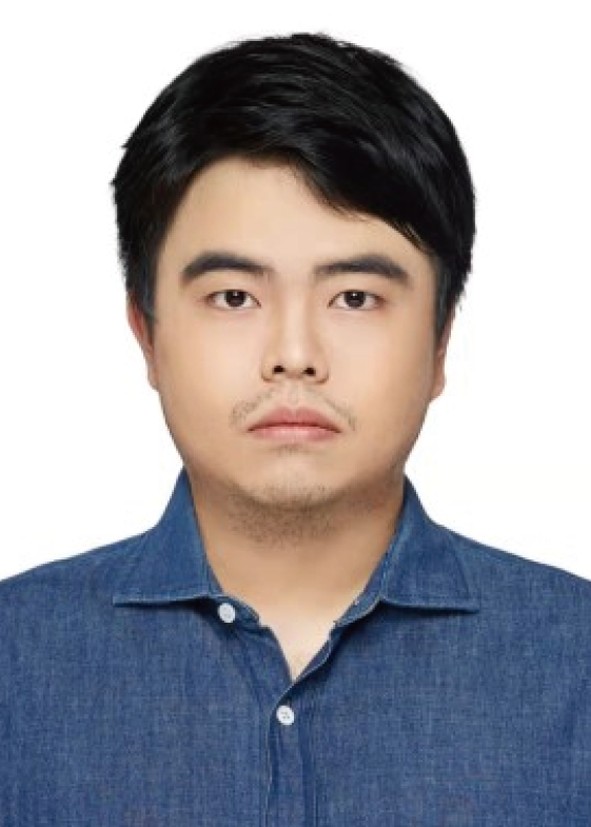 Haoran Du received the B.S. degree in physics from University of Washington, Seattle, USA in 2021, and M.S. degree in microelectronics from Newcastle University, Newcastle upon Tyne, U.K. in 2022. He is currently pursuing the Ph.D. degree in integrated circuit engineering with Southeast University, Nanjing, China. His research interests include circuit design of MRAM design, non-volatile computing in memory, and design-technology co-optimization.
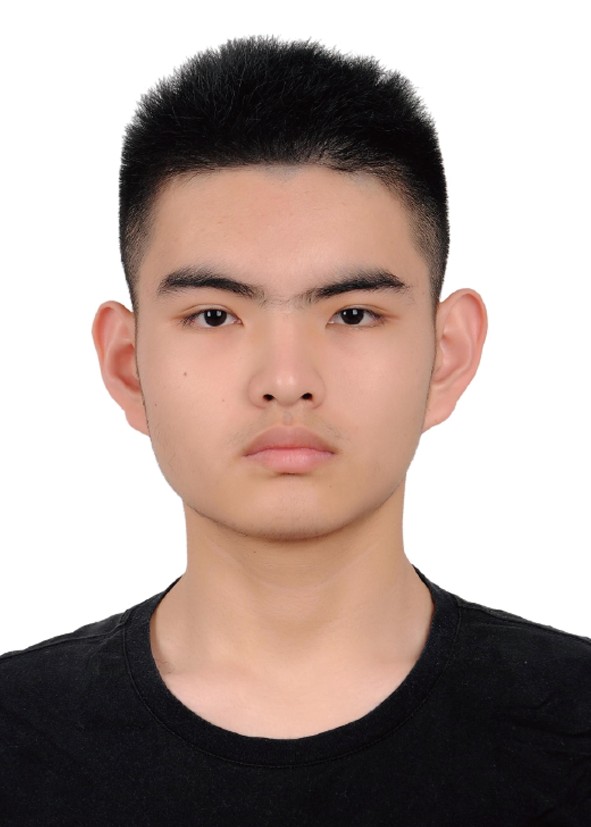 Haoran Chen received the B.Eng. degree from Shandong University, Weihai, China, in 2025. He is currently pursuing the M.Eng. degree at Southeast University. His research interests include computer architecture and memory systems.
 Yaoru Hou received the B.S. and M.S. degrees from Southeast University, Nanjing, China, in 2016 and 2023, respectively. He is currently pursuing the Ph.D. degree in Electronic and Computer Engineering at the Hong Kong University of Science and Technology. His research interests include MTJ device modeling, MRAM circuit design, and spintronic-based unconventional AI accelerators. He has authored or co-authored five papers in major international conferences, including IEDM, ISSCC, and CICC. He has participated in five chip tape-outs involving CMOS-integrated STT-, SOT-, and VCMA-MTJ technologies targeting MRAM commercialization.
 Bo Liu received the B.S. and Ph.D. degrees in electronic science and engineering from Southeast University, Nanjing, China, in 2006 and 2013, respectively. He is currently an Associate Professor with the National ASIC System Engineering Research Center, School of Integrated Circuits, Southeast University. His research is supported by the National Natural Science Foundation, the National Science and Technology Major Project, and the National Key Research and Development Program. He has authored or co-authored three book chapters and more than 60 scientific papers, including Nature Electronics, MICRO, ISSCC, DAC, TCAS-I,TCAS-II, TCAD, and IEEE Circuits and Systems Magazine. He holds one U.S. patent and more than 30 Chinese patents. His research interests include chip architecture design, reconfigurable computing, and approximate computing.
 Hao Cai received the master’s degree in electrical engineering from Lund University, Sweden, in 2009, and the Ph.D. degree in electrical engineering from Télécom ParisTech, France, in 2013. From 2013 to 2017, he was with Université Paris-Saclay, France, working on reliable low-power integrated circuit design. In 2018, he joined the National ASIC System Engineering Center, Southeast University, Nanjing, China, where he is currently a Professor. In 2019, he was with Semiconductor Manufacturing International Corporation (SMIC), working on high-density FinFET MRAM. He is also working on low-power MRAM design and device-circuit design interaction. He has been serving on IEEE-CAS technical committees and as a conference TPC member for DAC, GLSVLSI, Nanoarch, ESREF, and NEWCAS. He has authored or co-authored over 120 scientific articles and received several conference best paper awards.
 DownLoad: