


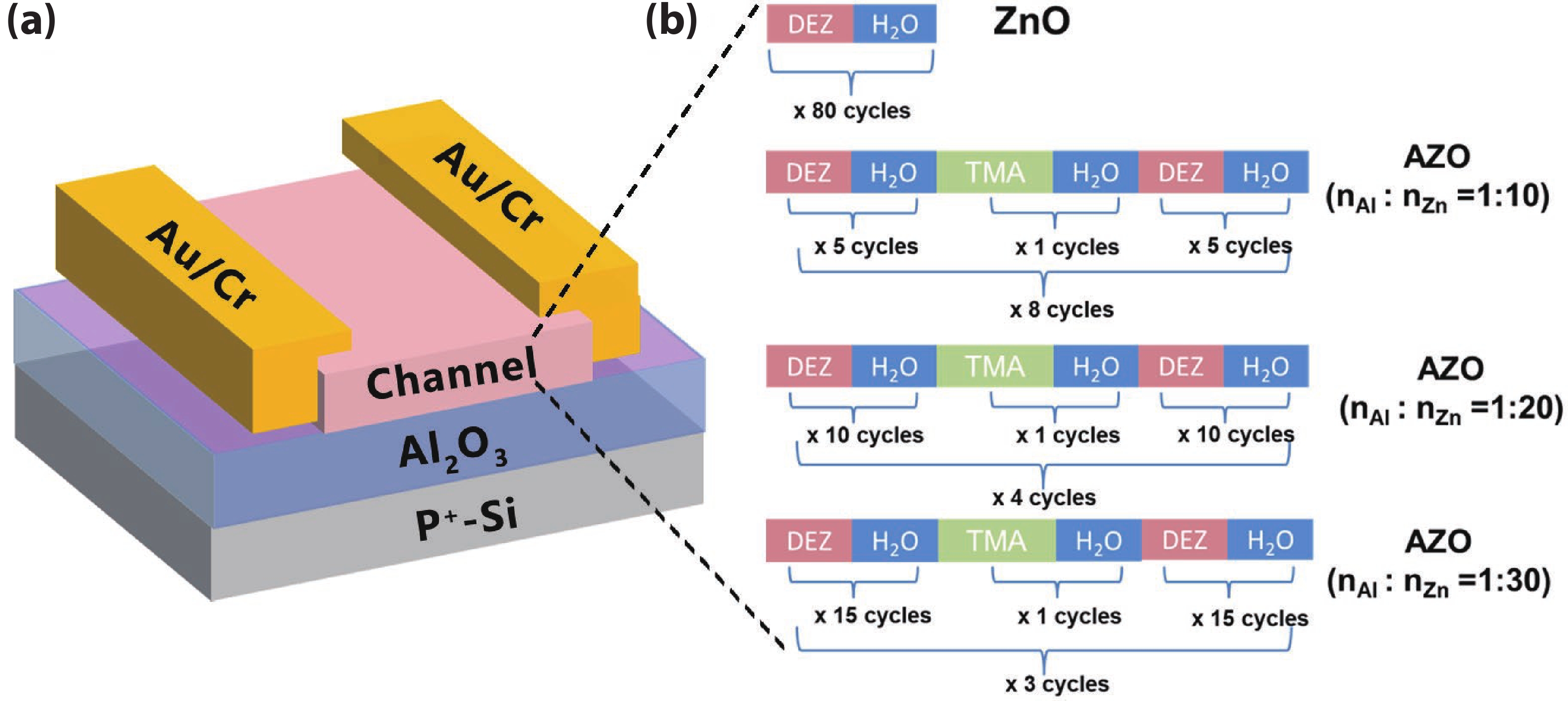
Fig. 1.
(Color online) (a) Schematic device structure of AZO TFTs. (b) Diagram of different deposition sequence for ZnO and AZO films using PEALD.
ARTICLES
Xue Chen1, Liwei Ji2, Hao Wu3, and Chang Liu2,
Corresponding author: Hao Wu, h.wu@whu.edu.cn; Chang Liu, chang.liu@whu.edu.cn
Abstract: In this study, the effects of post-deposition annealing conditions and Al-doping concentrations on the electrical characteristics and bias-stress stability of ZnO-based thin-film transistors (TFTs) were systematically investigated. Experimental results reveal that an optimal annealing condition of 200°C for 30 minutes effectively promotes the activation of ionic species and the passivation of detrimental defects, thereby facilitating superior device performance. At an optimized Al-doping ratio of 1:20, the AZO TFTs exhibit excellent electrical characteristics, including a field-effect mobility of 5.03 cm2–V–1–s–1, a positive threshold voltage of 3.47 V and a subthreshold swing of 0.29 V/dec. Compared to pure ZnO TFTs, the Al-doped devices demonstrate exceptional bias-stress stability, which can be attributed to appropriate Al doping concentration suppressing the density of trap states, including oxygen vacancies and residual carbon-oxygen related impurities.
Keywords: AlZnO, thin film transistors, annealing, plasma enhanced atomic layer deposition (PEALD)
| [1] |
Xu W Y, Xu C Y, Zhou J L, et al. Overcoming mobility–off current and mobility–stability trade-offs in solution-processed two-dimensional In2O3 transistors via in-situ ultrathin Ga2O3 passivation. Mater Today Phys, 2025, 59: 101936 doi: 10.1016/j.mtphys.2025.101936
|
| [2] |
Lin Z Y, Kang L, Zhao J X, et al. The role of oxygen vacancy and hydrogen on the PBTI reliability of ALD IGZO transistors and process optimization. IEEE Trans Electron Devices, 2024, 71(5): 3002 doi: 10.1109/TED.2024.3374247
|
| [3] |
Ren S H, Huang Q, Li D W, et al. Oxide semiconductor thin-film transistors for low-power electronics. Adv Sci, 2026, 13(11): e22487 doi: 10.1002/advs.202522487
|
| [4] |
Nomura K, Ohta H, Takagi A, et al. Room-temperature fabrication of transparent flexible thin-film transistors using amorphous oxide semiconductors. Nature, 2004, 432(7016): 488 doi: 10.1038/nature03090
|
| [5] |
Yan G P, Yang H, Liu W B, et al. Mechanism analysis of ultralow leakage and abnormal instability in InGaZnO thin-film transistor toward DRAM. IEEE Trans Electron Devices, 2022, 69(5): 2417 doi: 10.1109/TED.2022.3159266
|
| [6] |
Hong J H, Kim D, Park Y, et al. Facile diffusion of sulfur and fluorine into a-IGTO thin films for high-performance and reliability of transparent amorphous oxide semiconductor thin-film transistors. Mater Sci Semicond Process, 2024, 169: 107872 doi: 10.1016/j.mssp.2023.107872
|
| [7] |
Chen X, Zhang G Z, Wan J X, et al. Transparent and flexible thin-film transistors with high performance prepared at ultralow temperatures by atomic layer deposition. Adv Electron Mater, 2019, 5(2): 1800583 doi: 10.1002/aelm.201800583
|
| [8] |
Zhang N, Zhao W P, Yao C, et al. Transparent multi-level NAND flash memory and circuits based on ZnO thin film transistor. IEEE Electron Device Lett, 2023, 44(4): 610 doi: 10.1109/LED.2023.3248068
|
| [9] |
Li S Z, Zhu S Y, Liu L, et al. Modulating electrical characteristics of ZnO thin-film transistors by scaling down gate dielectric thickness. IEEE Trans Electron Devices, 2024, 71(2): 1089 doi: 10.1109/TED.2023.3343678
|
| [10] |
Trinh B N Q, Chien T D, Hoa N Q, et al. Solution-processable zinc oxide based thin films with different aluminum doping concentrations. J Sci Adv Mater Devices, 2020, 5(4): 497 doi: 10.1016/j.jsamd.2020.08.006
|
| [11] |
Fortunato E, Barquinha P, Martins R. Oxide semiconductor thin-film transistors: A review of recent advances. Adv Mater, 2012, 24(22): 2945 doi: 10.1002/adma.201103228
|
| [12] |
Bukke R N, Mude N N, Saha J K, et al. Effect of lanthanum doping on the electrical performance of spray coated ZnO thin film transistor. Proc Int Disp Work, 2019: 482
|
| [13] |
Yue D W, Guo S B, Han S, et al. Facile fabrication of MgZnO/ZnO composites for high performance thin film transistor. J Alloys Compd, 2021, 873: 159840 doi: 10.1016/j.jallcom.2021.159840
|
| [14] |
Saha J K, Ali A, Bukke R N, et al. Performance improvement for spray-coated ZnO TFT by F doping with spray-coated Zr–Al–O gate insulator. IEEE Trans Electron Devices, 2021, 68(3): 1063 doi: 10.1109/TED.2021.3051918
|
| [15] |
Yang J, Zhang Y P, Qin C P, et al. Enhanced stability in Zr-doped ZnO TFTs with minor influence on mobility by atomic layer deposition. IEEE Trans Electron Devices, 2019, 66(4): 1760 doi: 10.1109/TED.2019.2896313
|
| [16] |
Tang Q, Chen X, Wan J X, et al. Influence of Ga doping on electrical performance and stability of ZnO thin-film transistors prepared by atomic layer deposition. IEEE Trans Electron Devices, 2020, 67(8): 3129 doi: 10.1109/TED.2020.3000197
|
| [17] |
Dong J C, Li Q, Han D D, et al. Atomic layer deposition deposited Al-doped ZnO films for transistor application. 2021 5th IEEE Electron Devices Technology & Manufacturing Conference (EDTM), 2021: 1
|
| [18] |
Zhou X B, Han D D, Dong J C, et al. High-performance Al-Zn-O thin-film transistors sputtering at different power. IEEE Trans Electron Devices, 2019, 66(11): 4774 doi: 10.1109/TED.2019.2942950
|
| [19] |
Choi J, Choi J, Lee Y, et al. Optimization of atomic-layer-deposited zinc–tin-oxide thin-film transistors via controlled aluminum doping. ACS Appl Electron Mater, 2025, 7(11): 5184 doi: 10.1021/acsaelm.5c00575
|
| [20] |
Petrova D, Napoleonov B, Minh C N H, et al. The effect of post deposition treatment on properties of ALD Al-doped ZnO films. Nanomaterials, 2023, 13(5): 800 doi: 10.3390/nano13050800
|
| [21] |
Oviroh P O, Akbarzadeh R, Pan D Q, et al. New development of atomic layer deposition: Processes, methods and applications. Sci Technol Adv Mater, 2019, 20(1): 465 doi: 10.1080/14686996.2019.1599694
|
| [22] |
Lee W B, Kim Y S, Park J S. Control of subthreshold swing using an in situ PEALD nano-laminated IGZO/Al2O3 multi-channel structured TFT. J Inf Disp, 2024, 25(2): 179 doi: 10.1080/15980316.2023.2249244
|
| [23] |
Kim Y S, Lee W B, Oh H J, et al. Remarkable stability improvement with a high-performance PEALD-IZO/IGZO top-gate thin-film transistor via modulating dual-channel effects. Adv Mater Interfaces, 2022, 9(16): 2200501 doi: 10.1002/admi.202200501
|
| [24] |
Yoon S H, Cho J H, Cho I, et al. Tailoring subthreshold swing in A-IGZO thin-film transistors for amoled displays: Impact of conversion mechanism on peald deposition sequences (small methods 8/2024). Small Meth, 2024, 8(8): 2470043 doi: 10.1002/smtd.202470043
|
| [25] |
Woo N, Cho S I, Park S K. Optimal aluminum doping method in PEALD for designing outstandingly stable InAlZnO TFT. Adv Mater Interfaces, 2023, 10(12): 2300128 doi: 10.1002/admi.202300128
|
| [26] |
Alev O, Özdemir O, Kılıç A, et al. Effect of Al doping on structural and optical properties of atomic layer deposited ZnO thin films. Surf Interfaces, 2024, 52: 104942 doi: 10.1016/j.surfin.2024.104942
|
| [27] |
Shiah Y S, Sim K, Shi Y H, et al. Mobility–stability trade-off in oxide thin-film transistors. Nat Electron, 2021, 4(11): 800 doi: 10.1038/s41928-021-00671-0
|
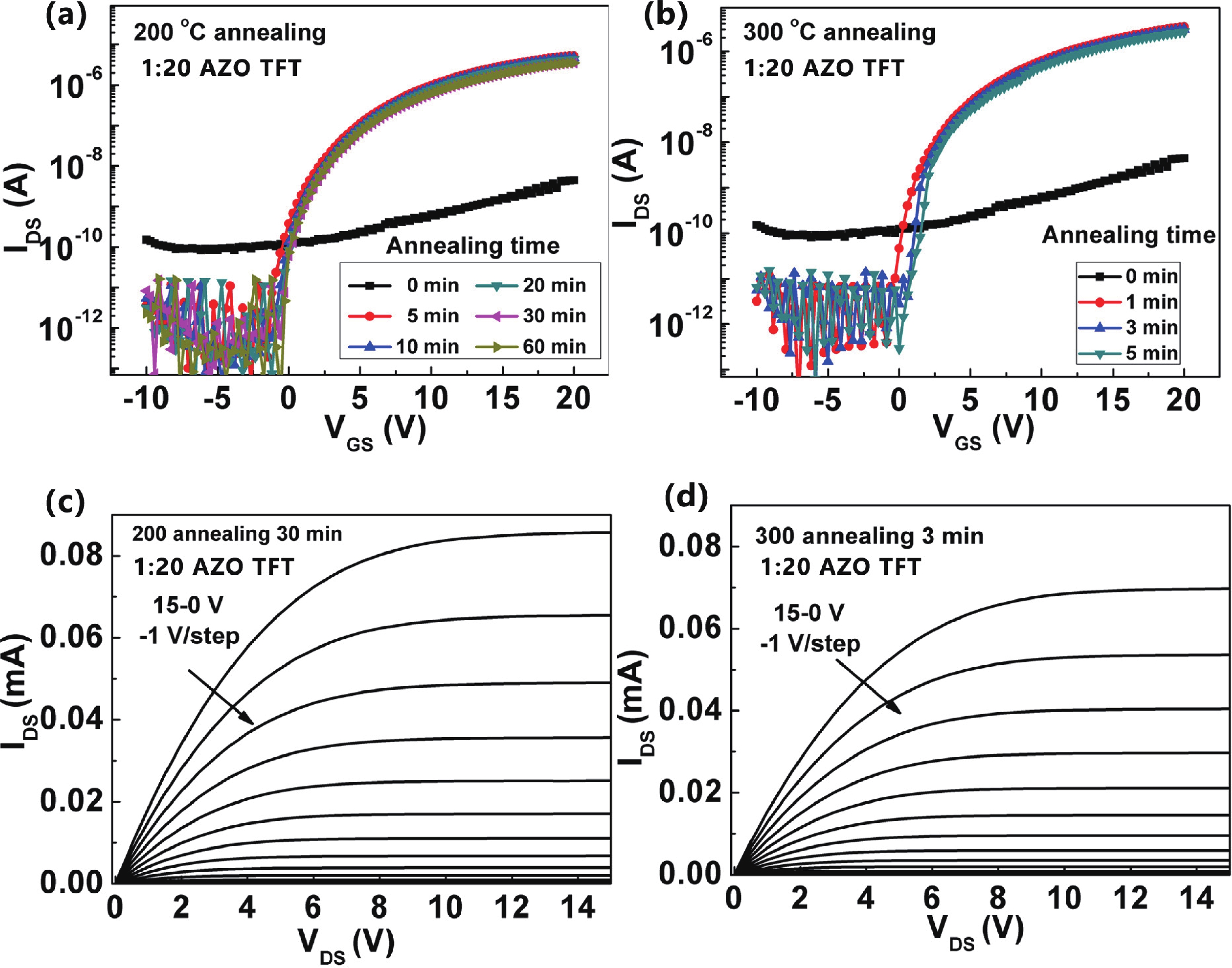
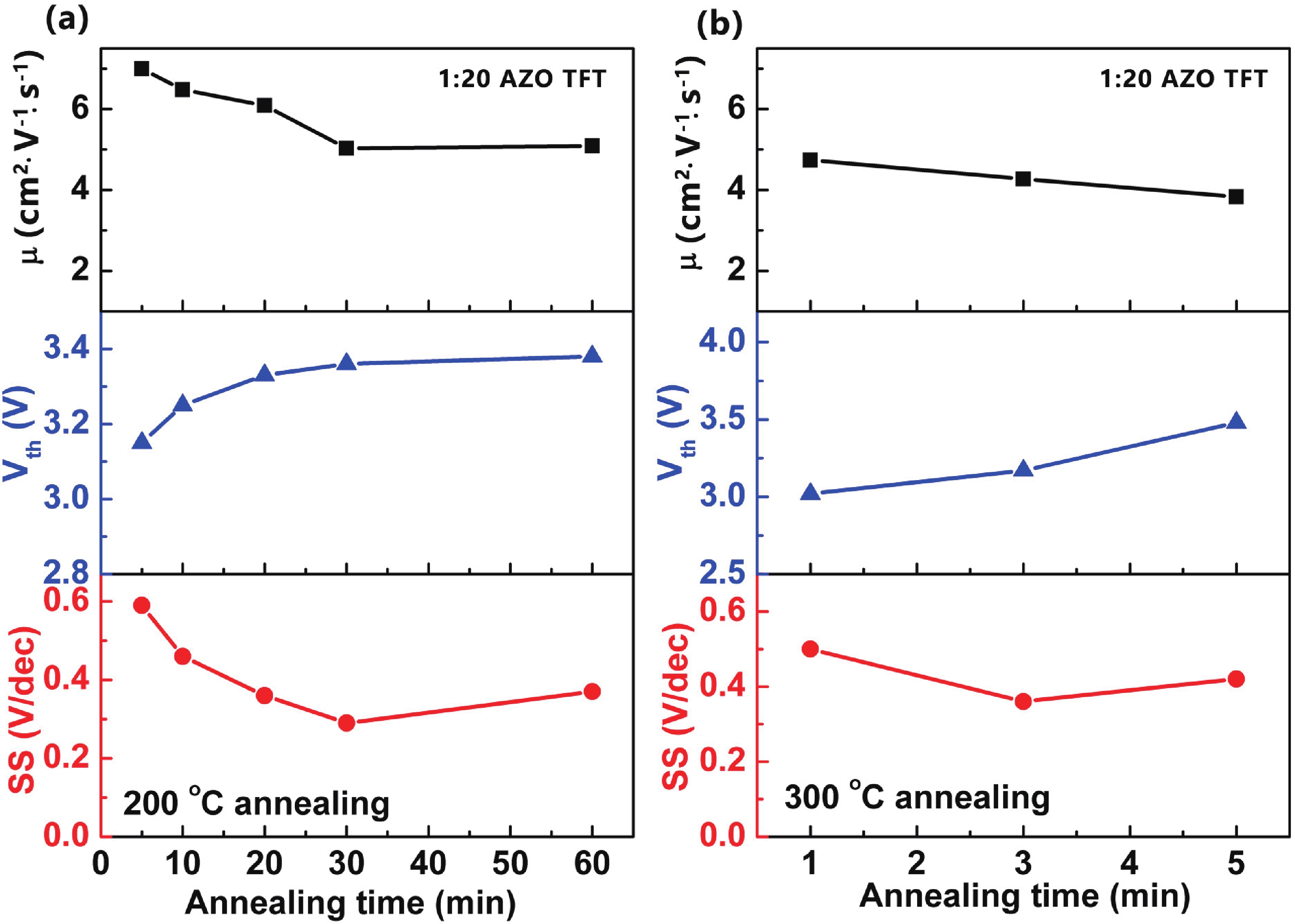
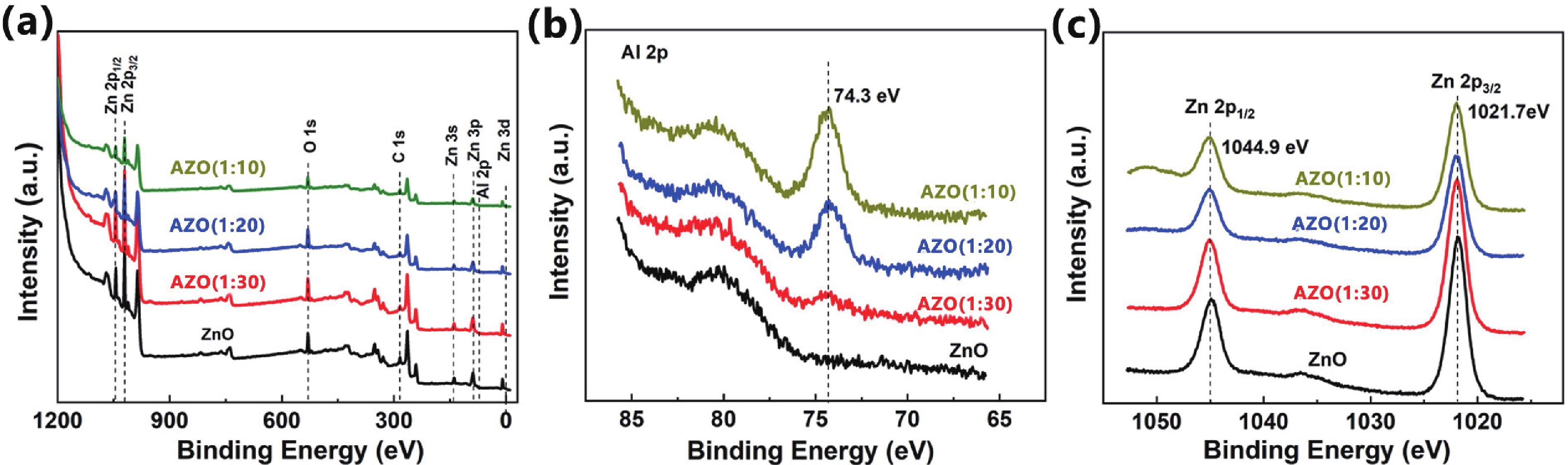
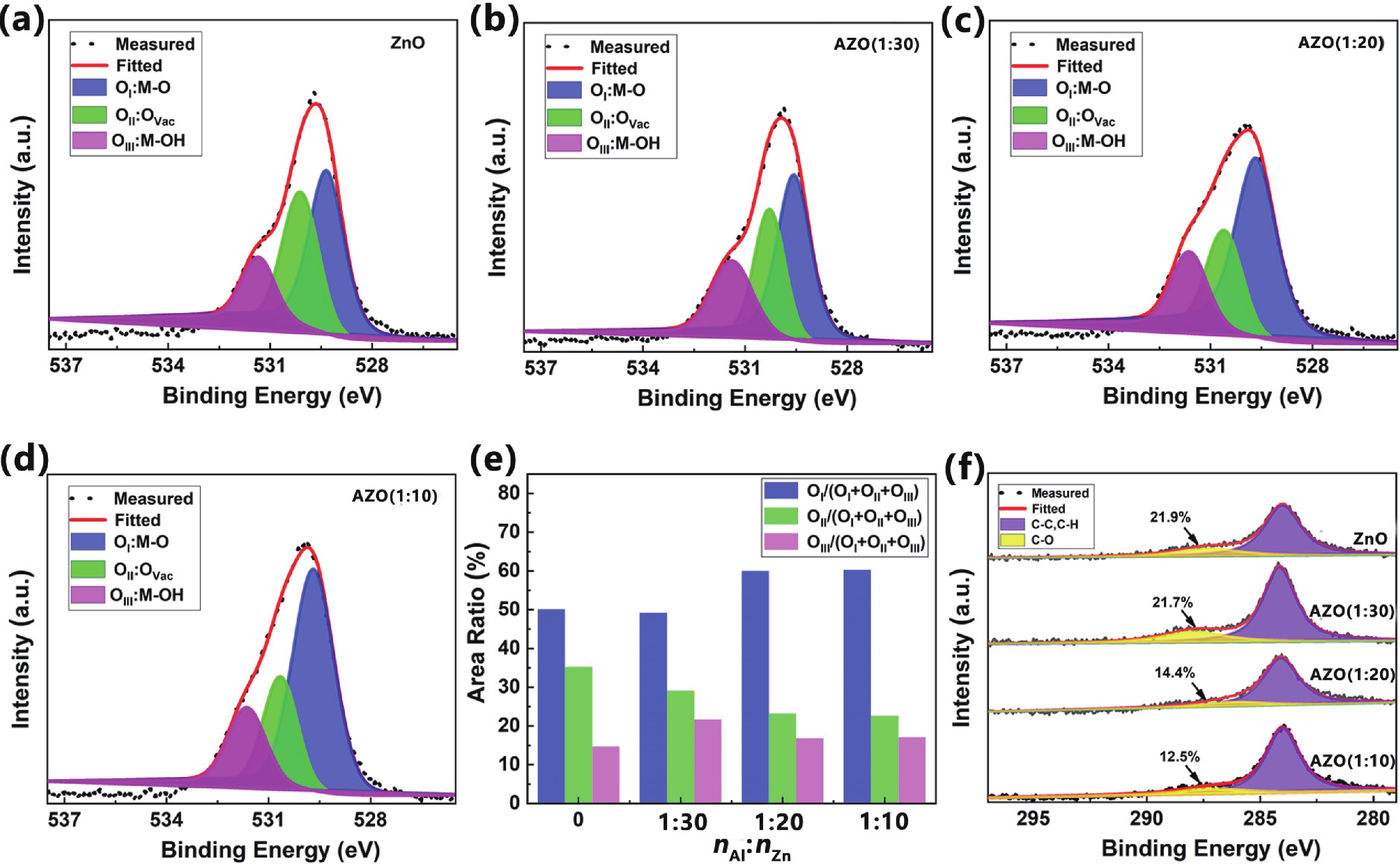
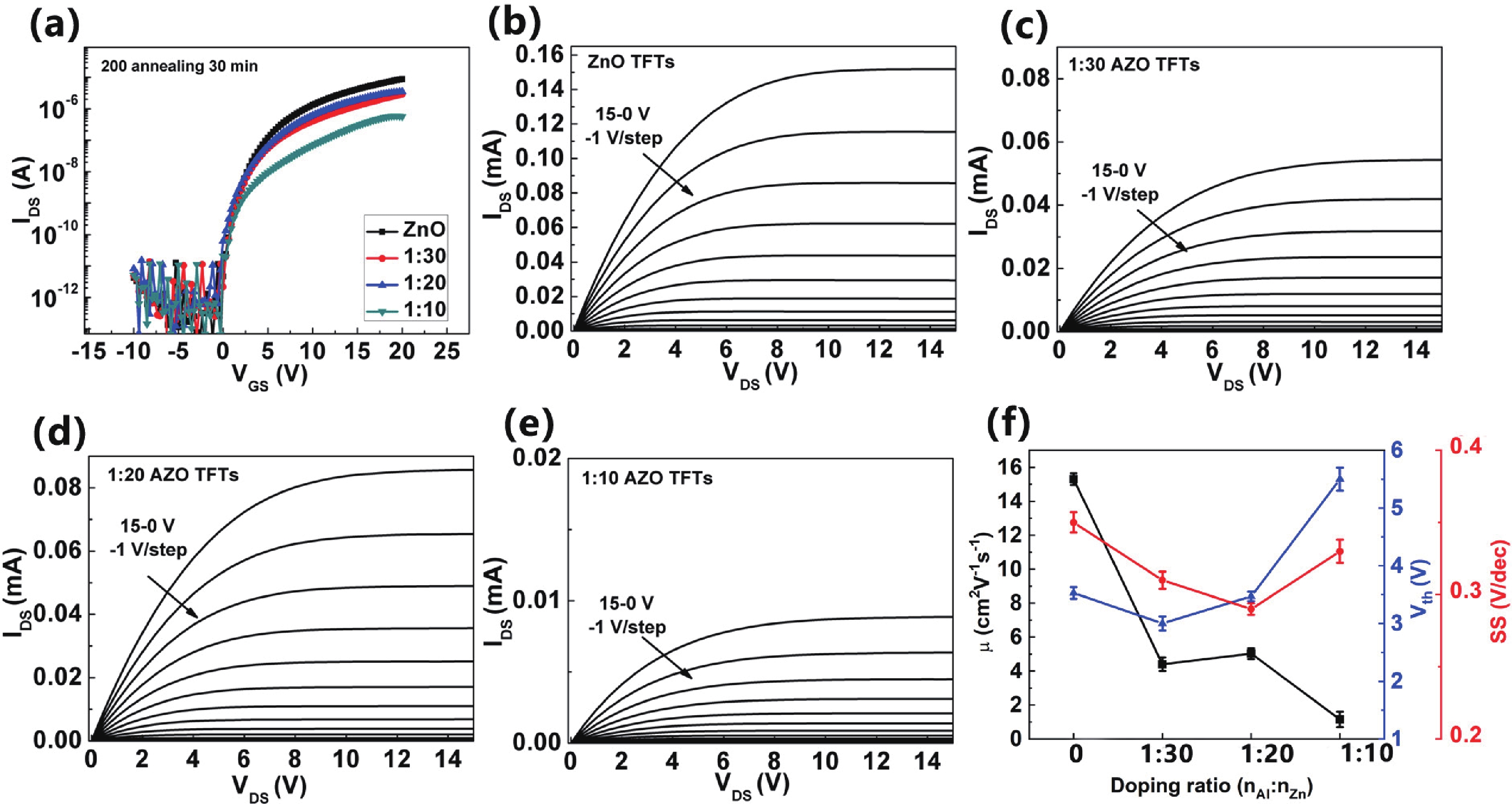

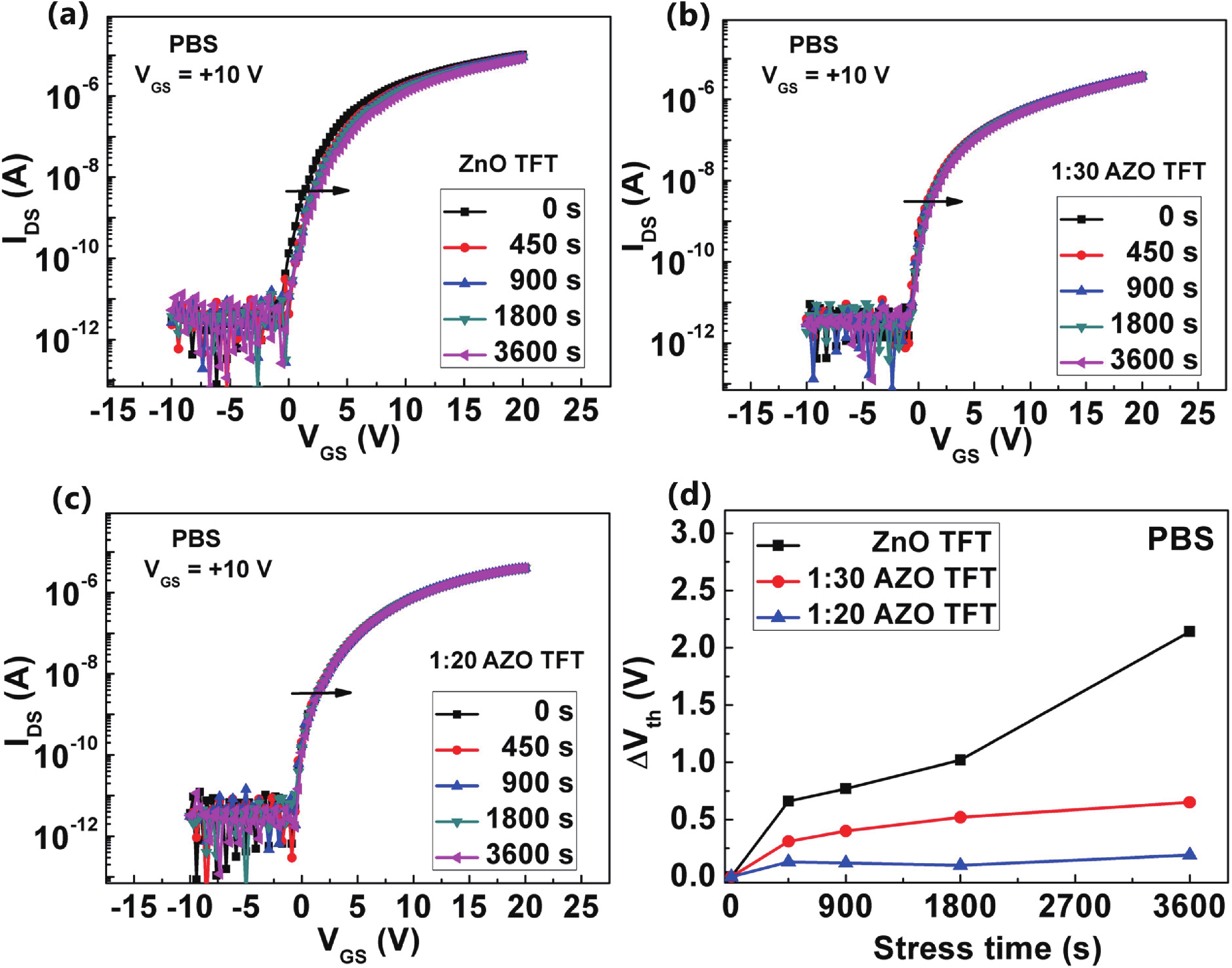
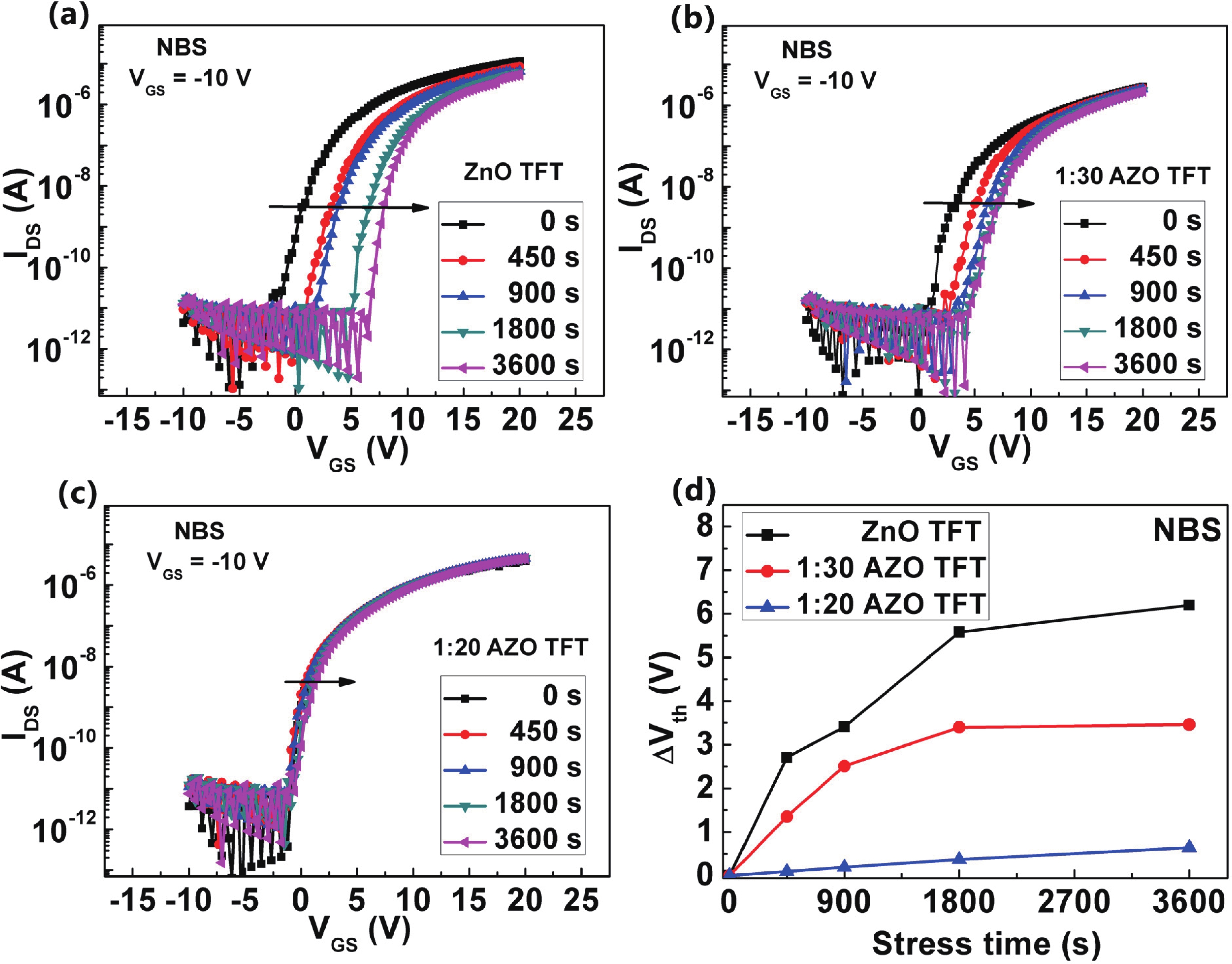
Table 1. Summary of electrical parameters of different devices.
| nAl∶nZn | $ {\mu }_{\text{FE}} $ ( cm2–V–1–s–1) |
Vth (V) |
SS (V/dec) |
Nit (×1012 cm−2–e–1–V–1) |
PBS $ \Delta {V}_{th} $(V) |
NBS $ \Delta {V}_{th} $(V) |
| 0 | 15.3 | 3.53 | 0.35 | 5.53 | 2.05 | 6.2 |
| 1∶30 | 4.4 | 3.00 | 0.31 | 4.75 | 0.65 | 3.46 |
| 1∶20 | 5.03 | 3.47 | 0.29 | 4.33 | 0.19 | 0.64 |
| 1∶10 | 1.15 | 5.5 | 0.33 | 5.14 | -- | -- |
 DownLoad: CSV
| [1] |
Xu W Y, Xu C Y, Zhou J L, et al. Overcoming mobility–off current and mobility–stability trade-offs in solution-processed two-dimensional In2O3 transistors via in-situ ultrathin Ga2O3 passivation. Mater Today Phys, 2025, 59: 101936 doi: 10.1016/j.mtphys.2025.101936
|
| [2] |
Lin Z Y, Kang L, Zhao J X, et al. The role of oxygen vacancy and hydrogen on the PBTI reliability of ALD IGZO transistors and process optimization. IEEE Trans Electron Devices, 2024, 71(5): 3002 doi: 10.1109/TED.2024.3374247
|
| [3] |
Ren S H, Huang Q, Li D W, et al. Oxide semiconductor thin-film transistors for low-power electronics. Adv Sci, 2026, 13(11): e22487 doi: 10.1002/advs.202522487
|
| [4] |
Nomura K, Ohta H, Takagi A, et al. Room-temperature fabrication of transparent flexible thin-film transistors using amorphous oxide semiconductors. Nature, 2004, 432(7016): 488 doi: 10.1038/nature03090
|
| [5] |
Yan G P, Yang H, Liu W B, et al. Mechanism analysis of ultralow leakage and abnormal instability in InGaZnO thin-film transistor toward DRAM. IEEE Trans Electron Devices, 2022, 69(5): 2417 doi: 10.1109/TED.2022.3159266
|
| [6] |
Hong J H, Kim D, Park Y, et al. Facile diffusion of sulfur and fluorine into a-IGTO thin films for high-performance and reliability of transparent amorphous oxide semiconductor thin-film transistors. Mater Sci Semicond Process, 2024, 169: 107872 doi: 10.1016/j.mssp.2023.107872
|
| [7] |
Chen X, Zhang G Z, Wan J X, et al. Transparent and flexible thin-film transistors with high performance prepared at ultralow temperatures by atomic layer deposition. Adv Electron Mater, 2019, 5(2): 1800583 doi: 10.1002/aelm.201800583
|
| [8] |
Zhang N, Zhao W P, Yao C, et al. Transparent multi-level NAND flash memory and circuits based on ZnO thin film transistor. IEEE Electron Device Lett, 2023, 44(4): 610 doi: 10.1109/LED.2023.3248068
|
| [9] |
Li S Z, Zhu S Y, Liu L, et al. Modulating electrical characteristics of ZnO thin-film transistors by scaling down gate dielectric thickness. IEEE Trans Electron Devices, 2024, 71(2): 1089 doi: 10.1109/TED.2023.3343678
|
| [10] |
Trinh B N Q, Chien T D, Hoa N Q, et al. Solution-processable zinc oxide based thin films with different aluminum doping concentrations. J Sci Adv Mater Devices, 2020, 5(4): 497 doi: 10.1016/j.jsamd.2020.08.006
|
| [11] |
Fortunato E, Barquinha P, Martins R. Oxide semiconductor thin-film transistors: A review of recent advances. Adv Mater, 2012, 24(22): 2945 doi: 10.1002/adma.201103228
|
| [12] |
Bukke R N, Mude N N, Saha J K, et al. Effect of lanthanum doping on the electrical performance of spray coated ZnO thin film transistor. Proc Int Disp Work, 2019: 482
|
| [13] |
Yue D W, Guo S B, Han S, et al. Facile fabrication of MgZnO/ZnO composites for high performance thin film transistor. J Alloys Compd, 2021, 873: 159840 doi: 10.1016/j.jallcom.2021.159840
|
| [14] |
Saha J K, Ali A, Bukke R N, et al. Performance improvement for spray-coated ZnO TFT by F doping with spray-coated Zr–Al–O gate insulator. IEEE Trans Electron Devices, 2021, 68(3): 1063 doi: 10.1109/TED.2021.3051918
|
| [15] |
Yang J, Zhang Y P, Qin C P, et al. Enhanced stability in Zr-doped ZnO TFTs with minor influence on mobility by atomic layer deposition. IEEE Trans Electron Devices, 2019, 66(4): 1760 doi: 10.1109/TED.2019.2896313
|
| [16] |
Tang Q, Chen X, Wan J X, et al. Influence of Ga doping on electrical performance and stability of ZnO thin-film transistors prepared by atomic layer deposition. IEEE Trans Electron Devices, 2020, 67(8): 3129 doi: 10.1109/TED.2020.3000197
|
| [17] |
Dong J C, Li Q, Han D D, et al. Atomic layer deposition deposited Al-doped ZnO films for transistor application. 2021 5th IEEE Electron Devices Technology & Manufacturing Conference (EDTM), 2021: 1
|
| [18] |
Zhou X B, Han D D, Dong J C, et al. High-performance Al-Zn-O thin-film transistors sputtering at different power. IEEE Trans Electron Devices, 2019, 66(11): 4774 doi: 10.1109/TED.2019.2942950
|
| [19] |
Choi J, Choi J, Lee Y, et al. Optimization of atomic-layer-deposited zinc–tin-oxide thin-film transistors via controlled aluminum doping. ACS Appl Electron Mater, 2025, 7(11): 5184 doi: 10.1021/acsaelm.5c00575
|
| [20] |
Petrova D, Napoleonov B, Minh C N H, et al. The effect of post deposition treatment on properties of ALD Al-doped ZnO films. Nanomaterials, 2023, 13(5): 800 doi: 10.3390/nano13050800
|
| [21] |
Oviroh P O, Akbarzadeh R, Pan D Q, et al. New development of atomic layer deposition: Processes, methods and applications. Sci Technol Adv Mater, 2019, 20(1): 465 doi: 10.1080/14686996.2019.1599694
|
| [22] |
Lee W B, Kim Y S, Park J S. Control of subthreshold swing using an in situ PEALD nano-laminated IGZO/Al2O3 multi-channel structured TFT. J Inf Disp, 2024, 25(2): 179 doi: 10.1080/15980316.2023.2249244
|
| [23] |
Kim Y S, Lee W B, Oh H J, et al. Remarkable stability improvement with a high-performance PEALD-IZO/IGZO top-gate thin-film transistor via modulating dual-channel effects. Adv Mater Interfaces, 2022, 9(16): 2200501 doi: 10.1002/admi.202200501
|
| [24] |
Yoon S H, Cho J H, Cho I, et al. Tailoring subthreshold swing in A-IGZO thin-film transistors for amoled displays: Impact of conversion mechanism on peald deposition sequences (small methods 8/2024). Small Meth, 2024, 8(8): 2470043 doi: 10.1002/smtd.202470043
|
| [25] |
Woo N, Cho S I, Park S K. Optimal aluminum doping method in PEALD for designing outstandingly stable InAlZnO TFT. Adv Mater Interfaces, 2023, 10(12): 2300128 doi: 10.1002/admi.202300128
|
| [26] |
Alev O, Özdemir O, Kılıç A, et al. Effect of Al doping on structural and optical properties of atomic layer deposited ZnO thin films. Surf Interfaces, 2024, 52: 104942 doi: 10.1016/j.surfin.2024.104942
|
| [27] |
Shiah Y S, Sim K, Shi Y H, et al. Mobility–stability trade-off in oxide thin-film transistors. Nat Electron, 2021, 4(11): 800 doi: 10.1038/s41928-021-00671-0
|





Article views: 3 Times PDF downloads: 0 Times Cited by: 0 Times
Received: 02 July 2026 Revised: 14 August 2026 Online: Accepted Manuscript: 12 October 2026
| Citation: |
Xue Chen, Liwei Ji, Hao Wu, Chang Liu. Optimization of annealing conditions and doping concentration for high-performance PEALD Al-doped ZnO thin-film transistors[J]. Journal of Semiconductors, 2026, In Press. doi: 10.1088/1674-4926/26070004
****
X Chen, L W Ji, H Wu, and C Liu, Optimization of annealing conditions and doping concentration for high-performance PEALD Al-doped ZnO thin-film transistors[J]. J. Semicond., 2026, accepted doi: 10.1088/1674-4926/26070004

|
 Xue Chen got her doctor’s degree in 2021 from Wuhan University in 2021. Now she is a lecture at Anhui University of Science and Technology. Her research focus on oxide thin film transistors and flexible sensors
 Hao Wu got his doctor’s degree from Institute of Physics, Chinese Academy of Sciences, in 2007. He is currently an associate professor at Wuhan University. His research focus on oxide films and heterojunctions
 Chang Liu got his doctor’s degree from Universitat Augsburg, Germany, in 1999. He was previously a professor at Wuhan University. Currently, he serves as the executive deputy director of the Micius Laboratory. His research focus on wide bandgap and ultra-wide bandgap semiconductor materials and devices
| [1] |
Xu W Y, Xu C Y, Zhou J L, et al. Overcoming mobility–off current and mobility–stability trade-offs in solution-processed two-dimensional In2O3 transistors via in-situ ultrathin Ga2O3 passivation. Mater Today Phys, 2025, 59: 101936 doi: 10.1016/j.mtphys.2025.101936
|
| [2] |
Lin Z Y, Kang L, Zhao J X, et al. The role of oxygen vacancy and hydrogen on the PBTI reliability of ALD IGZO transistors and process optimization. IEEE Trans Electron Devices, 2024, 71(5): 3002 doi: 10.1109/TED.2024.3374247
|
| [3] |
Ren S H, Huang Q, Li D W, et al. Oxide semiconductor thin-film transistors for low-power electronics. Adv Sci, 2026, 13(11): e22487 doi: 10.1002/advs.202522487
|
| [4] |
Nomura K, Ohta H, Takagi A, et al. Room-temperature fabrication of transparent flexible thin-film transistors using amorphous oxide semiconductors. Nature, 2004, 432(7016): 488 doi: 10.1038/nature03090
|
| [5] |
Yan G P, Yang H, Liu W B, et al. Mechanism analysis of ultralow leakage and abnormal instability in InGaZnO thin-film transistor toward DRAM. IEEE Trans Electron Devices, 2022, 69(5): 2417 doi: 10.1109/TED.2022.3159266
|
| [6] |
Hong J H, Kim D, Park Y, et al. Facile diffusion of sulfur and fluorine into a-IGTO thin films for high-performance and reliability of transparent amorphous oxide semiconductor thin-film transistors. Mater Sci Semicond Process, 2024, 169: 107872 doi: 10.1016/j.mssp.2023.107872
|
| [7] |
Chen X, Zhang G Z, Wan J X, et al. Transparent and flexible thin-film transistors with high performance prepared at ultralow temperatures by atomic layer deposition. Adv Electron Mater, 2019, 5(2): 1800583 doi: 10.1002/aelm.201800583
|
| [8] |
Zhang N, Zhao W P, Yao C, et al. Transparent multi-level NAND flash memory and circuits based on ZnO thin film transistor. IEEE Electron Device Lett, 2023, 44(4): 610 doi: 10.1109/LED.2023.3248068
|
| [9] |
Li S Z, Zhu S Y, Liu L, et al. Modulating electrical characteristics of ZnO thin-film transistors by scaling down gate dielectric thickness. IEEE Trans Electron Devices, 2024, 71(2): 1089 doi: 10.1109/TED.2023.3343678
|
| [10] |
Trinh B N Q, Chien T D, Hoa N Q, et al. Solution-processable zinc oxide based thin films with different aluminum doping concentrations. J Sci Adv Mater Devices, 2020, 5(4): 497 doi: 10.1016/j.jsamd.2020.08.006
|
| [11] |
Fortunato E, Barquinha P, Martins R. Oxide semiconductor thin-film transistors: A review of recent advances. Adv Mater, 2012, 24(22): 2945 doi: 10.1002/adma.201103228
|
| [12] |
Bukke R N, Mude N N, Saha J K, et al. Effect of lanthanum doping on the electrical performance of spray coated ZnO thin film transistor. Proc Int Disp Work, 2019: 482
|
| [13] |
Yue D W, Guo S B, Han S, et al. Facile fabrication of MgZnO/ZnO composites for high performance thin film transistor. J Alloys Compd, 2021, 873: 159840 doi: 10.1016/j.jallcom.2021.159840
|
| [14] |
Saha J K, Ali A, Bukke R N, et al. Performance improvement for spray-coated ZnO TFT by F doping with spray-coated Zr–Al–O gate insulator. IEEE Trans Electron Devices, 2021, 68(3): 1063 doi: 10.1109/TED.2021.3051918
|
| [15] |
Yang J, Zhang Y P, Qin C P, et al. Enhanced stability in Zr-doped ZnO TFTs with minor influence on mobility by atomic layer deposition. IEEE Trans Electron Devices, 2019, 66(4): 1760 doi: 10.1109/TED.2019.2896313
|
| [16] |
Tang Q, Chen X, Wan J X, et al. Influence of Ga doping on electrical performance and stability of ZnO thin-film transistors prepared by atomic layer deposition. IEEE Trans Electron Devices, 2020, 67(8): 3129 doi: 10.1109/TED.2020.3000197
|
| [17] |
Dong J C, Li Q, Han D D, et al. Atomic layer deposition deposited Al-doped ZnO films for transistor application. 2021 5th IEEE Electron Devices Technology & Manufacturing Conference (EDTM), 2021: 1
|
| [18] |
Zhou X B, Han D D, Dong J C, et al. High-performance Al-Zn-O thin-film transistors sputtering at different power. IEEE Trans Electron Devices, 2019, 66(11): 4774 doi: 10.1109/TED.2019.2942950
|
| [19] |
Choi J, Choi J, Lee Y, et al. Optimization of atomic-layer-deposited zinc–tin-oxide thin-film transistors via controlled aluminum doping. ACS Appl Electron Mater, 2025, 7(11): 5184 doi: 10.1021/acsaelm.5c00575
|
| [20] |
Petrova D, Napoleonov B, Minh C N H, et al. The effect of post deposition treatment on properties of ALD Al-doped ZnO films. Nanomaterials, 2023, 13(5): 800 doi: 10.3390/nano13050800
|
| [21] |
Oviroh P O, Akbarzadeh R, Pan D Q, et al. New development of atomic layer deposition: Processes, methods and applications. Sci Technol Adv Mater, 2019, 20(1): 465 doi: 10.1080/14686996.2019.1599694
|
| [22] |
Lee W B, Kim Y S, Park J S. Control of subthreshold swing using an in situ PEALD nano-laminated IGZO/Al2O3 multi-channel structured TFT. J Inf Disp, 2024, 25(2): 179 doi: 10.1080/15980316.2023.2249244
|
| [23] |
Kim Y S, Lee W B, Oh H J, et al. Remarkable stability improvement with a high-performance PEALD-IZO/IGZO top-gate thin-film transistor via modulating dual-channel effects. Adv Mater Interfaces, 2022, 9(16): 2200501 doi: 10.1002/admi.202200501
|
| [24] |
Yoon S H, Cho J H, Cho I, et al. Tailoring subthreshold swing in A-IGZO thin-film transistors for amoled displays: Impact of conversion mechanism on peald deposition sequences (small methods 8/2024). Small Meth, 2024, 8(8): 2470043 doi: 10.1002/smtd.202470043
|
| [25] |
Woo N, Cho S I, Park S K. Optimal aluminum doping method in PEALD for designing outstandingly stable InAlZnO TFT. Adv Mater Interfaces, 2023, 10(12): 2300128 doi: 10.1002/admi.202300128
|
| [26] |
Alev O, Özdemir O, Kılıç A, et al. Effect of Al doping on structural and optical properties of atomic layer deposited ZnO thin films. Surf Interfaces, 2024, 52: 104942 doi: 10.1016/j.surfin.2024.104942
|
| [27] |
Shiah Y S, Sim K, Shi Y H, et al. Mobility–stability trade-off in oxide thin-film transistors. Nat Electron, 2021, 4(11): 800 doi: 10.1038/s41928-021-00671-0
|

 WeChat ID
Journal of Semiconductors © 2017 All Rights Reserved 京ICP备05085259号-2