


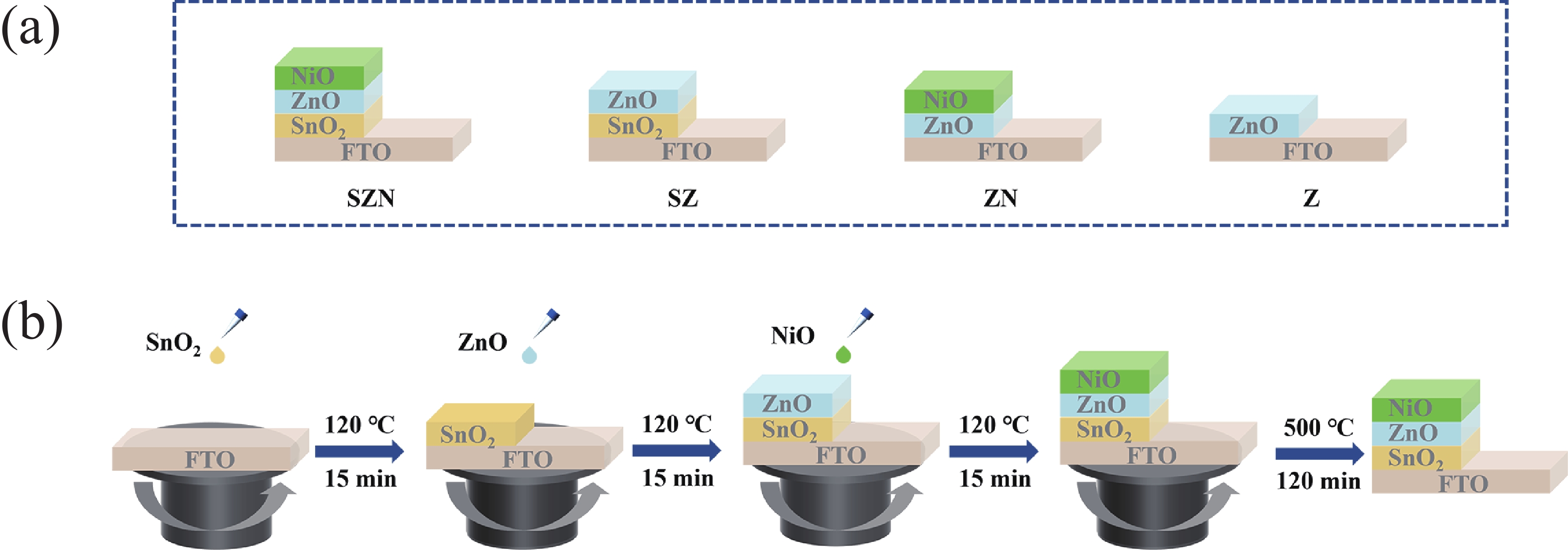
Fig. 1.
(Color online) (a) Schematic diagram of the structures of the four thin-film samples, (b) Fabrication process for SZN double heterojunction thin films.
ARTICLES
Nan Li, Peiqin Hong, Xinyu Cui, Haibo Fan, Peng Hu and Feng Teng
Corresponding author: Feng Teng, tengfeng@nwu.edu.cn
Abstract: Ultraviolet and near ultraviolet detectors based on ZnO thin films often exhibit potential in the field of optoelectronic devices. However, the persistent photoconductivity effect inside ZnO thin films often leads to slow response speeds. In this work, a sandwich structure of NiO/ZnO/SnO2 thin film was constructed to prepare a near ultraviolet photodetector with fast response speed. Compared with the heterojunction detectors of NiO/ZnO and ZnO/SnO2, the sandwich structure detector exhibits significantly faster response speed (20 ms/1.65 s) under a bias voltage of 0.1 V. At the same time, the obtained device also exhibited stable self-powered response characteristics. The device exhibits a photocurrent of 1.35 nA and a response time of 20/35ms under 365nm illumination at 0V bias. The maximum responsivity and detectivity are 47.98 μA/W and 4.642 × 10⁹ Jones, respectively. The performance of the device is mainly attributed to this unique sandwich structure. The NiO and SnO2 layers avoid direct contact between the ZnO and the electrode, effectively suppressing the influence of persistent photoconductivity of ZnO film. And the stepped energy level structure makes the transport of photo generated carriers smooth. The obtained results provide new ideas and corresponding data basis for the subsequent study of high-performance ZnO based photodetectors.
Keywords: ZnO film, sandwich structure, NiO, SnO2, self-powered
| [1] |
Pecunia V, Anthopoulos T D, Armin A, et al. Guidelines for accurate evaluation of photodetectors based on emerging semiconductor technologies. Nat Photonics, 2025, 19(11): 1178 doi: 10.1038/s41566-025-01759-1
|
| [2] |
Zhang P, Guo J, Yang J, et al. Ultrafast ultraviolet optoelectronic logic gate devices with ultralow energy consumption. Nano Lett, 2026, 26(24): 7937 doi: 10.1021/acs.nanolett.6c01365
|
| [3] |
Luo Y, Yu H, Wang D, et al. A single diode with integrated photosensing, memory and processing for neuromorphic image sensors. Nat Electron, 2026, 9(4): 404 doi: 10.1038/s41928-026-01588-2
|
| [4] |
Wu L, Hong P, Zhang M, et al. Influence of surface oxide layers on the performance of photoconductive detectors based on silicon wafers. J Phys D Appl Phys, 2025, 58(24): 245103 doi: 10.1088/1361-6463/adda5b
|
| [5] |
Wu L, Zhang M, Shi X, et al. The influence of surface treatment on the performance of photoconductive detectors based on silicon wafer. IEEE Sens J, 2024, 24(13): 20476 doi: 10.1109/JSEN.2024.3402118
|
| [6] |
Wu L, Shi X, Fan H, et al. Self-powered broadband photodetector based on pyramid-structured Si/TiO2 heterojunction. Chin Phys B, 2025, 34(8): 088501 doi: 10.1088/1674-1056/add50a
|
| [7] |
Wu W, Chen Z, Chen Y, et al. Sb2S3 indoor photovoltaics with a charge-transport-layer-free sandwich-structure. Appl Phys Lett, 2025, 127(8): 083907 doi: 10.1063/5.0285020
|
| [8] |
Parcaci M, Ruzgar S. Tuning the UV photodetection performance of In: ZnO thin films via Cu doping. Phys B Condens Matter, 2026, 739: 418956 doi: 10.1016/j.physb.2026.418956
|
| [9] |
Shi X, Guo K, Wu L, et al. Nano-ZnO/PVDF hybrid film for application in flexible waterproof ultraviolet photodetector. ACS Appl Nano Mater, 2024, 7(20): 23494 doi: 10.1021/acsanm.4c03567
|
| [10] |
Waheed U, Ahmed R. Optimization of defects in ZnO thin films for the enhancement of UV detection. Micro Nanostruct, 2026, 216: 208740 doi: 10.1016/j.micrna.2026.208740
|
| [11] |
Ghimire R R, Joshi N, Rai K B, et al. Optimization of UV photo-response in ZnO nanostructure film by balancing light absorption, carrier collection efficiency, and field effect mobility. Next Mater, 2026, 12: 102252 doi: 10.1016/j.nxmate.2026.102252
|
| [12] |
Hui Y, Ren Y, Song J, et al. Preparation of flexible ultraviolet photodetectors based on ZnO film using a dip-coating method on different flexible substrates. J Phys D Appl Phys, 2022, 55(35): 355105 doi: 10.1088/1361-6463/ac71e6
|
| [13] |
Wang Y, Shi X, Teng F. A ZnO nanoparticle UV detector on a fabric substrate pretreated with prussian blue with high anti-twist performance. Dalton Trans, 2026, 55(18): 7218 doi: 10.1039/D6DT00594B
|
| [14] |
Shi X, Wu L, Fan H, et al. Nano-sized ZnO particles on fabric substrates: Achieving ultra-flexible, self-healing UV photodetectors with superior anti-distortion performance. Phys B Condens Matter, 2025, 714: 417482 doi: 10.1016/j.physb.2025.417482
|
| [15] |
Liu S, Yang D, Ren Y, et al. Self‐Powered, Flexible Ultraviolet Photodetector Based on ZnO/Te All Nanowires Heterojunction Structure. Phys Status Solidi A, 2023, 220(5): 2200612 doi: 10.1002/pssa.202200612
|
| [16] |
Hong P, Cui X, Li N, et al. Performance enhancement of photoconductive detector based on ZnO film via the synergistic effect of heterojunction and polarization electric field. Phys B Condens Matter, 2026, 726: 418264 doi: 10.1016/j.physb.2026.418264
|
| [17] |
Hong P, Wu L, Shi X, et al. Influence of buffer layer on the performance of ZnO film based photoconductive detectors. J Appl Phys, 2025, 138(5): 055304 doi: 10.1063/5.0273458
|
| [18] |
Yin Z, Zeng Y, Yang D, et al. Multifunctional optoelectronic device based on CuO/ZnO heterojunction structure. J Lumin, 2023, 257: 119762 doi: 10.1016/j.jlumin.2023.119762
|
| [19] |
Panwar S, Dudi D, Bhardwaj K, et al. Plasmonic Ag nanoparticle-enhanced NiO/ZnO heterojunction for high-performance self-powered UV–visible broadband photodetection. J Appl Phys, 2025, 138(17): 174505 doi: 10.1063/5.0297252
|
| [20] |
Pham T K H, Tran B Q, Nguyen K B, et al. Effect of oxygen flow on transparent in-doped ZnO electrodes for NiO/ZnO junctions. Solid State Sci, 2026, 176: 108272 doi: 10.1016/j.solidstatesciences.2026.108272
|
| [21] |
Wang N, Li B, Chen Y, et al. Self-powered ZnO/NiO dual-band photodetector based on surface plasmon enhancement. Mater Des, 2025, 260: 115079 doi: 10.1016/j.matdes.2025.115079
|
| [22] |
Teng T, Chen Y, Peng Y, et al. Ultraviolet detector based on CdS/ZnO piezoelectric heterojunction. Thin Solid Films, 2025, 825: 140752 doi: 10.1016/j.tsf.2025.140752
|
| [23] |
Suneetha S, Dasi G, Thyda L, et al. Solution-processed bathophenanthroline (BPhen)/ZnO bulk hybrid-heterojunction thin films for efficient UV photodetector applications. Ceram Int, 2025, 51(9): 11509 doi: 10.1016/j.ceramint.2025.01.005
|
| [24] |
Bagheri F, Haratizadeh H, Askari R. High detectivity self-powered SnO2-ZnO flexible photodetector: The role of optimized heterojunction engineering. Sensor Actuat A: Phys, 2026, 409: 118043 doi: 10.1016/j.sna.2026.118043
|
| [25] |
Cao K, Lv Z, Huang F, et al. Low‐power dual‐functional neuromorphic optoelectronic device based on Bi4.15Nd0.85Ti3FeO15/ZnO heterojunction. Small, 2026, 22(17): e13679 doi: 10.1002/smll.202513679
|
| [26] |
Wang S, Zhao M, Jiang D, et al. Organic–inorganic PTB7-Th: ITIC/ZnO heterojunction based self-powered photodetectors with tunable dual detection windows. J Phys Chem Lett, 2025, 16(22): 5449 doi: 10.1021/acs.jpclett.5c01156
|
| [27] |
Yadav P K, Dahiya S, Pal B N, et al. Solution-processed ZnO/V2O5 heterojunction thin films for UV photodetectors. ACS Appl Nano Mater, 2025, 8(39): 19076 doi: 10.1021/acsanm.5c04171
|
| [28] |
Yin Z, Shan Y, Yu M, et al. Enhanced performance of UV photodetector based on ZnO nanorod arrays via TiO2 as electrons trap layer. Mater Sci Semicond Process, 2022, 148: 106813 doi: 10.1016/j.mssp.2022.106813
|
| [29] |
Shi X, Wu L, Hong P, et al. A review of recent advances in ZnO-based thin film photodetectors: Preparation, structure and strategies for performance enhancement. Opt Laser Technol, 2025, 191: 113352 doi: 10.1016/j.optlastec.2025.113352
|
| [30] |
Hu K, Teng F, Zheng L, et al. Binary response Se/ZnO p‐n heterojunction UV photodetector with high on/off ratio and fast speed. Laser Photonics Rev, 2017, 11(1): 1600257 doi: 10.1002/lpor.201600257
|
| [31] |
Jeong J H, Kang S J, Kang S J. Solution processable visible-light and color-selective image sensor with a ZnO/QDs/ZrO2 sandwich structure. Curr Appl Phys, 2023, 55: 34 doi: 10.1016/j.cap.2023.08.013
|
| [32] |
Wang S, Yang S, Xu Z, et al. A high-performance photodetector based on a ZnO/CsPbBr3 quantum-dot-level-contact hybrid sandwich structure. J Mater Chem C, 2025, 13(2): 902 doi: 10.1039/D4TC03359K
|
| [33] |
Zhang D, Feng T, Hou H, et al. Self-powered and broadband response photothermoelectric detector based on Bi2Te3 nanowires and carbon nanotubes sandwich structure. Mater Sci Semicond Process, 2026, 201: 110088 doi: 10.1016/j.mssp.2025.110088
|
| [34] |
Li L, Zhang Z, Wang J, et al. ZnO/Gra/Si structure to improve photoelectric properties. J Phys Chem Solids, 2025, 196: 112321 doi: 10.1016/j.jpcs.2024.112321
|
| [35] |
Yang Q, Hu J, Li H, et al. All‐optical modulation photodetectors based on the CdS/Graphene/Ge sandwich structures for integrated sensing‐computing. Adv Sci, 2025, 12(11): 2413662 doi: 10.1002/advs.202413662
|
| [36] |
Gong W, Yan J, Gao F, et al. High-performance UV–Vis broad-spectra photodetector based on a β-Ga2O3/Au/MAPbBr3 sandwich structure. ACS Appl Mater Interfaces, 2022, 14(42): 47853 doi: 10.1021/acsami.2c11681
|
| [37] |
Shi K, Jiang Z, Zheng Y, et al. Efficient hot-electron injection strategy towards high-performance plasmonic photodetector in imaging applications. Appl Surf Sci, 2026, 726: 165900 doi: 10.1016/j.apsusc.2026.165900
|
| [38] |
Xing M, Jiang D, Zhao M. High external quantum efficiency in ZnO/Au/Ga2O3 sandwich–structured photodetector. Appl Surf Sci, 2023, 618: 156705 doi: 10.1016/j.apsusc.2023.156705
|
| [39] |
Kadir A, Abdiryim T, Liu X, et al. Self-powered UV photodetector based on poly (3, 4-ethylenedioxyselenophene)/ZnO @ZnSe nanorods sandwich structure. Opt Laser Technol, 2024, 176: 111037 doi: 10.1016/j.optlastec.2024.111037
|
| [40] |
Li G, Song Y, Feng S, et al. Improved optoelectronic performance of MoS2 photodetector via localized surface plasmon resonance coupling of double-layered Au nanoparticles with sandwich structure. ACS Appl Electron Mater, 2022, 4(4): 1626 doi: 10.1021/acsaelm.1c01300
|
| [41] |
Xia B, Baron-Wiechec A, Ganem J, et al. Defect chemistry engineered SnO2 thin films via thermal ALD: unraveling defect-controlled electronic structure for charge transport. ACS Appl Mater Interfaces, 2025, 17(34): 49008 doi: 10.1021/acsami.5c11778
|
| [42] |
Ko R, Wang S, Chen Y, et al. Using thin-film transistor with thick oxygen-doped Si-Zn-Sn-O channel and patterned Pt/NiO capping layer to enhance ultraviolet light sensing performance. Jpn J Appl Phys, 2024, 63(2): 02SP29 doi: 10.35848/1347-4065/ad0cdc
|
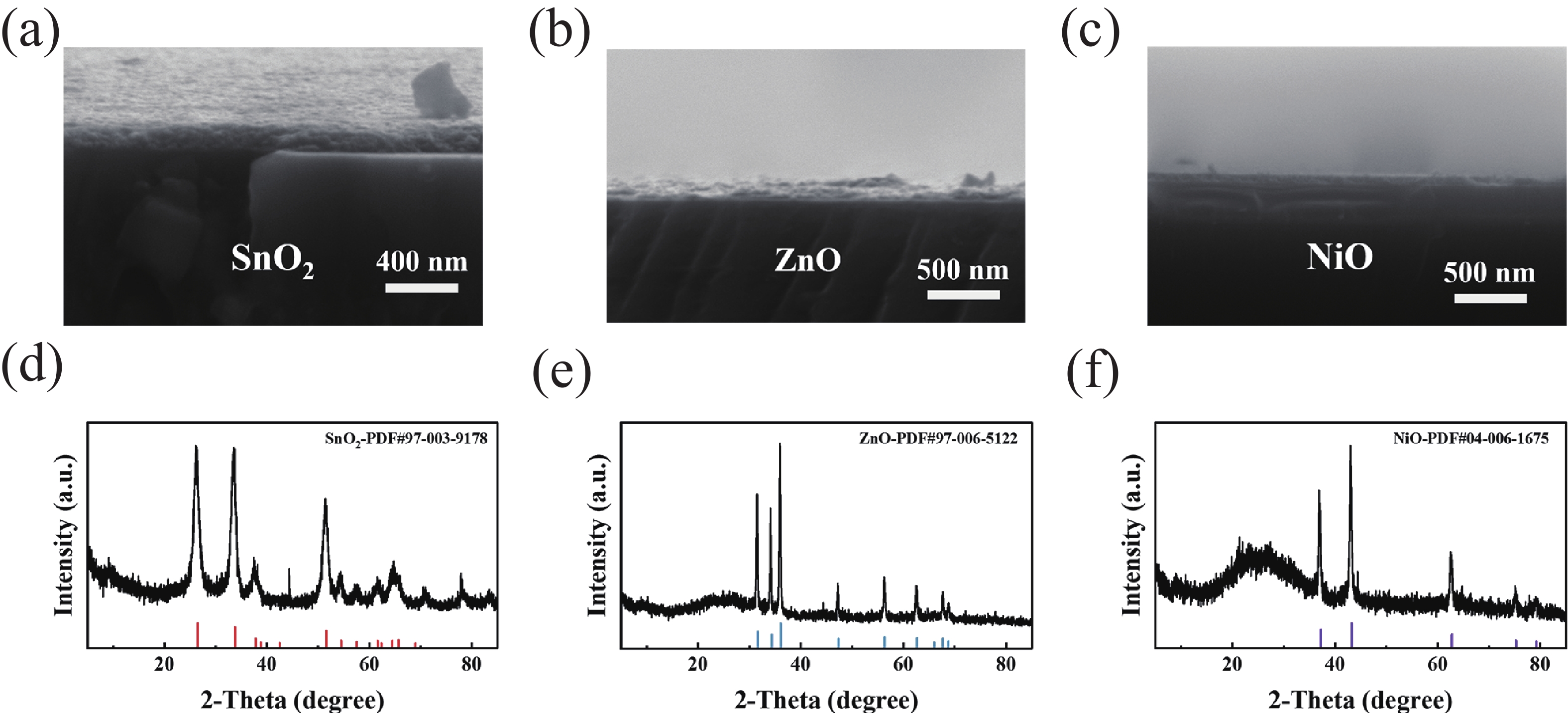
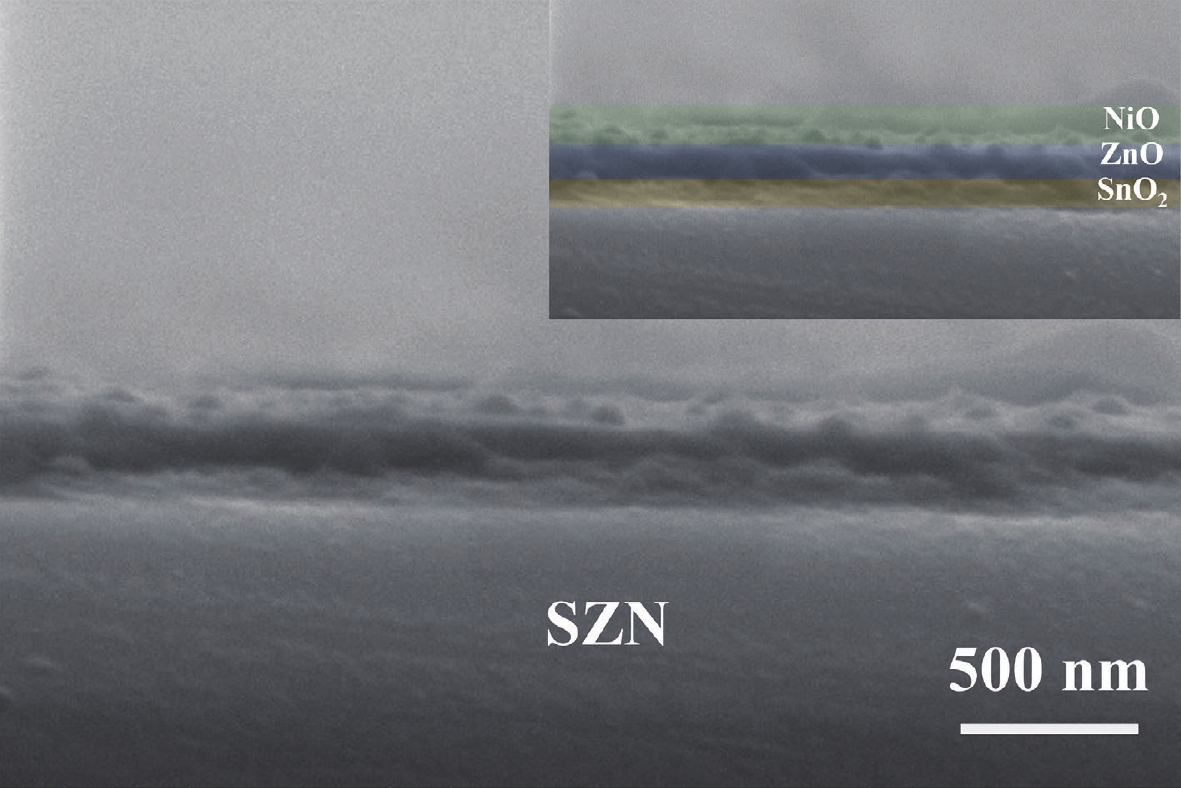
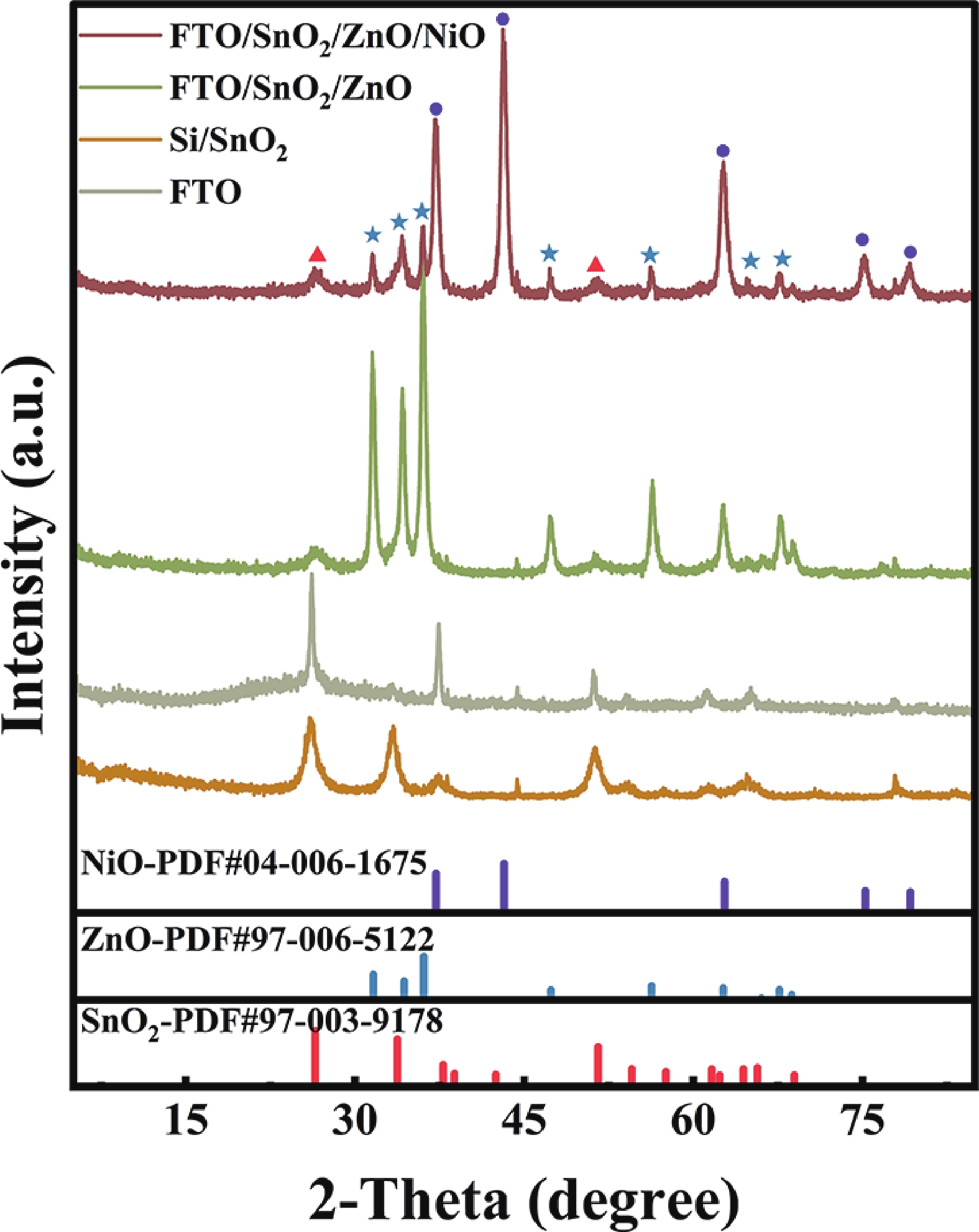
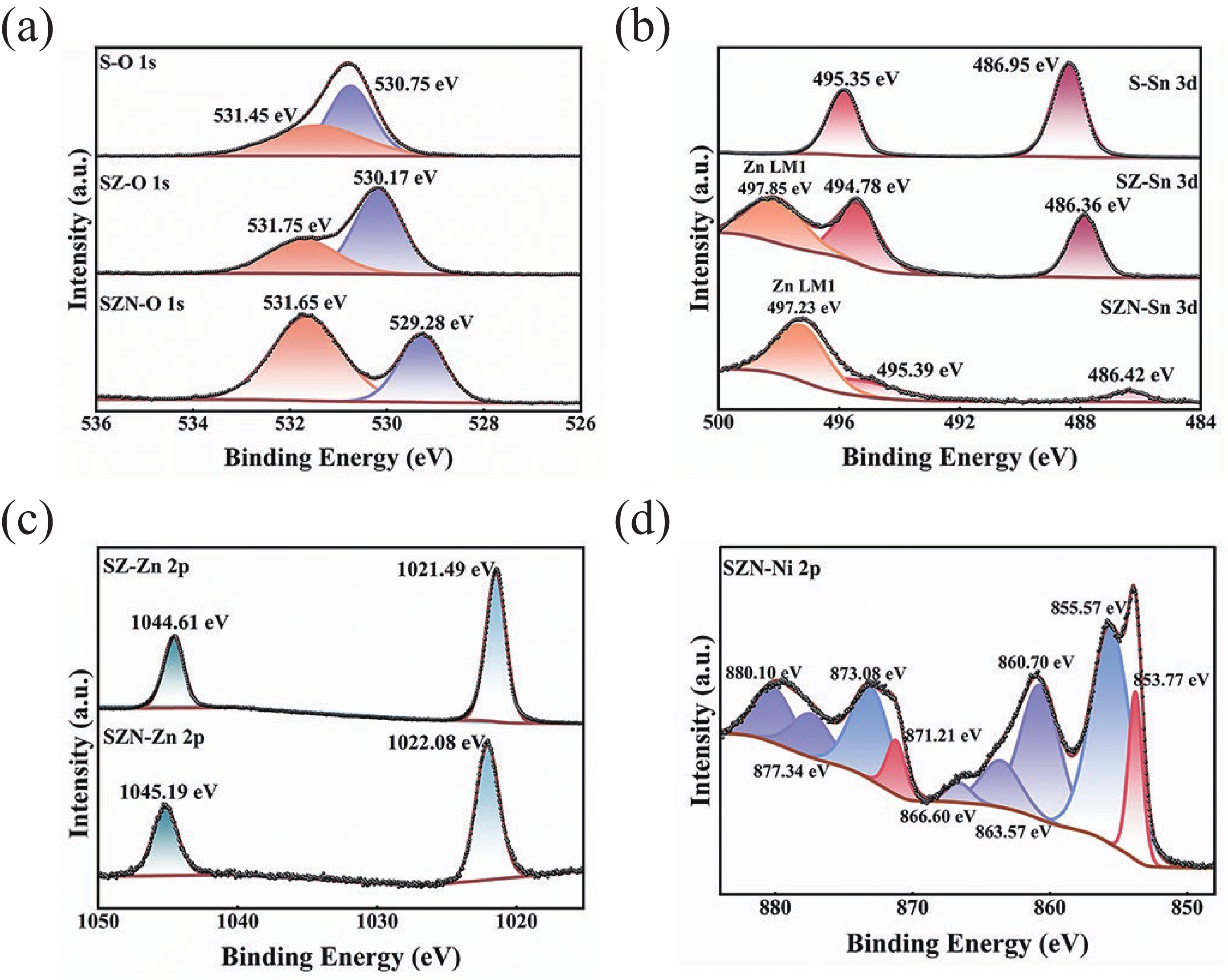
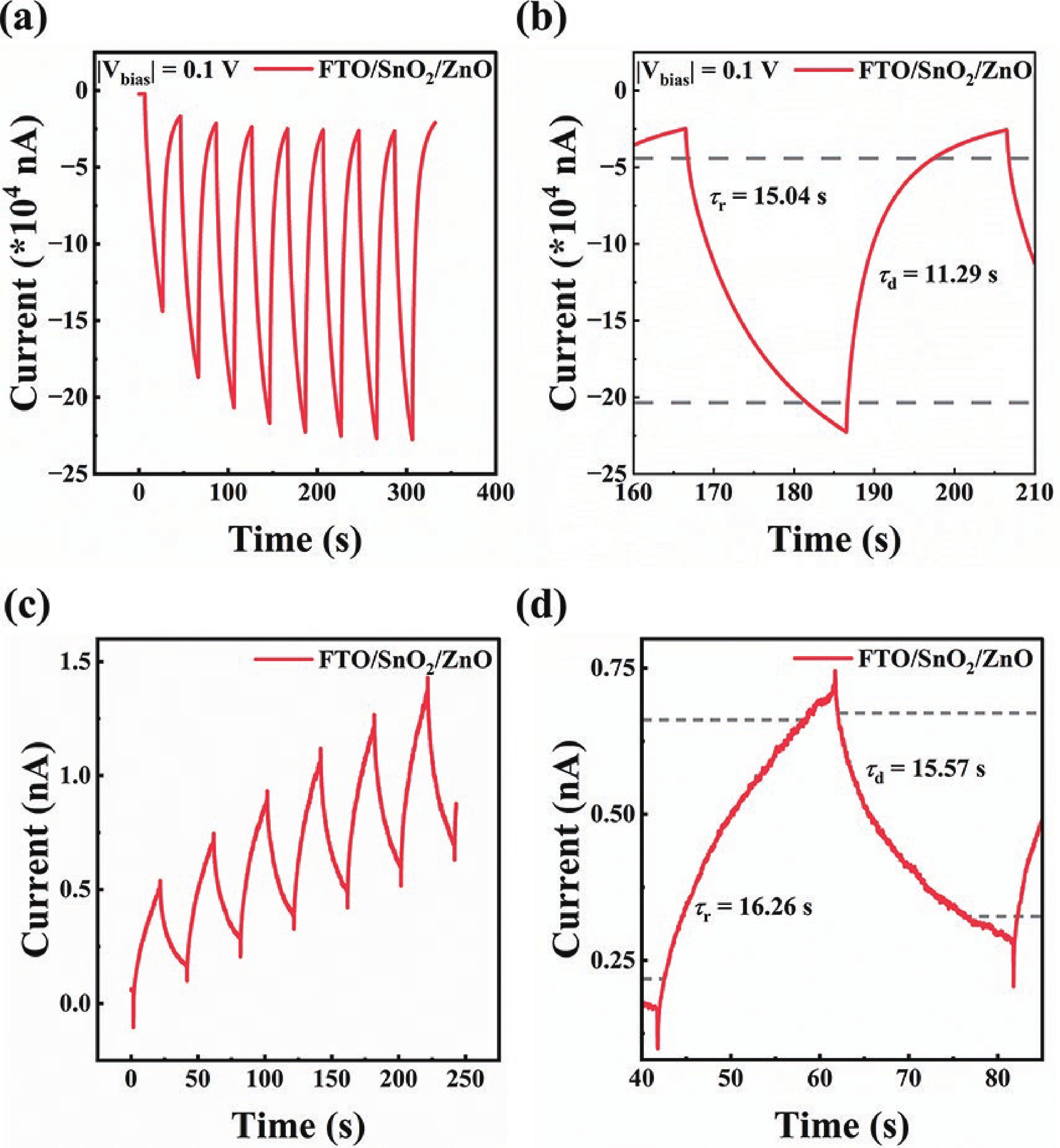

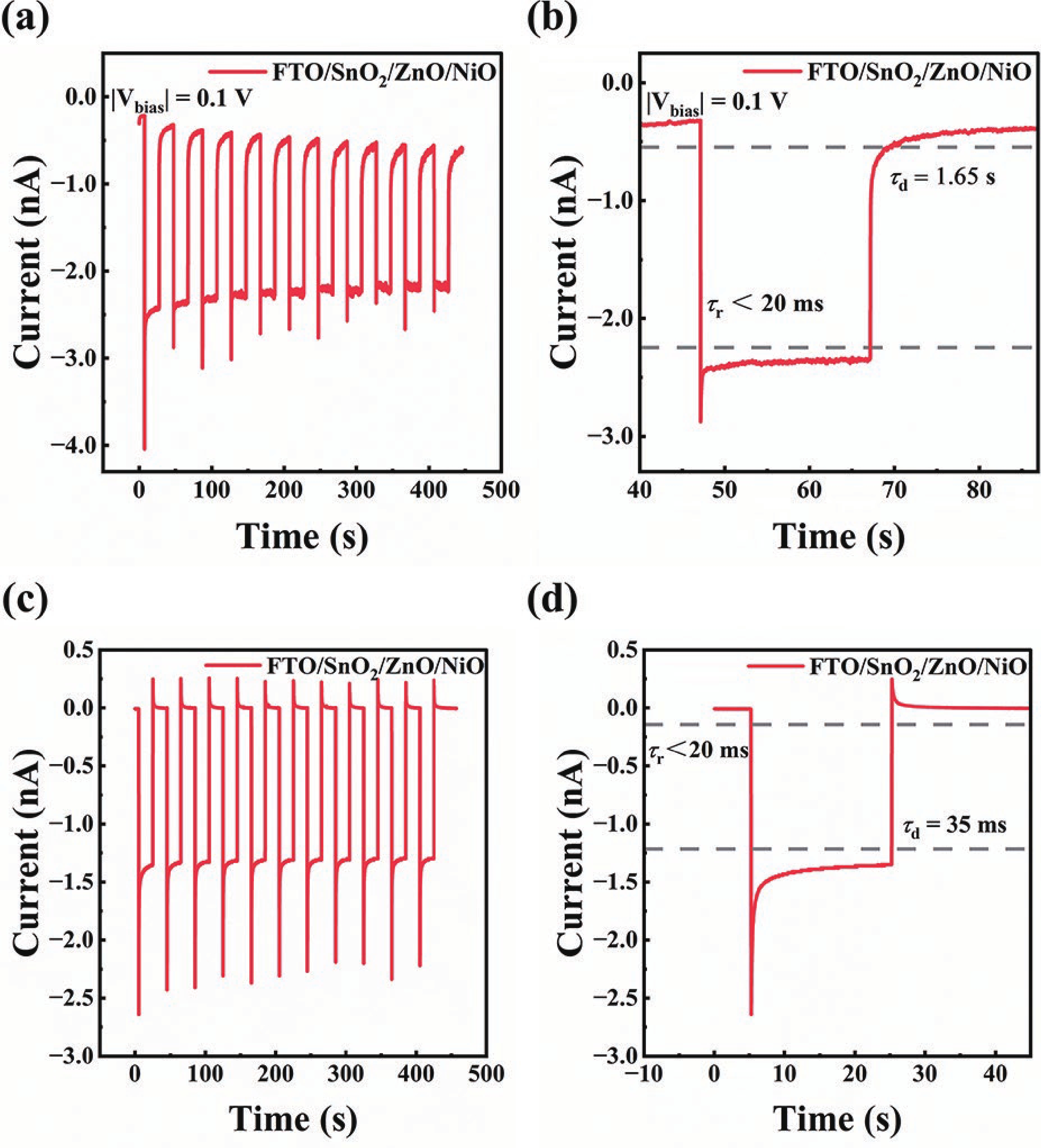
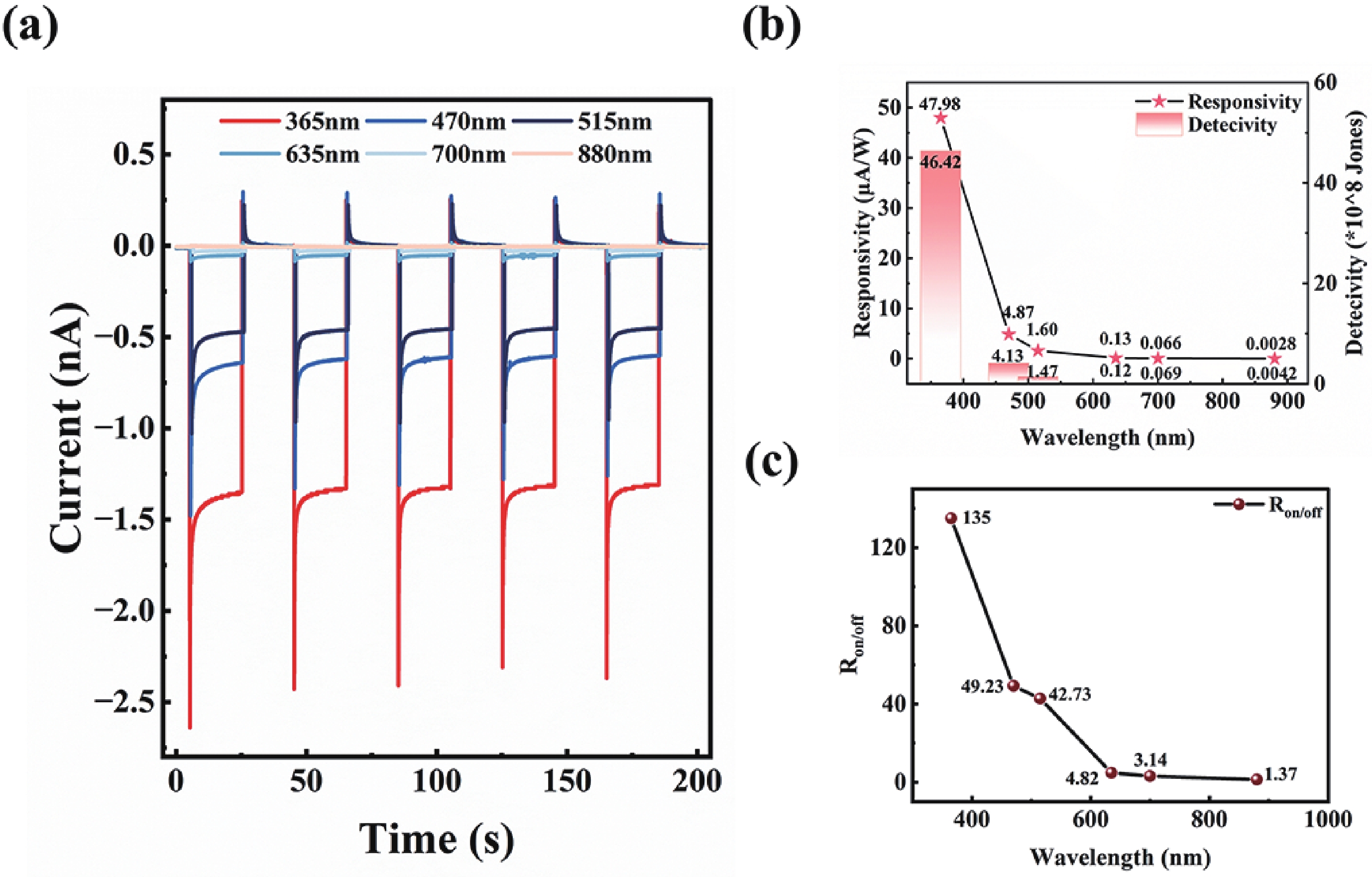

Table 1. Comparison of performance parameters for self-powered photodetectors with different structures in this work.
| Sample | Idark/nA | Ilight/nA | Ron/off | R(μA/W) | D*(*10^8 Jones) |
| SZ | 0.29 | 0.71 | 2.47 | 15.05 | 2.73 |
| ZN | 0.48 | 0.51 | 1.06 | 1.08 | 0.15 |
| SZN | –0.01 | –1.35 | 135 | 47.98 | 46.42 |
 DownLoad: CSV
Table 2. Work function $ \phi $, electron affinity $ \chi $, band gap Eg, valence band maximum EVB , and conduction band minimum ECB of SnO2, ZnO and NiO.
DownLoad: CSV
| [1] |
Pecunia V, Anthopoulos T D, Armin A, et al. Guidelines for accurate evaluation of photodetectors based on emerging semiconductor technologies. Nat Photonics, 2025, 19(11): 1178 doi: 10.1038/s41566-025-01759-1
|
| [2] |
Zhang P, Guo J, Yang J, et al. Ultrafast ultraviolet optoelectronic logic gate devices with ultralow energy consumption. Nano Lett, 2026, 26(24): 7937 doi: 10.1021/acs.nanolett.6c01365
|
| [3] |
Luo Y, Yu H, Wang D, et al. A single diode with integrated photosensing, memory and processing for neuromorphic image sensors. Nat Electron, 2026, 9(4): 404 doi: 10.1038/s41928-026-01588-2
|
| [4] |
Wu L, Hong P, Zhang M, et al. Influence of surface oxide layers on the performance of photoconductive detectors based on silicon wafers. J Phys D Appl Phys, 2025, 58(24): 245103 doi: 10.1088/1361-6463/adda5b
|
| [5] |
Wu L, Zhang M, Shi X, et al. The influence of surface treatment on the performance of photoconductive detectors based on silicon wafer. IEEE Sens J, 2024, 24(13): 20476 doi: 10.1109/JSEN.2024.3402118
|
| [6] |
Wu L, Shi X, Fan H, et al. Self-powered broadband photodetector based on pyramid-structured Si/TiO2 heterojunction. Chin Phys B, 2025, 34(8): 088501 doi: 10.1088/1674-1056/add50a
|
| [7] |
Wu W, Chen Z, Chen Y, et al. Sb2S3 indoor photovoltaics with a charge-transport-layer-free sandwich-structure. Appl Phys Lett, 2025, 127(8): 083907 doi: 10.1063/5.0285020
|
| [8] |
Parcaci M, Ruzgar S. Tuning the UV photodetection performance of In: ZnO thin films via Cu doping. Phys B Condens Matter, 2026, 739: 418956 doi: 10.1016/j.physb.2026.418956
|
| [9] |
Shi X, Guo K, Wu L, et al. Nano-ZnO/PVDF hybrid film for application in flexible waterproof ultraviolet photodetector. ACS Appl Nano Mater, 2024, 7(20): 23494 doi: 10.1021/acsanm.4c03567
|
| [10] |
Waheed U, Ahmed R. Optimization of defects in ZnO thin films for the enhancement of UV detection. Micro Nanostruct, 2026, 216: 208740 doi: 10.1016/j.micrna.2026.208740
|
| [11] |
Ghimire R R, Joshi N, Rai K B, et al. Optimization of UV photo-response in ZnO nanostructure film by balancing light absorption, carrier collection efficiency, and field effect mobility. Next Mater, 2026, 12: 102252 doi: 10.1016/j.nxmate.2026.102252
|
| [12] |
Hui Y, Ren Y, Song J, et al. Preparation of flexible ultraviolet photodetectors based on ZnO film using a dip-coating method on different flexible substrates. J Phys D Appl Phys, 2022, 55(35): 355105 doi: 10.1088/1361-6463/ac71e6
|
| [13] |
Wang Y, Shi X, Teng F. A ZnO nanoparticle UV detector on a fabric substrate pretreated with prussian blue with high anti-twist performance. Dalton Trans, 2026, 55(18): 7218 doi: 10.1039/D6DT00594B
|
| [14] |
Shi X, Wu L, Fan H, et al. Nano-sized ZnO particles on fabric substrates: Achieving ultra-flexible, self-healing UV photodetectors with superior anti-distortion performance. Phys B Condens Matter, 2025, 714: 417482 doi: 10.1016/j.physb.2025.417482
|
| [15] |
Liu S, Yang D, Ren Y, et al. Self‐Powered, Flexible Ultraviolet Photodetector Based on ZnO/Te All Nanowires Heterojunction Structure. Phys Status Solidi A, 2023, 220(5): 2200612 doi: 10.1002/pssa.202200612
|
| [16] |
Hong P, Cui X, Li N, et al. Performance enhancement of photoconductive detector based on ZnO film via the synergistic effect of heterojunction and polarization electric field. Phys B Condens Matter, 2026, 726: 418264 doi: 10.1016/j.physb.2026.418264
|
| [17] |
Hong P, Wu L, Shi X, et al. Influence of buffer layer on the performance of ZnO film based photoconductive detectors. J Appl Phys, 2025, 138(5): 055304 doi: 10.1063/5.0273458
|
| [18] |
Yin Z, Zeng Y, Yang D, et al. Multifunctional optoelectronic device based on CuO/ZnO heterojunction structure. J Lumin, 2023, 257: 119762 doi: 10.1016/j.jlumin.2023.119762
|
| [19] |
Panwar S, Dudi D, Bhardwaj K, et al. Plasmonic Ag nanoparticle-enhanced NiO/ZnO heterojunction for high-performance self-powered UV–visible broadband photodetection. J Appl Phys, 2025, 138(17): 174505 doi: 10.1063/5.0297252
|
| [20] |
Pham T K H, Tran B Q, Nguyen K B, et al. Effect of oxygen flow on transparent in-doped ZnO electrodes for NiO/ZnO junctions. Solid State Sci, 2026, 176: 108272 doi: 10.1016/j.solidstatesciences.2026.108272
|
| [21] |
Wang N, Li B, Chen Y, et al. Self-powered ZnO/NiO dual-band photodetector based on surface plasmon enhancement. Mater Des, 2025, 260: 115079 doi: 10.1016/j.matdes.2025.115079
|
| [22] |
Teng T, Chen Y, Peng Y, et al. Ultraviolet detector based on CdS/ZnO piezoelectric heterojunction. Thin Solid Films, 2025, 825: 140752 doi: 10.1016/j.tsf.2025.140752
|
| [23] |
Suneetha S, Dasi G, Thyda L, et al. Solution-processed bathophenanthroline (BPhen)/ZnO bulk hybrid-heterojunction thin films for efficient UV photodetector applications. Ceram Int, 2025, 51(9): 11509 doi: 10.1016/j.ceramint.2025.01.005
|
| [24] |
Bagheri F, Haratizadeh H, Askari R. High detectivity self-powered SnO2-ZnO flexible photodetector: The role of optimized heterojunction engineering. Sensor Actuat A: Phys, 2026, 409: 118043 doi: 10.1016/j.sna.2026.118043
|
| [25] |
Cao K, Lv Z, Huang F, et al. Low‐power dual‐functional neuromorphic optoelectronic device based on Bi4.15Nd0.85Ti3FeO15/ZnO heterojunction. Small, 2026, 22(17): e13679 doi: 10.1002/smll.202513679
|
| [26] |
Wang S, Zhao M, Jiang D, et al. Organic–inorganic PTB7-Th: ITIC/ZnO heterojunction based self-powered photodetectors with tunable dual detection windows. J Phys Chem Lett, 2025, 16(22): 5449 doi: 10.1021/acs.jpclett.5c01156
|
| [27] |
Yadav P K, Dahiya S, Pal B N, et al. Solution-processed ZnO/V2O5 heterojunction thin films for UV photodetectors. ACS Appl Nano Mater, 2025, 8(39): 19076 doi: 10.1021/acsanm.5c04171
|
| [28] |
Yin Z, Shan Y, Yu M, et al. Enhanced performance of UV photodetector based on ZnO nanorod arrays via TiO2 as electrons trap layer. Mater Sci Semicond Process, 2022, 148: 106813 doi: 10.1016/j.mssp.2022.106813
|
| [29] |
Shi X, Wu L, Hong P, et al. A review of recent advances in ZnO-based thin film photodetectors: Preparation, structure and strategies for performance enhancement. Opt Laser Technol, 2025, 191: 113352 doi: 10.1016/j.optlastec.2025.113352
|
| [30] |
Hu K, Teng F, Zheng L, et al. Binary response Se/ZnO p‐n heterojunction UV photodetector with high on/off ratio and fast speed. Laser Photonics Rev, 2017, 11(1): 1600257 doi: 10.1002/lpor.201600257
|
| [31] |
Jeong J H, Kang S J, Kang S J. Solution processable visible-light and color-selective image sensor with a ZnO/QDs/ZrO2 sandwich structure. Curr Appl Phys, 2023, 55: 34 doi: 10.1016/j.cap.2023.08.013
|
| [32] |
Wang S, Yang S, Xu Z, et al. A high-performance photodetector based on a ZnO/CsPbBr3 quantum-dot-level-contact hybrid sandwich structure. J Mater Chem C, 2025, 13(2): 902 doi: 10.1039/D4TC03359K
|
| [33] |
Zhang D, Feng T, Hou H, et al. Self-powered and broadband response photothermoelectric detector based on Bi2Te3 nanowires and carbon nanotubes sandwich structure. Mater Sci Semicond Process, 2026, 201: 110088 doi: 10.1016/j.mssp.2025.110088
|
| [34] |
Li L, Zhang Z, Wang J, et al. ZnO/Gra/Si structure to improve photoelectric properties. J Phys Chem Solids, 2025, 196: 112321 doi: 10.1016/j.jpcs.2024.112321
|
| [35] |
Yang Q, Hu J, Li H, et al. All‐optical modulation photodetectors based on the CdS/Graphene/Ge sandwich structures for integrated sensing‐computing. Adv Sci, 2025, 12(11): 2413662 doi: 10.1002/advs.202413662
|
| [36] |
Gong W, Yan J, Gao F, et al. High-performance UV–Vis broad-spectra photodetector based on a β-Ga2O3/Au/MAPbBr3 sandwich structure. ACS Appl Mater Interfaces, 2022, 14(42): 47853 doi: 10.1021/acsami.2c11681
|
| [37] |
Shi K, Jiang Z, Zheng Y, et al. Efficient hot-electron injection strategy towards high-performance plasmonic photodetector in imaging applications. Appl Surf Sci, 2026, 726: 165900 doi: 10.1016/j.apsusc.2026.165900
|
| [38] |
Xing M, Jiang D, Zhao M. High external quantum efficiency in ZnO/Au/Ga2O3 sandwich–structured photodetector. Appl Surf Sci, 2023, 618: 156705 doi: 10.1016/j.apsusc.2023.156705
|
| [39] |
Kadir A, Abdiryim T, Liu X, et al. Self-powered UV photodetector based on poly (3, 4-ethylenedioxyselenophene)/ZnO @ZnSe nanorods sandwich structure. Opt Laser Technol, 2024, 176: 111037 doi: 10.1016/j.optlastec.2024.111037
|
| [40] |
Li G, Song Y, Feng S, et al. Improved optoelectronic performance of MoS2 photodetector via localized surface plasmon resonance coupling of double-layered Au nanoparticles with sandwich structure. ACS Appl Electron Mater, 2022, 4(4): 1626 doi: 10.1021/acsaelm.1c01300
|
| [41] |
Xia B, Baron-Wiechec A, Ganem J, et al. Defect chemistry engineered SnO2 thin films via thermal ALD: unraveling defect-controlled electronic structure for charge transport. ACS Appl Mater Interfaces, 2025, 17(34): 49008 doi: 10.1021/acsami.5c11778
|
| [42] |
Ko R, Wang S, Chen Y, et al. Using thin-film transistor with thick oxygen-doped Si-Zn-Sn-O channel and patterned Pt/NiO capping layer to enhance ultraviolet light sensing performance. Jpn J Appl Phys, 2024, 63(2): 02SP29 doi: 10.35848/1347-4065/ad0cdc
|





Article views: 1 Times PDF downloads: 0 Times Cited by: 0 Times
Received: 11 July 2026 Revised: 09 September 2026 Online: Accepted Manuscript: 12 October 2026
| Citation: |
Nan Li, Peiqin Hong, Xinyu Cui, Haibo Fan, Peng Hu, Feng Teng. Performance enhanced self-powered near ultraviolet detector based on a NiO/ZnO/SnO2 sandwich structure[J]. Journal of Semiconductors, 2026, In Press. doi: 10.1088/1674-4926/26070050
****
N Li, P Q Hong, X Y Cui, H B Fan, P Hu, and F Teng, Performance enhanced self-powered near ultraviolet detector based on a NiO/ZnO/SnO2 sandwich structure[J]. J. Semicond., 2026, accepted doi: 10.1088/1674-4926/26070050

|
 Nan Li was born in Henan, China, in March 2004. She received the bachelor’s degree from Henan Normal University, Xinxiang, China, in 2025. She is pursuing the master’s degree with the Physics College, Northwest University, Xi’an, China. Her research interests include the preparation and application of nanomaterials, particularly the fabrication and study of ZnO-based photodetectors
 Feng Teng received the Ph.D. degree from the School of Physical Science and Technology, Lanzhou University, Lanzhou, China, in 2015. After that, he followed Prof. Xiaosheng Fang for his Postdoctoral Research at Fudan University, Shanghai, China. Currently, he is a Professor with the School of Physics, Northwest University, Xi’an, China. His research interests include the photodetectors based on metal oxides and silicon, and flexible, and wearable optoelectronic devices
| [1] |
Pecunia V, Anthopoulos T D, Armin A, et al. Guidelines for accurate evaluation of photodetectors based on emerging semiconductor technologies. Nat Photonics, 2025, 19(11): 1178 doi: 10.1038/s41566-025-01759-1
|
| [2] |
Zhang P, Guo J, Yang J, et al. Ultrafast ultraviolet optoelectronic logic gate devices with ultralow energy consumption. Nano Lett, 2026, 26(24): 7937 doi: 10.1021/acs.nanolett.6c01365
|
| [3] |
Luo Y, Yu H, Wang D, et al. A single diode with integrated photosensing, memory and processing for neuromorphic image sensors. Nat Electron, 2026, 9(4): 404 doi: 10.1038/s41928-026-01588-2
|
| [4] |
Wu L, Hong P, Zhang M, et al. Influence of surface oxide layers on the performance of photoconductive detectors based on silicon wafers. J Phys D Appl Phys, 2025, 58(24): 245103 doi: 10.1088/1361-6463/adda5b
|
| [5] |
Wu L, Zhang M, Shi X, et al. The influence of surface treatment on the performance of photoconductive detectors based on silicon wafer. IEEE Sens J, 2024, 24(13): 20476 doi: 10.1109/JSEN.2024.3402118
|
| [6] |
Wu L, Shi X, Fan H, et al. Self-powered broadband photodetector based on pyramid-structured Si/TiO2 heterojunction. Chin Phys B, 2025, 34(8): 088501 doi: 10.1088/1674-1056/add50a
|
| [7] |
Wu W, Chen Z, Chen Y, et al. Sb2S3 indoor photovoltaics with a charge-transport-layer-free sandwich-structure. Appl Phys Lett, 2025, 127(8): 083907 doi: 10.1063/5.0285020
|
| [8] |
Parcaci M, Ruzgar S. Tuning the UV photodetection performance of In: ZnO thin films via Cu doping. Phys B Condens Matter, 2026, 739: 418956 doi: 10.1016/j.physb.2026.418956
|
| [9] |
Shi X, Guo K, Wu L, et al. Nano-ZnO/PVDF hybrid film for application in flexible waterproof ultraviolet photodetector. ACS Appl Nano Mater, 2024, 7(20): 23494 doi: 10.1021/acsanm.4c03567
|
| [10] |
Waheed U, Ahmed R. Optimization of defects in ZnO thin films for the enhancement of UV detection. Micro Nanostruct, 2026, 216: 208740 doi: 10.1016/j.micrna.2026.208740
|
| [11] |
Ghimire R R, Joshi N, Rai K B, et al. Optimization of UV photo-response in ZnO nanostructure film by balancing light absorption, carrier collection efficiency, and field effect mobility. Next Mater, 2026, 12: 102252 doi: 10.1016/j.nxmate.2026.102252
|
| [12] |
Hui Y, Ren Y, Song J, et al. Preparation of flexible ultraviolet photodetectors based on ZnO film using a dip-coating method on different flexible substrates. J Phys D Appl Phys, 2022, 55(35): 355105 doi: 10.1088/1361-6463/ac71e6
|
| [13] |
Wang Y, Shi X, Teng F. A ZnO nanoparticle UV detector on a fabric substrate pretreated with prussian blue with high anti-twist performance. Dalton Trans, 2026, 55(18): 7218 doi: 10.1039/D6DT00594B
|
| [14] |
Shi X, Wu L, Fan H, et al. Nano-sized ZnO particles on fabric substrates: Achieving ultra-flexible, self-healing UV photodetectors with superior anti-distortion performance. Phys B Condens Matter, 2025, 714: 417482 doi: 10.1016/j.physb.2025.417482
|
| [15] |
Liu S, Yang D, Ren Y, et al. Self‐Powered, Flexible Ultraviolet Photodetector Based on ZnO/Te All Nanowires Heterojunction Structure. Phys Status Solidi A, 2023, 220(5): 2200612 doi: 10.1002/pssa.202200612
|
| [16] |
Hong P, Cui X, Li N, et al. Performance enhancement of photoconductive detector based on ZnO film via the synergistic effect of heterojunction and polarization electric field. Phys B Condens Matter, 2026, 726: 418264 doi: 10.1016/j.physb.2026.418264
|
| [17] |
Hong P, Wu L, Shi X, et al. Influence of buffer layer on the performance of ZnO film based photoconductive detectors. J Appl Phys, 2025, 138(5): 055304 doi: 10.1063/5.0273458
|
| [18] |
Yin Z, Zeng Y, Yang D, et al. Multifunctional optoelectronic device based on CuO/ZnO heterojunction structure. J Lumin, 2023, 257: 119762 doi: 10.1016/j.jlumin.2023.119762
|
| [19] |
Panwar S, Dudi D, Bhardwaj K, et al. Plasmonic Ag nanoparticle-enhanced NiO/ZnO heterojunction for high-performance self-powered UV–visible broadband photodetection. J Appl Phys, 2025, 138(17): 174505 doi: 10.1063/5.0297252
|
| [20] |
Pham T K H, Tran B Q, Nguyen K B, et al. Effect of oxygen flow on transparent in-doped ZnO electrodes for NiO/ZnO junctions. Solid State Sci, 2026, 176: 108272 doi: 10.1016/j.solidstatesciences.2026.108272
|
| [21] |
Wang N, Li B, Chen Y, et al. Self-powered ZnO/NiO dual-band photodetector based on surface plasmon enhancement. Mater Des, 2025, 260: 115079 doi: 10.1016/j.matdes.2025.115079
|
| [22] |
Teng T, Chen Y, Peng Y, et al. Ultraviolet detector based on CdS/ZnO piezoelectric heterojunction. Thin Solid Films, 2025, 825: 140752 doi: 10.1016/j.tsf.2025.140752
|
| [23] |
Suneetha S, Dasi G, Thyda L, et al. Solution-processed bathophenanthroline (BPhen)/ZnO bulk hybrid-heterojunction thin films for efficient UV photodetector applications. Ceram Int, 2025, 51(9): 11509 doi: 10.1016/j.ceramint.2025.01.005
|
| [24] |
Bagheri F, Haratizadeh H, Askari R. High detectivity self-powered SnO2-ZnO flexible photodetector: The role of optimized heterojunction engineering. Sensor Actuat A: Phys, 2026, 409: 118043 doi: 10.1016/j.sna.2026.118043
|
| [25] |
Cao K, Lv Z, Huang F, et al. Low‐power dual‐functional neuromorphic optoelectronic device based on Bi4.15Nd0.85Ti3FeO15/ZnO heterojunction. Small, 2026, 22(17): e13679 doi: 10.1002/smll.202513679
|
| [26] |
Wang S, Zhao M, Jiang D, et al. Organic–inorganic PTB7-Th: ITIC/ZnO heterojunction based self-powered photodetectors with tunable dual detection windows. J Phys Chem Lett, 2025, 16(22): 5449 doi: 10.1021/acs.jpclett.5c01156
|
| [27] |
Yadav P K, Dahiya S, Pal B N, et al. Solution-processed ZnO/V2O5 heterojunction thin films for UV photodetectors. ACS Appl Nano Mater, 2025, 8(39): 19076 doi: 10.1021/acsanm.5c04171
|
| [28] |
Yin Z, Shan Y, Yu M, et al. Enhanced performance of UV photodetector based on ZnO nanorod arrays via TiO2 as electrons trap layer. Mater Sci Semicond Process, 2022, 148: 106813 doi: 10.1016/j.mssp.2022.106813
|
| [29] |
Shi X, Wu L, Hong P, et al. A review of recent advances in ZnO-based thin film photodetectors: Preparation, structure and strategies for performance enhancement. Opt Laser Technol, 2025, 191: 113352 doi: 10.1016/j.optlastec.2025.113352
|
| [30] |
Hu K, Teng F, Zheng L, et al. Binary response Se/ZnO p‐n heterojunction UV photodetector with high on/off ratio and fast speed. Laser Photonics Rev, 2017, 11(1): 1600257 doi: 10.1002/lpor.201600257
|
| [31] |
Jeong J H, Kang S J, Kang S J. Solution processable visible-light and color-selective image sensor with a ZnO/QDs/ZrO2 sandwich structure. Curr Appl Phys, 2023, 55: 34 doi: 10.1016/j.cap.2023.08.013
|
| [32] |
Wang S, Yang S, Xu Z, et al. A high-performance photodetector based on a ZnO/CsPbBr3 quantum-dot-level-contact hybrid sandwich structure. J Mater Chem C, 2025, 13(2): 902 doi: 10.1039/D4TC03359K
|
| [33] |
Zhang D, Feng T, Hou H, et al. Self-powered and broadband response photothermoelectric detector based on Bi2Te3 nanowires and carbon nanotubes sandwich structure. Mater Sci Semicond Process, 2026, 201: 110088 doi: 10.1016/j.mssp.2025.110088
|
| [34] |
Li L, Zhang Z, Wang J, et al. ZnO/Gra/Si structure to improve photoelectric properties. J Phys Chem Solids, 2025, 196: 112321 doi: 10.1016/j.jpcs.2024.112321
|
| [35] |
Yang Q, Hu J, Li H, et al. All‐optical modulation photodetectors based on the CdS/Graphene/Ge sandwich structures for integrated sensing‐computing. Adv Sci, 2025, 12(11): 2413662 doi: 10.1002/advs.202413662
|
| [36] |
Gong W, Yan J, Gao F, et al. High-performance UV–Vis broad-spectra photodetector based on a β-Ga2O3/Au/MAPbBr3 sandwich structure. ACS Appl Mater Interfaces, 2022, 14(42): 47853 doi: 10.1021/acsami.2c11681
|
| [37] |
Shi K, Jiang Z, Zheng Y, et al. Efficient hot-electron injection strategy towards high-performance plasmonic photodetector in imaging applications. Appl Surf Sci, 2026, 726: 165900 doi: 10.1016/j.apsusc.2026.165900
|
| [38] |
Xing M, Jiang D, Zhao M. High external quantum efficiency in ZnO/Au/Ga2O3 sandwich–structured photodetector. Appl Surf Sci, 2023, 618: 156705 doi: 10.1016/j.apsusc.2023.156705
|
| [39] |
Kadir A, Abdiryim T, Liu X, et al. Self-powered UV photodetector based on poly (3, 4-ethylenedioxyselenophene)/ZnO @ZnSe nanorods sandwich structure. Opt Laser Technol, 2024, 176: 111037 doi: 10.1016/j.optlastec.2024.111037
|
| [40] |
Li G, Song Y, Feng S, et al. Improved optoelectronic performance of MoS2 photodetector via localized surface plasmon resonance coupling of double-layered Au nanoparticles with sandwich structure. ACS Appl Electron Mater, 2022, 4(4): 1626 doi: 10.1021/acsaelm.1c01300
|
| [41] |
Xia B, Baron-Wiechec A, Ganem J, et al. Defect chemistry engineered SnO2 thin films via thermal ALD: unraveling defect-controlled electronic structure for charge transport. ACS Appl Mater Interfaces, 2025, 17(34): 49008 doi: 10.1021/acsami.5c11778
|
| [42] |
Ko R, Wang S, Chen Y, et al. Using thin-film transistor with thick oxygen-doped Si-Zn-Sn-O channel and patterned Pt/NiO capping layer to enhance ultraviolet light sensing performance. Jpn J Appl Phys, 2024, 63(2): 02SP29 doi: 10.35848/1347-4065/ad0cdc
|
 26070050 Supporting_Information.pdf
|

|

 WeChat ID
Journal of Semiconductors © 2017 All Rights Reserved 京ICP备05085259号-2