


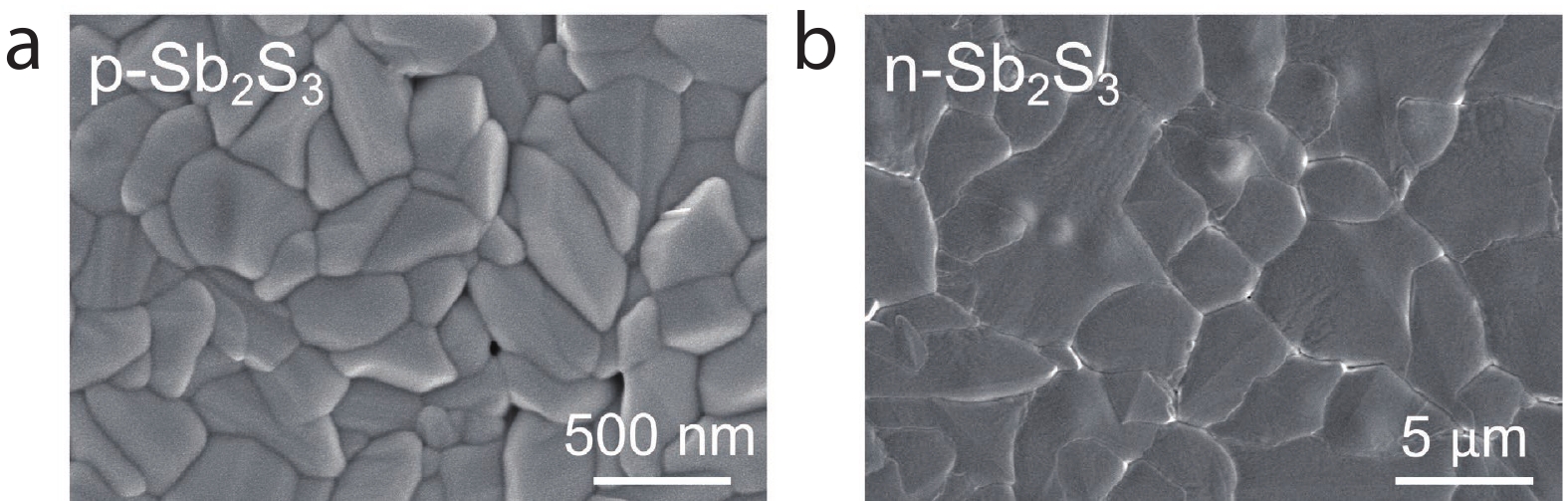
Fig. 1.
Top-view SEM images of (a) CSS-processed p-type Sb2S3 thin films and (b) CBD-processed n-type Sb2S3 thin films.
ARTICLES
Qiang Xie1, Jiacheng Zhou1, Wenfei Wei2, Naiqiang Yin3, and Ru Zhou1,
Corresponding author: Naiqiang Yin, yinnq@foxmail.com; Ru Zhou, zhouru@hfut.edu.cn
Abstract: Sb2S3 has attracted increasing attention for next-generation photovoltaics due to its excellent materials and optoelectronic properties, especially a suitable bandgap (~1.75 eV) for indoor photovoltaics and silicon-based tandem solar cells. However, the highest power conversion efficiency (PCE) report thus far for Sb2S3 solar cells is 8.26%, lagging far behind its theoretical efficiency limit (~28%). This study aims to scrutinize the important roles of hole transport layers (HTLs) in near-intrinsic Sb2S3 solar cells. It is found that the device efficiencies of both of p-type Sb2S3 and n-type Sb2S3 based planar solar cells are significantly enhanced with the incorporation of Spiro-OMeTAD HTL, further confirmed by the SCAPS simulation. The specific roles of HTL on promoting the interface hole extraction in Sb2S3 solar cells are elucidated. Then the performance optimization is conducted by systematically optimizing key parameters of Sb2S3 absorbers, such as absorber thickness, defect density, and doping concentration. Furthermore, several typical inorganic HTL candidates for replacing Spiro-OMeTAD were explored for Sb2S3 solar cells, revealing that the Cu2O HTL based device exhibits a highest PCE of 23.09%. This work highlights the necessity of HTLs for devices based on near-intrinsic Sb2S3 and provides valuable insights for further enhancing the performance of Sb2S3 solar cells.
Keywords: Sb2S3 solar cells, hole transport layer, SCAPS, charge transport, charge recombination
| [1] |
Ali Shah U, Chen S W, Khalaf G M G, et al. Wide bandgap Sb2S3 solar cells. Adv Funct Mater, 2021, 31(27): 2100265 doi: 10.1002/adfm.202100265
|
| [2] |
Chen S W, Li M Y, Zhu Y C, et al. A codoping strategy for efficient planar heterojunction Sb2S3 solar cells. Adv Energy Mater, 2022, 12(47): 2202897 doi: 10.1002/aenm.202202897
|
| [3] |
Deng H, Cheng Y S, Chen Z K, et al. Flexible substrate-structured Sb2S3 solar cells with back interface selenization. Adv Funct Mater, 2023, 33(12): 2212627 doi: 10.1002/adfm.202212627
|
| [4] |
Shen G H, Ke A, Chen S W, et al. Strong chelating additive and modified electron transport layer for 8.26%-efficient Sb2S3 solar cells. Adv Energy Mater, 2025, 15(24): 2406051 doi: 10.1002/aenm.202406051
|
| [5] |
Lian W T, Jiang C H, Yin Y W, et al. Revealing composition and structure dependent deep-level defect in antimony trisulfide photovoltaics. Nat Commun, 2021, 12: 3260 doi: 10.1038/s41467-021-23592-0
|
| [6] |
Wang X M, Shi X Q, Zhang F, et al. Chemical etching induced surface modification and gentle gradient bandgap for highly efficient Sb2(S, Se)3 solar cell. Appl Surf Sci, 2022, 579: 152193 doi: 10.1016/j.apsusc.2021.152193
|
| [7] |
Amin A, Cagno C, Wang Y Z, et al. A review of interface engineering in antimony chalcogenide thin film solar cells. Sol RRL, 2025, 9(15): 2500330 doi: 10.1002/solr.202500330
|
| [8] |
Myagmarsereejid P, Ingram M, Batmunkh M, et al. Doping strategies in Sb2S3 thin films for solar cells. Small, 2021, 17(39): 2100241 doi: 10.1002/smll.202100241
|
| [9] |
Chen C, Tang J. Open-circuit voltage loss of antimony chalcogenide solar cells: Status, origin, and possible solutions. ACS Energy Lett, 2020, 5(7): 2294 doi: 10.1021/acsenergylett.0c00940
|
| [10] |
Kung P K, Li M H, Lin P Y, et al. A review of inorganic hole transport materials for perovskite solar cells. Adv Mater Interfaces, 2018, 5(22): 1800882 doi: 10.1002/admi.201800882
|
| [11] |
Rahman M F, Al Ijajul Islam M, Chowdhury M, et al. Efficiency improvement of CsSnI3 based heterojunction solar cells with P3HT HTL: A numerical simulation approach. Mater Sci Eng B, 2024, 307: 117524 doi: 10.1016/j.mseb.2024.117524
|
| [12] |
Kumar P, Eriksson M, Kharytonau D S, et al. All-inorganic hydrothermally processed semitransparent Sb2S3 solar cells with CuSCN as the hole transport layer. ACS Appl Energy Mater, 2024, 7(4): 1421 doi: 10.1021/acsaem.3c02492
|
| [13] |
Wang S Y, Zhao Y Q, Che B, et al. A novel multi-sulfur source collaborative chemical bath deposition technology enables 8%-efficiency Sb2S3 planar solar cells. Adv Mater, 2022, 34(41): 2206242 doi: 10.1002/adma.202206242
|
| [14] |
Liu X N, Cai Z Y, Wan L, et al. Grain engineering of Sb2S3 thin films to enable efficient planar solar cells with high open-circuit voltage. Adv Mater, 2024, 36(1): 2305841 doi: 10.1002/adma.202305841
|
| [15] |
Tumen-Ulzii G, Matsushima T, Adachi C. Mini-review on efficiency and stability of perovskite solar cells with spiro-OMeTAD hole transport layer: Recent progress and perspectives. Energy Fuels, 2021, 35(23): 18915 doi: 10.1021/acs.energyfuels.1c02190
|
| [16] |
Song W Y, Rakocevic L, Thiruvallur Eachambadi R, et al. Improving the morphology stability of spiro-OMeTAD films for enhanced thermal stability of perovskite solar cells. ACS Appl Mater Interfaces, 2021, 13(37): 44294 doi: 10.1021/acsami.1c11227
|
| [17] |
Abdellah I M, Chowdhury T H, Lee J J, et al. Facile and low-cost synthesis of a novel dopant-free hole transporting material that rivals Spiro-OMeTAD for high efficiency perovskite solar cells. Sustainable Energy Fuels, 2021, 5(1): 199 doi: 10.1039/D0SE01323D
|
| [18] |
Al-Hattab M, Moudou L, Khenfouch M, et al. Numerical simulation of a new heterostructure CIGS/GaSe solar cell system using SCAPS-1D software. Sol Energy, 2021, 227: 13 doi: 10.1016/j.solener.2021.08.084
|
| [19] |
Dahmardeh Z, Saadat M. Exploring the potential of standalone and tandem solar cells with Sb2S3 and Sb2Se3 absorbers: A simulation study. Sci Rep, 2023, 13: 22632 doi: 10.1038/s41598-023-49269-w
|
| [20] |
Chen X, Shu X X, Zhou J C, et al. Additive engineering for Sb2S3 indoor photovoltaics with efficiency exceeding 17%. Light Sci Appl, 2024, 13: 281 doi: 10.1038/s41377-024-01620-0
|
| [21] |
Wu W T, Chen Z H, Chen Y X, et al. Sb2S3 indoor photovoltaics with a charge-transport-layer-free sandwich-structure. Appl Phys Lett, 2025, 127(8): 083907 doi: 10.1063/5.0285020
|
| [22] |
Li Y, Liu X A, Xie Q, et al. Precursor engineering of chemical bath deposited Sb2S3 films for efficient planar solar cells and minimodules. Small Meth, 2026, 10(3): e02005 doi: 10.1002/smtd.202502005
|
| [23] |
Su X S, Li D D, Xie Q, et al. Anion-vacancy defect passivation for efficient antimony selenosulfide solar cells via magnesium chloride post-growth activation. Small, 2025, 21(17): 2412322 doi: 10.1002/smll.202412322
|
| [24] |
Salem M S, Shaker A, Othman M S, et al. Numerical analysis and design of high performance HTL-free antimony sulfide solar cells by SCAPS-1D. Opt Mater, 2022, 123: 111880 doi: 10.1016/j.optmat.2021.111880
|
| [25] |
Kim J K, Veerappan G, Heo N, et al. Efficient hole extraction from Sb2S3 heterojunction solar cells by the solid transfer of preformed PEDOT: PSS film. J Phys Chem C, 2014, 118(39): 22672 doi: 10.1021/jp507652r
|
| [26] |
Xiao Y P, Wang H P, Kuang H. Numerical simulation and performance optimization of Sb2S3 solar cell with a hole transport layer. Opt Mater, 2020, 108: 110414 doi: 10.1016/j.optmat.2020.110414
|
| [27] |
Lin L Y, Jiang L Q, Qiu Y, et al. Analysis of Sb2Se3/CdS based photovoltaic cell: A numerical simulation approach. J Phys Chem Solids, 2018, 122: 19 doi: 10.1016/j.spmi.2016.10.028
|
| [28] |
Zhang H, Yuan S J, Deng H, et al. Controllable orientations for Sb2S3 solar cells by vertical VTD method. Prog Photovolt Res Appl, 2020, 28(8): 823 doi: 10.1002/pip.3278
|
| [29] |
Zhou J C , Wang X W, Shi T L, et al. Breaking the 800 mV open-circuit voltage barrier in antimony sulfide photovoltaics. arXiv, 2026: 2512.18100
|
| [30] |
Xing X S, Ren X F, Zeng X Y, et al. Accelerating oxygen evolution reaction kinetics by reconstructing layered and defective Ni3FeOOH/FeOOH in a hematite photoanode. Sol RRL, 2023, 7(9): 2201041 doi: 10.1002/solr.202201041
|
| [31] |
Tang R, Chen S, Zheng Z H, et al. Heterojunction annealing enabling record open-circuit voltage in antimony triselenide solar cells. Adv Mater, 2022, 34(14): 2109078 doi: 10.1002/adma.202109078
|
| [32] |
Riverola A, Vossier A, Chemisana D. Fundamentals of solar cells. Nanomaterials for Solar Cell Applications. Amsterdam: Elsevier, 2019: 3
|
| [33] |
Polman A, Knight M, Garnett E C, et al. Photovoltaic materials: Present efficiencies and future challenges. Science, 2016, 352(6283): aad4424 doi: 10.1126/science.aad4424
|
| [34] |
Cheng J H, Cao H J, Zhang S M, et al. Reinforcing built-in electric field to enable efficient carrier extraction for high-performance perovskite solar cells. Mater Chem Front, 2024, 8(4): 956 doi: 10.1039/D3QM00956D
|
| [35] |
Yue X Y, Fan J J, Xiang Q J. Internal electric field on steering charge migration: Modulations, determinations and energy-related applications. Adv Funct Mater, 2022, 32(12): 2110258 doi: 10.1002/adfm.202110258
|
| [36] |
Zhang X, Zhou H, Hu C, et al. Performance analysis of all-inorganic Cs3Sb2I9 perovskite solar cells with micro-offset energy level structure by SCAPS-1D simulation and first-principles calculation. Sol Energy Mater Sol Cells, 2023, 260: 112487 doi: 10.1016/j.solmat.2023.112487
|
| [37] |
Fakharuddin A, Vasilopoulou M, Soultati A, et al. Robust inorganic hole transport materials for organic and perovskite solar cells: Insights into materials electronic properties and device performance. Sol RRL, 2021, 5(1): 2000555 doi: 10.1002/solr.202000555
|
| [38] |
Arumugam G M, Karunakaran S K, Liu C, et al. Inorganic hole transport layers in inverted perovskite solar cells: A review. Nano Sel, 2021, 2(6): 1081 doi: 10.1002/nano.202000200
|
| [39] |
Park H H. Efficient and stable perovskite solar cells based on inorganic hole transport materials. Nanomaterials, 2021, 12(1): 112 doi: 10.3390/nano12010112
|
| [40] |
Wijesinghe U, Longo G, Hutter O S. Defect engineering in antimony selenide thin film solar cells. Energy Adv, 2023, 2(1): 12 doi: 10.1039/D2YA00232A
|
| [41] |
Zhu L X, Liu R, Wan Z Y, et al. Parallel planar heterojunction strategy enables Sb2S3 solar cells with efficiency exceeding 8 %. Angew Chem Int Ed, 2023, 62(50): e202312951 doi: 10.1002/anie.202312951
|
| [42] |
Kim J, Lee Y, Gil B, et al. A Cu2O–CuSCN nanocomposite as a hole-transport material of perovskite solar cells for enhanced carrier transport and suppressed interfacial degradation. ACS Appl Energy Mater, 2020, 3(8): 7572 doi: 10.1021/acsaem.0c01001
|
| [43] |
Liu Y J, Zhu J D, Cai L, et al. Solution-processed high-quality Cu2O thin films as hole transport layers for pushing the conversion efficiency limit of Cu2O/Si heterojunction solar cells. Sol RRL, 2020, 4(1): 1900339 doi: 10.1002/solr.201900339
|
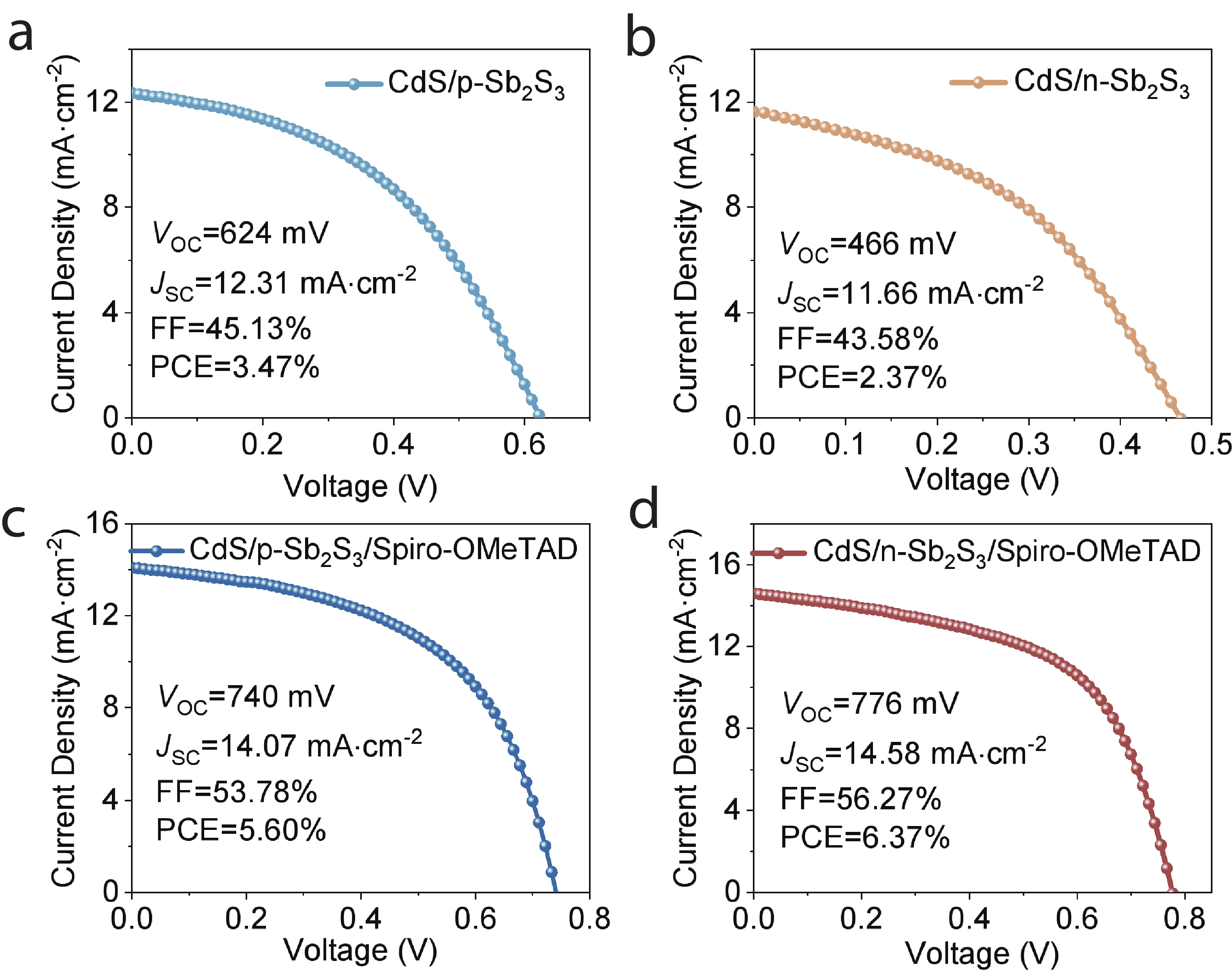
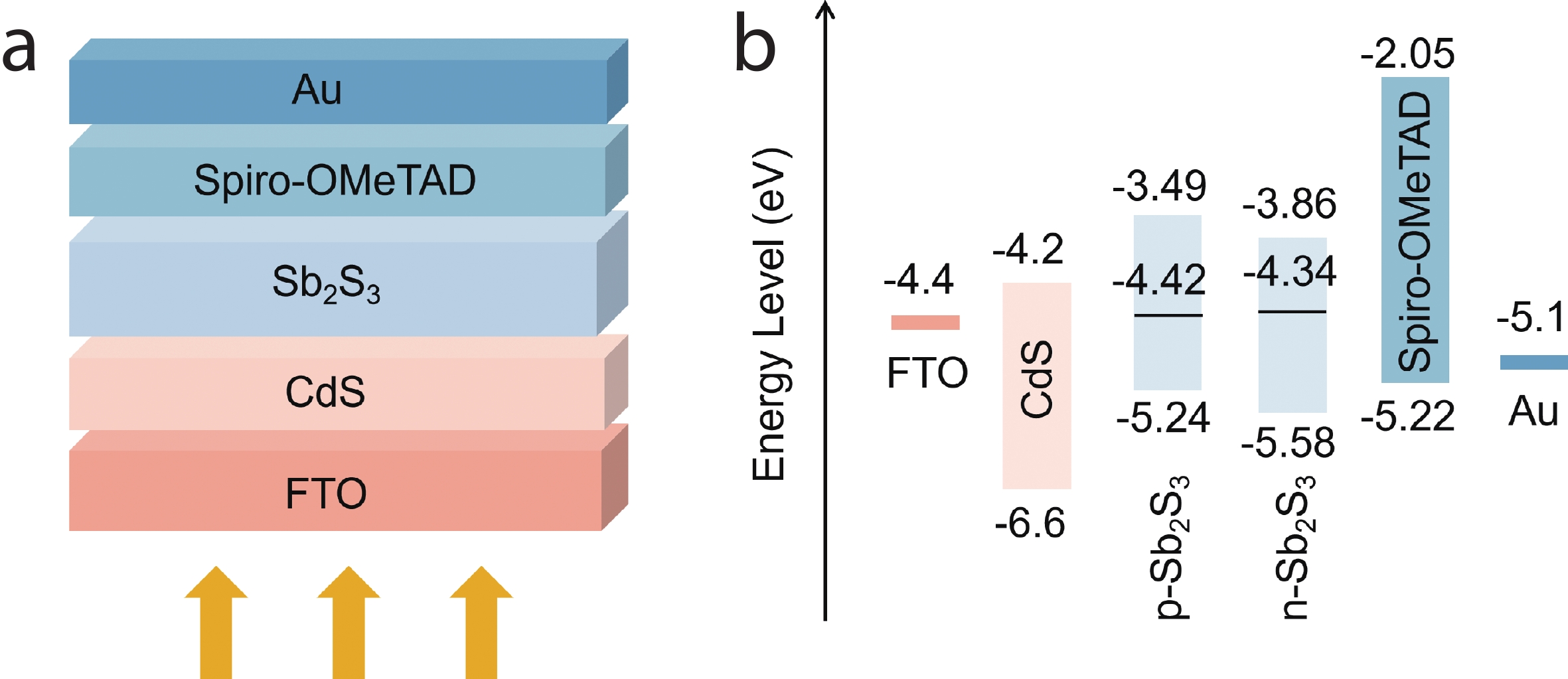
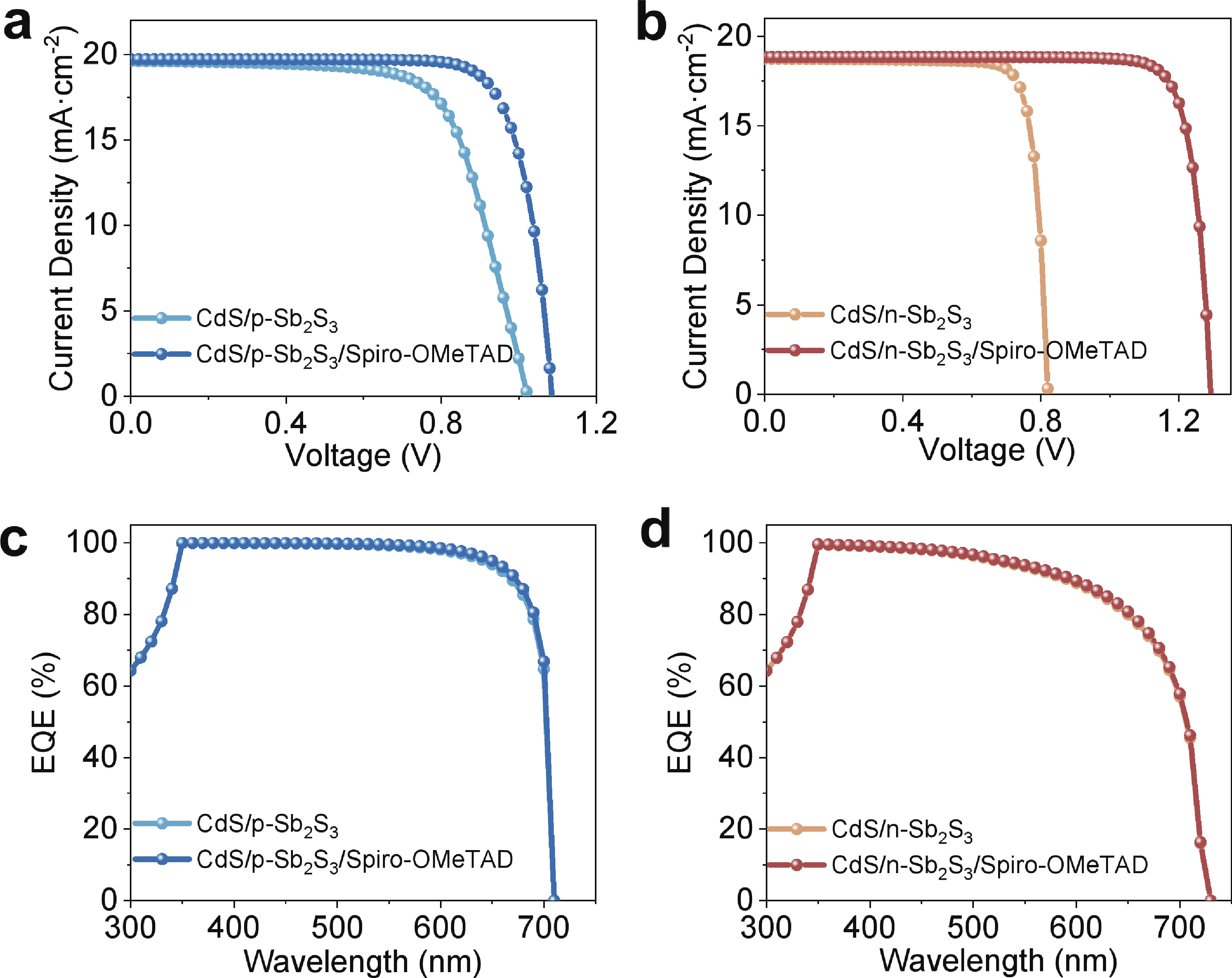
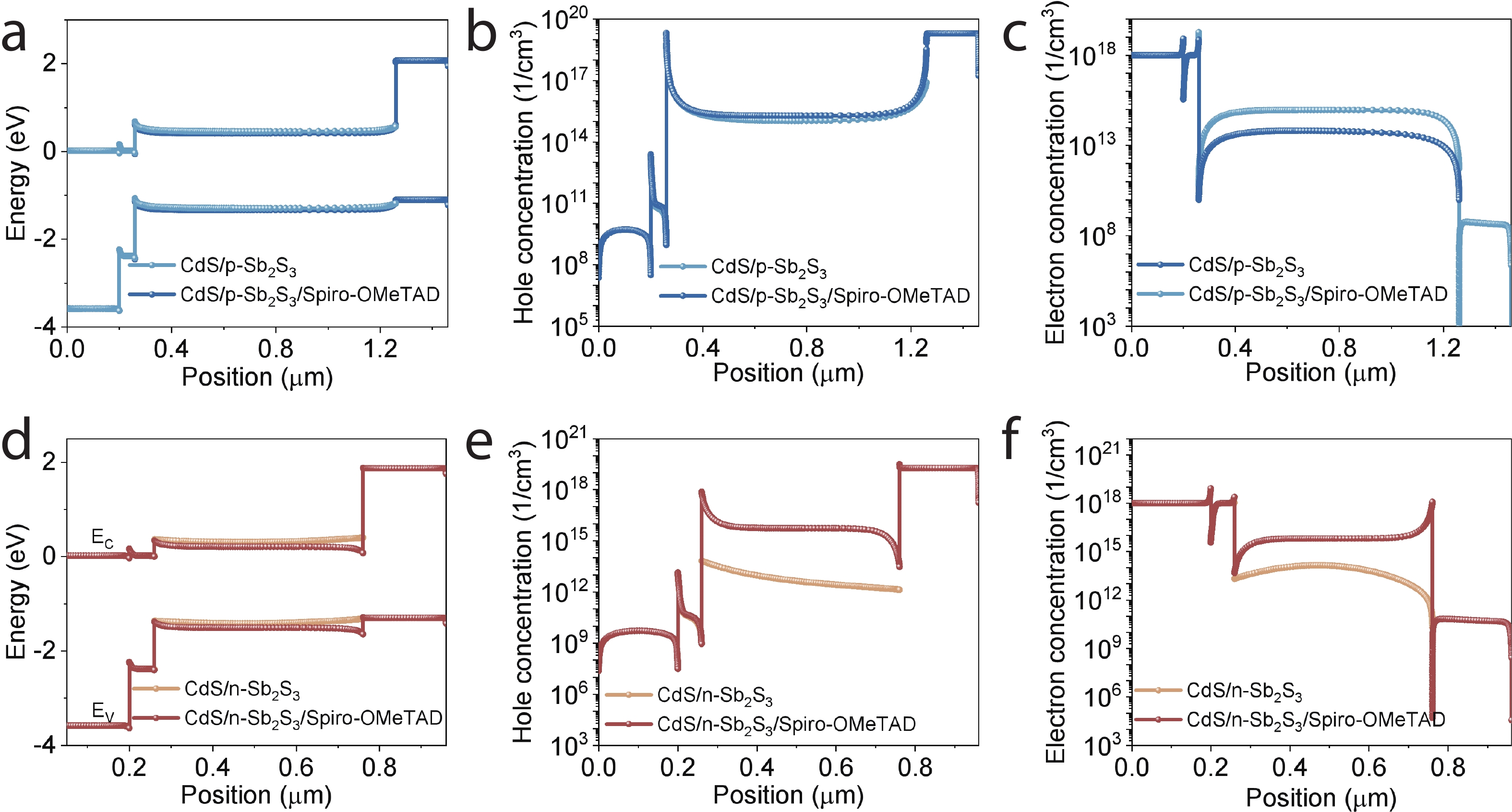
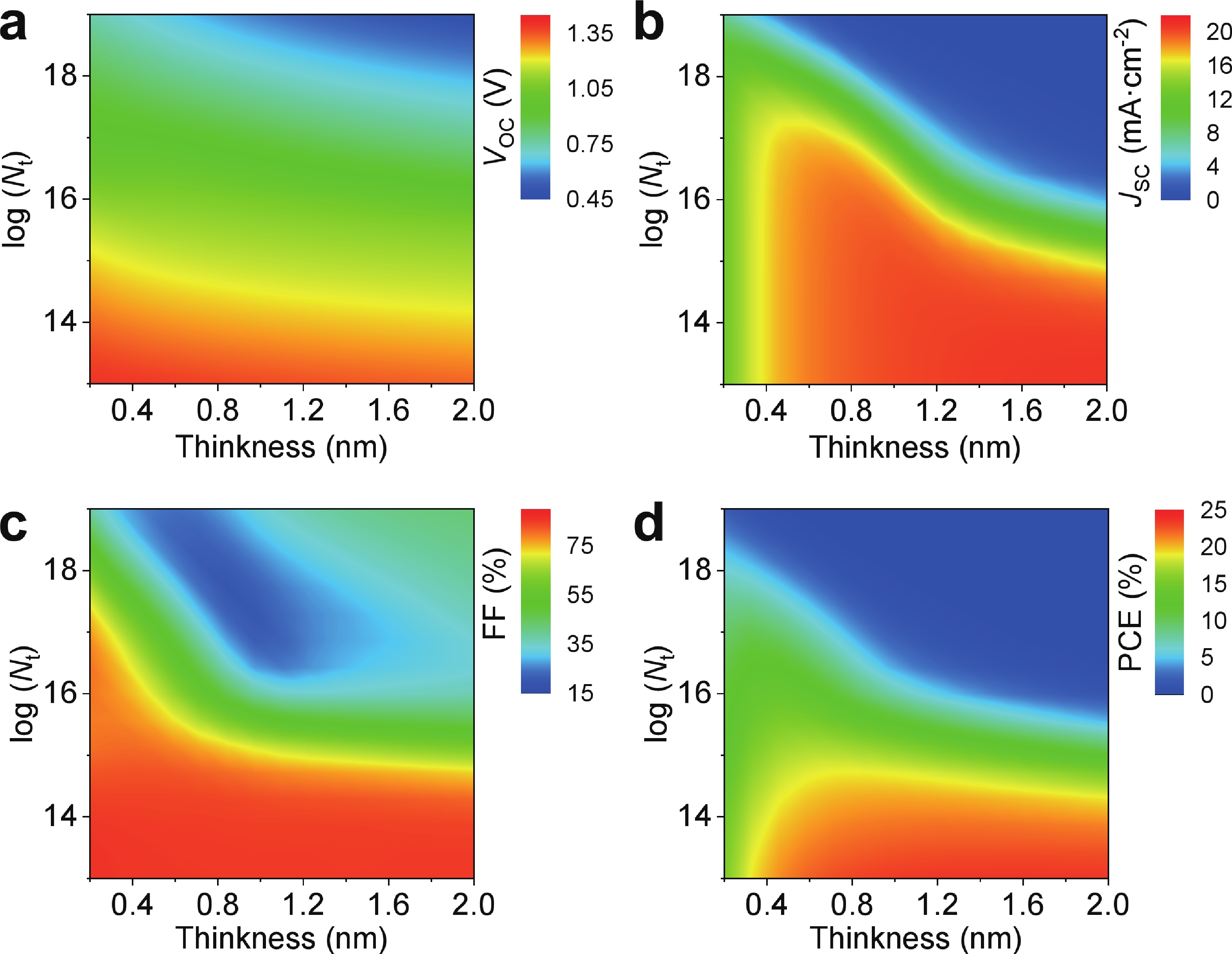
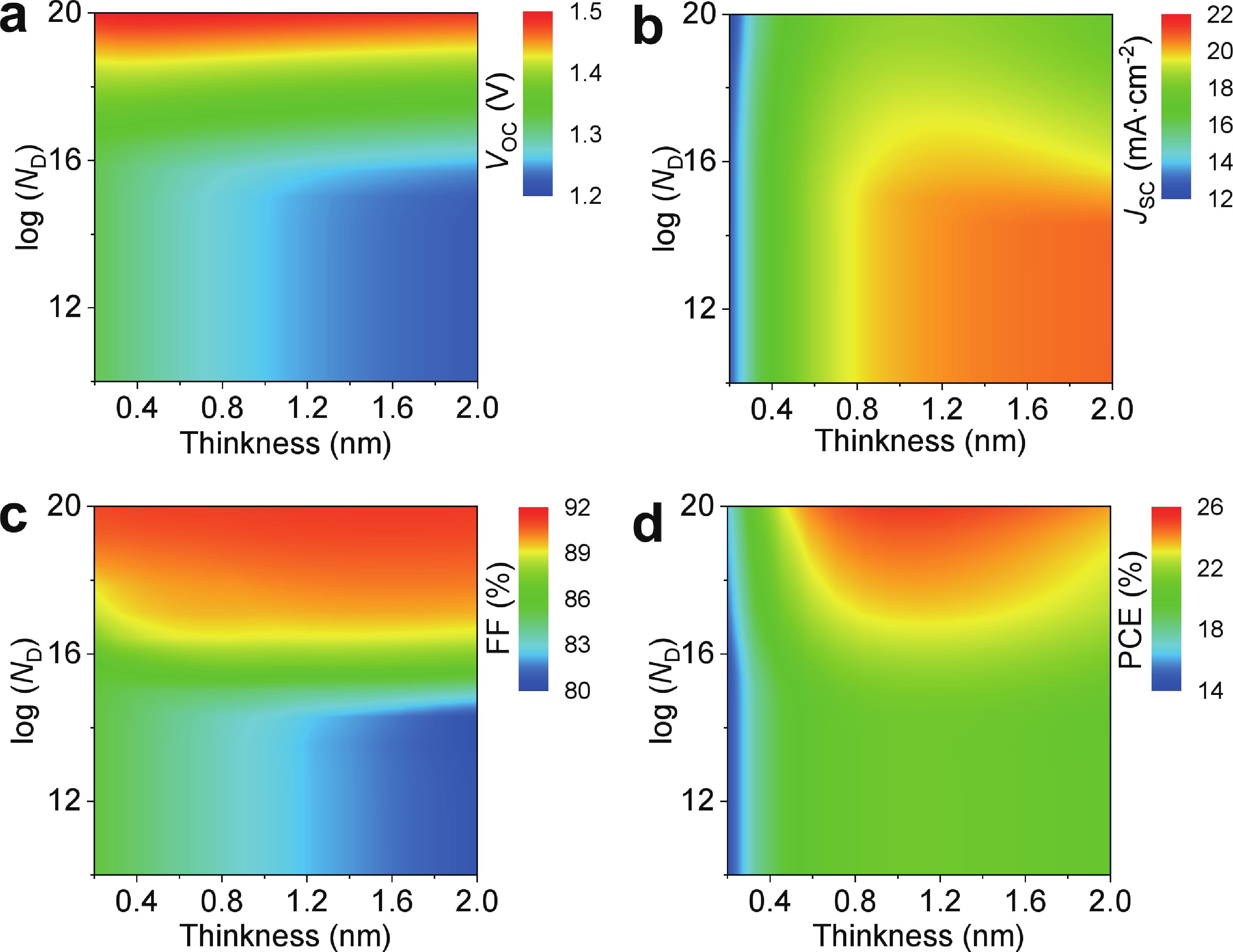
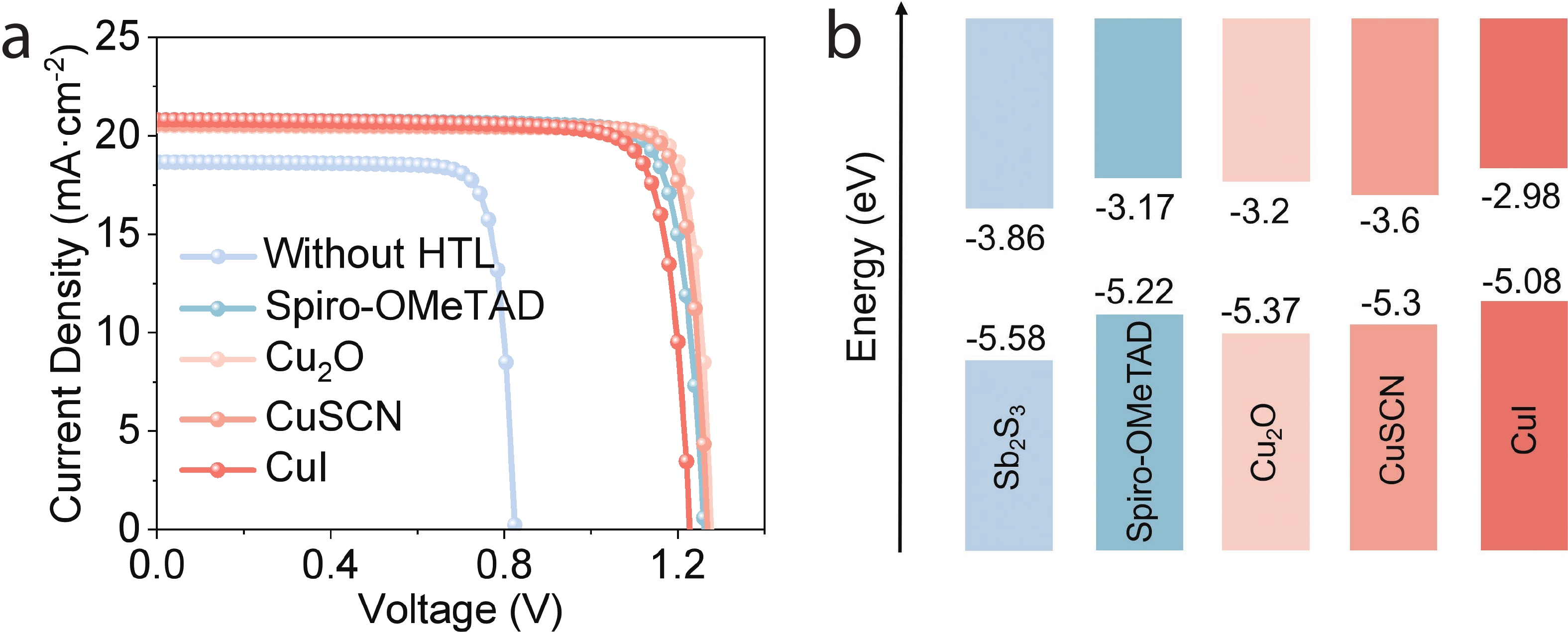
Table 1. Specific parameters of each layer material for the device simulation of Sb2S3 solar cells[24, 26, 27].
| Parameter | CdS | p-Sb2S3 | n-Sb2S3 | Spiro-OMeTAD |
| Thickness (nm) | 60 | 1000 | 1000 | 200 |
| Dielectric permittivity | 10 | 7.08 | 7.10 | 3 |
| Bandgap, Eg (eV) | 2.4 | 1.75 | 1.72 | 3.17 |
| Electron affinity, χ (eV) | 4.2 | 3.49 | 3.86 | 2.05 |
| Electron mobility (cm2∙V−1∙s−1) | 100 | 9.8 | 9.8 | 2 × 10⁻⁴ |
| Hole mobility (cm2∙V−1∙s−1) | 25 | 10 | 10 | 2 × 10⁻⁴ |
| CB effective density of states (cm−3) | 2.2 × 10¹⁸ | 3 × 10¹⁹ | 3 × 10¹⁹ | 2.2 × 10¹⁸ |
| VB effective density of states (cm−3) | 1.8 × 10¹⁹ | 7 × 10¹⁹ | 7 × 10¹⁹ | 1.8 × 10¹⁹ |
| Acceptor doping concentration (cm−3) | − | 1014 | − | 2 × 10¹⁹ |
| Donor doping concentration (cm−3) | 1018 | − | 1014 | − |
| Electron/hole thermal velocity (cm−3) | 107 | 107 | 107 | 107 |
| Defect density (cm−3) | 1014 | 1014 | 1014 | 1014 |
 DownLoad: CSV
Table 2. Performance parameters of Sb2S3 solar cells without HTL and with different HTL materials.
| HTL | VOC (V) | JSC (mA∙cm−2) | FF (%) | PCE (%) |
| Without HTL | 0.82 | 18.75 | 83.48 | 12.84 |
| Spiro-OMeTAD | 1.26 | 20.82 | 84.36 | 22.15 |
| Cu2O | 1.28 | 20.52 | 88.06 | 23.09 |
| CuSCN | 1.27 | 20.60 | 87.12 | 22.77 |
| CuI | 1.23 | 20.81 | 82.88 | 21.18 |
DownLoad: CSV
| [1] |
Ali Shah U, Chen S W, Khalaf G M G, et al. Wide bandgap Sb2S3 solar cells. Adv Funct Mater, 2021, 31(27): 2100265 doi: 10.1002/adfm.202100265
|
| [2] |
Chen S W, Li M Y, Zhu Y C, et al. A codoping strategy for efficient planar heterojunction Sb2S3 solar cells. Adv Energy Mater, 2022, 12(47): 2202897 doi: 10.1002/aenm.202202897
|
| [3] |
Deng H, Cheng Y S, Chen Z K, et al. Flexible substrate-structured Sb2S3 solar cells with back interface selenization. Adv Funct Mater, 2023, 33(12): 2212627 doi: 10.1002/adfm.202212627
|
| [4] |
Shen G H, Ke A, Chen S W, et al. Strong chelating additive and modified electron transport layer for 8.26%-efficient Sb2S3 solar cells. Adv Energy Mater, 2025, 15(24): 2406051 doi: 10.1002/aenm.202406051
|
| [5] |
Lian W T, Jiang C H, Yin Y W, et al. Revealing composition and structure dependent deep-level defect in antimony trisulfide photovoltaics. Nat Commun, 2021, 12: 3260 doi: 10.1038/s41467-021-23592-0
|
| [6] |
Wang X M, Shi X Q, Zhang F, et al. Chemical etching induced surface modification and gentle gradient bandgap for highly efficient Sb2(S, Se)3 solar cell. Appl Surf Sci, 2022, 579: 152193 doi: 10.1016/j.apsusc.2021.152193
|
| [7] |
Amin A, Cagno C, Wang Y Z, et al. A review of interface engineering in antimony chalcogenide thin film solar cells. Sol RRL, 2025, 9(15): 2500330 doi: 10.1002/solr.202500330
|
| [8] |
Myagmarsereejid P, Ingram M, Batmunkh M, et al. Doping strategies in Sb2S3 thin films for solar cells. Small, 2021, 17(39): 2100241 doi: 10.1002/smll.202100241
|
| [9] |
Chen C, Tang J. Open-circuit voltage loss of antimony chalcogenide solar cells: Status, origin, and possible solutions. ACS Energy Lett, 2020, 5(7): 2294 doi: 10.1021/acsenergylett.0c00940
|
| [10] |
Kung P K, Li M H, Lin P Y, et al. A review of inorganic hole transport materials for perovskite solar cells. Adv Mater Interfaces, 2018, 5(22): 1800882 doi: 10.1002/admi.201800882
|
| [11] |
Rahman M F, Al Ijajul Islam M, Chowdhury M, et al. Efficiency improvement of CsSnI3 based heterojunction solar cells with P3HT HTL: A numerical simulation approach. Mater Sci Eng B, 2024, 307: 117524 doi: 10.1016/j.mseb.2024.117524
|
| [12] |
Kumar P, Eriksson M, Kharytonau D S, et al. All-inorganic hydrothermally processed semitransparent Sb2S3 solar cells with CuSCN as the hole transport layer. ACS Appl Energy Mater, 2024, 7(4): 1421 doi: 10.1021/acsaem.3c02492
|
| [13] |
Wang S Y, Zhao Y Q, Che B, et al. A novel multi-sulfur source collaborative chemical bath deposition technology enables 8%-efficiency Sb2S3 planar solar cells. Adv Mater, 2022, 34(41): 2206242 doi: 10.1002/adma.202206242
|
| [14] |
Liu X N, Cai Z Y, Wan L, et al. Grain engineering of Sb2S3 thin films to enable efficient planar solar cells with high open-circuit voltage. Adv Mater, 2024, 36(1): 2305841 doi: 10.1002/adma.202305841
|
| [15] |
Tumen-Ulzii G, Matsushima T, Adachi C. Mini-review on efficiency and stability of perovskite solar cells with spiro-OMeTAD hole transport layer: Recent progress and perspectives. Energy Fuels, 2021, 35(23): 18915 doi: 10.1021/acs.energyfuels.1c02190
|
| [16] |
Song W Y, Rakocevic L, Thiruvallur Eachambadi R, et al. Improving the morphology stability of spiro-OMeTAD films for enhanced thermal stability of perovskite solar cells. ACS Appl Mater Interfaces, 2021, 13(37): 44294 doi: 10.1021/acsami.1c11227
|
| [17] |
Abdellah I M, Chowdhury T H, Lee J J, et al. Facile and low-cost synthesis of a novel dopant-free hole transporting material that rivals Spiro-OMeTAD for high efficiency perovskite solar cells. Sustainable Energy Fuels, 2021, 5(1): 199 doi: 10.1039/D0SE01323D
|
| [18] |
Al-Hattab M, Moudou L, Khenfouch M, et al. Numerical simulation of a new heterostructure CIGS/GaSe solar cell system using SCAPS-1D software. Sol Energy, 2021, 227: 13 doi: 10.1016/j.solener.2021.08.084
|
| [19] |
Dahmardeh Z, Saadat M. Exploring the potential of standalone and tandem solar cells with Sb2S3 and Sb2Se3 absorbers: A simulation study. Sci Rep, 2023, 13: 22632 doi: 10.1038/s41598-023-49269-w
|
| [20] |
Chen X, Shu X X, Zhou J C, et al. Additive engineering for Sb2S3 indoor photovoltaics with efficiency exceeding 17%. Light Sci Appl, 2024, 13: 281 doi: 10.1038/s41377-024-01620-0
|
| [21] |
Wu W T, Chen Z H, Chen Y X, et al. Sb2S3 indoor photovoltaics with a charge-transport-layer-free sandwich-structure. Appl Phys Lett, 2025, 127(8): 083907 doi: 10.1063/5.0285020
|
| [22] |
Li Y, Liu X A, Xie Q, et al. Precursor engineering of chemical bath deposited Sb2S3 films for efficient planar solar cells and minimodules. Small Meth, 2026, 10(3): e02005 doi: 10.1002/smtd.202502005
|
| [23] |
Su X S, Li D D, Xie Q, et al. Anion-vacancy defect passivation for efficient antimony selenosulfide solar cells via magnesium chloride post-growth activation. Small, 2025, 21(17): 2412322 doi: 10.1002/smll.202412322
|
| [24] |
Salem M S, Shaker A, Othman M S, et al. Numerical analysis and design of high performance HTL-free antimony sulfide solar cells by SCAPS-1D. Opt Mater, 2022, 123: 111880 doi: 10.1016/j.optmat.2021.111880
|
| [25] |
Kim J K, Veerappan G, Heo N, et al. Efficient hole extraction from Sb2S3 heterojunction solar cells by the solid transfer of preformed PEDOT: PSS film. J Phys Chem C, 2014, 118(39): 22672 doi: 10.1021/jp507652r
|
| [26] |
Xiao Y P, Wang H P, Kuang H. Numerical simulation and performance optimization of Sb2S3 solar cell with a hole transport layer. Opt Mater, 2020, 108: 110414 doi: 10.1016/j.optmat.2020.110414
|
| [27] |
Lin L Y, Jiang L Q, Qiu Y, et al. Analysis of Sb2Se3/CdS based photovoltaic cell: A numerical simulation approach. J Phys Chem Solids, 2018, 122: 19 doi: 10.1016/j.spmi.2016.10.028
|
| [28] |
Zhang H, Yuan S J, Deng H, et al. Controllable orientations for Sb2S3 solar cells by vertical VTD method. Prog Photovolt Res Appl, 2020, 28(8): 823 doi: 10.1002/pip.3278
|
| [29] |
Zhou J C , Wang X W, Shi T L, et al. Breaking the 800 mV open-circuit voltage barrier in antimony sulfide photovoltaics. arXiv, 2026: 2512.18100
|
| [30] |
Xing X S, Ren X F, Zeng X Y, et al. Accelerating oxygen evolution reaction kinetics by reconstructing layered and defective Ni3FeOOH/FeOOH in a hematite photoanode. Sol RRL, 2023, 7(9): 2201041 doi: 10.1002/solr.202201041
|
| [31] |
Tang R, Chen S, Zheng Z H, et al. Heterojunction annealing enabling record open-circuit voltage in antimony triselenide solar cells. Adv Mater, 2022, 34(14): 2109078 doi: 10.1002/adma.202109078
|
| [32] |
Riverola A, Vossier A, Chemisana D. Fundamentals of solar cells. Nanomaterials for Solar Cell Applications. Amsterdam: Elsevier, 2019: 3
|
| [33] |
Polman A, Knight M, Garnett E C, et al. Photovoltaic materials: Present efficiencies and future challenges. Science, 2016, 352(6283): aad4424 doi: 10.1126/science.aad4424
|
| [34] |
Cheng J H, Cao H J, Zhang S M, et al. Reinforcing built-in electric field to enable efficient carrier extraction for high-performance perovskite solar cells. Mater Chem Front, 2024, 8(4): 956 doi: 10.1039/D3QM00956D
|
| [35] |
Yue X Y, Fan J J, Xiang Q J. Internal electric field on steering charge migration: Modulations, determinations and energy-related applications. Adv Funct Mater, 2022, 32(12): 2110258 doi: 10.1002/adfm.202110258
|
| [36] |
Zhang X, Zhou H, Hu C, et al. Performance analysis of all-inorganic Cs3Sb2I9 perovskite solar cells with micro-offset energy level structure by SCAPS-1D simulation and first-principles calculation. Sol Energy Mater Sol Cells, 2023, 260: 112487 doi: 10.1016/j.solmat.2023.112487
|
| [37] |
Fakharuddin A, Vasilopoulou M, Soultati A, et al. Robust inorganic hole transport materials for organic and perovskite solar cells: Insights into materials electronic properties and device performance. Sol RRL, 2021, 5(1): 2000555 doi: 10.1002/solr.202000555
|
| [38] |
Arumugam G M, Karunakaran S K, Liu C, et al. Inorganic hole transport layers in inverted perovskite solar cells: A review. Nano Sel, 2021, 2(6): 1081 doi: 10.1002/nano.202000200
|
| [39] |
Park H H. Efficient and stable perovskite solar cells based on inorganic hole transport materials. Nanomaterials, 2021, 12(1): 112 doi: 10.3390/nano12010112
|
| [40] |
Wijesinghe U, Longo G, Hutter O S. Defect engineering in antimony selenide thin film solar cells. Energy Adv, 2023, 2(1): 12 doi: 10.1039/D2YA00232A
|
| [41] |
Zhu L X, Liu R, Wan Z Y, et al. Parallel planar heterojunction strategy enables Sb2S3 solar cells with efficiency exceeding 8 %. Angew Chem Int Ed, 2023, 62(50): e202312951 doi: 10.1002/anie.202312951
|
| [42] |
Kim J, Lee Y, Gil B, et al. A Cu2O–CuSCN nanocomposite as a hole-transport material of perovskite solar cells for enhanced carrier transport and suppressed interfacial degradation. ACS Appl Energy Mater, 2020, 3(8): 7572 doi: 10.1021/acsaem.0c01001
|
| [43] |
Liu Y J, Zhu J D, Cai L, et al. Solution-processed high-quality Cu2O thin films as hole transport layers for pushing the conversion efficiency limit of Cu2O/Si heterojunction solar cells. Sol RRL, 2020, 4(1): 1900339 doi: 10.1002/solr.201900339
|





Article views: 415 Times PDF downloads: 94 Times Cited by: 0 Times
Received: 14 December 2025 Revised: 18 March 2026 Online: Accepted Manuscript: 01 April 2026Uncorrected proof: 21 April 2026Published: 11 June 2026
| Citation: |
Qiang Xie, Jiacheng Zhou, Wenfei Wei, Naiqiang Yin, Ru Zhou. Scrutinizing the important roles of hole transport layers in near-intrinsic Sb2S3 planar solar cells[J]. Journal of Semiconductors, 2026, 47(6): 062703. doi: 10.1088/1674-4926/25120025
****
Q Xie, J C Zhou, W F Wei, N Q Yin, and R Zhou, Scrutinizing the important roles of hole transport layers in near-intrinsic Sb2S3 planar solar cells[J]. J. Semicond., 2026, 47(6): 062703 doi: 10.1088/1674-4926/25120025

|
 Qiang Xie obtained his bachelor's degree in 2022 from Tongling University. Now he is a master student at Hefei University of Technology under the supervision of Prof. Ru Zhou. His research focuses on the fabrication and simulation of antimony selenosulfide solar cells
 Naiqiang Yin received his doctoral degree from University of Science and Technology of China, Hefei, China, in 2014. He is currently a Professor with the School of Physics and Electronic Engineering, Qilu Normal University, Jinan, China. His current research interests include the fabrication and application of nano-optoelectronic materials
 Ru Zhou obtained his Ph.D. degree from University of Science and Technology of China (USTC) in 2014. He worked as a visiting scholar in Department of Materials Science and Engineering at the University of Washington (2012–2013) and Department of Chemistry at the University of Oxford (2023). He is currently a full Professor with the School of Electrical Engineering and Automation, Hefei University of Technology. His current research interest mainly involves next generation low-cost, high-performance photovoltaic materials and devices, especially emerging indoor photovoltaics for the Internet of Things
| [1] |
Ali Shah U, Chen S W, Khalaf G M G, et al. Wide bandgap Sb2S3 solar cells. Adv Funct Mater, 2021, 31(27): 2100265 doi: 10.1002/adfm.202100265
|
| [2] |
Chen S W, Li M Y, Zhu Y C, et al. A codoping strategy for efficient planar heterojunction Sb2S3 solar cells. Adv Energy Mater, 2022, 12(47): 2202897 doi: 10.1002/aenm.202202897
|
| [3] |
Deng H, Cheng Y S, Chen Z K, et al. Flexible substrate-structured Sb2S3 solar cells with back interface selenization. Adv Funct Mater, 2023, 33(12): 2212627 doi: 10.1002/adfm.202212627
|
| [4] |
Shen G H, Ke A, Chen S W, et al. Strong chelating additive and modified electron transport layer for 8.26%-efficient Sb2S3 solar cells. Adv Energy Mater, 2025, 15(24): 2406051 doi: 10.1002/aenm.202406051
|
| [5] |
Lian W T, Jiang C H, Yin Y W, et al. Revealing composition and structure dependent deep-level defect in antimony trisulfide photovoltaics. Nat Commun, 2021, 12: 3260 doi: 10.1038/s41467-021-23592-0
|
| [6] |
Wang X M, Shi X Q, Zhang F, et al. Chemical etching induced surface modification and gentle gradient bandgap for highly efficient Sb2(S, Se)3 solar cell. Appl Surf Sci, 2022, 579: 152193 doi: 10.1016/j.apsusc.2021.152193
|
| [7] |
Amin A, Cagno C, Wang Y Z, et al. A review of interface engineering in antimony chalcogenide thin film solar cells. Sol RRL, 2025, 9(15): 2500330 doi: 10.1002/solr.202500330
|
| [8] |
Myagmarsereejid P, Ingram M, Batmunkh M, et al. Doping strategies in Sb2S3 thin films for solar cells. Small, 2021, 17(39): 2100241 doi: 10.1002/smll.202100241
|
| [9] |
Chen C, Tang J. Open-circuit voltage loss of antimony chalcogenide solar cells: Status, origin, and possible solutions. ACS Energy Lett, 2020, 5(7): 2294 doi: 10.1021/acsenergylett.0c00940
|
| [10] |
Kung P K, Li M H, Lin P Y, et al. A review of inorganic hole transport materials for perovskite solar cells. Adv Mater Interfaces, 2018, 5(22): 1800882 doi: 10.1002/admi.201800882
|
| [11] |
Rahman M F, Al Ijajul Islam M, Chowdhury M, et al. Efficiency improvement of CsSnI3 based heterojunction solar cells with P3HT HTL: A numerical simulation approach. Mater Sci Eng B, 2024, 307: 117524 doi: 10.1016/j.mseb.2024.117524
|
| [12] |
Kumar P, Eriksson M, Kharytonau D S, et al. All-inorganic hydrothermally processed semitransparent Sb2S3 solar cells with CuSCN as the hole transport layer. ACS Appl Energy Mater, 2024, 7(4): 1421 doi: 10.1021/acsaem.3c02492
|
| [13] |
Wang S Y, Zhao Y Q, Che B, et al. A novel multi-sulfur source collaborative chemical bath deposition technology enables 8%-efficiency Sb2S3 planar solar cells. Adv Mater, 2022, 34(41): 2206242 doi: 10.1002/adma.202206242
|
| [14] |
Liu X N, Cai Z Y, Wan L, et al. Grain engineering of Sb2S3 thin films to enable efficient planar solar cells with high open-circuit voltage. Adv Mater, 2024, 36(1): 2305841 doi: 10.1002/adma.202305841
|
| [15] |
Tumen-Ulzii G, Matsushima T, Adachi C. Mini-review on efficiency and stability of perovskite solar cells with spiro-OMeTAD hole transport layer: Recent progress and perspectives. Energy Fuels, 2021, 35(23): 18915 doi: 10.1021/acs.energyfuels.1c02190
|
| [16] |
Song W Y, Rakocevic L, Thiruvallur Eachambadi R, et al. Improving the morphology stability of spiro-OMeTAD films for enhanced thermal stability of perovskite solar cells. ACS Appl Mater Interfaces, 2021, 13(37): 44294 doi: 10.1021/acsami.1c11227
|
| [17] |
Abdellah I M, Chowdhury T H, Lee J J, et al. Facile and low-cost synthesis of a novel dopant-free hole transporting material that rivals Spiro-OMeTAD for high efficiency perovskite solar cells. Sustainable Energy Fuels, 2021, 5(1): 199 doi: 10.1039/D0SE01323D
|
| [18] |
Al-Hattab M, Moudou L, Khenfouch M, et al. Numerical simulation of a new heterostructure CIGS/GaSe solar cell system using SCAPS-1D software. Sol Energy, 2021, 227: 13 doi: 10.1016/j.solener.2021.08.084
|
| [19] |
Dahmardeh Z, Saadat M. Exploring the potential of standalone and tandem solar cells with Sb2S3 and Sb2Se3 absorbers: A simulation study. Sci Rep, 2023, 13: 22632 doi: 10.1038/s41598-023-49269-w
|
| [20] |
Chen X, Shu X X, Zhou J C, et al. Additive engineering for Sb2S3 indoor photovoltaics with efficiency exceeding 17%. Light Sci Appl, 2024, 13: 281 doi: 10.1038/s41377-024-01620-0
|
| [21] |
Wu W T, Chen Z H, Chen Y X, et al. Sb2S3 indoor photovoltaics with a charge-transport-layer-free sandwich-structure. Appl Phys Lett, 2025, 127(8): 083907 doi: 10.1063/5.0285020
|
| [22] |
Li Y, Liu X A, Xie Q, et al. Precursor engineering of chemical bath deposited Sb2S3 films for efficient planar solar cells and minimodules. Small Meth, 2026, 10(3): e02005 doi: 10.1002/smtd.202502005
|
| [23] |
Su X S, Li D D, Xie Q, et al. Anion-vacancy defect passivation for efficient antimony selenosulfide solar cells via magnesium chloride post-growth activation. Small, 2025, 21(17): 2412322 doi: 10.1002/smll.202412322
|
| [24] |
Salem M S, Shaker A, Othman M S, et al. Numerical analysis and design of high performance HTL-free antimony sulfide solar cells by SCAPS-1D. Opt Mater, 2022, 123: 111880 doi: 10.1016/j.optmat.2021.111880
|
| [25] |
Kim J K, Veerappan G, Heo N, et al. Efficient hole extraction from Sb2S3 heterojunction solar cells by the solid transfer of preformed PEDOT: PSS film. J Phys Chem C, 2014, 118(39): 22672 doi: 10.1021/jp507652r
|
| [26] |
Xiao Y P, Wang H P, Kuang H. Numerical simulation and performance optimization of Sb2S3 solar cell with a hole transport layer. Opt Mater, 2020, 108: 110414 doi: 10.1016/j.optmat.2020.110414
|
| [27] |
Lin L Y, Jiang L Q, Qiu Y, et al. Analysis of Sb2Se3/CdS based photovoltaic cell: A numerical simulation approach. J Phys Chem Solids, 2018, 122: 19 doi: 10.1016/j.spmi.2016.10.028
|
| [28] |
Zhang H, Yuan S J, Deng H, et al. Controllable orientations for Sb2S3 solar cells by vertical VTD method. Prog Photovolt Res Appl, 2020, 28(8): 823 doi: 10.1002/pip.3278
|
| [29] |
Zhou J C , Wang X W, Shi T L, et al. Breaking the 800 mV open-circuit voltage barrier in antimony sulfide photovoltaics. arXiv, 2026: 2512.18100
|
| [30] |
Xing X S, Ren X F, Zeng X Y, et al. Accelerating oxygen evolution reaction kinetics by reconstructing layered and defective Ni3FeOOH/FeOOH in a hematite photoanode. Sol RRL, 2023, 7(9): 2201041 doi: 10.1002/solr.202201041
|
| [31] |
Tang R, Chen S, Zheng Z H, et al. Heterojunction annealing enabling record open-circuit voltage in antimony triselenide solar cells. Adv Mater, 2022, 34(14): 2109078 doi: 10.1002/adma.202109078
|
| [32] |
Riverola A, Vossier A, Chemisana D. Fundamentals of solar cells. Nanomaterials for Solar Cell Applications. Amsterdam: Elsevier, 2019: 3
|
| [33] |
Polman A, Knight M, Garnett E C, et al. Photovoltaic materials: Present efficiencies and future challenges. Science, 2016, 352(6283): aad4424 doi: 10.1126/science.aad4424
|
| [34] |
Cheng J H, Cao H J, Zhang S M, et al. Reinforcing built-in electric field to enable efficient carrier extraction for high-performance perovskite solar cells. Mater Chem Front, 2024, 8(4): 956 doi: 10.1039/D3QM00956D
|
| [35] |
Yue X Y, Fan J J, Xiang Q J. Internal electric field on steering charge migration: Modulations, determinations and energy-related applications. Adv Funct Mater, 2022, 32(12): 2110258 doi: 10.1002/adfm.202110258
|
| [36] |
Zhang X, Zhou H, Hu C, et al. Performance analysis of all-inorganic Cs3Sb2I9 perovskite solar cells with micro-offset energy level structure by SCAPS-1D simulation and first-principles calculation. Sol Energy Mater Sol Cells, 2023, 260: 112487 doi: 10.1016/j.solmat.2023.112487
|
| [37] |
Fakharuddin A, Vasilopoulou M, Soultati A, et al. Robust inorganic hole transport materials for organic and perovskite solar cells: Insights into materials electronic properties and device performance. Sol RRL, 2021, 5(1): 2000555 doi: 10.1002/solr.202000555
|
| [38] |
Arumugam G M, Karunakaran S K, Liu C, et al. Inorganic hole transport layers in inverted perovskite solar cells: A review. Nano Sel, 2021, 2(6): 1081 doi: 10.1002/nano.202000200
|
| [39] |
Park H H. Efficient and stable perovskite solar cells based on inorganic hole transport materials. Nanomaterials, 2021, 12(1): 112 doi: 10.3390/nano12010112
|
| [40] |
Wijesinghe U, Longo G, Hutter O S. Defect engineering in antimony selenide thin film solar cells. Energy Adv, 2023, 2(1): 12 doi: 10.1039/D2YA00232A
|
| [41] |
Zhu L X, Liu R, Wan Z Y, et al. Parallel planar heterojunction strategy enables Sb2S3 solar cells with efficiency exceeding 8 %. Angew Chem Int Ed, 2023, 62(50): e202312951 doi: 10.1002/anie.202312951
|
| [42] |
Kim J, Lee Y, Gil B, et al. A Cu2O–CuSCN nanocomposite as a hole-transport material of perovskite solar cells for enhanced carrier transport and suppressed interfacial degradation. ACS Appl Energy Mater, 2020, 3(8): 7572 doi: 10.1021/acsaem.0c01001
|
| [43] |
Liu Y J, Zhu J D, Cai L, et al. Solution-processed high-quality Cu2O thin films as hole transport layers for pushing the conversion efficiency limit of Cu2O/Si heterojunction solar cells. Sol RRL, 2020, 4(1): 1900339 doi: 10.1002/solr.201900339
|
 Supporting Information.pdf
|

|

 WeChat ID
Journal of Semiconductors © 2017 All Rights Reserved 京ICP备05085259号-2