| [1] |
Pejović V, Georgitzikis E, Lee J, et al. Infrared colloidal quantum dot image sensors. IEEE Trans Electron Devices, 2022, 69(6): 2840 doi: 10.1109/TED.2021.3133191 |
| [2] |
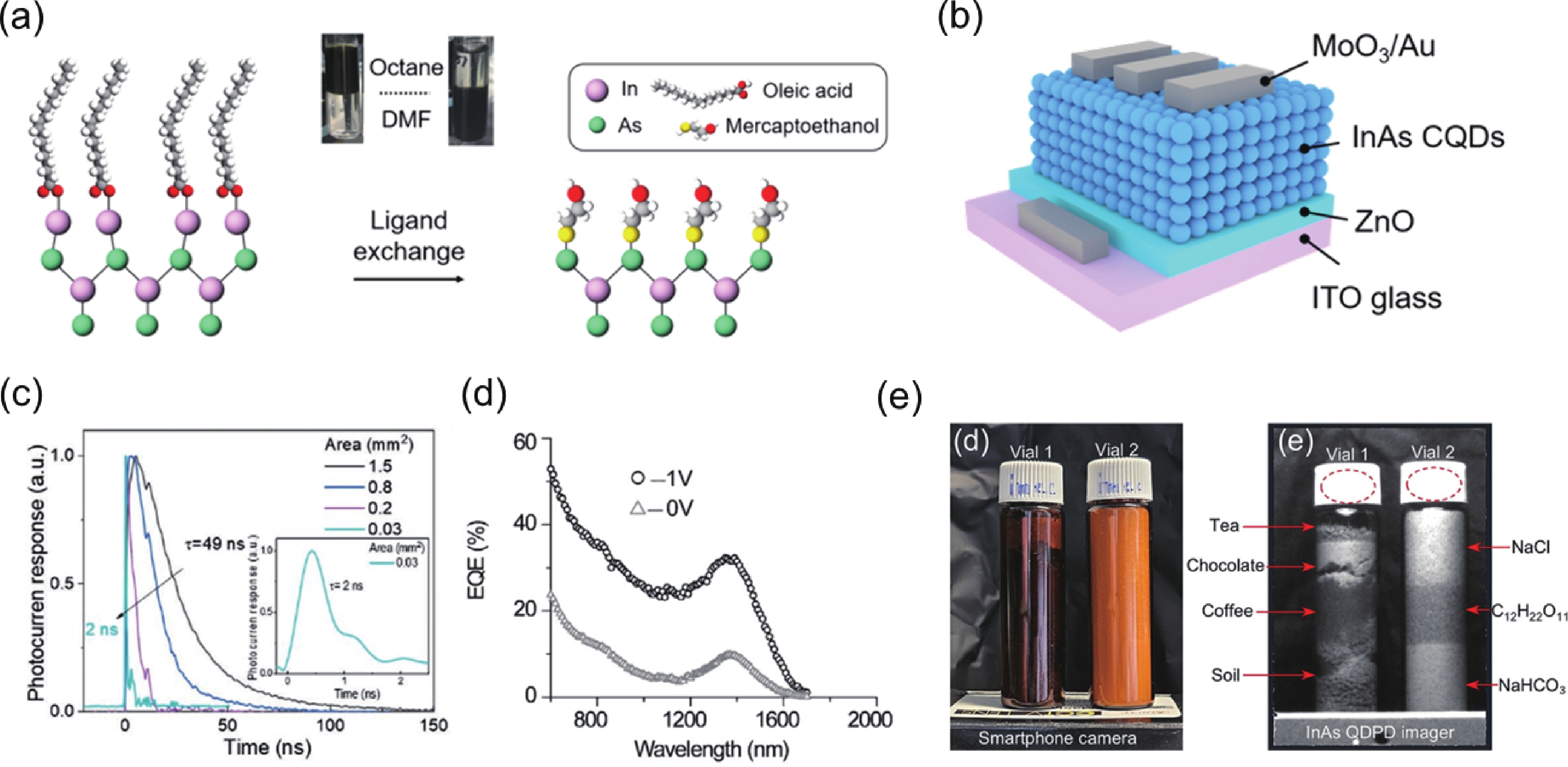
Sun B, Najarian A M, Sagar L K, et al. Fast near-infrared photodetection using Ⅲ−Ⅴ colloidal quantum dots. Adv Mater, 2022, 34(33): 2203039 doi: 10.1002/adma.202203039 |
| [3] |
Gu X, Fei W L, Sun B Q, et al. Wide-bandgap and heavy-metal-free quantum dots for blue light-emitting diodes. J Semicond, 2025, 46(4): 041101 doi: 10.1088/1674-4926/24100016 |
| [4] |
Wang Q Y, Sun C, Liu Z F, et al. Stepwise crystallization synthetic strategy for monodisperse InSb colloidal quantum dots with mid-infrared absorption. Angew Chem Int Ed, 2025, 64(25): e202506387 doi: 10.1002/anie.202506387 |
| [5] |
Bahmani Jalali H, De Trizio L, Manna L, et al. Indium arsenide quantum dots: An alternative to lead-based infrared emitting nanomaterials. Chem Soc Rev, 2022, 51(24): 9861 doi: 10.1039/D2CS00490A |
| [6] |
Battaglia D, Peng X G. Formation of high quality InP and InAs nanocrystals in a noncoordinating solvent. Nano Lett, 2002, 2(9): 1027 doi: 10.1021/nl025687v |
| [7] |
Srivastava V, Janke E M, Diroll B T, et al. Facile, economic and size-tunable synthesis of metal arsenide nanocrystals. Chem Mater, 2016, 28(18): 6797 doi: 10.1021/acs.chemmater.6b03501 |
| [8] |
Srivastava V, Dunietz E, Kamysbayev V, et al. Monodisperse InAs quantum dots from aminoarsine precursors: Understanding the role of reducing agent. Chem Mater, 2018, 30(11): 3623 doi: 10.1021/acs.chemmater.8b01137 |
| [9] |
Li Y, Hou X Q, Shen Y M, et al. Tuning the reactivity of indium alkanoates by tertiary organophosphines for the synthesis of indium-based quantum dots. Chem Mater, 2021, 33(23): 9348 doi: 10.1021/acs.chemmater.1c03219 |
| [10] |
Kim T, Park S, Jeong S. Diffusion dynamics controlled colloidal synthesis of highly monodisperse InAs nanocrystals. Nat Commun, 2021, 12: 3013 doi: 10.1038/s41467-021-23259-w |
| [11] |
Liu W Y, Chang A Y, Schaller R D, et al. Colloidal InSb nanocrystals. J Am Chem Soc, 2012, 134(50): 20258 doi: 10.1021/ja309821j |
| [12] |
Zhao T S, Oh N, Jishkariani D, et al. General synthetic route to high-quality colloidal Ⅲ−Ⅴ semiconductor quantum dots based on pnictogen chlorides. J Am Chem Soc, 2019, 141(38): 15145 doi: 10.1021/jacs.9b06652 |
| [13] |
Imran M, Bin Kim D, Xia P, et al. Control over metal-halide reactivity enables uniform growth of InSb colloidal quantum dots for enhanced SWIR light detection. Adv Mater, 2025, 37(12): 2420273 doi: 10.1002/adma.202420273 |
| [14] |
Choi M J, Sagar L K, Sun B, et al. Ligand exchange at a covalent surface enables balanced stoichiometry in Ⅲ−Ⅴ colloidal quantum dots. Nano Lett, 2021, 21(14): 6057 doi: 10.1021/acs.nanolett.1c01286 |
| [15] |
Sheikh T, Mir W J, Alofi A, et al. Surface-reconstructed InAs colloidal nanorod quantum dots for efficient deep-shortwave infrared emission and photodetection. J Am Chem Soc, 2024, 146(42): 29094 doi: 10.1021/jacs.4c10755 |
| [16] |
Zhang Y N, Imran M, Xia P, et al. Nucleophilic covalent ligands enable simultaneous surface reconstruction and passivation of colloidal InSb quantum dots for stable short-wave infrared photodetectors. Angew Chem Int Ed, 2025, 64(28): e202505179 doi: 10.1002/anie.202505179 |
| [17] |
Peng L C, Wang Y J, Ren Y R, et al. InSb/InP core−shell colloidal quantum dots for sensitive and fast short-wave infrared photodetectors. ACS Nano, 2024, 18(6): 5113 doi: 10.1021/acsnano.3c12007 |
| [18] |
Liu Z F, Sun C, Wang Q Y, et al. Colloidal InSb quantum dots mid-wave infrared photoconductive detectors via one-step strong acid surface treatment strategy. Nano Lett, 2025, 25(36): 13549 doi: 10.1021/acs.nanolett.5c03048 |
| [19] |
Jee S, Si M J, Choi J H, et al. P-type colloidal InSb quantum dot ink enables Ⅲ−Ⅴ group bulk-heterojunction shortwave infrared (SWIR) photodetector. Adv Opt Mater, 2024, 12(18): 2303097 doi: 10.1002/adom.202303097 |
| [20] |
Siddik A B, Song W Y, Georgitzikis E, et al. InAs colloidal quantum dot photodiode stack for CMOS-integrated infrared imaging. ACS Nano, 2025, 19(36): 32780 doi: 10.1021/acsnano.5c11108 |



 Yang Liu is currently a postdoctoral researcher at King Abdullah University of Science and Technology (KAUST). He received his M.S. and Ph.D. degrees from Soochow University under the supervision of Prof. Wanli Ma. His research interests focus on the synthesis of infrared colloidal quantum dots and their applications in optoelectronic devices.
 Zeke Liu is a professor at Soochow University. He obtained his Ph.D. degree from Soochow University, worked as a joint Ph.D. student under the supervision of Prof. Paul Alivisatos at University of California, Berkeley. Before he joined Soochow University in 2019, he worked as a joint postdoctoral scholar in Indiana University, Bloomington and Soochow University. His current research interest focuses on the design and synthesis of semiconductor quantum dots/nanocrystals, and their application in optoelectronic devices.
 Wanli Ma is currently a professor in the Institute of Functional Nano & Soft Materials (FUNSOM) at Soochow University. He received his Ph.D. degree in 2006 from the University of California at Santa Barbara under the supervision of Prof. Alan J. Heeger. Before he joined Soochow University in 2010, he worked as a postdoctoral scholar in Prof. Paul Alivisatos’ group at Lawrence Berkeley national laboratory. His publications have been cited over 28 000 times. His current research interest focuses on developing solution processed solar cells, including quantum dots, organic materials and perovskite.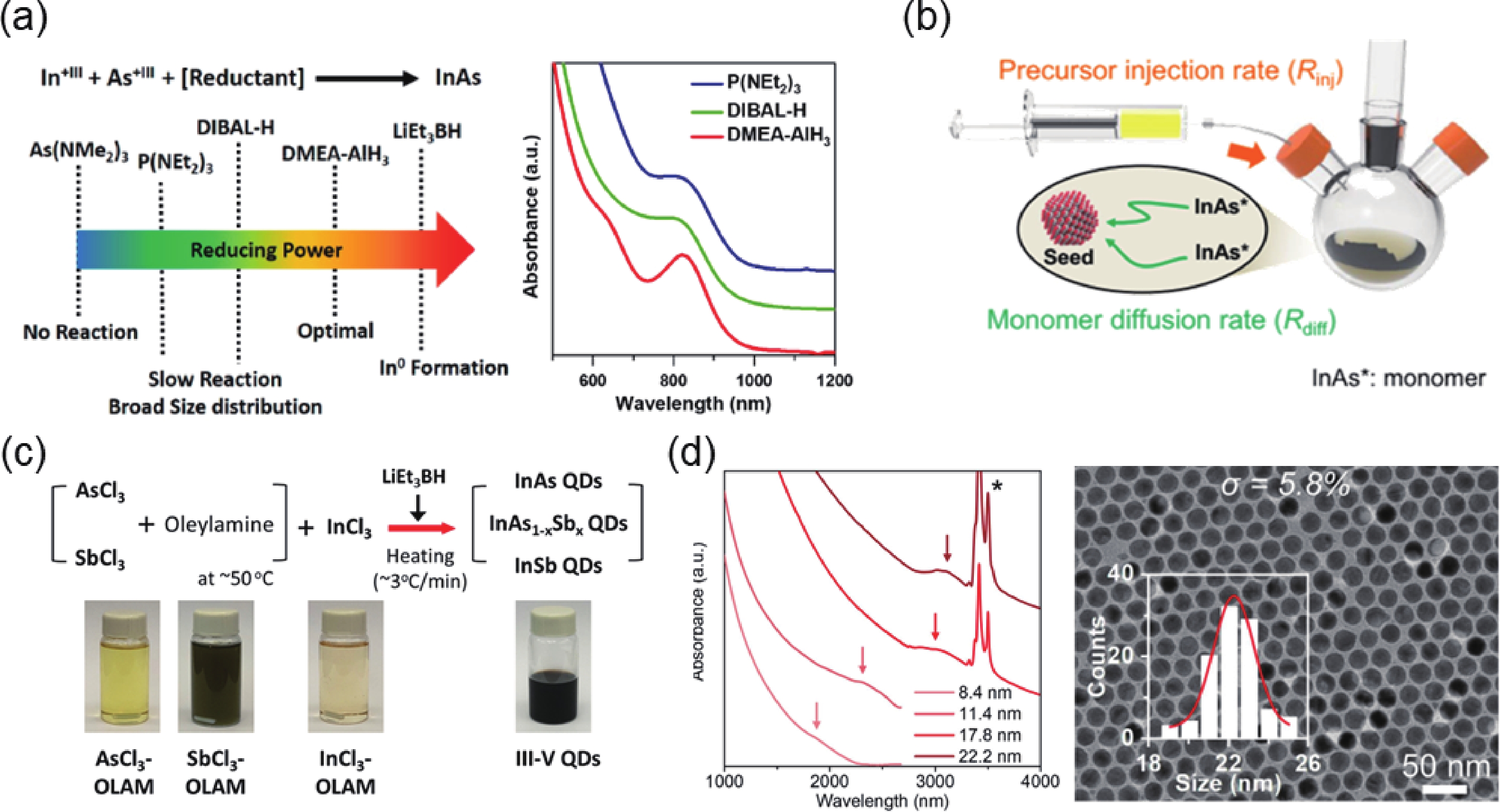
 DownLoad: