J. Semicond. >  Just Accepted

REVIEWS

Organic electrochemical transistor-based theranostics: materials, mechanisms, and system integration

Runxue Wei1, Zinuo Li5, Qiuchun Lu2, , Jia-Han Zhang3, 4, and Xidi Sun1,

+ Author Affiliations

 Corresponding author: Qiuchun Lu, qiuchun.lu@nus.edu.sg; Jia-Han Zhang, jiahan_zhang@outlook.com; Xidi Sun, xidisun@smail.nju.edu.cn

DOI: 10.1088/1674-4926/26040015CSTR: 32376.14.1674-4926.26040015

PDF

Turn off MathJax

Abstract: Organic electrochemical transistors (OECTs), leveraged by their unique volumetric doping mechanism and ultra-high transconductance performance, have emerged as a pivotal device platform for constructing high-performance bioelectronic interfaces. OECT-based theranostics aim to develop intelligent closed-loop systems that integrate sensing, decision-making, and execution, thereby overcoming the latency and discretization limitations of traditional medical models when managing dynamic physiological fluctuations. This article systematically reviews the performance evolution of OECT materials from p-type to n-type, discusses critical strategies for enhancing device stability and transconductance density, such as side-chain engineering and ladder-type molecular design, while emphasizing the essential role of complementary logic circuits in minimizing the static power consumption of implantable electronics. Furthermore, breakthroughs in OECT-based neuromorphic computing are addressed; by simulating synaptic plasticity (STP/LTP) and engineering organic electrochemical neurons (OECNs), a highly efficient sensing-computing closed-loop architecture has been realized. The current application landscape of OECTs in electrophysiological monitoring, neurochemical sensing, and multimodal synergistic sensing is detailed, alongside a summary of high-density array fabrication and system integration strategies, including 3D printing, inkjet printing, and 3D hydrogel integration. Finally, future outlooks are provided, focusing on challenges such as the environmental stability of n-type materials, multimodal signal crosstalk, and long-term clinical reliability.

Keywords: organic electrochemical transistorsflexiblearrayintegrationtheranostic


[1]
Ates H C, Yetisen A K, Güder F, et al. Wearable devices for the detection of COVID-19. Nat Electron, 2021, 4(1): 13 doi: 10.1038/s41928-020-00533-1
[2]
Yin L, Cao M, Kim K N, et al. A stretchable epidermal sweat sensing platform with an integrated printed battery and electrochromic display. Nat Electron, 2022, 5(10): 694 doi: 10.1038/s41928-022-00843-6
[3]
Jimenez Martinez C, Campuzano Ruiz R, Barrenada Copete M E, et al. Do wearable electronic devices after a cardiac rehabilitation programme improve adherence to physical exercise? Eur Heart J, 2025, 46: ehaf784.4480
[4]
Jung J, Lee S, Kim H, et al. Self-healing electronic skin with high fracture strength and toughness. Nat Commun, 2024, 15(1): 9763 doi: 10.1038/s41467-024-53957-0
[5]
Zhao C, Park J, Root S E, et al. Skin-inspired soft bioelectronic materials, devices and systems. Nat Rev Bioeng, 2024, 2(8): 671 doi: 10.1038/s44222-024-00194-1
[6]
Kim J, Pankow R M, Cho Y, et al. Monolithically integrated high-density vertical organic electrochemical transistor arrays and complementary circuits. Nat Electron, 2024, 7(3): 234-243 doi: 10.1038/s41928-024-01127-x
[7]
Saleh A, Koklu A, Uguz I, et al. Bioelectronic interfaces of organic electrochemical transistors. Nat Rev Bioeng, 2024, 2(7): 559 doi: 10.1038/s44222-024-00180-7
[8]
Kukhta N A, Marks A, Luscombe C K. Molecular Design Strategies toward Improvement of Charge Injection and Ionic Conduction in Organic Mixed Ionic–Electronic Conductors for Organic Electrochemical Transistors. Chem Rev, 2022, 122(4): 4325 doi: 10.1021/acs.chemrev.1c00266
[9]
Zabihipour M, Lassnig R, Strandberg J, et al. High yield manufacturing of fully screen-printed organic electrochemical transistors. npj Flex Electron, 2020, 4(1) doi: 10.1038/s41528-020-0078-9
[10]
Rivnay J, Inal S, Salleo A, et al. Organic electrochemical transistors. Nat Rev Mater, 2018, 3(2): 17086 doi: 10.1038/natrevmats.2017.86
[11]
Paulsen B D, Tybrandt K, Stavrinidou E, et al. Organic mixed ionic–electronic conductors. Nat Mater, 2020, 19(1): 13 doi: 10.1038/s41563-019-0435-z
[12]
Khodagholy D, Rivnay J, Sessolo M, et al. High transconductance organic electrochemical transistors. Nat Commun, 2013, 4(1): 2133 doi: 10.1038/ncomms3133
[13]
Li T, Cheryl Koh J Y, Moudgil A, et al. Biocompatible Ionic Liquids in High-Performing Organic Electrochemical Transistors for Ion Detection and Electrophysiological Monitoring. ACS Nano, 2022, 16(8): 12049 doi: 10.1021/acsnano.2c02191
[14]
Zhang S, Qian S-H, Zhao G, et al. Intrinsically Antifouling, soft and conformal bioelectronic from scalable fabrication of Thin-Film OECT arrays by zwitterionic polymers. Chem Eng J, 2024, 483: 148980 doi: 10.1016/j.cej.2024.148980
[15]
Jo Y J, Ye Y-s, Choi S, et al. Choline Ionic Liquid for Long-Term Stable Organic Electrochemical Transistors. Adv Mater, 2026, 38(4): e12163 doi: 10.1002/adma.202512163
[16]
Chen W, Jiang H, Du C, et al. Fiber Transistors as a Hardware Surrogate Gradient for Backpropagation in Spiking Neural Networks. Adv Mater, 2026, 38(6): e14904 doi: 10.1002/adma.202514904
[17]
Pang Y, Li Y, Gu Y, et al. Stretchable organic electrochemical transistors for sustained high-fidelity electrophysiology and deep learning-assisted sleep monitoring. Matter, 2025, 8(5): 102086 doi: 10.1016/j.matt.2025.102086
[18]
Ji J, Gao D, Wu H-Y, et al. Single-transistor organic electrochemical neurons. Nat Commun, 2025, 16(1): 4334 doi: 10.1038/s41467-025-59587-4
[19]
Harikesh P C, Yang C-Y, Tu D, et al. Organic electrochemical neurons and synapses with ion mediated spiking. Nat Commun, 2022, 13(1): 901 doi: 10.1038/s41467-022-28483-6
[20]
Jiang H, Yang C-Y, Du C, et al. Ambipolar Bulk Heterojunction Semiconductor Fibers for High-Performance Neuromorphic Systems. ACS Nano, 2026, 18(4): 3112 doi: 10.1021/acsnano.5c19192.s001
[21]
Bernards D A, Malliaras G G. Steady-State and Transient Behavior of Organic Electrochemical Transistors. Adv Funct Mater, 2007, 17(17): 3538 doi: 10.1002/adfm.200601239
[22]
Huang Y, Hu Z, Zhu S, et al. Fibre-based organic electrochemical transistors: principle, evaluation, and application. npj Flex Electron, 2025, 9(1): 43 doi: 10.1038/s41528-025-00417-4
[23]
Wang Y, Wustoni S, Surgailis J, et al. Designing organic mixed conductors for electrochemical transistor applications. Nat Rev Mater, 2024, 9(4): 249 doi: 10.1038/s41578-024-00652-7
[24]
He Y, Kukhta N A, Marks A, et al. The effect of side chain engineering on conjugated polymers in organic electrochemical transistors for bioelectronic applications. J Mater Chem C, 2022, 10(7): 2314 doi: 10.1039/D1TC05229B
[25]
Tang H, Liang Y, Liu C, et al. A solution-processed n-type conducting polymer with ultrahigh conductivity. Nature, 2022, 611(7935): 271 doi: 10.1038/s41586-022-05295-8
[26]
Wang X, Zhang Z, Li P, et al. Ultrastable N-Type Semiconducting Fiber Organic Electrochemical Transistors for Highly Sensitive Biosensors. Adv Mater, 2024, 36(24): 2400287 doi: 10.1002/adma.202400287
[27]
Khodagholy D, Gelinas J N, Thesen T, et al. NeuroGrid: recording action potentials from the surface of the brain. Nat Neurosci, 2015, 18(2): 310 doi: 10.1038/nn.3905
[28]
Tseng H, Weissbach A, Kucinski J, et al. Threshold Voltage Control in Dual-Gate Organic Electrochemical Transistors. Adv Mater Interfaces, 2023, 10(19): 2201914 doi: 10.1002/admi.202201914
[29]
Gu M, Travaglini L, Ta D, et al. A PEDOT based graft copolymer with enhanced electronic stability. Mater Horiz, 2024, 11(19): 4809 doi: 10.1039/D4MH00654B
[30]
Gregorio T, Mombrú D, Romero M, et al. Exploring Mixed Ionic–Electronic-Conducting PVA/PEDOT: PSS Hydrogels as Channel Materials for Organic Electrochemical Transistors. Polymers, 2024, 16(11): 1478 doi: 10.3390/polym16111478
[31]
Moro S, Siemons N, Drury O, et al. The Effect of Glycol Side Chains on the Assembly and Microstructure of Conjugated Polymers. ACS Nano, 2022, 16(12): 21303 doi: 10.1021/acsnano.2c09464
[32]
Pan T, Wu X, Liu M, et al. Ambipolar Organic Bulk Heterojunction Electrochemical Transistors for High Gain Inverters. ACS Materials Lett, 2025, 8(1): 171 doi: 10.1021/acsmaterialslett.5c01279.s001
[33]
Chen X, Marks A, Paulsen B D, et al. n-Type Rigid Semiconducting Polymers Bearing Oligo(Ethylene Glycol) Side Chains for High-Performance Organic Electrochemical Transistors. Angew Chem Int Ed, 2021, 60(17): 9368 doi: 10.1002/anie.202013998
[34]
Khau B V, Savagian L R, De Keersmaecker M, et al. Carboxylic Acid Functionalization Yields Solvent-Resistant Organic Electrochemical Transistors. ACS Materials Lett, 2019, 1(6): 599 doi: 10.1021/acsmaterialslett.9b00373
[35]
Schmode P, Savva A, Kahl R, et al. The Key Role of Side Chain Linkage in Structure Formation and Mixed Conduction of Ethylene Glycol Substituted Polythiophenes. ACS Appl Mater Interfaces, 2020, 12(11): 13029 doi: 10.1021/acsami.9b21604
[36]
Nguyen D C T, Nguyen Q H, Ko J, et al. Conjugated Radical Polymer-Based Organic Electrochemical Transistors for Biosensing Devices. Chem Mater, 2024, 36(16): 7897 doi: 10.1021/acs.chemmater.4c01321.s001
[37]
Moser M, Wang Y, Hidalgo T C, et al. Propylene and butylene glycol: new alternatives to ethylene glycol in conjugated polymers for bioelectronic applications. Mater Horiz, 2022, 9(3): 973 doi: 10.1039/D1MH01889B
[38]
Wu H Y, Huang J D, Jeong S Y, et al. Stable organic electrochemical neurons based on p-type and n-type ladder polymers. Mater Horiz, 2023, 10(10): 4213 doi: 10.1039/D3MH00858D
[39]
Liu S, Fu Y, Li G, et al. Conjugated Polymer for Voltage-Controlled Release of Molecules. Adv Mater, 2017, 29(35): 1701906
[40]
Moser M, Hidalgo T C, Surgailis J, et al. Side Chain Redistribution as a Strategy to Boost Organic Electrochemical Transistor Performance and Stability. Adv Mater, 2020, 32(37): e2002748 doi: 10.1002/adma.202002748
[41]
Jo I Y, Jeong D, Moon Y, et al. High-Performance Organic Electrochemical Transistors Achieved by Optimizing Structural and Energetic Ordering of Diketopyrrolopyrrole-Based Polymers. Adv Mater, 2024, 36(4): e2307402 doi: 10.1002/adma.202307402
[42]
Bynens L, Mantegazza P, Marks A, et al. Revealing the Full Potential of Glycolated Mixed Ionic-Electronic Semiconductors - Symmetric Monomer Polymerization to Boost Electrochemical Transistor Performance. J Am Chem Soc, 2026, 148(8): 8383 doi: 10.1021/jacs.5c19024
[43]
Bynens L, Zhang K, Cavassin P, et al. Organic Electrochemical Transistor Channel Materials: Copolymerization Versus Physical Mixing of Glycolated and Alkoxylated Polymers. Adv Funct Mater, 2025, 36(20): 2423913 doi: 10.1002/adfm.202423913
[44]
Sun H, Vagin M, Wang S, et al. Complementary Logic Circuits Based on High-Performance n-Type Organic Electrochemical Transistors. Adv Mater, 2018, 30(9): 1704916 doi: 10.1002/adma.201704916
[45]
Ding R, Zhang X, Luan Y, et al. Donor Engineering for High Performance n-Type OECT Materials with Exceptional Operational Stability. Angew Chem Int Ed, 2025, 64(36): e202513182 doi: 10.1002/anie.202513182
[46]
Feng K, Shan W, Wang J, et al. Cyano-Functionalized n-Type Polymer with High Electron Mobility for High-Performance Organic Electrochemical Transistors. Adv Mater, 2022, 34(24): 2201340 doi: 10.1002/adma.202201340
[47]
Usta H, Risko C, Wang Z, et al. Design, synthesis, and characterization of ladder-type molecules and polymers: Air-stable, solution-processable n-channel and ambipolar semiconductors for thin-film transistors via experiment and theory. J Am Chem Soc, 2009, 131(15): 5586 doi: 10.1021/ja809555c
[48]
Campana A, Cramer T, Simon D T, et al. Electrocardiographic recording with conformable organic electrochemical transistor fabricated on resorbable bioscaffold. Adv Mater, 2014, 26(23): 3874 doi: 10.1002/adma.201400263
[49]
Li X, Zhong Y, Wang Y, et al. Conformal Vertical Organic Electrochemical Transistors With Ion-Permeable Electrodes for Electrophysiological Monitoring. Adv Mater, 2026, 38(11): e11945 doi: 10.1002/adma.202511945
[50]
Zhu Z, Wang X, Wang D, et al. Fine-Grained ECG Monitoring Based on Stretchable Organic Electrochemical Transistors with Anisotropic Gel Electrolytes for Biometric Identification. ACS Sens, 2025, 10(12): 9423 doi: 10.1021/acssensors.5c02403
[51]
Meng K, Zhu J, Zhang T, et al. Nanostructure-gated organic electrochemical transistors for accurate glucose monitoring in dynamic biological pH conditions. Biosens Bioelectron, 2025, 287: 117677 doi: 10.1016/j.bios.2025.117677
[52]
Soliman I, Gunathilake C. Aptamer-enhanced organic electrochemical transistors for ultra-sensitive dopamine detection. Next Materials, 2024, 3: 100160 doi: 10.1016/j.nxmate.2024.100160
[53]
Yang C-Y, Zhao Z, Wu H-Y, et al. High-frequency, low-energy organic event-based sensors for closed-loop neurostimulation. Nat Sensors, 2026, 1(1): 63 doi: 10.1038/s44460-025-00007-x
[54]
Harikesh P C, Yang C-Y, Wu H-Y, et al. Ion-tunable antiambipolarity in mixed ion–electron conducting polymers enables biorealistic organic electrochemical neurons. Nat Mater, 2023, 22(2): 242 doi: 10.1038/s41563-022-01450-8
[55]
Sultan M J, Bag A, Hong S J, et al. Tactile sensory synapse based on organic electrochemical transistors with ionogel triboelectric layer. Nano Energy, 2024, 131: 110202 doi: 10.1016/j.nanoen.2024.110202
[56]
Liu G, Wen W, Shan C, et al. Photomediated ion dynamics enables multi-modal learning, memory and sensing in ultralow-voltage organic electrochemical device. Nat Commun, 2025, 16(1): 6933 doi: 10.1038/s41467-025-61783-1
[57]
Cho K W, Sunwoo S-H, Hong Y J, et al. Soft Bioelectronics Based on Nanomaterials. Chem Rev, 2022, 122(5): 5068 doi: 10.1021/acs.chemrev.1c00531
[58]
González-González M A, Conde S V, Latorre R, et al. Bioelectronic Medicine: a multidisciplinary roadmap from biophysics to precision therapies. Front Integr Neurosci, 2024, 18: 1321872 doi: 10.3389/fnint.2024.1321872
[59]
Antal A, Bjekic J, Ganho-Avila A, et al. Low intensity transcranial electric stimulation: Safety, ethical, legal regulatory and application guidelines (2017-2025: An update) - endorsed by the European Society for Brain Stimulation (ESBS) and by the International Federation for Clinical Neurophysiology (IFCN). Clin Neurophysiol, 2026, 184: 2111436 doi: 10.1016/j.clinph.2025.2111436
[60]
Marin C, Fernández E. Biocompatibility of intracortical microelectrodes: current status and future prospects. Front Neuroeng, 2010, 3: 8 doi: 10.3389/fneng.2010.00008
[61]
Hanson L, Zhao W, Lou H-Y, et al. Vertical nanopillars for in situ probing of nuclear mechanics in adherent cells. Nat Nanotechnol, 2015, 10(6): 554 doi: 10.1038/nnano.2015.88
[62]
Weaver C L, LaRosa J M, Luo X, et al. Electrically Controlled Drug Delivery from Graphene Oxide Nanocomposite Films. ACS Nano, 2014, 8(2): 1834 doi: 10.1021/nn406223e
[63]
Alkahtani M E, Elbadawi M, Chapman C A R, et al. Electroactive Polymers for On-Demand Drug Release. Adv Healthcare Mater, 2024, 13(3): 2301759 doi: 10.1002/adhm.202301759
[64]
Isaksson J, Kjall P, Nilsson D, et al. Electronic control of Ca2+ signalling in neuronal cells using an organic electronic ion pump. Nat Mater, 2007, 6(9): 673 doi: 10.1038/nmat1963
[65]
Proctor C M, Slézia A, Kaszas A, et al. Electrophoretic drug delivery for seizure control. Sci Adv, 2018, 4(8): eaau1291 doi: 10.1126/sciadv.aau1291
[66]
Song Z, Ma Y, Morrin A, et al. Preparation and electrochemical sensing application of porous conducting polymers. TrAC Trends Anal Chem, 2021, 135: 116155 doi: 10.1016/j.trac.2020.116155
[67]
Uppalapati D, Boyd B J, Garg S, et al. Conducting polymers with defined micro- or nanostructures for drug delivery. Biomaterials, 2016, 111: 149-162 doi: 10.1016/j.biomaterials.2016.09.021
[68]
Tang Y, Varyambath A, Ding Y, et al. Porous organic polymers for drug delivery: hierarchical pore structures, variable morphologies, and biological properties. Biomater Sci, 2022, 10(19): 5369 doi: 10.1039/D2BM00719C
[69]
Wang W, Pan Y, Shui Y, et al. Imperceptible augmentation of living systems with organic bioelectronic fibres. Nat Electron, 2024, 7(7): 586 doi: 10.1038/s41928-024-01174-4
[70]
Lubrano C, Bettucci O, Dijk G, et al. The impact of hydrogen peroxide production in OECTs for in vitro applications. J Mater Chem C, 2024, 12(5): 1625 doi: 10.1039/D3TC02849F
[71]
Dai Y, Dai S, Li N, et al. Stretchable Redox-Active Semiconducting Polymers for High-Performance Organic Electrochemical Transistors. Adv Mater, 2022, 34(23): e2201178 doi: 10.1002/adma.202201178
[72]
Zhang C, Meng J, Chen Y, et al. Carbon nanotube/polymer hybrid film for optimizing electron transport in organic electrochemical transistor. J Mater Sci, 2023, 58(40): 15727 doi: 10.1007/s10853-023-09036-8
[73]
Dai Y, Wai S, Li P, et al. Soft hydrogel semiconductors with augmented biointeractive functions. Science, 2024, 386(6720): 431 doi: 10.1126/science.adp9314
[74]
Liu D, Bai J, Tian X, et al. Increasing the dimensionality of transistors with hydrogels. Science, 2025, 390(6775): 824 doi: 10.1126/science.adx4514
[75]
Wang Z, Chen K, Shi X, et al. Fibre integrated circuits by a multilayered spiral architecture. Nature, 2026, 650(8100): 102 doi: 10.1038/s41586-025-09974-0
[76]
Xu W, Zhu Y, Zhou X, et al. High-density, ultraflexible organic electrochemical transistor array for brain activity mapping. J Mater Chem C, 2025, 13(9): 4385 doi: 10.1039/D4TC02839B
[77]
Massetti M, Zhang S, Harikesh P C, et al. Fully 3D-printed organic electrochemical transistors. npj Flex Electron, 2023, 7(1): 11 doi: 10.1038/s41528-023-00245-4
[78]
Demuru S, Huang C-H, Parvez K, et al. All-Inkjet-Printed Graphene-Gated Organic Electrochemical Transistors on Polymeric Foil as Highly Sensitive Enzymatic Biosensors. ACS Appl Nano Mater, 2022, 5(1): 1664 doi: 10.1021/acsanm.1c04434
[79]
Guo X, Liu J, Liu F, et al. Label-free and sensitive sialic acid biosensor based on organic electrochemical transistors. Sensors Actuators B, 2017, 240: 1075 doi: 10.1016/j.snb.2016.09.099
[80]
Fang Y, Feng J, Shi X, et al. Coaxial fiber organic electrochemical transistor with high transconductance. Nano Res, 2023, 16(9): 11885 doi: 10.1007/s12274-023-5722-y
[81]
Scheiblin G, Coppard R, Owens R M, et al. Referenceless pH Sensor using Organic Electrochemical Transistors. Adv Mater Technol, 2016, 2(2): 1600141 doi: 10.1002/admt.201600141
[82]
Fan J, Parr S, Kang S, et al. Point-of-care (POC) SARS-CoV-2 antigen detection using functionalized aerosol jet-printed organic electrochemical transistors (OECTs). Nanoscale, 2023, 15(11): 5476 doi: 10.1039/D2NR06485E
[83]
Mariani F, Quast T, Andronescu C, et al. Needle-type organic electrochemical transistor for spatially resolved detection of dopamine. Mikrochim Acta, 2020, 187(7): 378 doi: 10.1007/s00604-020-04352-1
[84]
Nguyen D C T, Vu Thi Q, Nguyen Q H, et al. Engineering flexible dopamine biosensors: blended EGylated conjugated and radical polymers in organic electrochemical transistors. npj Flex Electron, 2025, 9(1): 35 doi: 10.1038/s41528-025-00412-9
[85]
Li Y, Yan M, He X, et al. Organic electrochemical transceiver: An all-in-one sense-and-release device architecture for physiological modulation. Sci Adv, 2025, 11(37): eadu9516 doi: 10.1126/sciadv.adu9516
[86]
Chen J, Huang W, Zheng D, et al. Highly stretchable organic electrochemical transistors with strain-resistant performance. Nat Mater, 2022, 21(5): 564 doi: 10.1038/s41563-022-01239-9
[87]
Chen S, Hou K, Li T, et al. Ultra-Lightweight, Highly Permeable, and Waterproof Fibrous Organic Electrochemical Transistors for On-Skin Bioelectronics. Adv Mater Technol, 2022, 8(1): 2200611 doi: 10.29363/nanoge.nsm.2022.313
[88]
Li N, Li Y, Cheng Z, et al. Bioadhesive polymer semiconductors and transistors for intimate biointerfaces. Science, 2023, 381(6658): 686 doi: 10.1126/science.adg8758
[89]
Spyropoulos G D, Gelinas J N, Khodagholy D. Internal ion-gated organic electrochemical transistor: A building block for integrated bioelectronics. Sci Adv, 2019, 5(2): eaau7378 doi: 10.1126/sciadv.aau7378
[90]
Gerasimov J Y, Gabrielsson R, Forchheimer R, et al. An Evolvable Organic Electrochemical Transistor for Neuromorphic Applications. Adv Sci, 2019, 6(7): 1801339 doi: 10.1002/advs.201801339
[91]
Liu D, Tian X, Bai J, et al. A wearable in-sensor computing platform based on stretchable organic electrochemical transistors. Nat Electron, 2024, 7(12): 1176 doi: 10.1038/s41928-024-01250-9
[92]
Cucchi M, Gruener C, Petrauskas L, et al. Reservoir computing with biocompatible organic electrochemical networks for brain-inspired biosignal classification. Sci Adv, 2021, 7(34): eabh0693 doi: 10.1126/sciadv.abh0693
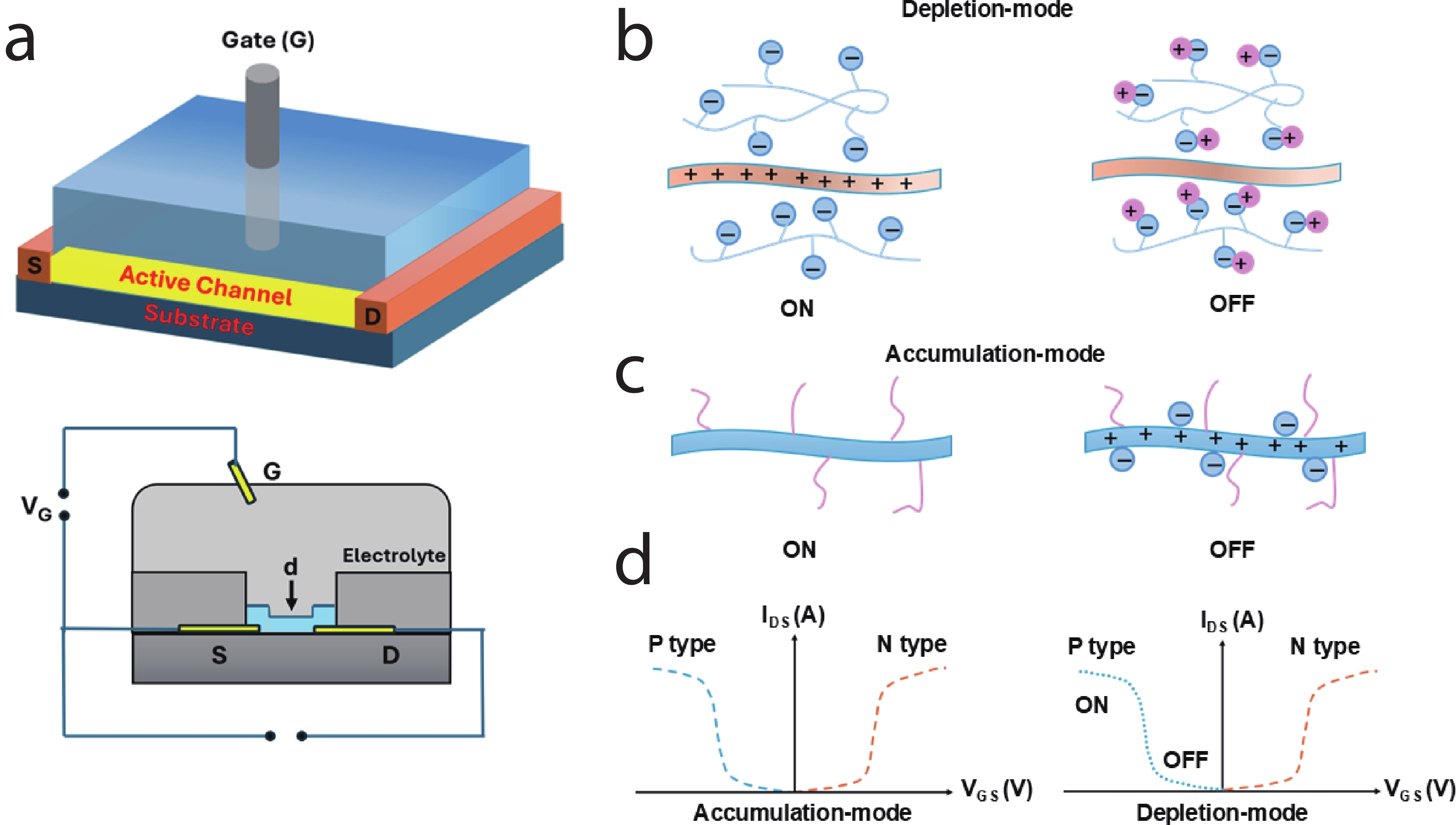
Fig. 1.  (Color online) (a) Schematic of a typical OECT device structure, along with the corresponding circuit connection and cross-sectional view of the device. (b) Operating mechanism of a depletion-mode OECT. (c) Operating mechanism of an accumulation-mode OECT. (d) Typical transfer characteristic curves (IDSVGS) for p-type and n-type OECTs in accumulation-mode and depletion-mode operation.

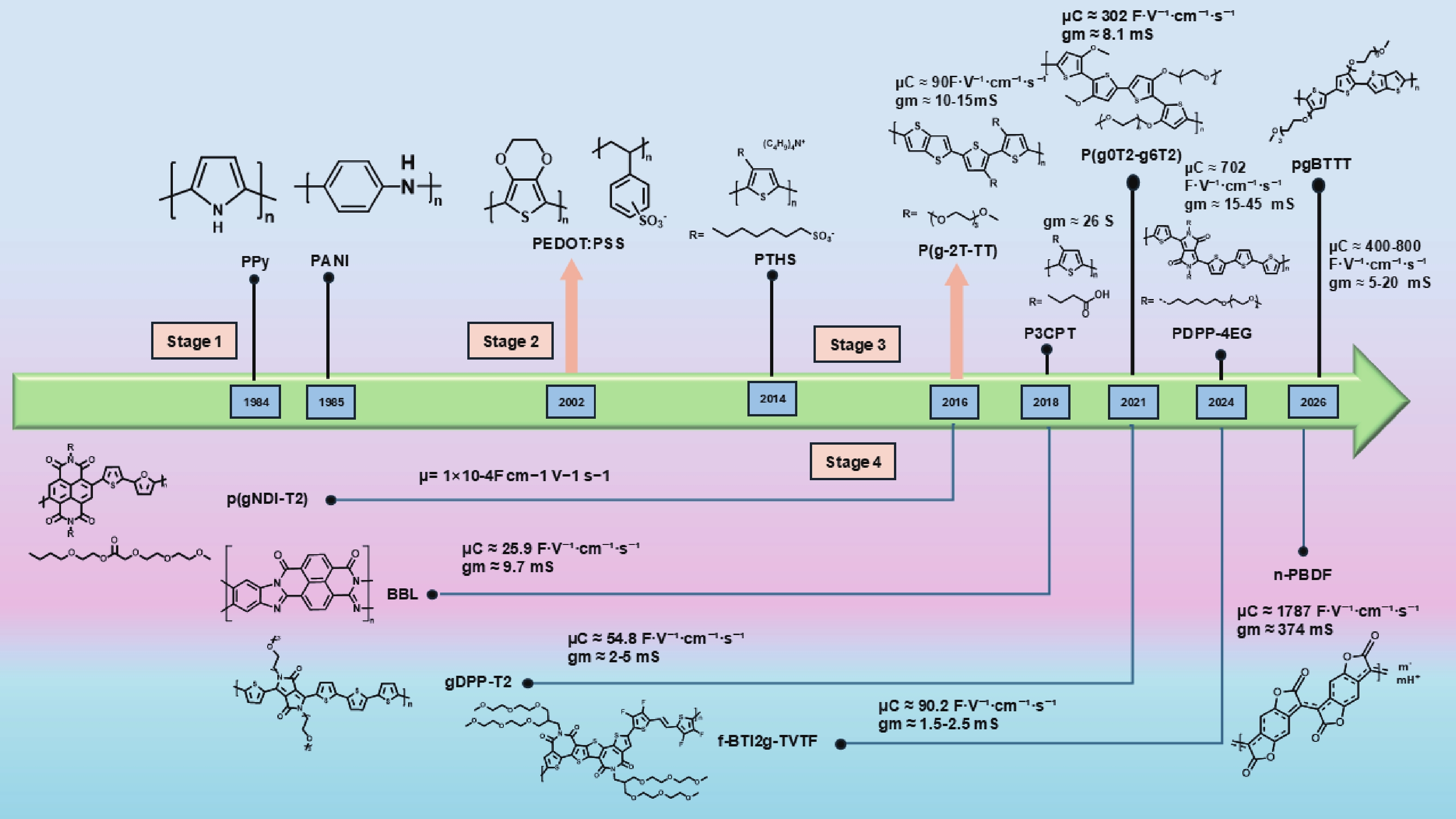
Fig. 2.  (Color online) Timeline of the development and performance evolution of organic mixed-ion-electron conductors (OMIECs).

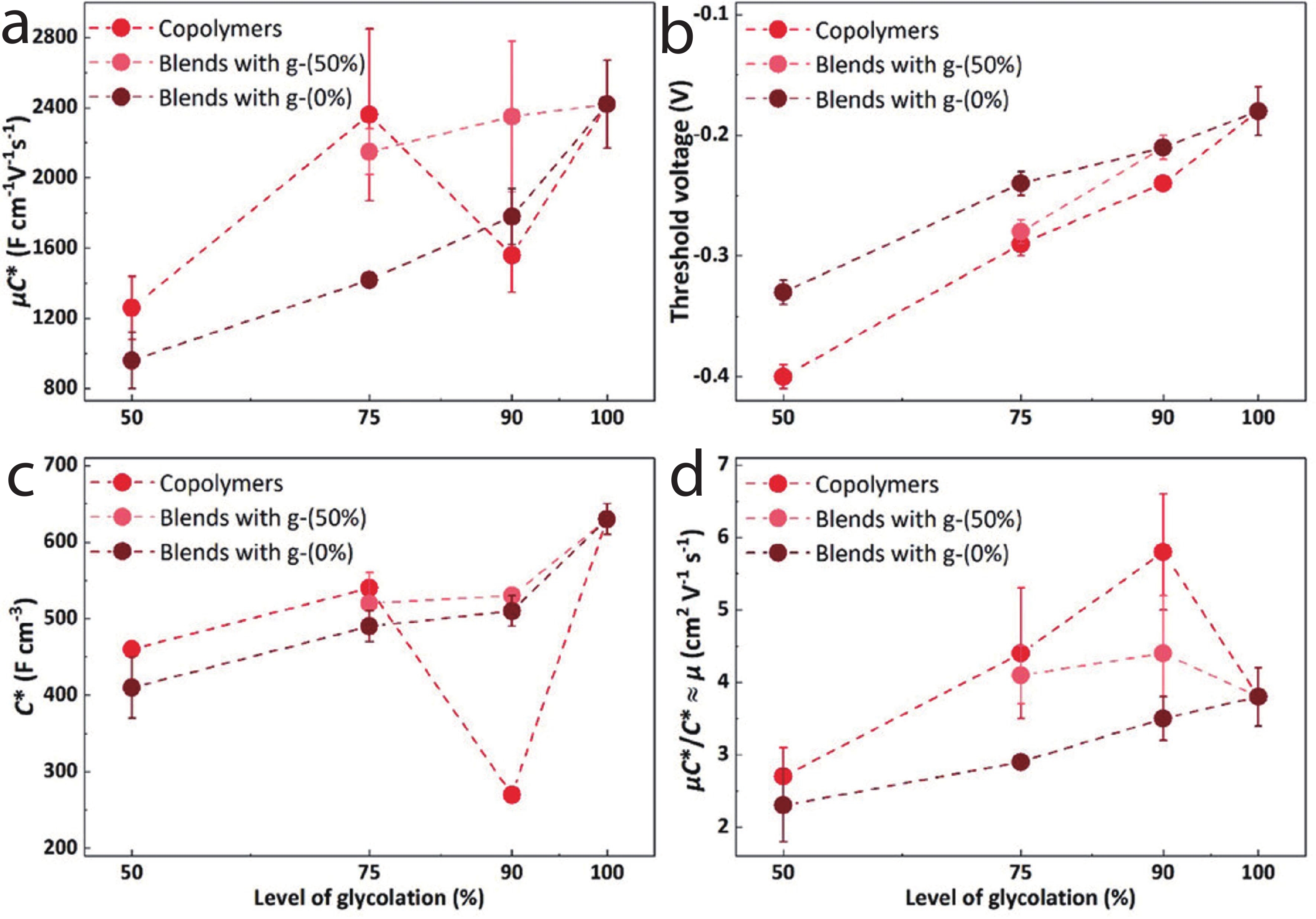
Fig. 3.  (Color online) Comparison of OECT performance parameters for copolymer and physical blend systems at different glycosylation levels. (a) Mobility-capacitance product (μC*). (b) Threshold voltage (Vth). (c) Volume capacitance (C*). and (d) extracted electron mobility (μ).[43] Copyright © 2025 The Author(s). Advanced Functional Materials published by Wiley-VCH GmbH

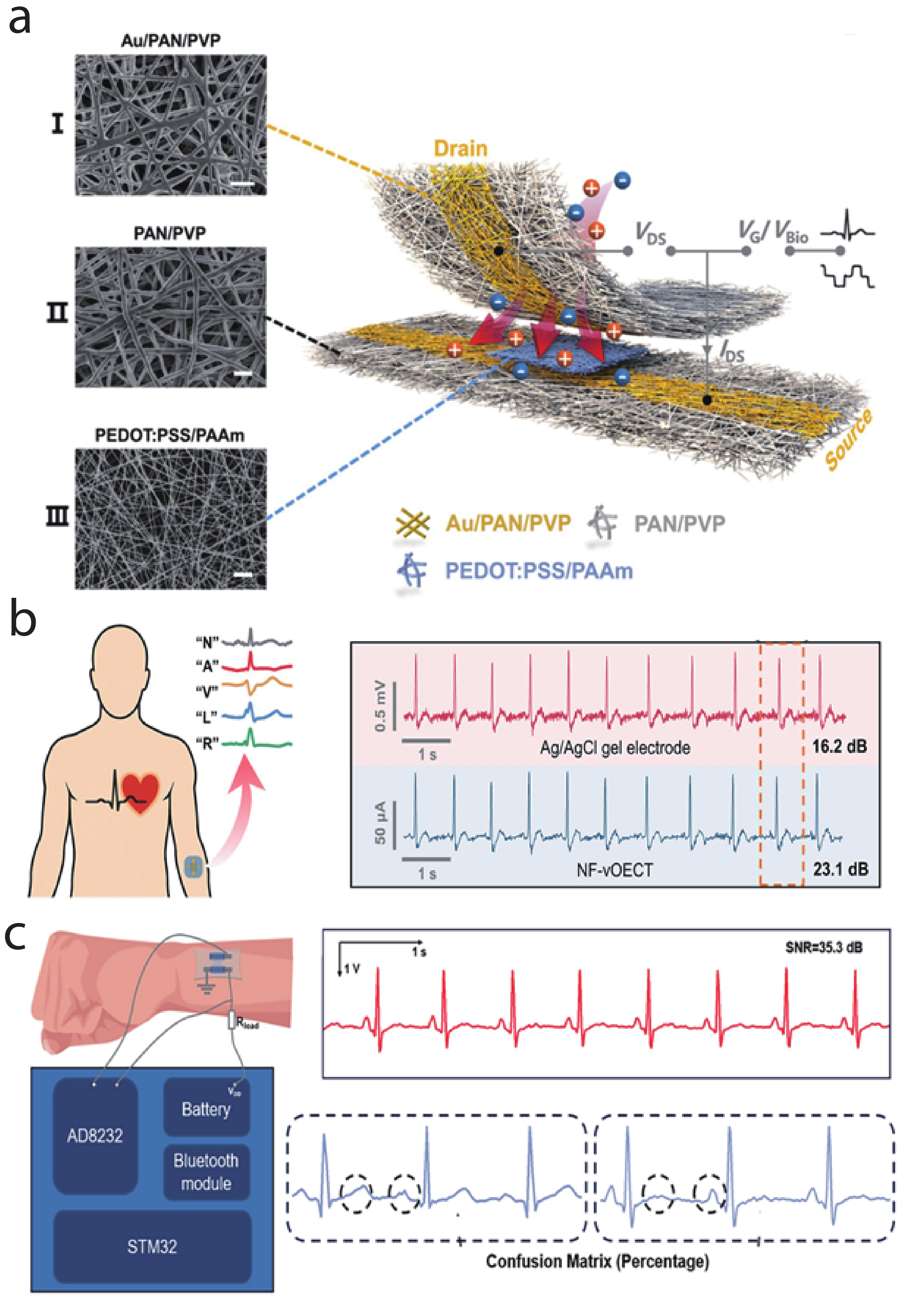
Fig. 4.  (Color online) (a) Schematic diagram of the NF-vOECT structure, featuring a design with three layers of nanofiber networks stacked vertically. SEM images of the PAN/PVP nanofiber substrate before (I) and after (II) gold deposition, as well as the PEDOT:PSS/PAAm dual-network semiconductor nanofiber (III). (b) Schematic diagram of ECG acquisition using the NF-vOECT device and representative waveforms of five typical heartbeat categories, along with a comparison of ECGs acquired by the NF-vOECT and standard gel electrodes[50]. (c) A smart closed-loop monitoring system integrating the NF-vOECT with hardware back-end components (AD8232 analog front-end, STM32 microcontroller, and Bluetooth module)[51]. Copyright © 2026 Wiley-VCH GmbH, © 2025 American Chemical Society.

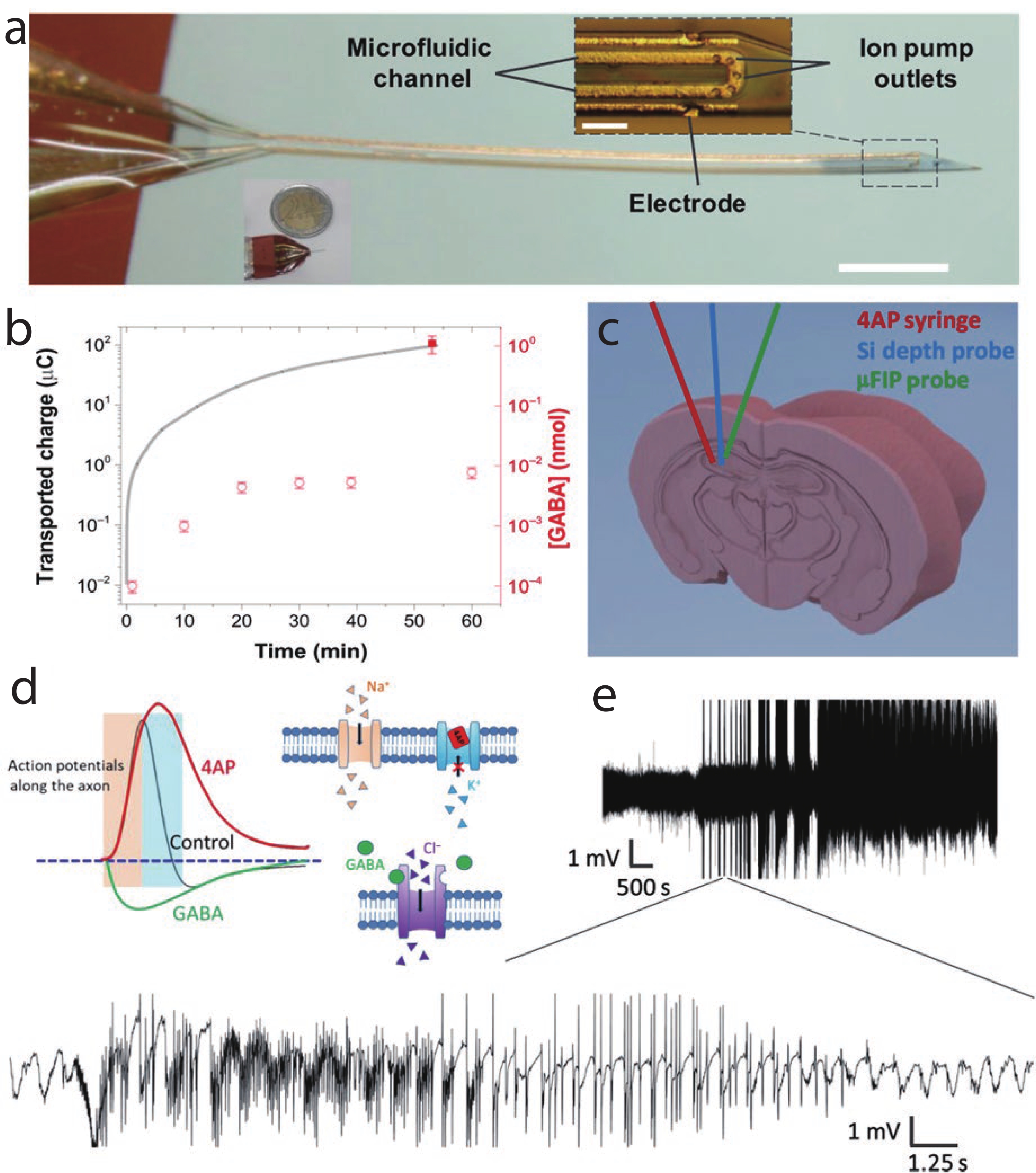
Fig. 5.  (Color online) The microfluidic ion pump probe system features an implantable architecture designed for high-resolution neural interfaces, facilitating electrophoretic GABA delivery that significantly outweighs passive diffusion when activated at 1 V. As demonstrated in the hippocampal experimental configuration, the probe operates alongside chemical induction to modulate K+ channels and action potentials, with its efficacy confirmed through the real-time recording of seizure-like events across multiple temporal scales[65]. Copyright ©2018 the author

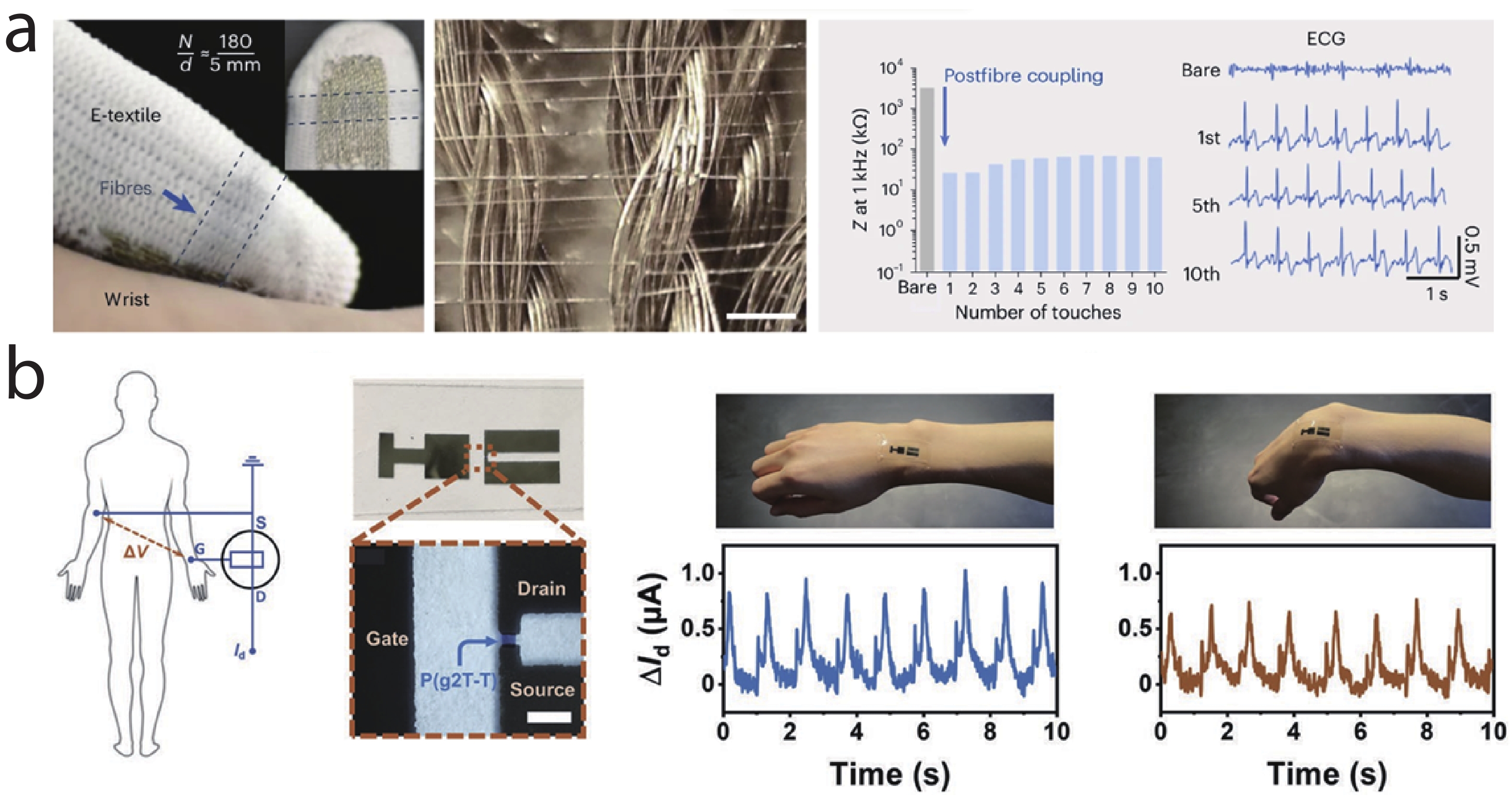
Fig. 6.  (Color online) (a) Textile-integrated organic bioelectronic fibers enabling skin-tight contact and stable electrophysiological signal acquisition. (b) Stretchable OECTs based on p(g2T-T) for skin sensing, showing device structure and stable current response under mechanical deformation[71]. Copyright © 2022 The Authors. Advanced Materials published by Wiley-VCH GmbHCopyright © 2024, The Author(s)

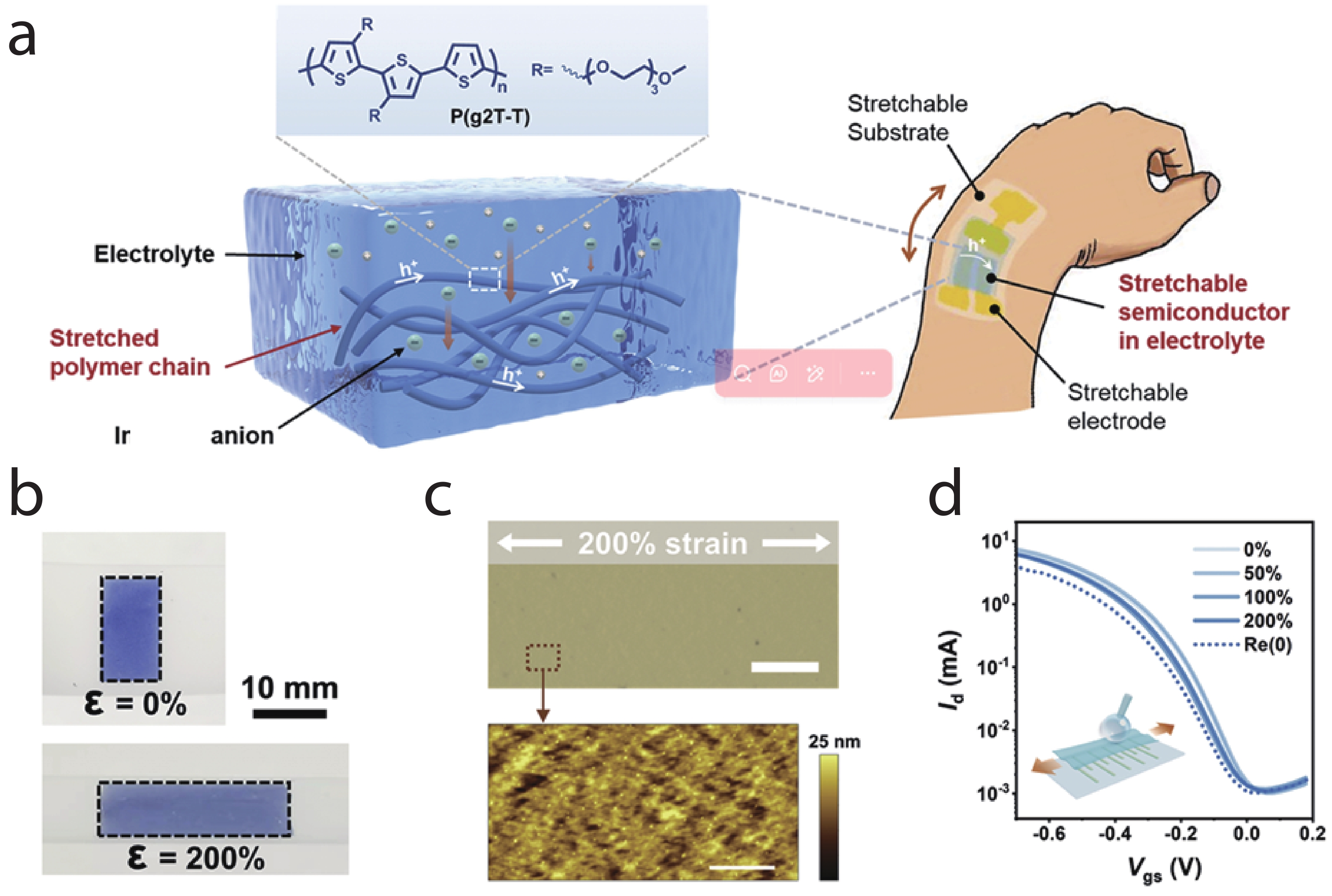
Fig. 7.  (Color online) (a) Schematic illustration of ion-electron coupled transport in the structure of a highly stretchable, wearable OECT and its device, fabricated from p(g2T-T) material. (b) Microscopic images of the p(g2T-T) film under 0% and 200% strain. (c) Optical microscope image (top) and corresponding atomic force microscope (AFM) image (bottom) of the stretched film (200% strain). (d) Transfer curves of the OECT under different tensile strains[72]. Copyright© 2022 The Authors. Advanced Materials published by Wiley-VCH GmbH

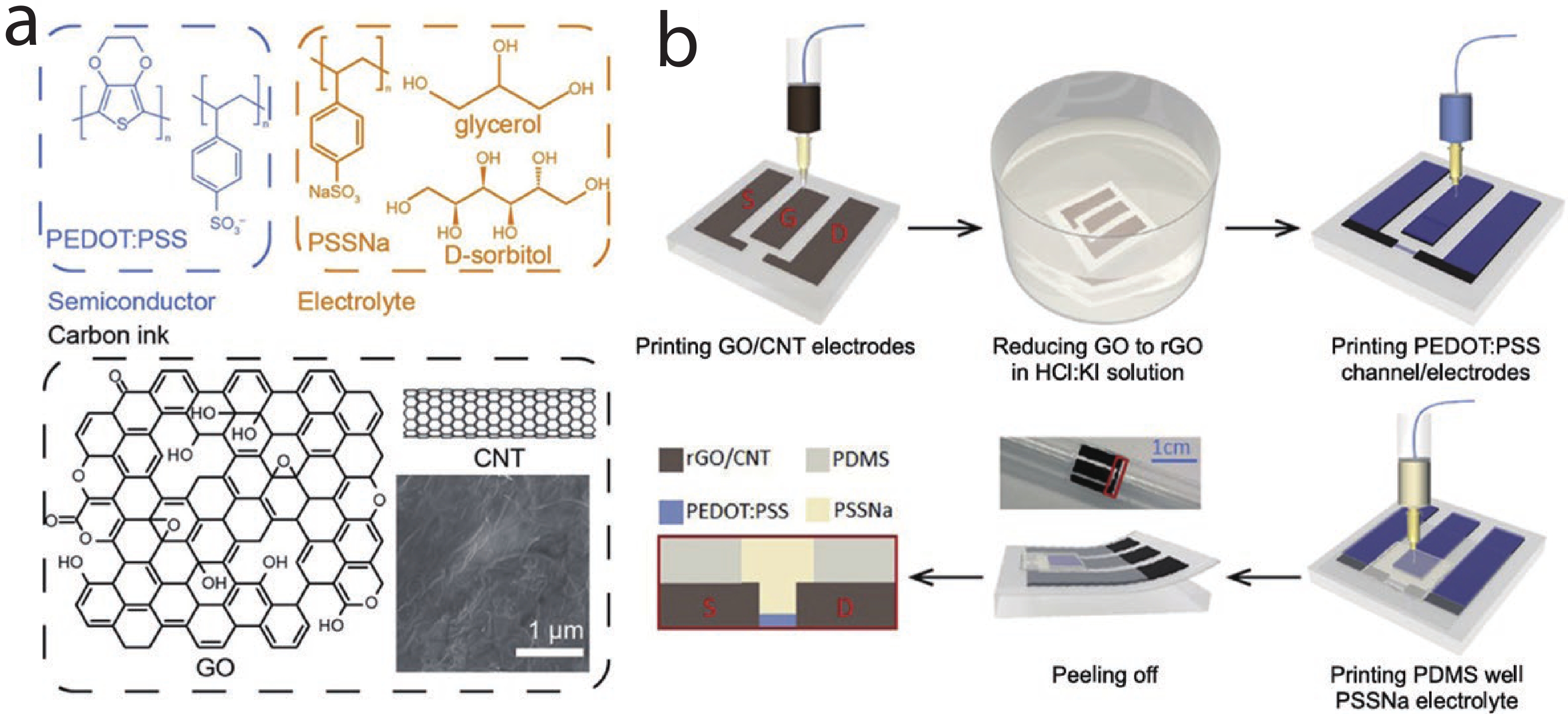
Fig. 8.  (Color online) Wet-extrusion direct-writing strategy. (a) Ink structure and composition. (b The printing process of OECT.[78] Copyright © 2024, The Author(s)

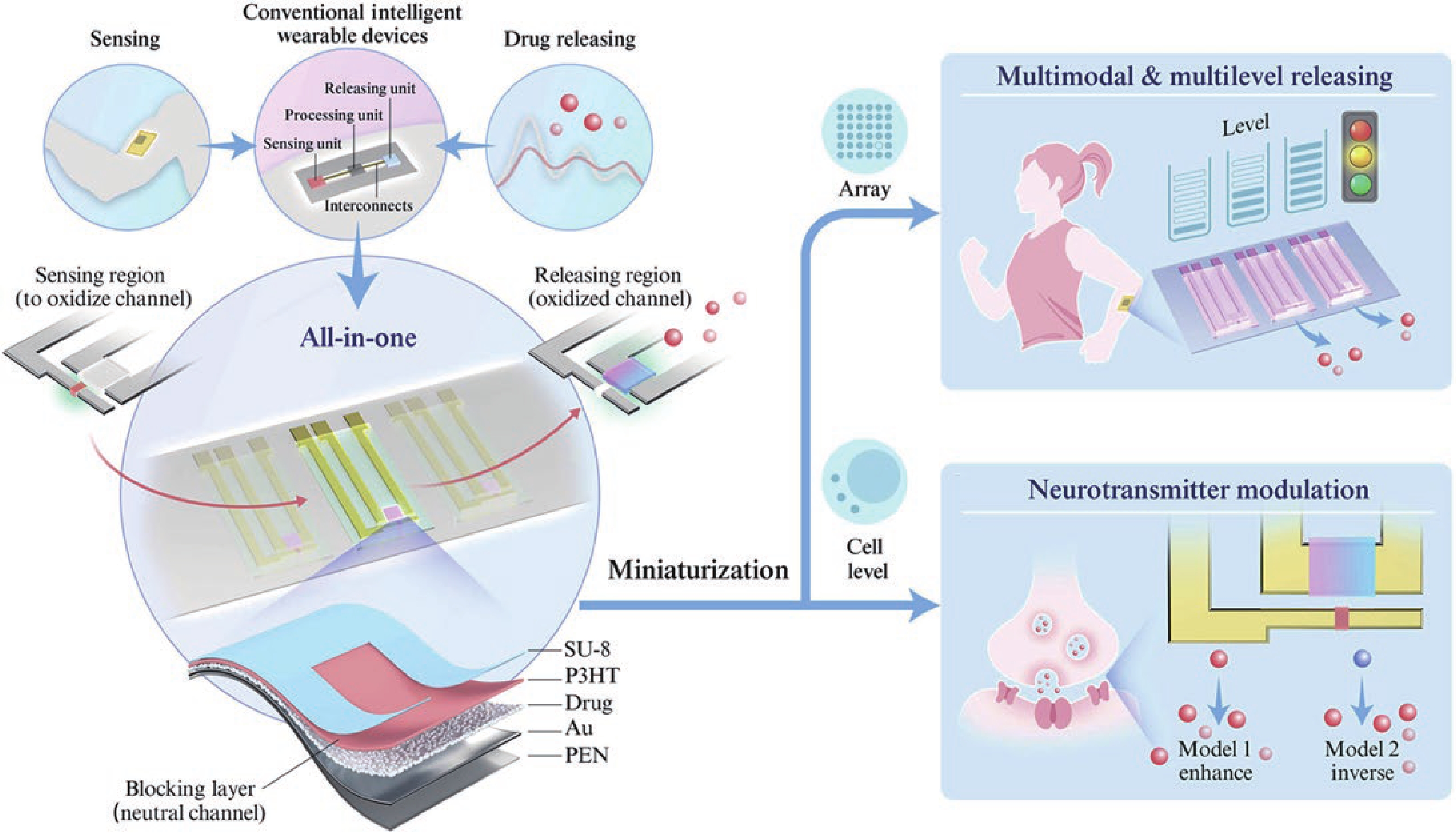
Fig. 9.  (Color online) An all-in-one IWD based on OECTC for biomedical and neuroscience applications. IWDs provide solutions for simultaneous sensing and drug delivery. Multimodal and multilevel drug release capabilities of the OECT for biomedical applications. Devices with different trigger conditions can be responsible for releasing different doses or types of drugs. Neurotransmitter modulation capabilities of the OECT for neuroscience applications. The magnitude or type of the input neurotrans mitter can be altered with the assistance of the OECT[85]. Copyright © 2025, The Author(s)

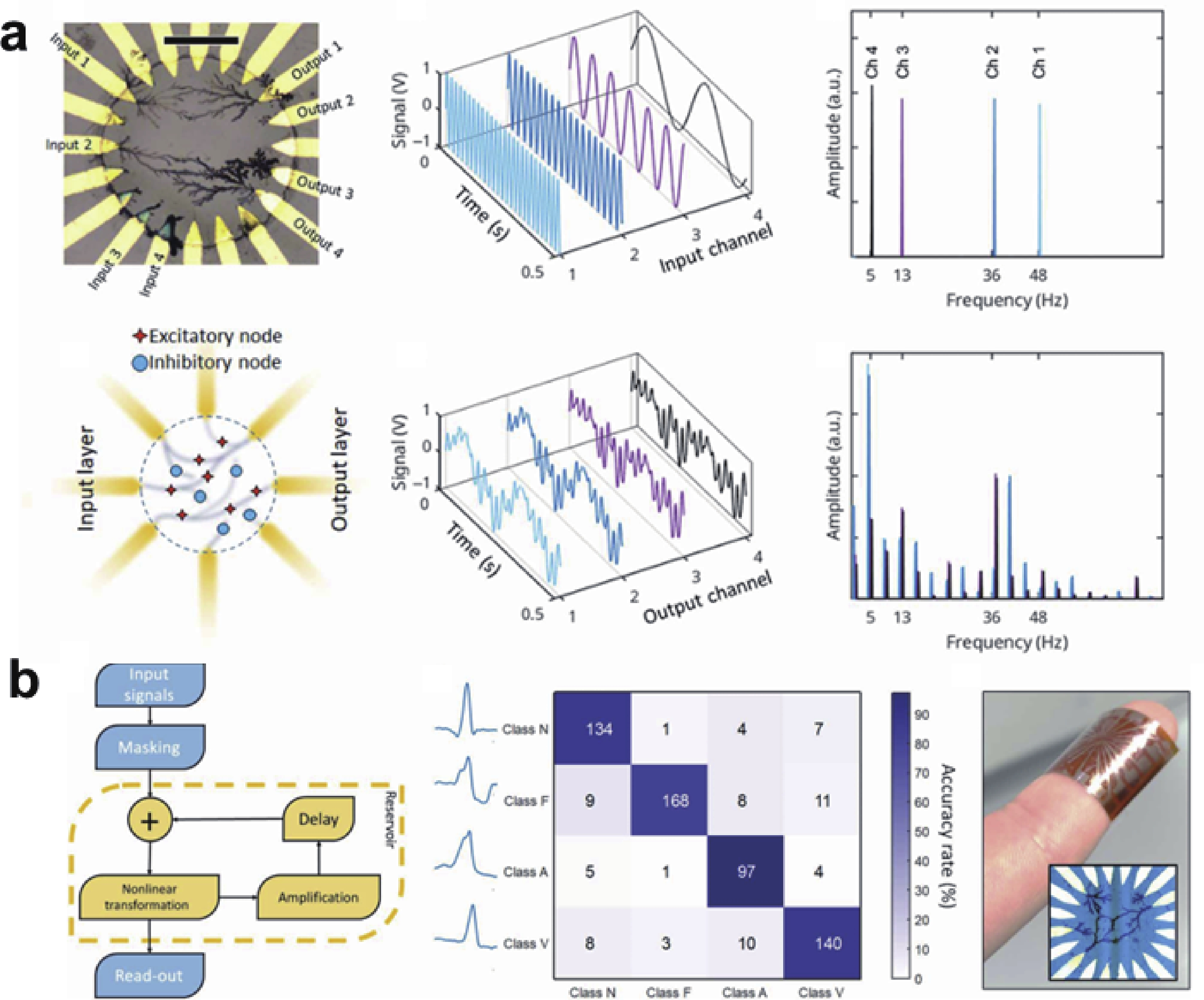
Fig. 10.  (Color online) (a) Nonlinear behavior of the networks: Optical microscope picture of a network, with four input channels and four output channels labeled (scale bar, 100 μm). Sketch of a network with E/I balance with highlighted excitatory and inhibitory nodes. Input signals injected to the four labeled channels and readout of the reservoir states measured at the four output channels. The Fourier transforms proof that the transfer function of the network is nonlinear: A multitude of new frequencies appear, proving the nonlinear projection performed by the reservoir. (b) Heartbeat classification using PEDOT networks[92]. Copyright © 2021, The Author(s)

Table 1.   Comparison of OECT performance based on different materials.

Material Vth (V) μC* ( F·cm−1·V−1·S−1) gm
On/off ratio Electrolyte Reference
PgNaN 0.37 0.662 ± 0.113 0.212 S·cm−1 ≈104 N/R [33]
P3CPT −0.1 N/R 26±2 mS ≈103 Aqueous electrolyte [34]
P3MEEET 0.4 11.5±1.4 20.4 S·cm−1 N/R 0.1 M NaCl aqueous [35]
BTMP EDOT/P3MEET N/R 27.34 400 mS ≈104 N/R [36]
p(g2T-TT) 0.00 ± 0.01 299.42±5.15 15.8 mS 105 0.1 M NaCl aqueous [37]
p(p2T-TT) −0.18 ± 0.01 182.24±16.5 15.1 mS 105 0.1 M NaCl aqueous [37]
p(b2T-TT) −0.27 ± 0.01 342.2±12 19.4 mS 105 0.1 M NaCl aqueous [37]
PBBT-H −0.36±0.01 2.52±0.07 1.11±0.02 S·cm−1 ≈103 0.1 M NaCl aqueous [38]
PBBT-Me −0.52±0.02 92.3±5.0 40.6±1.5 S·cm−1 ≈106 0.1 M NaCl aqueous [38]
P3APPT −0.58± 0.01 30.5±2.2 N/R N/R 100mmol/L KCl(aq) [39]
P(g0T2-g6T2) 0.18 302 8.1 mS 104-105 0.1 M NaCl aqueous [40]
PDPP-2EG −0.66 20 1.7 S cm−1 N/R N/R [41]
PDPP-3EG −0.61 491 76.3 S·cm−1 N/R N/R [41]
PDPP-4EG −0.60 702 137.1 S·cm−1 105 N/R [41]
PDPP-5EG −0.60 346 63.3 S·cm−1 N/R N/R [41]
pgBTTT −0.18 530±240 5–20 mS 104-105 N/R [42]
Note: The reported transconductance ($ {g}_{m} $) values were retained in their original forms because normalization methods and device geometries varied across different literature reports.
DownLoad: CSV
[1]
Ates H C, Yetisen A K, Güder F, et al. Wearable devices for the detection of COVID-19. Nat Electron, 2021, 4(1): 13 doi: 10.1038/s41928-020-00533-1
[2]
Yin L, Cao M, Kim K N, et al. A stretchable epidermal sweat sensing platform with an integrated printed battery and electrochromic display. Nat Electron, 2022, 5(10): 694 doi: 10.1038/s41928-022-00843-6
[3]
Jimenez Martinez C, Campuzano Ruiz R, Barrenada Copete M E, et al. Do wearable electronic devices after a cardiac rehabilitation programme improve adherence to physical exercise? Eur Heart J, 2025, 46: ehaf784.4480
[4]
Jung J, Lee S, Kim H, et al. Self-healing electronic skin with high fracture strength and toughness. Nat Commun, 2024, 15(1): 9763 doi: 10.1038/s41467-024-53957-0
[5]
Zhao C, Park J, Root S E, et al. Skin-inspired soft bioelectronic materials, devices and systems. Nat Rev Bioeng, 2024, 2(8): 671 doi: 10.1038/s44222-024-00194-1
[6]
Kim J, Pankow R M, Cho Y, et al. Monolithically integrated high-density vertical organic electrochemical transistor arrays and complementary circuits. Nat Electron, 2024, 7(3): 234-243 doi: 10.1038/s41928-024-01127-x
[7]
Saleh A, Koklu A, Uguz I, et al. Bioelectronic interfaces of organic electrochemical transistors. Nat Rev Bioeng, 2024, 2(7): 559 doi: 10.1038/s44222-024-00180-7
[8]
Kukhta N A, Marks A, Luscombe C K. Molecular Design Strategies toward Improvement of Charge Injection and Ionic Conduction in Organic Mixed Ionic–Electronic Conductors for Organic Electrochemical Transistors. Chem Rev, 2022, 122(4): 4325 doi: 10.1021/acs.chemrev.1c00266
[9]
Zabihipour M, Lassnig R, Strandberg J, et al. High yield manufacturing of fully screen-printed organic electrochemical transistors. npj Flex Electron, 2020, 4(1) doi: 10.1038/s41528-020-0078-9
[10]
Rivnay J, Inal S, Salleo A, et al. Organic electrochemical transistors. Nat Rev Mater, 2018, 3(2): 17086 doi: 10.1038/natrevmats.2017.86
[11]
Paulsen B D, Tybrandt K, Stavrinidou E, et al. Organic mixed ionic–electronic conductors. Nat Mater, 2020, 19(1): 13 doi: 10.1038/s41563-019-0435-z
[12]
Khodagholy D, Rivnay J, Sessolo M, et al. High transconductance organic electrochemical transistors. Nat Commun, 2013, 4(1): 2133 doi: 10.1038/ncomms3133
[13]
Li T, Cheryl Koh J Y, Moudgil A, et al. Biocompatible Ionic Liquids in High-Performing Organic Electrochemical Transistors for Ion Detection and Electrophysiological Monitoring. ACS Nano, 2022, 16(8): 12049 doi: 10.1021/acsnano.2c02191
[14]
Zhang S, Qian S-H, Zhao G, et al. Intrinsically Antifouling, soft and conformal bioelectronic from scalable fabrication of Thin-Film OECT arrays by zwitterionic polymers. Chem Eng J, 2024, 483: 148980 doi: 10.1016/j.cej.2024.148980
[15]
Jo Y J, Ye Y-s, Choi S, et al. Choline Ionic Liquid for Long-Term Stable Organic Electrochemical Transistors. Adv Mater, 2026, 38(4): e12163 doi: 10.1002/adma.202512163
[16]
Chen W, Jiang H, Du C, et al. Fiber Transistors as a Hardware Surrogate Gradient for Backpropagation in Spiking Neural Networks. Adv Mater, 2026, 38(6): e14904 doi: 10.1002/adma.202514904
[17]
Pang Y, Li Y, Gu Y, et al. Stretchable organic electrochemical transistors for sustained high-fidelity electrophysiology and deep learning-assisted sleep monitoring. Matter, 2025, 8(5): 102086 doi: 10.1016/j.matt.2025.102086
[18]
Ji J, Gao D, Wu H-Y, et al. Single-transistor organic electrochemical neurons. Nat Commun, 2025, 16(1): 4334 doi: 10.1038/s41467-025-59587-4
[19]
Harikesh P C, Yang C-Y, Tu D, et al. Organic electrochemical neurons and synapses with ion mediated spiking. Nat Commun, 2022, 13(1): 901 doi: 10.1038/s41467-022-28483-6
[20]
Jiang H, Yang C-Y, Du C, et al. Ambipolar Bulk Heterojunction Semiconductor Fibers for High-Performance Neuromorphic Systems. ACS Nano, 2026, 18(4): 3112 doi: 10.1021/acsnano.5c19192.s001
[21]
Bernards D A, Malliaras G G. Steady-State and Transient Behavior of Organic Electrochemical Transistors. Adv Funct Mater, 2007, 17(17): 3538 doi: 10.1002/adfm.200601239
[22]
Huang Y, Hu Z, Zhu S, et al. Fibre-based organic electrochemical transistors: principle, evaluation, and application. npj Flex Electron, 2025, 9(1): 43 doi: 10.1038/s41528-025-00417-4
[23]
Wang Y, Wustoni S, Surgailis J, et al. Designing organic mixed conductors for electrochemical transistor applications. Nat Rev Mater, 2024, 9(4): 249 doi: 10.1038/s41578-024-00652-7
[24]
He Y, Kukhta N A, Marks A, et al. The effect of side chain engineering on conjugated polymers in organic electrochemical transistors for bioelectronic applications. J Mater Chem C, 2022, 10(7): 2314 doi: 10.1039/D1TC05229B
[25]
Tang H, Liang Y, Liu C, et al. A solution-processed n-type conducting polymer with ultrahigh conductivity. Nature, 2022, 611(7935): 271 doi: 10.1038/s41586-022-05295-8
[26]
Wang X, Zhang Z, Li P, et al. Ultrastable N-Type Semiconducting Fiber Organic Electrochemical Transistors for Highly Sensitive Biosensors. Adv Mater, 2024, 36(24): 2400287 doi: 10.1002/adma.202400287
[27]
Khodagholy D, Gelinas J N, Thesen T, et al. NeuroGrid: recording action potentials from the surface of the brain. Nat Neurosci, 2015, 18(2): 310 doi: 10.1038/nn.3905
[28]
Tseng H, Weissbach A, Kucinski J, et al. Threshold Voltage Control in Dual-Gate Organic Electrochemical Transistors. Adv Mater Interfaces, 2023, 10(19): 2201914 doi: 10.1002/admi.202201914
[29]
Gu M, Travaglini L, Ta D, et al. A PEDOT based graft copolymer with enhanced electronic stability. Mater Horiz, 2024, 11(19): 4809 doi: 10.1039/D4MH00654B
[30]
Gregorio T, Mombrú D, Romero M, et al. Exploring Mixed Ionic–Electronic-Conducting PVA/PEDOT: PSS Hydrogels as Channel Materials for Organic Electrochemical Transistors. Polymers, 2024, 16(11): 1478 doi: 10.3390/polym16111478
[31]
Moro S, Siemons N, Drury O, et al. The Effect of Glycol Side Chains on the Assembly and Microstructure of Conjugated Polymers. ACS Nano, 2022, 16(12): 21303 doi: 10.1021/acsnano.2c09464
[32]
Pan T, Wu X, Liu M, et al. Ambipolar Organic Bulk Heterojunction Electrochemical Transistors for High Gain Inverters. ACS Materials Lett, 2025, 8(1): 171 doi: 10.1021/acsmaterialslett.5c01279.s001
[33]
Chen X, Marks A, Paulsen B D, et al. n-Type Rigid Semiconducting Polymers Bearing Oligo(Ethylene Glycol) Side Chains for High-Performance Organic Electrochemical Transistors. Angew Chem Int Ed, 2021, 60(17): 9368 doi: 10.1002/anie.202013998
[34]
Khau B V, Savagian L R, De Keersmaecker M, et al. Carboxylic Acid Functionalization Yields Solvent-Resistant Organic Electrochemical Transistors. ACS Materials Lett, 2019, 1(6): 599 doi: 10.1021/acsmaterialslett.9b00373
[35]
Schmode P, Savva A, Kahl R, et al. The Key Role of Side Chain Linkage in Structure Formation and Mixed Conduction of Ethylene Glycol Substituted Polythiophenes. ACS Appl Mater Interfaces, 2020, 12(11): 13029 doi: 10.1021/acsami.9b21604
[36]
Nguyen D C T, Nguyen Q H, Ko J, et al. Conjugated Radical Polymer-Based Organic Electrochemical Transistors for Biosensing Devices. Chem Mater, 2024, 36(16): 7897 doi: 10.1021/acs.chemmater.4c01321.s001
[37]
Moser M, Wang Y, Hidalgo T C, et al. Propylene and butylene glycol: new alternatives to ethylene glycol in conjugated polymers for bioelectronic applications. Mater Horiz, 2022, 9(3): 973 doi: 10.1039/D1MH01889B
[38]
Wu H Y, Huang J D, Jeong S Y, et al. Stable organic electrochemical neurons based on p-type and n-type ladder polymers. Mater Horiz, 2023, 10(10): 4213 doi: 10.1039/D3MH00858D
[39]
Liu S, Fu Y, Li G, et al. Conjugated Polymer for Voltage-Controlled Release of Molecules. Adv Mater, 2017, 29(35): 1701906
[40]
Moser M, Hidalgo T C, Surgailis J, et al. Side Chain Redistribution as a Strategy to Boost Organic Electrochemical Transistor Performance and Stability. Adv Mater, 2020, 32(37): e2002748 doi: 10.1002/adma.202002748
[41]
Jo I Y, Jeong D, Moon Y, et al. High-Performance Organic Electrochemical Transistors Achieved by Optimizing Structural and Energetic Ordering of Diketopyrrolopyrrole-Based Polymers. Adv Mater, 2024, 36(4): e2307402 doi: 10.1002/adma.202307402
[42]
Bynens L, Mantegazza P, Marks A, et al. Revealing the Full Potential of Glycolated Mixed Ionic-Electronic Semiconductors - Symmetric Monomer Polymerization to Boost Electrochemical Transistor Performance. J Am Chem Soc, 2026, 148(8): 8383 doi: 10.1021/jacs.5c19024
[43]
Bynens L, Zhang K, Cavassin P, et al. Organic Electrochemical Transistor Channel Materials: Copolymerization Versus Physical Mixing of Glycolated and Alkoxylated Polymers. Adv Funct Mater, 2025, 36(20): 2423913 doi: 10.1002/adfm.202423913
[44]
Sun H, Vagin M, Wang S, et al. Complementary Logic Circuits Based on High-Performance n-Type Organic Electrochemical Transistors. Adv Mater, 2018, 30(9): 1704916 doi: 10.1002/adma.201704916
[45]
Ding R, Zhang X, Luan Y, et al. Donor Engineering for High Performance n-Type OECT Materials with Exceptional Operational Stability. Angew Chem Int Ed, 2025, 64(36): e202513182 doi: 10.1002/anie.202513182
[46]
Feng K, Shan W, Wang J, et al. Cyano-Functionalized n-Type Polymer with High Electron Mobility for High-Performance Organic Electrochemical Transistors. Adv Mater, 2022, 34(24): 2201340 doi: 10.1002/adma.202201340
[47]
Usta H, Risko C, Wang Z, et al. Design, synthesis, and characterization of ladder-type molecules and polymers: Air-stable, solution-processable n-channel and ambipolar semiconductors for thin-film transistors via experiment and theory. J Am Chem Soc, 2009, 131(15): 5586 doi: 10.1021/ja809555c
[48]
Campana A, Cramer T, Simon D T, et al. Electrocardiographic recording with conformable organic electrochemical transistor fabricated on resorbable bioscaffold. Adv Mater, 2014, 26(23): 3874 doi: 10.1002/adma.201400263
[49]
Li X, Zhong Y, Wang Y, et al. Conformal Vertical Organic Electrochemical Transistors With Ion-Permeable Electrodes for Electrophysiological Monitoring. Adv Mater, 2026, 38(11): e11945 doi: 10.1002/adma.202511945
[50]
Zhu Z, Wang X, Wang D, et al. Fine-Grained ECG Monitoring Based on Stretchable Organic Electrochemical Transistors with Anisotropic Gel Electrolytes for Biometric Identification. ACS Sens, 2025, 10(12): 9423 doi: 10.1021/acssensors.5c02403
[51]
Meng K, Zhu J, Zhang T, et al. Nanostructure-gated organic electrochemical transistors for accurate glucose monitoring in dynamic biological pH conditions. Biosens Bioelectron, 2025, 287: 117677 doi: 10.1016/j.bios.2025.117677
[52]
Soliman I, Gunathilake C. Aptamer-enhanced organic electrochemical transistors for ultra-sensitive dopamine detection. Next Materials, 2024, 3: 100160 doi: 10.1016/j.nxmate.2024.100160
[53]
Yang C-Y, Zhao Z, Wu H-Y, et al. High-frequency, low-energy organic event-based sensors for closed-loop neurostimulation. Nat Sensors, 2026, 1(1): 63 doi: 10.1038/s44460-025-00007-x
[54]
Harikesh P C, Yang C-Y, Wu H-Y, et al. Ion-tunable antiambipolarity in mixed ion–electron conducting polymers enables biorealistic organic electrochemical neurons. Nat Mater, 2023, 22(2): 242 doi: 10.1038/s41563-022-01450-8
[55]
Sultan M J, Bag A, Hong S J, et al. Tactile sensory synapse based on organic electrochemical transistors with ionogel triboelectric layer. Nano Energy, 2024, 131: 110202 doi: 10.1016/j.nanoen.2024.110202
[56]
Liu G, Wen W, Shan C, et al. Photomediated ion dynamics enables multi-modal learning, memory and sensing in ultralow-voltage organic electrochemical device. Nat Commun, 2025, 16(1): 6933 doi: 10.1038/s41467-025-61783-1
[57]
Cho K W, Sunwoo S-H, Hong Y J, et al. Soft Bioelectronics Based on Nanomaterials. Chem Rev, 2022, 122(5): 5068 doi: 10.1021/acs.chemrev.1c00531
[58]
González-González M A, Conde S V, Latorre R, et al. Bioelectronic Medicine: a multidisciplinary roadmap from biophysics to precision therapies. Front Integr Neurosci, 2024, 18: 1321872 doi: 10.3389/fnint.2024.1321872
[59]
Antal A, Bjekic J, Ganho-Avila A, et al. Low intensity transcranial electric stimulation: Safety, ethical, legal regulatory and application guidelines (2017-2025: An update) - endorsed by the European Society for Brain Stimulation (ESBS) and by the International Federation for Clinical Neurophysiology (IFCN). Clin Neurophysiol, 2026, 184: 2111436 doi: 10.1016/j.clinph.2025.2111436
[60]
Marin C, Fernández E. Biocompatibility of intracortical microelectrodes: current status and future prospects. Front Neuroeng, 2010, 3: 8 doi: 10.3389/fneng.2010.00008
[61]
Hanson L, Zhao W, Lou H-Y, et al. Vertical nanopillars for in situ probing of nuclear mechanics in adherent cells. Nat Nanotechnol, 2015, 10(6): 554 doi: 10.1038/nnano.2015.88
[62]
Weaver C L, LaRosa J M, Luo X, et al. Electrically Controlled Drug Delivery from Graphene Oxide Nanocomposite Films. ACS Nano, 2014, 8(2): 1834 doi: 10.1021/nn406223e
[63]
Alkahtani M E, Elbadawi M, Chapman C A R, et al. Electroactive Polymers for On-Demand Drug Release. Adv Healthcare Mater, 2024, 13(3): 2301759 doi: 10.1002/adhm.202301759
[64]
Isaksson J, Kjall P, Nilsson D, et al. Electronic control of Ca2+ signalling in neuronal cells using an organic electronic ion pump. Nat Mater, 2007, 6(9): 673 doi: 10.1038/nmat1963
[65]
Proctor C M, Slézia A, Kaszas A, et al. Electrophoretic drug delivery for seizure control. Sci Adv, 2018, 4(8): eaau1291 doi: 10.1126/sciadv.aau1291
[66]
Song Z, Ma Y, Morrin A, et al. Preparation and electrochemical sensing application of porous conducting polymers. TrAC Trends Anal Chem, 2021, 135: 116155 doi: 10.1016/j.trac.2020.116155
[67]
Uppalapati D, Boyd B J, Garg S, et al. Conducting polymers with defined micro- or nanostructures for drug delivery. Biomaterials, 2016, 111: 149-162 doi: 10.1016/j.biomaterials.2016.09.021
[68]
Tang Y, Varyambath A, Ding Y, et al. Porous organic polymers for drug delivery: hierarchical pore structures, variable morphologies, and biological properties. Biomater Sci, 2022, 10(19): 5369 doi: 10.1039/D2BM00719C
[69]
Wang W, Pan Y, Shui Y, et al. Imperceptible augmentation of living systems with organic bioelectronic fibres. Nat Electron, 2024, 7(7): 586 doi: 10.1038/s41928-024-01174-4
[70]
Lubrano C, Bettucci O, Dijk G, et al. The impact of hydrogen peroxide production in OECTs for in vitro applications. J Mater Chem C, 2024, 12(5): 1625 doi: 10.1039/D3TC02849F
[71]
Dai Y, Dai S, Li N, et al. Stretchable Redox-Active Semiconducting Polymers for High-Performance Organic Electrochemical Transistors. Adv Mater, 2022, 34(23): e2201178 doi: 10.1002/adma.202201178
[72]
Zhang C, Meng J, Chen Y, et al. Carbon nanotube/polymer hybrid film for optimizing electron transport in organic electrochemical transistor. J Mater Sci, 2023, 58(40): 15727 doi: 10.1007/s10853-023-09036-8
[73]
Dai Y, Wai S, Li P, et al. Soft hydrogel semiconductors with augmented biointeractive functions. Science, 2024, 386(6720): 431 doi: 10.1126/science.adp9314
[74]
Liu D, Bai J, Tian X, et al. Increasing the dimensionality of transistors with hydrogels. Science, 2025, 390(6775): 824 doi: 10.1126/science.adx4514
[75]
Wang Z, Chen K, Shi X, et al. Fibre integrated circuits by a multilayered spiral architecture. Nature, 2026, 650(8100): 102 doi: 10.1038/s41586-025-09974-0
[76]
Xu W, Zhu Y, Zhou X, et al. High-density, ultraflexible organic electrochemical transistor array for brain activity mapping. J Mater Chem C, 2025, 13(9): 4385 doi: 10.1039/D4TC02839B
[77]
Massetti M, Zhang S, Harikesh P C, et al. Fully 3D-printed organic electrochemical transistors. npj Flex Electron, 2023, 7(1): 11 doi: 10.1038/s41528-023-00245-4
[78]
Demuru S, Huang C-H, Parvez K, et al. All-Inkjet-Printed Graphene-Gated Organic Electrochemical Transistors on Polymeric Foil as Highly Sensitive Enzymatic Biosensors. ACS Appl Nano Mater, 2022, 5(1): 1664 doi: 10.1021/acsanm.1c04434
[79]
Guo X, Liu J, Liu F, et al. Label-free and sensitive sialic acid biosensor based on organic electrochemical transistors. Sensors Actuators B, 2017, 240: 1075 doi: 10.1016/j.snb.2016.09.099
[80]
Fang Y, Feng J, Shi X, et al. Coaxial fiber organic electrochemical transistor with high transconductance. Nano Res, 2023, 16(9): 11885 doi: 10.1007/s12274-023-5722-y
[81]
Scheiblin G, Coppard R, Owens R M, et al. Referenceless pH Sensor using Organic Electrochemical Transistors. Adv Mater Technol, 2016, 2(2): 1600141 doi: 10.1002/admt.201600141
[82]
Fan J, Parr S, Kang S, et al. Point-of-care (POC) SARS-CoV-2 antigen detection using functionalized aerosol jet-printed organic electrochemical transistors (OECTs). Nanoscale, 2023, 15(11): 5476 doi: 10.1039/D2NR06485E
[83]
Mariani F, Quast T, Andronescu C, et al. Needle-type organic electrochemical transistor for spatially resolved detection of dopamine. Mikrochim Acta, 2020, 187(7): 378 doi: 10.1007/s00604-020-04352-1
[84]
Nguyen D C T, Vu Thi Q, Nguyen Q H, et al. Engineering flexible dopamine biosensors: blended EGylated conjugated and radical polymers in organic electrochemical transistors. npj Flex Electron, 2025, 9(1): 35 doi: 10.1038/s41528-025-00412-9
[85]
Li Y, Yan M, He X, et al. Organic electrochemical transceiver: An all-in-one sense-and-release device architecture for physiological modulation. Sci Adv, 2025, 11(37): eadu9516 doi: 10.1126/sciadv.adu9516
[86]
Chen J, Huang W, Zheng D, et al. Highly stretchable organic electrochemical transistors with strain-resistant performance. Nat Mater, 2022, 21(5): 564 doi: 10.1038/s41563-022-01239-9
[87]
Chen S, Hou K, Li T, et al. Ultra-Lightweight, Highly Permeable, and Waterproof Fibrous Organic Electrochemical Transistors for On-Skin Bioelectronics. Adv Mater Technol, 2022, 8(1): 2200611 doi: 10.29363/nanoge.nsm.2022.313
[88]
Li N, Li Y, Cheng Z, et al. Bioadhesive polymer semiconductors and transistors for intimate biointerfaces. Science, 2023, 381(6658): 686 doi: 10.1126/science.adg8758
[89]
Spyropoulos G D, Gelinas J N, Khodagholy D. Internal ion-gated organic electrochemical transistor: A building block for integrated bioelectronics. Sci Adv, 2019, 5(2): eaau7378 doi: 10.1126/sciadv.aau7378
[90]
Gerasimov J Y, Gabrielsson R, Forchheimer R, et al. An Evolvable Organic Electrochemical Transistor for Neuromorphic Applications. Adv Sci, 2019, 6(7): 1801339 doi: 10.1002/advs.201801339
[91]
Liu D, Tian X, Bai J, et al. A wearable in-sensor computing platform based on stretchable organic electrochemical transistors. Nat Electron, 2024, 7(12): 1176 doi: 10.1038/s41928-024-01250-9
[92]
Cucchi M, Gruener C, Petrauskas L, et al. Reservoir computing with biocompatible organic electrochemical networks for brain-inspired biosignal classification. Sci Adv, 2021, 7(34): eabh0693 doi: 10.1126/sciadv.abh0693
  • Search

    Advanced Search >>

    GET CITATION

    shu

    Export: BibTex EndNote

    Article Metrics

    Article views: 8 Times PDF downloads: 0 Times Cited by: 0 Times

    History

    Received: 15 April 2026 Revised: 12 May 2026 Online: Accepted Manuscript: 09 June 2026

    Catalog

      Email This Article

      User name:
      Email:*请输入正确邮箱
      Code:*验证码错误
      Runxue Wei, Zinuo Li, Qiuchun Lu, Jia-Han Zhang, Xidi Sun. Organic electrochemical transistor-based theranostics: materials, mechanisms, and system integration[J]. Journal of Semiconductors, 2026, In Press. doi: 10.1088/1674-4926/26040015 ****R X Wei, Z N Li, Q C Lu, J H Zhang, and X D Sun, Organic electrochemical transistor-based theranostics: materials, mechanisms, and system integration[J]. J. Semicond., 2026, accepted doi: 10.1088/1674-4926/26040015
      Citation:
      Runxue Wei, Zinuo Li, Qiuchun Lu, Jia-Han Zhang, Xidi Sun. Organic electrochemical transistor-based theranostics: materials, mechanisms, and system integration[J]. Journal of Semiconductors, 2026, In Press. doi: 10.1088/1674-4926/26040015 ****
      R X Wei, Z N Li, Q C Lu, J H Zhang, and X D Sun, Organic electrochemical transistor-based theranostics: materials, mechanisms, and system integration[J]. J. Semicond., 2026, accepted doi: 10.1088/1674-4926/26040015

      Organic electrochemical transistor-based theranostics: materials, mechanisms, and system integration

      DOI: 10.1088/1674-4926/26040015
      CSTR: 32376.14.1674-4926.26040015
      More Information
      • Runxue Wei received the B.S. degree in Applied Chemistry from Jinan University, Guangdong, China, in 2025, and the M.S. degree from the Department of Materials Science and Engineering, National University of Singapore, Singapore, in 2026. Her current research interests include flexible sensors, intelligent materials, organic electrochemical transistors, and neuromorphic electronics
      • Qiuchun Lu received her Ph.D. in Physics from Guangxi University in 2023 and is currently a postdoctoral fellow at the National University of Singapore. Her research focuses on solid oxide electrochemical cells, with emphasis on perovskite electrode design and reaction kinetics for high-efficiency low-temperature operation. She has also conducted research on semiconductor optoelectronic materials and micro-nano device fabrication
      • Jia-Han Zhang is a Special-Term Professor at the Electronic-Photonic Smart Sensing Device R & D Team of the School of Electronic and Information Engineering at Inner Mongolia University. He received his Ph.D. degree from Nanjing University in 2024 under the supervision of Prof. Lijia Pan and Prof. Yi Shi. He received his M.E. degree from Inner Mongolia University of Science and Technology under the supervision of Prof. Xihong Hao in 2020. His current research interests mainly focus on flexible electronic-photonic information devices
      • Xidi Sun received his Ph.D. degree from Nanjing University in 2025 under the supervision of Prof. Lijia Pan and Prof. Yi Shi. His research focuses on semiconductor materials and flexible electronic devices
      • Corresponding author: qiuchun.lu@nus.edu.sgjiahan_zhang@outlook.comxidisun@smail.nju.edu.cn
      • Received Date: 2026-04-15
      • Revised Date: 2026-05-12
      • Available Online: 2026-06-09

      Catalog

        /

        DownLoad:  Full-Size Img  PowerPoint
        Return
        Return