


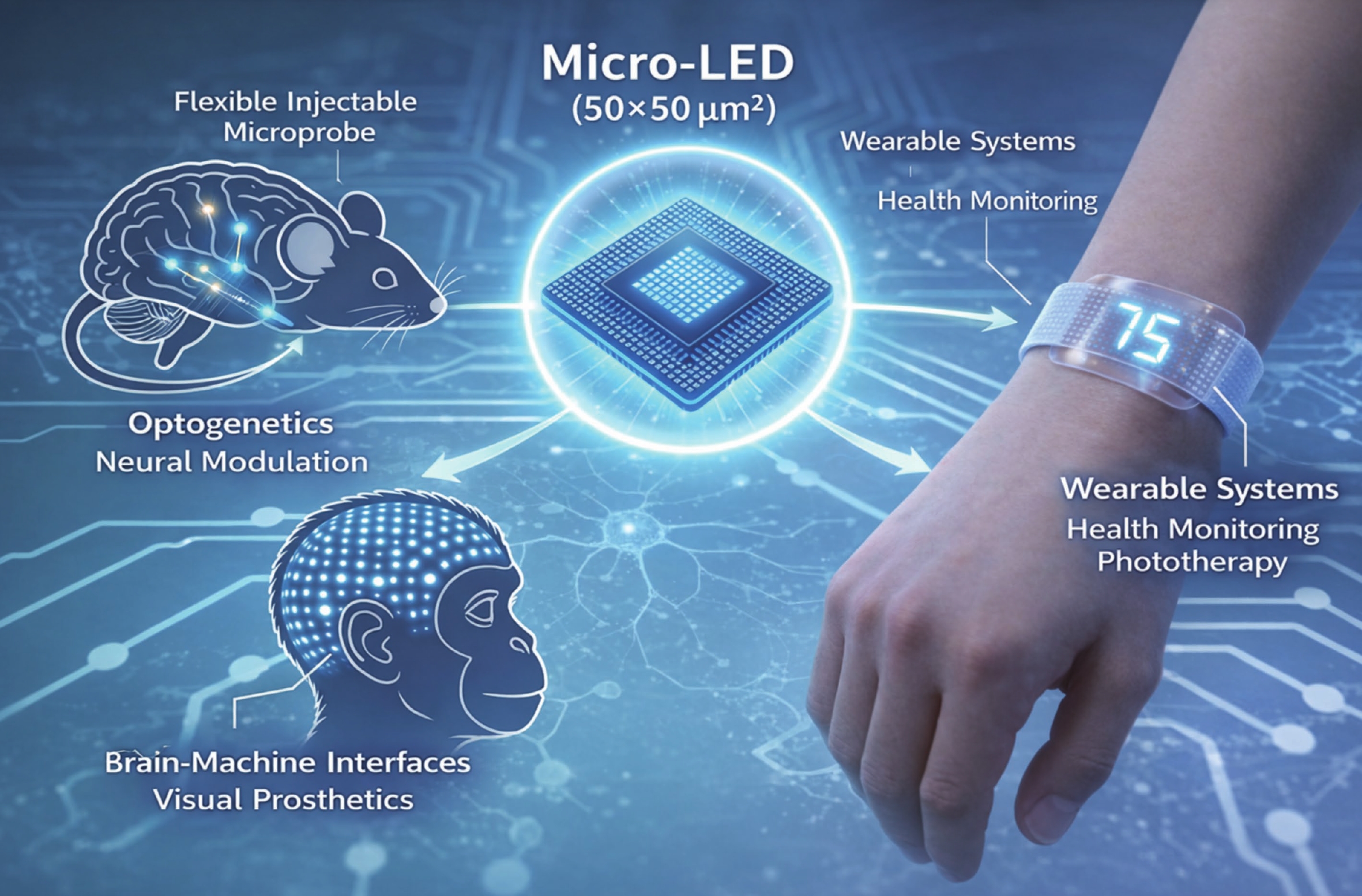
Fig. 1.
(Color online) Biomedical applications of microscale Micro-LED technology.
REVIEWS
Yihan Huang1, §, Huaqi Liu2, §, Yun Lin2, Junwei Hu2, Li Zou1, Shula Chen3, Ouying Chen1, , Xiaoyan Yi4, and Liancheng Wang2,
Corresponding author: Ouying Chen, 1577554027@qq.com; Xiaoyan Yi, spring@semi.ac.cn; Liancheng Wang, liancheng_wang@csu.edu.cn
Abstract: Micro-scale light-emitting diodes (Micro-LEDs) are evolving from display devices to powerful biomedical tools owing to their miniaturization, low power consumption, flexibility and multi-wavelength capability. This review summarizes advances in Micro-LED biomedicine (2024−2026). It introduces core enabling technologies and classifies applications into implantable systems, wearable platforms and brain−computer interfaces, covering optogenetics, cardiac/tumor therapy, epidermal healthcare, visual prostheses and all-optical neural interfaces. Key challenges including biocompatibility, heat dissipation and packaging are discussed. Prospects such as closed-loop intelligent systems, degradable devices and clinical translation are proposed. This review highlights Micro-LEDs’ great potential for next-generation precision medicine.
Keywords: Micro-LED, optogenetics, implantable biomedical device, wearable phototherapy, brain−computer computer interface
| [1] |
Lee H E, Shin J H, Park J H, et al. Micro light-emitting diodes for display and flexible biomedical applications. Adv Funct Mater, 2019, 29(24): 1808075 doi: 10.1002/adfm.201808075
|
| [2] |
Olivier F, Tirano S, Dupré L, et al. Influence of size-reduction on the performances of GaN-based micro-LEDs for display application. J Lumin, 2017, 191: 112 doi: 10.1016/j.jlumin.2016.09.052
|
| [3] |
Hwangbo S, Hu L , Hoang A T, et al. Wafer-scale monolithic integration of full-colour micro-LED display using MoS2 transistor. Nat Nanotechnol, 2022, 17(5): 500
|
| [4] |
Won S M, Cai L, Gutruf P, et al. Wireless and battery-free technologies for neuroengineering. Nat Biomed Eng, 2023, 7(4): 405. doi: 10.1038/s41551-021-00683-3
|
| [5] |
Lu L Y, Yang Z J, Meacham K, et al. Biodegradable monocrystalline silicon photovoltaic microcells as power supplies for transient biomedical implants. Adv Energy Mater, 2018, 8(16): 1703035 doi: 10.1002/aenm.201703035
|
| [6] |
Mukunda D C, Rodrigues J, Joshi V K, et al. A comprehensive review on LED-induced fluorescence in diagnostic pathology. Biosens Bioelectron, 2022, 209: 114230 doi: 10.1016/j.bios.2022.114230
|
| [7] |
Kim T I, McCall J G, Jung Y H, et al. Injectable, cellular-scale optoelectronics with applications for wireless optogenetics. Science, 2013, 340(6129): 211 doi: 10.1126/science.1232437
|
| [8] |
Kim K, Vöröslakos M, Seymour J P, et al. Artifact-free and high-temporal-resolution in vivo opto-electrophysiology with microLED optoelectrodes. Nat Commun, 2020, 11: 2063 doi: 10.1038/s41467-020-15769-w
|
| [9] |
Lee H E, Lee S H, Jeong M, et al. Trichogenic photostimulation using monolithic flexible vertical AlGaInP light-emitting diodes. ACS Nano, 2018, 12(9): 9587 doi: 10.1021/acsnano.8b05568
|
| [10] |
Aravanis A M, Wang L P, Zhang F, et al. An optical neural interface: in vivo control of rodent motor cortex with integrated fiberoptic and optogenetic technology. J Neural Eng, 2007, 4(3): S143 doi: 10.1088/1741-2560/4/3/S02
|
| [11] |
Tye K M, Prakash R, Kim S Y. Amygdala circuitry mediating reversible and bidirectional control of anxiety. Nature. 2011, 471(7338), 358
|
| [12] |
Lee H , Kim E , Lee Y , et al. Toward all-day wearable health monitoring: An ultralow-power, reflective organic pulse oximetry sensing patch. Sci Adv, 2018, 4(11): eaas9530
|
| [13] |
Sekitani T, Nakajima H, Maeda H, et al. Stretchable active-matrix organic light-emitting diode display using printable elastic conductors. Nat Mater, 2009, 8(6): 494 doi: 10.1038/nmat2459
|
| [14] |
Yamagishi K, Kirino I, Takahashi I, et al. Tissue-adhesive wirelessly powered optoelectronic device for metronomic photodynamic cancer therapy. Nat Biomed Eng, 2019, 3(1): 27 doi: 10.1038/s41551-018-0261-7
|
| [15] |
Zhou B R, Zhan T, Huang J P, et al. Wirelessly operated, implantable flexible optoelectrical probes for optogenetics neural stimulation. IEEE Photonics Technol Lett, 2023, 35(5): 233 doi: 10.1109/LPT.2023.3235899
|
| [16] |
McCall J G, Kim T I, Shin G, et al. Fabrication and application of flexible, multimodal light-emitting devices for wireless optogenetics. Nat Protoc, 2013, 8(12): 2413 doi: 10.1038/nprot.2013.158
|
| [17] |
Abrantes M, Pereira T, Silva P, et al. Small form factor implantable neural probe with efficient flip chip μLED for in vivo optogenetics. Biomed Microdevices, 2025, 27(2): 24 doi: 10.1007/s10544-025-00754-1
|
| [18] |
Elwassif M M, Kong Q J, Vazquez M, et al. Bio-heat transfer model of deep brain stimulation-induced temperature changes. J Neural Eng, 2006, 3(4): 306 doi: 10.1088/1741-2560/3/4/008
|
| [19] |
Ji Y P, Liu C Z, Li J W, et al. A photothermal modelling approach for micro-LED arrays in wireless optogenetics. Int J Distrib Sens Netw, 2024, 2024(1): 5562848 doi: 10.1155/2024/5562848
|
| [20] |
Lee Y, Chung J W, Lee G H, et al. Standalone real-time health monitoring patch based on a stretchable organic optoelectronic system. Sci Adv, 2021, 7(23): eabg9180
|
| [21] |
Qiao K Y, Wu G, Cao Y, et al. A wireless, implantable, and stretchable device for optogenetic modulation (WISDOM) in the central and peripheral nervous systems. Adv Opt Mater, 2026, 14(10): e03813 doi: 10.1002/adom.202503813
|
| [22] |
Lee G H, Jeon C, Mok J W, et al. Smart wireless near-infrared light emitting contact lens for the treatment of diabetic retinopathy. Adv Sci, 2022, 9(9): 2103254 doi: 10.1002/advs.202103254
|
| [23] |
Dieter A, Klein E, Keppeler D, et al. μLED-based optical cochlear implants for spectrally selective activation of the auditory nerve. EMBO Mol Med, 2020, 12(8): e12387 doi: 10.15252/emmm.202012387
|
| [24] |
Huang H, He L T, Cai S R, et al. Recent developments of micro-scaled LED-based technologies and mechanisms in the fields of healthcare. Adv Photon Nexus, 2025, 4(5): 054001 doi: 10.1117/1.apn.4.5.054001
|
| [25] |
Wang C X, Yu Q, Li M, et al. Challenges and opportunities in next-generation LED therapeutic devices. Light Sci Appl, 2025, 14: 319 doi: 10.1038/s41377-025-01990-z
|
| [26] |
Li H, Lu D Y, Liao H O, et al. A mesoscale optogenetics system for precise and robust stimulation of the primate cortex. Neuron, 2026, 114(6): 1006 doi: 10.1016/j.neuron.2025.12.001
|
| [27] |
Yan A Z, Yan J L, Shen P H, et al. A flexible digital compute-in-memory chip for edge intelligence. Nature, 2026, 649(8099): 1165 doi: 10.1038/s41586-025-09931-x
|
| [28] |
Zhou B R, Wang G H, et al. Linear flip-chipped resonant-cavity green μLEDs arrays for low-crosstalk optogenetic probes with low damage. Appl Phys Rev, 2025, 12: 011418 doi: 10.1063/5.0237052
|
| [29] |
Lu L Y, Gutruf P, Xia L, et al. Wireless optoelectronic photometers for monitoring neuronal dynamics in the deep brain. Proc Natl Acad Sci U S A, 2018, 115(7): E1374 doi: 10.1073/pnas.1718721115
|
| [30] |
Jeong J W, McCall J G, Shin G, et al. Wireless optofluidic systems for programmable in vivo pharmacology and optogenetics. Cell, 2015, 162(3): 662 doi: 10.1016/j.cell.2015.06.058
|
| [31] |
Park S I, Brenner D S, Shin G, et al. Soft, stretchable, fully implantable miniaturized optoelectronic systems for wireless optogenetics. Nat Biotechnol, 2015, 33(12): 1280 doi: 10.1038/nbt.3415
|
| [32] |
Han Y, Wei X M, Chen G J, et al. Optogenetic stimulation of the cardiac vagus nerve to promote heart regenerative repair after myocardial infarction. Int J Biol Sci, 2024, 20(6): 2072 doi: 10.7150/ijbs.89883
|
| [33] |
Choi J, Lee I S, Lee J S, et al. Implantable micro-scale LED device guided photodynamic therapy to potentiate antitumor immunity with mild visible light. Biomater Res, 2022, 26: 56 doi: 10.1186/s40824-022-00305-2
|
| [34] |
Zhou M J, Yan B, Yang F K, et al. A wireless optogenetic stimulation system for long-term function evaluation of mice forelimb with sub-nerve resolution. Nat Commun, 2025, 16: 8702 doi: 10.1038/s41467-025-63746-y
|
| [35] |
Wu M Z, Yang Y Y, Zhang J L, et al. Patterned wireless transcranial optogenetics generates artificial perception. Nat Neurosci, 2026, 29(1): 234 doi: 10.1038/s41593-025-02127-6
|
| [36] |
Greer R, Verdier A, Butt E, et al. Chronically implantable μLED arrays for optogenetic cortical surface stimulation in mice. Nat Commun, 2026, 17: 878 doi: 10.1038/s41467-025-68191-5
|
| [37] |
Deng S L, Harlaar N, Zhang J, et al. Smart optogenetics for real-Time automated control of cardiac electrical activity. Adv Sci, 2026, 13(20): e22759 doi: 10.1002/advs.202522759
|
| [38] |
Mattis J, Tye K M, Ferenczi E A, et al. Principles for applying optogenetic tools derived from direct comparative analysis of microbial opsins. Nat Meth, 2012, 9(2): 159 doi: 10.1038/nmeth.1808
|
| [39] |
Szarowski D H, Andersen M D, Retterer S, et al. Brain responses to micro-machined silicon devices. Brain Res, 2003, 983(1/2): 23 doi: 10.1016/s0006-8993(03)03023-3
|
| [40] |
Lee H E. Novel bio-optoelectronics enabled by flexible micro light-emitting diodes. Electronics, 2021, 10(21): 2644 doi: 10.3390/electronics10212644
|
| [41] |
Sekiguchi H, Matsuhira H, Kanda R, et al. Adhesionable flexible GaN-based microLED array film to brain surface for in vivo optogenetic stimulation. Appl Phys Express, 2022, 15(4): 046501 doi: 10.35848/1882-0786/ac5ba3
|
| [42] |
Mao D C, Sun F, Driscoll B, et al. Close-packed dual-color micro-LEDs enable cortical-layer-specific bidirectional in vivo optogenetic electrophysiology. Cell Rep Phys Sci, 2023, 4(12): 101702 doi: 10.1016/j.xcrp.2023.101702
|
| [43] |
Huang S, Yang C, Liu Z Q, et al. Wireless implantable phototherapy device for oral inflammation repair. 2021 IEEE 16th International Conference on Nano/Micro Engineered and Molecular Systems (NEMS), 2021: 503
|
| [44] |
Luan L, Wei X L, Zhao Z T, et al. Ultraflexible nanoelectronic probes form reliable, glial scar–free neural integration. Sci Adv, 2017, 3(2): e1601966 doi: 10.1126/sciadv.1601966
|
| [45] |
Cai X, Zhang H J, Wei P H, et al. A wireless optoelectronic probe to monitor oxygenation in deep brain tissue. Nat Photonics, 2024, 18(5): 492 doi: 10.1038/s41566-023-01374-y
|
| [46] |
Vöröslakos M, Kim K, Slager N, et al. HectoSTAR μLED optoelectrodes for large-scale, high-precision in vivo opto-electrophysiology. Adv Sci, 2022, 9(18): 2105414 doi: 10.1002/advs.202105414
|
| [47] |
Oh S, Ruiz J R L, Kim K, et al. Fiber-less, large-scale opto-electrophysiology interface for micro-Scale interaction of multiple brain regions. IEEE Trans Biomed Eng, 2025
|
| [48] |
Okui A, Moriya K, Kai N, et al. Multipoint MicroLED probes for selective neural stimulation in optogenetics. Jpn J Appl Phys, 2025, 64(4): 048005 doi: 10.35848/1347-4065/adc863
|
| [49] |
Kitade T, Kanda R, Matsui K, et al. Optimization of gate structure for damageless MicroLED thin films in optogenetic applications. Phys Status Solidi A, 2024, 221(21): 2300834 doi: 10.1002/pssa.202300834
|
| [50] |
Entcheva E, Kay M W. Cardiac optogenetics: A decade of enlightenment. Nat Rev Cardiol, 2021, 18(5): 349 doi: 10.1038/s41569-020-00478-0
|
| [51] |
Alekseev A, Hunniford V, Zerche M, et al. Efficient and sustained optogenetic control of sensory and cardiac systems. Nat Biomed Eng, 2026, 10(2): 277 doi: 10.1101/2023.11.17.567544
|
| [52] |
Gutruf P, Yin R T, Lee K B, et al. Wireless, battery-free, fully implantable multimodal and multisite pacemakers for applications in small animal models. Nat Commun, 2019, 10: 5742 doi: 10.1038/s41467-019-13637-w
|
| [53] |
Lee J H, Lee C G, Kim M S, et al. Deeply implantable, shape-morphing, 3D microLEDs for pancreatic cancer therapy. Adv Mater, 2025, 37(49): 2411494. doi: 10.1002/adma.202411494
|
| [54] |
Nam K Y, Kim M S, An J, et al. Human-centric, three dimensional micro light-emitting diodes for cosmetic and medical phototherapy. Adv Sci, 2025, 12(10): 2416716 doi: 10.1002/advs.202416716
|
| [55] |
Goo J, Lee J S, Park J, et al. Dual delivery of light/prodrug nanoparticles using tumor-implantable micro light-emitting diode on an optofluidic system for combinational Glioma Treatment. ACS Nano, 2025, 19(18): 17393 doi: 10.1021/acsnano.4c17421
|
| [56] |
Kim J, Lee H K, Park J, et al. Implantable MicroLED-mediated chemo-photodynamic combination therapy for glioma treatment. Adv Funct Mater, 2024, 34(30): 2316386 doi: 10.1002/adfm.202316386
|
| [57] |
Mansour R, Yalagala B, Vikas V, et al. A flexible wireless system for prospective photodynamic therapy applications. Opto-Electron Adv, 2026, 9(7): 250275 doi: 10.29026/oea.2026.250275
|
| [58] |
Yang J C, Mun J, Kwon S Y, et al. Electronic skin: recent progress and future prospects for skin-attachable devices for health monitoring, robotics, and prosthetics. Adv Mater, 2019, 31(48): 1904765 doi: 10.1002/adma.201904765
|
| [59] |
Kim J, Salvatore G A, Araki H, et al. Battery-free, stretchable optoelectronic systems for wireless optical characterization of the skin. Sci Adv, 2016, 2(8): e1600418 doi: 10.1126/sciadv.1600418
|
| [60] |
Lee J H, Ahn Y, Lee H E, et al. Wearable surface-lighting micro-light-emitting diode patch for melanogenesis inhibition. Adv Healthc Mater, 2023, 12(1): 2201796 doi: 10.1002/adhm.202201796
|
| [61] |
Cho E H, An J, Chi Y, et al. Wearable textile-based phototherapy platform with customized NIR OLEDs toward non-invasive hair loss treatment. Nat Commun, 2026, 17: 1536 doi: 10.1038/s41467-025-68258-3
|
| [62] |
Blebea C M, Ujvary L P, Necula V, et al. Current concepts and future trends in increasing the benefits of cochlear implantation: A narrative review. Medicina, 2022, 58(6): 747 doi: 10.3390/medicina58060747
|
| [63] |
Lee J H, Kim M S, Lee S H, et al. Flexible, surface-lighting MicroLED skin patch for multiple human skincare. Biomaterials, 2025, 318: 123139 doi: 10.1016/j.biomaterials.2025.123139
|
| [64] |
Kipke D R, Pellinen D S, Vetter R J. Advanced neural implants using thin-film polymers. 2002 IEEE International Symposium on Circuits and Systems (ISCAS), 2002: 173
|
| [65] |
Gu W, Wang L D, Wang X Y, et al. Large-scale, high-density MicroLED array-based optogenetic device for neural stimulation and recording. Nano Lett, 2024, 24(48): 15252 doi: 10.1021/acs.nanolett.4c03645
|
| [66] |
ETH Zurich, UZH, MOSIAC: multimodal optogenetic subcellular neural interfacing array on CMOS with multi-color Micro-OLEDs. Project launch , 2025
|
| [67] |
Weiland J D, Cho A K, Humayun M S. Retinal prostheses: current clinical results and future needs. Ophthalmology, 2011, 118(11): 2227 doi: 10.1016/j.ophtha.2011.08.042
|
| [68] |
Chung S H, Kim C, Kim Y K, et al. An array of silicon dual microneedle electrodes integrated with mini-LEDs for electrophysiological recording and simultaneous application of electrical and optical stimuli to the retina for artificial vision. 2025 IEEE 38th International Conference on Micro Electro Mechanical Systems (MEMS), 2025: 509
|
| [69] |
Zheng L, Dong Y D, Tian S, et al. A calibration-free c-VEP based BCI employing narrow-band random sequences. J Neural Eng, 2024, 21(2): 026023 doi: 10.1088/1741-2552/ad3679
|
| [70] |
Hou B B, Yin J, Zhao Y K, et al. Multifunctional micro-devices for neuromorphic computing, display and energy saving. npj Unconv Comput, 2026, 3: 9 doi: 10.1038/s44335-026-00058-4
|
| [71] |
Stark E, Koos T, Buzsáki G. Diode probes for spatiotemporal optical control of multiple neurons in freely moving animals. J Neurophysiol, 2012, 108(1): 349 doi: 10.1152/jn.00153.2012
|
| [72] |
Jeong H, Baek J, Kim S, et al. Biocompatibility assessment of encapsulation materials for micro LED biomedical applications: in vivo and in vitro studies. Biomed Eng Lett, 2026, 16(1): 117 doi: 10.1007/s13534-025-00516-1
|
| [73] |
Lee H E, Shin J H, Lee S H, et al. Flexible micro light-emitting diodes for wearable applications. Light-Emitting Devices, Materials, and Applications, 2019: 14
|
| [74] |
Amorepacific, Amorepacific Showcases Innovative Technologies at CES 2026, Beijing Weekly, 2026 (in Chinese)
|
| [75] |
LG Lifestyle & Health , LG Lifestyle & Health Wearable Beauty Device Wins CES 2026 Innovation Award, National Business Daily, 2025 (in Chinese)
|
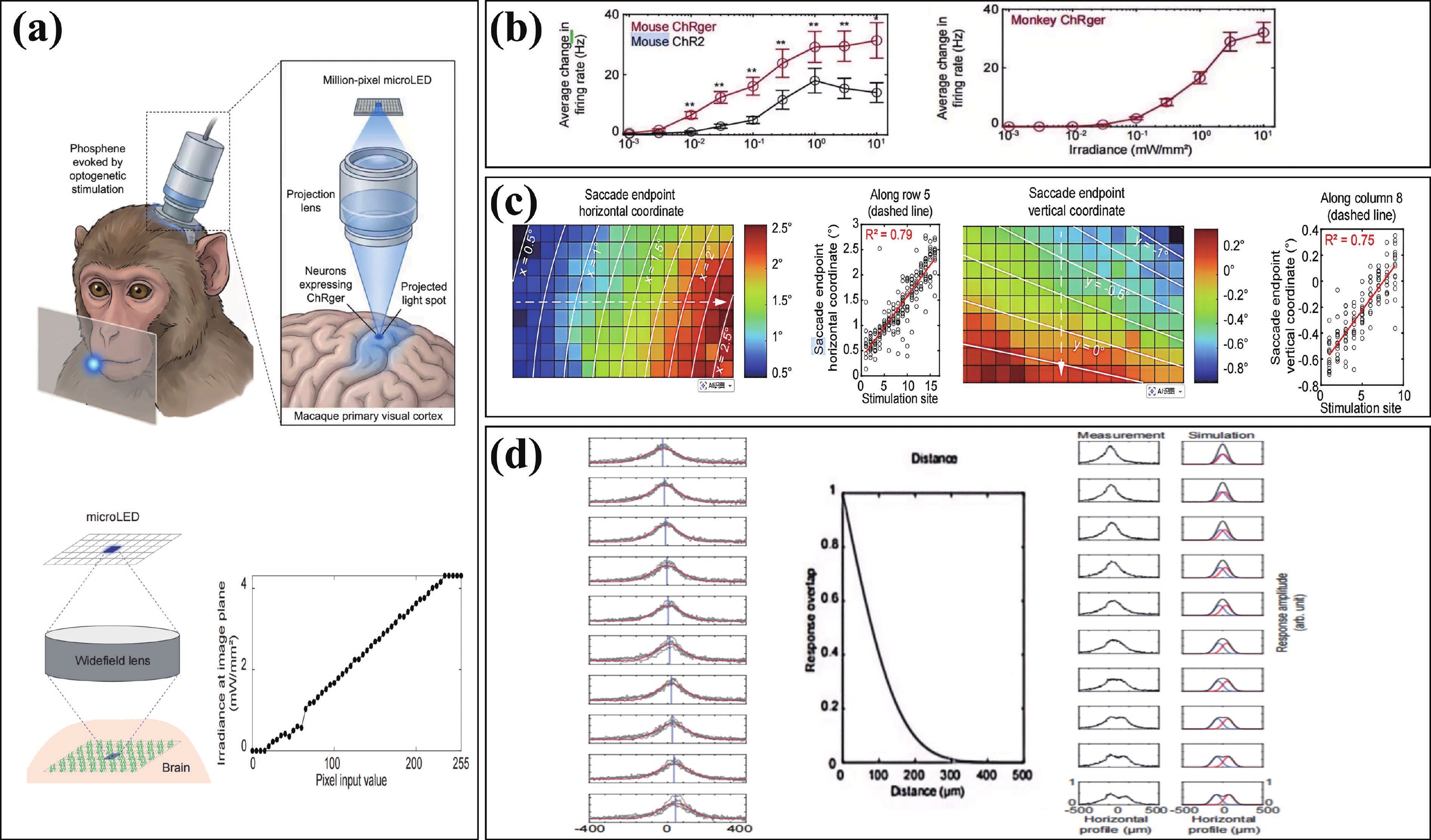
Table 1. comparison of mainstream optoelectronic platforms for biomedical optical stimulation.
| Platform | Feature size | Flexibility | Power consumption | Multi-wavelength integration | Implantation compatibility |
| Optical fiber | 100–200 μm diameter | Rigid, non-bendable | High (external laser) | Requires light source replacement, hard to integrate | High invasiveness, physically tethered |
| Conventional LED | Millimeter scale | Rigid, non-conformal | Relatively high | Mostly single wavelength | Too bulky for implantation |
| OLED | Hundreds of micrometers | Good flexibility | Moderate | Stacked structure for multi-color | Poor water/oxygen stability, unsuitable for long-term implantation |
| Laser-based system | Hundreds of micrometers spot | No flexibility, fiber-guided | High | Single wavelength | Requires fiber delivery, invasive |
| Micro-LED | 5–50 μm | Stretchable and bendable | Low (high efficiency in pulse mode) | Multi-wavelength via heterogeneous integration | Minimally invasive/injectable, suitable for long-term implantation |
 DownLoad: CSV
Table 2. Key technological milestones of Micro-LED biomedical applications.
| Year | Milestone event | Technological significance | Representative reference |
| 2013 | Injectable wireless optogenetic probe first proposed | Established the technical paradigm of Micro-LED-based implantable bioelectronics | Kim et al., Science[7] |
| 2015 | Soft, stretchable fully implantable optogenetic system developed | Expanded applications to peripheral nerve and spinal cord modulation | Park et al., Nat. Biotechnol.[31] |
| 2020 | 16-channel optical cochlear implant validated in vivo | Achieved high spectral selectivity for auditory rehabilitation | Dieter et al., EMBO Mol. Med[23] |
| 2024 | Optogenetic vagus nerve stimulation for myocardial regeneration; implantable immuno-photodynamic tumor therapy | Extended to cardiac regenerative medicine and combined cancer immunotherapy | Yuan et al., Int. J. Biol. Sci.[32]; Choi et al., Biomater. Res[33] |
| 2025 | Sub-fascicle resolution peripheral nerve modulation; wireless transcranial optogenetics enabling artificial perception | Realized high-resolution neuromodulation and minimally invasive brain−computer interaction | Zhou et al., Nat. Commun[34]; Wu et al., Nat. Neurosci[35] |
| 2026 | Million-pixel mesoscale optogenetics in macaque cortex; smart closed-loop arrhythmia control platform; 300+ h chronic implantation stability validated | Completed non-human primate validation and system-level intelligent closed-loop breakthrough | Li et al., Neuron[26]; Greer et al., Nat. Commun[36]; Deng et al., Adv. Sci[37] |
DownLoad: CSV
Table 3. Dimensional characteristics of representative biomedical Micro-LED devices.
| Advantages | Traditional fiber/LED | Micro-LED | Biomedical significance |
| Tissue damage | Diameter 100–200 μm, requires puncture tract | Thickness <10 μm, injectable implantation | Reduced neuronal loss and gliosis |
| Spatial precision | Millimeter-scale light diffusion | Micrometer-scale spot (<50 μm) | Targeting individual neurons or subcellular structures |
| Multi-channel density | Single channel or low density | >500 PPI array integration | High-resolution neuromodulation |
| Implantation site | Limited to deep brain nuclei | Can cover cortical surface, peripheral nerves | Extends to dynamic tissues like spinal cord, heart |
DownLoad: CSV
Table 4. Overview of mainstream stretchable design strategies for Micro-LED devices.
| Research work | Device type | Device size | Total thickness | Total weight | Ref. |
| Kim Science 2013 | Injectable optogenetic probe | 50 × 50 μm² | ~20 μm | 29 mg | [7] |
| Lee Sci Adv 2021 | Skin-like health patch | Pixel size N/A | 15 μm | Powered by 3.8 V battery | [20] |
| Lu PNAS 2018 | Wireless fluorescence photometer | µ-ILED + µ-IPD | ~150 μm | 29 mg | [29] |
| Dieter EMBO 2020 | Optical cochlear implant | 60 × 60 μm² | On flexible substrate | – | [23] |
DownLoad: CSV
Table 5. Overview of mainstream stretchable design strategies for Micro-LED devices.
| Strategy | Principle | Representative | Stretchability |
| Wavy/Buckled structure | Pre-stretch substrate, then release to form wavy interconnects | Lee Sci Adv 2021[20] | Stable operation under 30% strain |
| Bioinspired 3D helical interconnect structure | Helical architecture mimicking the tendril mechanics of climbing plants | Adv. Opt Mat 2026[21] | Stretchability up to 91%, Young’s modulus of 3.58MPa |
| Serpentine interconnects | Design curved metal lines to absorb strain | Kim Science 2013[7] | Suitable for low-density arrays |
| Island-bridge structure | Rigid device islands + flexible interconnect bridges | Park Nat Biotechnol 2015[31] | Full functionality under 50% strain |
| Intrinsically stretchable materials | Conductive polymers or liquid metals | Advanced research stage | >100% stretch potential |
DownLoad: CSV
Table 6. Implementation strategies for multi-wavelength Micro-LED optogenetic stimulation.
| Implementation method | Principle | Advantages | Limitations | Representative work |
| Heterogeneous integration | Transferring µ-ILEDs of different materials (GaN blue, GaAs red) onto the same substrate | High spectral purity, individually addressable | Complex process | Kim Science 2013[7] |
| Fluorescence conversion | Blue µ-ILED combined with phosphor/quantum dots | Simple process, scalable | Conversion efficiency, spectral broadening | Kim Science 2013 (Green conversion)[7] |
| Homogeneous multi-QW | Designing multiple emission colors on a single epi-wafer | Monolithic integration, high density | High material growth difficulty | Cell Reports Physical Science[42] |
DownLoad: CSV
Table 7. Overview of mainstream wireless power transfer schemes for implantable Micro-LED biomedical systems.
| Scheme | Principle | Operate frequency | Power output | Application scenario | Representative work |
| RF energy harvesting | Near-field/far-field RF coupling | 910 MHz | 4.08 mW (at 1 m distance) | Freely moving small animals | Kim Science 2013[7] |
| Near-field magnetic coupling | Resonant inductive coupling | 13.56 MHz | Adjustable | Implantable deep devices | Park oral inflammation device[43] |
| Ultrasound power transfer | Piezoelectric transducer | MHz range | Under development | Deep tissues | University of California, Berkeley[25] |
| Photovoltaic power | NIR light illuminating an implanted PV cell | – | – | Conceptual stage | Lu L Y Adv Energy Mater 2018[5] |
DownLoad: CSV
Table 8. comparison of packaging materials for biomedical Micro-LED implant systems.
| Material | Advantages | Limitations | Application example |
| PDMS | Flexible, breathable, easy to process | Moderate barrier to moisture/oxygen | Encapsulation layer in Kim Science 2013[7] |
| Parylene-C | Vapor-deposited, conformal, FDA-approved | Internal stress, adhesion issues | Sekiguchi flexible arrays[41] |
| Ecoflex | Extremely high elasticity | Low mechanical strength | Stretchable patches[31] |
| Kapton/PI | High-temperature resistance, compatible with photolithography | Higher stiffness | Probe substrate[29] |
| Silk fibroin | Biodegradable, temporary fixation | Controllable dissolution time | Injection-assist layer[7] |
DownLoad: CSV
Table 9. Core design principles of implantable Micro-LED systems.
| Design dimension | Key requirements | Implementation strategies | Representative works |
| Miniaturization | Cellular scale (<100 μm), ultra-thin (<20 μm) | Transfer printing, laser lift-off | Kim Science 2013[7] |
| Flexibility/stretchability | Match tissue modulus, tolerate dynamic strain | Island-bridge structures, wavy interconnects | Park Nat Biotechnol 2015[31] |
| Thermal management | Temperature rise <1−2 °C | Miniaturized heat sinking, FEM optimization | Greer Nat Commun 2026[36] |
| Wireless power | Break physical tethers, enable free behavior | RF harvesting, magnetic coupling | Multiple works[15, 43] |
| Long-term packaging | >3 months stable function, low immune response | Parylene-C, PDMS multi-layer encapsulation | Greer Nat Commun 2026[36] |
| Multi-channel density | High spatial resolution, independent addressing | Matrix addressing, CMOS integration | Lingang Lab Neuron 2026[26] |
DownLoad: CSV
Table 10. Typical challenges and engineering strategies for epidermal wireless oximeter systems.
| Challenge | Specific problem | Solution strategy |
| Skin conformability | Motion artifacts affect signal quality | Ultra-thin flexible substrate, stretchable interconnects |
| Power consumption | Energy demands for long-term continuous monitoring | Low-power Micro-LEDs, wireless power transfer |
| Signal accuracy | Consistency with clinical-grade devices | Multi-wavelength compensation, AI denoising |
| Multi-parameter integration | Covering multiple physiological indices in a single device | Time multiplexing, multi-spectral design |
DownLoad: CSV
Table 11. Comparison of anti-melanogenic effects between SMicro-LED and traditional LED phototherapy devices.
| Measured indicator | SMicro-LED effect | Comparison with traditional LED |
| Melanin content | Significantly reduced | Superior to traditional LED |
| Melan-A | Significantly down regulated | Superior to traditional LED |
| Tyrosinase activity | Significantly inhibited | Superior to traditional LED |
| MITF transcription factor | Significantly down regulated | Superior to traditional LED |
DownLoad: CSV
Table 12. Summary of wearable Micro-LED applications for cutaneous and sensory rehabilitation.
| Application area | Target tissue | Micro-LED wavelength | Key mechanism |
| Hair growth | Hair follicle | Red ~650 nm | Wnt/β-catenin pathway activation[25] |
| Skin lightening | Melanocytes | Specific wavelengths | MITF/Tyrosinase inhibition[63] |
| Diabetic retinopathy | Retinal vessels | Far-red/NIR | Reduced vascular hyperpermeability[22] |
| Oral inflammation | Gingival tissue | NIR 808 nm | Photobiomodulation promoting repair[43] |
| Auditory rehabilitation | Spiral ganglion neurons | Blue ~470 nm | Light-sensitive protein activation[23] |
DownLoad: CSV
Table 13. Comparison of mainstream wireless power transfer schemes for implantable biomedical Micro-LED systems.
| Scheme | Advantages | Limitations | Representative work |
| RF Energy harvesting | Long range (meter-scale), mature tech | Power decay with distance, tissue absorption | Kim Science 2013[7] |
| Near-field magnetic coupling | High efficiency, high power | Short range (cm-scale), alignment sensitive | Park oral device[43] |
| Ultrasound | Deep penetration, high safety | Large transducer size, efficiency needs improvement | UC Berkeley team[25] |
| Photovoltaic | Potential for infinite power | Requires external light, limited depth | Conceptual[5] |
DownLoad: CSV
Table 14. Multimodal functional modules, integration strategies and application values for Micro-LED neural interfaces.
| Functional module | Integration method | Application value |
| Microelectrode array | Monolithic integration with Micro-LEDs | Real-time recording of stimulation effects, closed-loop control |
| Microfluidic channel | Lamination or sidewall integration | Local drug delivery, gene therapy |
| Biochemical sensor | Functionalized coating or integrated sensor | Monitoring neurotransmitters, pH, oxygen tension |
| Temperature sensor | Metal resistor or thermocouple | Thermal safety management, tissue status monitoring |
DownLoad: CSV
Table 15. Key dimensions and implementation approaches for personalized Micro-LED phototherapy.
| Dimension | Personalized parameters | Implementation method |
| Wavelength | Tailored to photosensitizer/drug absorption peak | Multi-wavelength Micro-LED array, tunable wavelength |
| Dose | Tailored to lesion depth, size | Adjustable optical power, programmable pulse patterns |
| Timing | Tailored to circadian rhythm, treatment phase | Programmable stimulation sequences, closed-loop feedback |
| Spatial | Tailored to lesion shape | High-density array, spatial light modulation |
DownLoad: CSV
Table 16. Five-to-ten-year development roadmap for biomedical Micro-LED technology.
| Time frame | Key Technological breakthroughs | Representative applications |
| Short-term (1−3 years) | High-density array yield improvement (>95%) standardization of multi-wavelength heterogeneous integration validation of long-term flexible packaging stability (>6 months) | Commercialization of wearable phototherapy products Widespread use in rodent neuroscience research Preclinical studies of optical cochlear implants |
| Medium-term (3−5 years) | Prototype validation of closed-loop intelligent systems Controlled functional lifetime for degradable devices (1−4 weeks) mature multimodal integration platforms | Validation of visual prostheses in macaque models Preclinical studies of wireless pacemakers Clinical studies of diabetic retinopathy phototherapy |
| Long-term (5−10 years) | Fully integrated AI-Micro-LED systems Large-scale single-neuron resolution interfaces Established clinical protocols for personalized phototherapy | Human clinical trials of visual prostheses Market approval of closed-loop epilepsy control systems Clinical application of degradable phototherapy devices |
DownLoad: CSV
| [1] |
Lee H E, Shin J H, Park J H, et al. Micro light-emitting diodes for display and flexible biomedical applications. Adv Funct Mater, 2019, 29(24): 1808075 doi: 10.1002/adfm.201808075
|
| [2] |
Olivier F, Tirano S, Dupré L, et al. Influence of size-reduction on the performances of GaN-based micro-LEDs for display application. J Lumin, 2017, 191: 112 doi: 10.1016/j.jlumin.2016.09.052
|
| [3] |
Hwangbo S, Hu L , Hoang A T, et al. Wafer-scale monolithic integration of full-colour micro-LED display using MoS2 transistor. Nat Nanotechnol, 2022, 17(5): 500
|
| [4] |
Won S M, Cai L, Gutruf P, et al. Wireless and battery-free technologies for neuroengineering. Nat Biomed Eng, 2023, 7(4): 405. doi: 10.1038/s41551-021-00683-3
|
| [5] |
Lu L Y, Yang Z J, Meacham K, et al. Biodegradable monocrystalline silicon photovoltaic microcells as power supplies for transient biomedical implants. Adv Energy Mater, 2018, 8(16): 1703035 doi: 10.1002/aenm.201703035
|
| [6] |
Mukunda D C, Rodrigues J, Joshi V K, et al. A comprehensive review on LED-induced fluorescence in diagnostic pathology. Biosens Bioelectron, 2022, 209: 114230 doi: 10.1016/j.bios.2022.114230
|
| [7] |
Kim T I, McCall J G, Jung Y H, et al. Injectable, cellular-scale optoelectronics with applications for wireless optogenetics. Science, 2013, 340(6129): 211 doi: 10.1126/science.1232437
|
| [8] |
Kim K, Vöröslakos M, Seymour J P, et al. Artifact-free and high-temporal-resolution in vivo opto-electrophysiology with microLED optoelectrodes. Nat Commun, 2020, 11: 2063 doi: 10.1038/s41467-020-15769-w
|
| [9] |
Lee H E, Lee S H, Jeong M, et al. Trichogenic photostimulation using monolithic flexible vertical AlGaInP light-emitting diodes. ACS Nano, 2018, 12(9): 9587 doi: 10.1021/acsnano.8b05568
|
| [10] |
Aravanis A M, Wang L P, Zhang F, et al. An optical neural interface: in vivo control of rodent motor cortex with integrated fiberoptic and optogenetic technology. J Neural Eng, 2007, 4(3): S143 doi: 10.1088/1741-2560/4/3/S02
|
| [11] |
Tye K M, Prakash R, Kim S Y. Amygdala circuitry mediating reversible and bidirectional control of anxiety. Nature. 2011, 471(7338), 358
|
| [12] |
Lee H , Kim E , Lee Y , et al. Toward all-day wearable health monitoring: An ultralow-power, reflective organic pulse oximetry sensing patch. Sci Adv, 2018, 4(11): eaas9530
|
| [13] |
Sekitani T, Nakajima H, Maeda H, et al. Stretchable active-matrix organic light-emitting diode display using printable elastic conductors. Nat Mater, 2009, 8(6): 494 doi: 10.1038/nmat2459
|
| [14] |
Yamagishi K, Kirino I, Takahashi I, et al. Tissue-adhesive wirelessly powered optoelectronic device for metronomic photodynamic cancer therapy. Nat Biomed Eng, 2019, 3(1): 27 doi: 10.1038/s41551-018-0261-7
|
| [15] |
Zhou B R, Zhan T, Huang J P, et al. Wirelessly operated, implantable flexible optoelectrical probes for optogenetics neural stimulation. IEEE Photonics Technol Lett, 2023, 35(5): 233 doi: 10.1109/LPT.2023.3235899
|
| [16] |
McCall J G, Kim T I, Shin G, et al. Fabrication and application of flexible, multimodal light-emitting devices for wireless optogenetics. Nat Protoc, 2013, 8(12): 2413 doi: 10.1038/nprot.2013.158
|
| [17] |
Abrantes M, Pereira T, Silva P, et al. Small form factor implantable neural probe with efficient flip chip μLED for in vivo optogenetics. Biomed Microdevices, 2025, 27(2): 24 doi: 10.1007/s10544-025-00754-1
|
| [18] |
Elwassif M M, Kong Q J, Vazquez M, et al. Bio-heat transfer model of deep brain stimulation-induced temperature changes. J Neural Eng, 2006, 3(4): 306 doi: 10.1088/1741-2560/3/4/008
|
| [19] |
Ji Y P, Liu C Z, Li J W, et al. A photothermal modelling approach for micro-LED arrays in wireless optogenetics. Int J Distrib Sens Netw, 2024, 2024(1): 5562848 doi: 10.1155/2024/5562848
|
| [20] |
Lee Y, Chung J W, Lee G H, et al. Standalone real-time health monitoring patch based on a stretchable organic optoelectronic system. Sci Adv, 2021, 7(23): eabg9180
|
| [21] |
Qiao K Y, Wu G, Cao Y, et al. A wireless, implantable, and stretchable device for optogenetic modulation (WISDOM) in the central and peripheral nervous systems. Adv Opt Mater, 2026, 14(10): e03813 doi: 10.1002/adom.202503813
|
| [22] |
Lee G H, Jeon C, Mok J W, et al. Smart wireless near-infrared light emitting contact lens for the treatment of diabetic retinopathy. Adv Sci, 2022, 9(9): 2103254 doi: 10.1002/advs.202103254
|
| [23] |
Dieter A, Klein E, Keppeler D, et al. μLED-based optical cochlear implants for spectrally selective activation of the auditory nerve. EMBO Mol Med, 2020, 12(8): e12387 doi: 10.15252/emmm.202012387
|
| [24] |
Huang H, He L T, Cai S R, et al. Recent developments of micro-scaled LED-based technologies and mechanisms in the fields of healthcare. Adv Photon Nexus, 2025, 4(5): 054001 doi: 10.1117/1.apn.4.5.054001
|
| [25] |
Wang C X, Yu Q, Li M, et al. Challenges and opportunities in next-generation LED therapeutic devices. Light Sci Appl, 2025, 14: 319 doi: 10.1038/s41377-025-01990-z
|
| [26] |
Li H, Lu D Y, Liao H O, et al. A mesoscale optogenetics system for precise and robust stimulation of the primate cortex. Neuron, 2026, 114(6): 1006 doi: 10.1016/j.neuron.2025.12.001
|
| [27] |
Yan A Z, Yan J L, Shen P H, et al. A flexible digital compute-in-memory chip for edge intelligence. Nature, 2026, 649(8099): 1165 doi: 10.1038/s41586-025-09931-x
|
| [28] |
Zhou B R, Wang G H, et al. Linear flip-chipped resonant-cavity green μLEDs arrays for low-crosstalk optogenetic probes with low damage. Appl Phys Rev, 2025, 12: 011418 doi: 10.1063/5.0237052
|
| [29] |
Lu L Y, Gutruf P, Xia L, et al. Wireless optoelectronic photometers for monitoring neuronal dynamics in the deep brain. Proc Natl Acad Sci U S A, 2018, 115(7): E1374 doi: 10.1073/pnas.1718721115
|
| [30] |
Jeong J W, McCall J G, Shin G, et al. Wireless optofluidic systems for programmable in vivo pharmacology and optogenetics. Cell, 2015, 162(3): 662 doi: 10.1016/j.cell.2015.06.058
|
| [31] |
Park S I, Brenner D S, Shin G, et al. Soft, stretchable, fully implantable miniaturized optoelectronic systems for wireless optogenetics. Nat Biotechnol, 2015, 33(12): 1280 doi: 10.1038/nbt.3415
|
| [32] |
Han Y, Wei X M, Chen G J, et al. Optogenetic stimulation of the cardiac vagus nerve to promote heart regenerative repair after myocardial infarction. Int J Biol Sci, 2024, 20(6): 2072 doi: 10.7150/ijbs.89883
|
| [33] |
Choi J, Lee I S, Lee J S, et al. Implantable micro-scale LED device guided photodynamic therapy to potentiate antitumor immunity with mild visible light. Biomater Res, 2022, 26: 56 doi: 10.1186/s40824-022-00305-2
|
| [34] |
Zhou M J, Yan B, Yang F K, et al. A wireless optogenetic stimulation system for long-term function evaluation of mice forelimb with sub-nerve resolution. Nat Commun, 2025, 16: 8702 doi: 10.1038/s41467-025-63746-y
|
| [35] |
Wu M Z, Yang Y Y, Zhang J L, et al. Patterned wireless transcranial optogenetics generates artificial perception. Nat Neurosci, 2026, 29(1): 234 doi: 10.1038/s41593-025-02127-6
|
| [36] |
Greer R, Verdier A, Butt E, et al. Chronically implantable μLED arrays for optogenetic cortical surface stimulation in mice. Nat Commun, 2026, 17: 878 doi: 10.1038/s41467-025-68191-5
|
| [37] |
Deng S L, Harlaar N, Zhang J, et al. Smart optogenetics for real-Time automated control of cardiac electrical activity. Adv Sci, 2026, 13(20): e22759 doi: 10.1002/advs.202522759
|
| [38] |
Mattis J, Tye K M, Ferenczi E A, et al. Principles for applying optogenetic tools derived from direct comparative analysis of microbial opsins. Nat Meth, 2012, 9(2): 159 doi: 10.1038/nmeth.1808
|
| [39] |
Szarowski D H, Andersen M D, Retterer S, et al. Brain responses to micro-machined silicon devices. Brain Res, 2003, 983(1/2): 23 doi: 10.1016/s0006-8993(03)03023-3
|
| [40] |
Lee H E. Novel bio-optoelectronics enabled by flexible micro light-emitting diodes. Electronics, 2021, 10(21): 2644 doi: 10.3390/electronics10212644
|
| [41] |
Sekiguchi H, Matsuhira H, Kanda R, et al. Adhesionable flexible GaN-based microLED array film to brain surface for in vivo optogenetic stimulation. Appl Phys Express, 2022, 15(4): 046501 doi: 10.35848/1882-0786/ac5ba3
|
| [42] |
Mao D C, Sun F, Driscoll B, et al. Close-packed dual-color micro-LEDs enable cortical-layer-specific bidirectional in vivo optogenetic electrophysiology. Cell Rep Phys Sci, 2023, 4(12): 101702 doi: 10.1016/j.xcrp.2023.101702
|
| [43] |
Huang S, Yang C, Liu Z Q, et al. Wireless implantable phototherapy device for oral inflammation repair. 2021 IEEE 16th International Conference on Nano/Micro Engineered and Molecular Systems (NEMS), 2021: 503
|
| [44] |
Luan L, Wei X L, Zhao Z T, et al. Ultraflexible nanoelectronic probes form reliable, glial scar–free neural integration. Sci Adv, 2017, 3(2): e1601966 doi: 10.1126/sciadv.1601966
|
| [45] |
Cai X, Zhang H J, Wei P H, et al. A wireless optoelectronic probe to monitor oxygenation in deep brain tissue. Nat Photonics, 2024, 18(5): 492 doi: 10.1038/s41566-023-01374-y
|
| [46] |
Vöröslakos M, Kim K, Slager N, et al. HectoSTAR μLED optoelectrodes for large-scale, high-precision in vivo opto-electrophysiology. Adv Sci, 2022, 9(18): 2105414 doi: 10.1002/advs.202105414
|
| [47] |
Oh S, Ruiz J R L, Kim K, et al. Fiber-less, large-scale opto-electrophysiology interface for micro-Scale interaction of multiple brain regions. IEEE Trans Biomed Eng, 2025
|
| [48] |
Okui A, Moriya K, Kai N, et al. Multipoint MicroLED probes for selective neural stimulation in optogenetics. Jpn J Appl Phys, 2025, 64(4): 048005 doi: 10.35848/1347-4065/adc863
|
| [49] |
Kitade T, Kanda R, Matsui K, et al. Optimization of gate structure for damageless MicroLED thin films in optogenetic applications. Phys Status Solidi A, 2024, 221(21): 2300834 doi: 10.1002/pssa.202300834
|
| [50] |
Entcheva E, Kay M W. Cardiac optogenetics: A decade of enlightenment. Nat Rev Cardiol, 2021, 18(5): 349 doi: 10.1038/s41569-020-00478-0
|
| [51] |
Alekseev A, Hunniford V, Zerche M, et al. Efficient and sustained optogenetic control of sensory and cardiac systems. Nat Biomed Eng, 2026, 10(2): 277 doi: 10.1101/2023.11.17.567544
|
| [52] |
Gutruf P, Yin R T, Lee K B, et al. Wireless, battery-free, fully implantable multimodal and multisite pacemakers for applications in small animal models. Nat Commun, 2019, 10: 5742 doi: 10.1038/s41467-019-13637-w
|
| [53] |
Lee J H, Lee C G, Kim M S, et al. Deeply implantable, shape-morphing, 3D microLEDs for pancreatic cancer therapy. Adv Mater, 2025, 37(49): 2411494. doi: 10.1002/adma.202411494
|
| [54] |
Nam K Y, Kim M S, An J, et al. Human-centric, three dimensional micro light-emitting diodes for cosmetic and medical phototherapy. Adv Sci, 2025, 12(10): 2416716 doi: 10.1002/advs.202416716
|
| [55] |
Goo J, Lee J S, Park J, et al. Dual delivery of light/prodrug nanoparticles using tumor-implantable micro light-emitting diode on an optofluidic system for combinational Glioma Treatment. ACS Nano, 2025, 19(18): 17393 doi: 10.1021/acsnano.4c17421
|
| [56] |
Kim J, Lee H K, Park J, et al. Implantable MicroLED-mediated chemo-photodynamic combination therapy for glioma treatment. Adv Funct Mater, 2024, 34(30): 2316386 doi: 10.1002/adfm.202316386
|
| [57] |
Mansour R, Yalagala B, Vikas V, et al. A flexible wireless system for prospective photodynamic therapy applications. Opto-Electron Adv, 2026, 9(7): 250275 doi: 10.29026/oea.2026.250275
|
| [58] |
Yang J C, Mun J, Kwon S Y, et al. Electronic skin: recent progress and future prospects for skin-attachable devices for health monitoring, robotics, and prosthetics. Adv Mater, 2019, 31(48): 1904765 doi: 10.1002/adma.201904765
|
| [59] |
Kim J, Salvatore G A, Araki H, et al. Battery-free, stretchable optoelectronic systems for wireless optical characterization of the skin. Sci Adv, 2016, 2(8): e1600418 doi: 10.1126/sciadv.1600418
|
| [60] |
Lee J H, Ahn Y, Lee H E, et al. Wearable surface-lighting micro-light-emitting diode patch for melanogenesis inhibition. Adv Healthc Mater, 2023, 12(1): 2201796 doi: 10.1002/adhm.202201796
|
| [61] |
Cho E H, An J, Chi Y, et al. Wearable textile-based phototherapy platform with customized NIR OLEDs toward non-invasive hair loss treatment. Nat Commun, 2026, 17: 1536 doi: 10.1038/s41467-025-68258-3
|
| [62] |
Blebea C M, Ujvary L P, Necula V, et al. Current concepts and future trends in increasing the benefits of cochlear implantation: A narrative review. Medicina, 2022, 58(6): 747 doi: 10.3390/medicina58060747
|
| [63] |
Lee J H, Kim M S, Lee S H, et al. Flexible, surface-lighting MicroLED skin patch for multiple human skincare. Biomaterials, 2025, 318: 123139 doi: 10.1016/j.biomaterials.2025.123139
|
| [64] |
Kipke D R, Pellinen D S, Vetter R J. Advanced neural implants using thin-film polymers. 2002 IEEE International Symposium on Circuits and Systems (ISCAS), 2002: 173
|
| [65] |
Gu W, Wang L D, Wang X Y, et al. Large-scale, high-density MicroLED array-based optogenetic device for neural stimulation and recording. Nano Lett, 2024, 24(48): 15252 doi: 10.1021/acs.nanolett.4c03645
|
| [66] |
ETH Zurich, UZH, MOSIAC: multimodal optogenetic subcellular neural interfacing array on CMOS with multi-color Micro-OLEDs. Project launch , 2025
|
| [67] |
Weiland J D, Cho A K, Humayun M S. Retinal prostheses: current clinical results and future needs. Ophthalmology, 2011, 118(11): 2227 doi: 10.1016/j.ophtha.2011.08.042
|
| [68] |
Chung S H, Kim C, Kim Y K, et al. An array of silicon dual microneedle electrodes integrated with mini-LEDs for electrophysiological recording and simultaneous application of electrical and optical stimuli to the retina for artificial vision. 2025 IEEE 38th International Conference on Micro Electro Mechanical Systems (MEMS), 2025: 509
|
| [69] |
Zheng L, Dong Y D, Tian S, et al. A calibration-free c-VEP based BCI employing narrow-band random sequences. J Neural Eng, 2024, 21(2): 026023 doi: 10.1088/1741-2552/ad3679
|
| [70] |
Hou B B, Yin J, Zhao Y K, et al. Multifunctional micro-devices for neuromorphic computing, display and energy saving. npj Unconv Comput, 2026, 3: 9 doi: 10.1038/s44335-026-00058-4
|
| [71] |
Stark E, Koos T, Buzsáki G. Diode probes for spatiotemporal optical control of multiple neurons in freely moving animals. J Neurophysiol, 2012, 108(1): 349 doi: 10.1152/jn.00153.2012
|
| [72] |
Jeong H, Baek J, Kim S, et al. Biocompatibility assessment of encapsulation materials for micro LED biomedical applications: in vivo and in vitro studies. Biomed Eng Lett, 2026, 16(1): 117 doi: 10.1007/s13534-025-00516-1
|
| [73] |
Lee H E, Shin J H, Lee S H, et al. Flexible micro light-emitting diodes for wearable applications. Light-Emitting Devices, Materials, and Applications, 2019: 14
|
| [74] |
Amorepacific, Amorepacific Showcases Innovative Technologies at CES 2026, Beijing Weekly, 2026 (in Chinese)
|
| [75] |
LG Lifestyle & Health , LG Lifestyle & Health Wearable Beauty Device Wins CES 2026 Innovation Award, National Business Daily, 2025 (in Chinese)
|





Article views: 13 Times PDF downloads: 2 Times Cited by: 0 Times
Received: 22 May 2026 Revised: 09 July 2026 Online: Accepted Manuscript: 03 August 2026Uncorrected proof: 03 August 2026
| Citation: |
Yihan Huang, Huaqi Liu, Yun Lin, Junwei Hu, Li Zou, Shula Chen, Ouying Chen, Xiaoyan Yi, Liancheng Wang. Micro-LEDs in biomedicine: from implantable optogenetics to intelligent theranostics[J]. Journal of Semiconductors, 2026, In Press. doi: 10.1088/1674-4926/26050037
****
Y H Huang, H Q Liu, Y Lin, J W Hu, L Zou, S L Chen, O Y Chen, X Y Yi, and L C Wang, Micro-LEDs in biomedicine: from implantable optogenetics to intelligent theranostics[J]. J. Semicond., 2026, accepted doi: 10.1088/1674-4926/26050037

|
 Yihan Huang is currently studying at Hunan University of Chinese Medicine. Her primary research focuses on the mechanisms of type H hypertension and atherosclerosis, alongside interdisciplinary research spanning medicine and engineering
 Ouying Chen holds a Ph.D, is a Second-Class Professor and doctoral supervisor, primarily engaged in research on the prevention and nursing care of cardiovascular diseases
 Xiaoyan Yi received her Ph.D. degree from the Institute of Semiconductors, Chinese Academy of Sciences. She is currently a Research Professor at the Institute of Semiconductors, Chinese Academy of Sciences. Her research focuses on wide-bandgap semiconductor materials, novel nitride optoelectronic devices, and functional optoelectronic integrated chip technologies
 Liancheng Wang obtained his Ph.D. and now works as a Professor and doctoral supervisor at Central South University. His research interests focus on GaN-based Micro-LED devices, micro-nano optoelectronic fabrication, and integrated optoelectronic systems for display
| [1] |
Lee H E, Shin J H, Park J H, et al. Micro light-emitting diodes for display and flexible biomedical applications. Adv Funct Mater, 2019, 29(24): 1808075 doi: 10.1002/adfm.201808075
|
| [2] |
Olivier F, Tirano S, Dupré L, et al. Influence of size-reduction on the performances of GaN-based micro-LEDs for display application. J Lumin, 2017, 191: 112 doi: 10.1016/j.jlumin.2016.09.052
|
| [3] |
Hwangbo S, Hu L , Hoang A T, et al. Wafer-scale monolithic integration of full-colour micro-LED display using MoS2 transistor. Nat Nanotechnol, 2022, 17(5): 500
|
| [4] |
Won S M, Cai L, Gutruf P, et al. Wireless and battery-free technologies for neuroengineering. Nat Biomed Eng, 2023, 7(4): 405. doi: 10.1038/s41551-021-00683-3
|
| [5] |
Lu L Y, Yang Z J, Meacham K, et al. Biodegradable monocrystalline silicon photovoltaic microcells as power supplies for transient biomedical implants. Adv Energy Mater, 2018, 8(16): 1703035 doi: 10.1002/aenm.201703035
|
| [6] |
Mukunda D C, Rodrigues J, Joshi V K, et al. A comprehensive review on LED-induced fluorescence in diagnostic pathology. Biosens Bioelectron, 2022, 209: 114230 doi: 10.1016/j.bios.2022.114230
|
| [7] |
Kim T I, McCall J G, Jung Y H, et al. Injectable, cellular-scale optoelectronics with applications for wireless optogenetics. Science, 2013, 340(6129): 211 doi: 10.1126/science.1232437
|
| [8] |
Kim K, Vöröslakos M, Seymour J P, et al. Artifact-free and high-temporal-resolution in vivo opto-electrophysiology with microLED optoelectrodes. Nat Commun, 2020, 11: 2063 doi: 10.1038/s41467-020-15769-w
|
| [9] |
Lee H E, Lee S H, Jeong M, et al. Trichogenic photostimulation using monolithic flexible vertical AlGaInP light-emitting diodes. ACS Nano, 2018, 12(9): 9587 doi: 10.1021/acsnano.8b05568
|
| [10] |
Aravanis A M, Wang L P, Zhang F, et al. An optical neural interface: in vivo control of rodent motor cortex with integrated fiberoptic and optogenetic technology. J Neural Eng, 2007, 4(3): S143 doi: 10.1088/1741-2560/4/3/S02
|
| [11] |
Tye K M, Prakash R, Kim S Y. Amygdala circuitry mediating reversible and bidirectional control of anxiety. Nature. 2011, 471(7338), 358
|
| [12] |
Lee H , Kim E , Lee Y , et al. Toward all-day wearable health monitoring: An ultralow-power, reflective organic pulse oximetry sensing patch. Sci Adv, 2018, 4(11): eaas9530
|
| [13] |
Sekitani T, Nakajima H, Maeda H, et al. Stretchable active-matrix organic light-emitting diode display using printable elastic conductors. Nat Mater, 2009, 8(6): 494 doi: 10.1038/nmat2459
|
| [14] |
Yamagishi K, Kirino I, Takahashi I, et al. Tissue-adhesive wirelessly powered optoelectronic device for metronomic photodynamic cancer therapy. Nat Biomed Eng, 2019, 3(1): 27 doi: 10.1038/s41551-018-0261-7
|
| [15] |
Zhou B R, Zhan T, Huang J P, et al. Wirelessly operated, implantable flexible optoelectrical probes for optogenetics neural stimulation. IEEE Photonics Technol Lett, 2023, 35(5): 233 doi: 10.1109/LPT.2023.3235899
|
| [16] |
McCall J G, Kim T I, Shin G, et al. Fabrication and application of flexible, multimodal light-emitting devices for wireless optogenetics. Nat Protoc, 2013, 8(12): 2413 doi: 10.1038/nprot.2013.158
|
| [17] |
Abrantes M, Pereira T, Silva P, et al. Small form factor implantable neural probe with efficient flip chip μLED for in vivo optogenetics. Biomed Microdevices, 2025, 27(2): 24 doi: 10.1007/s10544-025-00754-1
|
| [18] |
Elwassif M M, Kong Q J, Vazquez M, et al. Bio-heat transfer model of deep brain stimulation-induced temperature changes. J Neural Eng, 2006, 3(4): 306 doi: 10.1088/1741-2560/3/4/008
|
| [19] |
Ji Y P, Liu C Z, Li J W, et al. A photothermal modelling approach for micro-LED arrays in wireless optogenetics. Int J Distrib Sens Netw, 2024, 2024(1): 5562848 doi: 10.1155/2024/5562848
|
| [20] |
Lee Y, Chung J W, Lee G H, et al. Standalone real-time health monitoring patch based on a stretchable organic optoelectronic system. Sci Adv, 2021, 7(23): eabg9180
|
| [21] |
Qiao K Y, Wu G, Cao Y, et al. A wireless, implantable, and stretchable device for optogenetic modulation (WISDOM) in the central and peripheral nervous systems. Adv Opt Mater, 2026, 14(10): e03813 doi: 10.1002/adom.202503813
|
| [22] |
Lee G H, Jeon C, Mok J W, et al. Smart wireless near-infrared light emitting contact lens for the treatment of diabetic retinopathy. Adv Sci, 2022, 9(9): 2103254 doi: 10.1002/advs.202103254
|
| [23] |
Dieter A, Klein E, Keppeler D, et al. μLED-based optical cochlear implants for spectrally selective activation of the auditory nerve. EMBO Mol Med, 2020, 12(8): e12387 doi: 10.15252/emmm.202012387
|
| [24] |
Huang H, He L T, Cai S R, et al. Recent developments of micro-scaled LED-based technologies and mechanisms in the fields of healthcare. Adv Photon Nexus, 2025, 4(5): 054001 doi: 10.1117/1.apn.4.5.054001
|
| [25] |
Wang C X, Yu Q, Li M, et al. Challenges and opportunities in next-generation LED therapeutic devices. Light Sci Appl, 2025, 14: 319 doi: 10.1038/s41377-025-01990-z
|
| [26] |
Li H, Lu D Y, Liao H O, et al. A mesoscale optogenetics system for precise and robust stimulation of the primate cortex. Neuron, 2026, 114(6): 1006 doi: 10.1016/j.neuron.2025.12.001
|
| [27] |
Yan A Z, Yan J L, Shen P H, et al. A flexible digital compute-in-memory chip for edge intelligence. Nature, 2026, 649(8099): 1165 doi: 10.1038/s41586-025-09931-x
|
| [28] |
Zhou B R, Wang G H, et al. Linear flip-chipped resonant-cavity green μLEDs arrays for low-crosstalk optogenetic probes with low damage. Appl Phys Rev, 2025, 12: 011418 doi: 10.1063/5.0237052
|
| [29] |
Lu L Y, Gutruf P, Xia L, et al. Wireless optoelectronic photometers for monitoring neuronal dynamics in the deep brain. Proc Natl Acad Sci U S A, 2018, 115(7): E1374 doi: 10.1073/pnas.1718721115
|
| [30] |
Jeong J W, McCall J G, Shin G, et al. Wireless optofluidic systems for programmable in vivo pharmacology and optogenetics. Cell, 2015, 162(3): 662 doi: 10.1016/j.cell.2015.06.058
|
| [31] |
Park S I, Brenner D S, Shin G, et al. Soft, stretchable, fully implantable miniaturized optoelectronic systems for wireless optogenetics. Nat Biotechnol, 2015, 33(12): 1280 doi: 10.1038/nbt.3415
|
| [32] |
Han Y, Wei X M, Chen G J, et al. Optogenetic stimulation of the cardiac vagus nerve to promote heart regenerative repair after myocardial infarction. Int J Biol Sci, 2024, 20(6): 2072 doi: 10.7150/ijbs.89883
|
| [33] |
Choi J, Lee I S, Lee J S, et al. Implantable micro-scale LED device guided photodynamic therapy to potentiate antitumor immunity with mild visible light. Biomater Res, 2022, 26: 56 doi: 10.1186/s40824-022-00305-2
|
| [34] |
Zhou M J, Yan B, Yang F K, et al. A wireless optogenetic stimulation system for long-term function evaluation of mice forelimb with sub-nerve resolution. Nat Commun, 2025, 16: 8702 doi: 10.1038/s41467-025-63746-y
|
| [35] |
Wu M Z, Yang Y Y, Zhang J L, et al. Patterned wireless transcranial optogenetics generates artificial perception. Nat Neurosci, 2026, 29(1): 234 doi: 10.1038/s41593-025-02127-6
|
| [36] |
Greer R, Verdier A, Butt E, et al. Chronically implantable μLED arrays for optogenetic cortical surface stimulation in mice. Nat Commun, 2026, 17: 878 doi: 10.1038/s41467-025-68191-5
|
| [37] |
Deng S L, Harlaar N, Zhang J, et al. Smart optogenetics for real-Time automated control of cardiac electrical activity. Adv Sci, 2026, 13(20): e22759 doi: 10.1002/advs.202522759
|
| [38] |
Mattis J, Tye K M, Ferenczi E A, et al. Principles for applying optogenetic tools derived from direct comparative analysis of microbial opsins. Nat Meth, 2012, 9(2): 159 doi: 10.1038/nmeth.1808
|
| [39] |
Szarowski D H, Andersen M D, Retterer S, et al. Brain responses to micro-machined silicon devices. Brain Res, 2003, 983(1/2): 23 doi: 10.1016/s0006-8993(03)03023-3
|
| [40] |
Lee H E. Novel bio-optoelectronics enabled by flexible micro light-emitting diodes. Electronics, 2021, 10(21): 2644 doi: 10.3390/electronics10212644
|
| [41] |
Sekiguchi H, Matsuhira H, Kanda R, et al. Adhesionable flexible GaN-based microLED array film to brain surface for in vivo optogenetic stimulation. Appl Phys Express, 2022, 15(4): 046501 doi: 10.35848/1882-0786/ac5ba3
|
| [42] |
Mao D C, Sun F, Driscoll B, et al. Close-packed dual-color micro-LEDs enable cortical-layer-specific bidirectional in vivo optogenetic electrophysiology. Cell Rep Phys Sci, 2023, 4(12): 101702 doi: 10.1016/j.xcrp.2023.101702
|
| [43] |
Huang S, Yang C, Liu Z Q, et al. Wireless implantable phototherapy device for oral inflammation repair. 2021 IEEE 16th International Conference on Nano/Micro Engineered and Molecular Systems (NEMS), 2021: 503
|
| [44] |
Luan L, Wei X L, Zhao Z T, et al. Ultraflexible nanoelectronic probes form reliable, glial scar–free neural integration. Sci Adv, 2017, 3(2): e1601966 doi: 10.1126/sciadv.1601966
|
| [45] |
Cai X, Zhang H J, Wei P H, et al. A wireless optoelectronic probe to monitor oxygenation in deep brain tissue. Nat Photonics, 2024, 18(5): 492 doi: 10.1038/s41566-023-01374-y
|
| [46] |
Vöröslakos M, Kim K, Slager N, et al. HectoSTAR μLED optoelectrodes for large-scale, high-precision in vivo opto-electrophysiology. Adv Sci, 2022, 9(18): 2105414 doi: 10.1002/advs.202105414
|
| [47] |
Oh S, Ruiz J R L, Kim K, et al. Fiber-less, large-scale opto-electrophysiology interface for micro-Scale interaction of multiple brain regions. IEEE Trans Biomed Eng, 2025
|
| [48] |
Okui A, Moriya K, Kai N, et al. Multipoint MicroLED probes for selective neural stimulation in optogenetics. Jpn J Appl Phys, 2025, 64(4): 048005 doi: 10.35848/1347-4065/adc863
|
| [49] |
Kitade T, Kanda R, Matsui K, et al. Optimization of gate structure for damageless MicroLED thin films in optogenetic applications. Phys Status Solidi A, 2024, 221(21): 2300834 doi: 10.1002/pssa.202300834
|
| [50] |
Entcheva E, Kay M W. Cardiac optogenetics: A decade of enlightenment. Nat Rev Cardiol, 2021, 18(5): 349 doi: 10.1038/s41569-020-00478-0
|
| [51] |
Alekseev A, Hunniford V, Zerche M, et al. Efficient and sustained optogenetic control of sensory and cardiac systems. Nat Biomed Eng, 2026, 10(2): 277 doi: 10.1101/2023.11.17.567544
|
| [52] |
Gutruf P, Yin R T, Lee K B, et al. Wireless, battery-free, fully implantable multimodal and multisite pacemakers for applications in small animal models. Nat Commun, 2019, 10: 5742 doi: 10.1038/s41467-019-13637-w
|
| [53] |
Lee J H, Lee C G, Kim M S, et al. Deeply implantable, shape-morphing, 3D microLEDs for pancreatic cancer therapy. Adv Mater, 2025, 37(49): 2411494. doi: 10.1002/adma.202411494
|
| [54] |
Nam K Y, Kim M S, An J, et al. Human-centric, three dimensional micro light-emitting diodes for cosmetic and medical phototherapy. Adv Sci, 2025, 12(10): 2416716 doi: 10.1002/advs.202416716
|
| [55] |
Goo J, Lee J S, Park J, et al. Dual delivery of light/prodrug nanoparticles using tumor-implantable micro light-emitting diode on an optofluidic system for combinational Glioma Treatment. ACS Nano, 2025, 19(18): 17393 doi: 10.1021/acsnano.4c17421
|
| [56] |
Kim J, Lee H K, Park J, et al. Implantable MicroLED-mediated chemo-photodynamic combination therapy for glioma treatment. Adv Funct Mater, 2024, 34(30): 2316386 doi: 10.1002/adfm.202316386
|
| [57] |
Mansour R, Yalagala B, Vikas V, et al. A flexible wireless system for prospective photodynamic therapy applications. Opto-Electron Adv, 2026, 9(7): 250275 doi: 10.29026/oea.2026.250275
|
| [58] |
Yang J C, Mun J, Kwon S Y, et al. Electronic skin: recent progress and future prospects for skin-attachable devices for health monitoring, robotics, and prosthetics. Adv Mater, 2019, 31(48): 1904765 doi: 10.1002/adma.201904765
|
| [59] |
Kim J, Salvatore G A, Araki H, et al. Battery-free, stretchable optoelectronic systems for wireless optical characterization of the skin. Sci Adv, 2016, 2(8): e1600418 doi: 10.1126/sciadv.1600418
|
| [60] |
Lee J H, Ahn Y, Lee H E, et al. Wearable surface-lighting micro-light-emitting diode patch for melanogenesis inhibition. Adv Healthc Mater, 2023, 12(1): 2201796 doi: 10.1002/adhm.202201796
|
| [61] |
Cho E H, An J, Chi Y, et al. Wearable textile-based phototherapy platform with customized NIR OLEDs toward non-invasive hair loss treatment. Nat Commun, 2026, 17: 1536 doi: 10.1038/s41467-025-68258-3
|
| [62] |
Blebea C M, Ujvary L P, Necula V, et al. Current concepts and future trends in increasing the benefits of cochlear implantation: A narrative review. Medicina, 2022, 58(6): 747 doi: 10.3390/medicina58060747
|
| [63] |
Lee J H, Kim M S, Lee S H, et al. Flexible, surface-lighting MicroLED skin patch for multiple human skincare. Biomaterials, 2025, 318: 123139 doi: 10.1016/j.biomaterials.2025.123139
|
| [64] |
Kipke D R, Pellinen D S, Vetter R J. Advanced neural implants using thin-film polymers. 2002 IEEE International Symposium on Circuits and Systems (ISCAS), 2002: 173
|
| [65] |
Gu W, Wang L D, Wang X Y, et al. Large-scale, high-density MicroLED array-based optogenetic device for neural stimulation and recording. Nano Lett, 2024, 24(48): 15252 doi: 10.1021/acs.nanolett.4c03645
|
| [66] |
ETH Zurich, UZH, MOSIAC: multimodal optogenetic subcellular neural interfacing array on CMOS with multi-color Micro-OLEDs. Project launch , 2025
|
| [67] |
Weiland J D, Cho A K, Humayun M S. Retinal prostheses: current clinical results and future needs. Ophthalmology, 2011, 118(11): 2227 doi: 10.1016/j.ophtha.2011.08.042
|
| [68] |
Chung S H, Kim C, Kim Y K, et al. An array of silicon dual microneedle electrodes integrated with mini-LEDs for electrophysiological recording and simultaneous application of electrical and optical stimuli to the retina for artificial vision. 2025 IEEE 38th International Conference on Micro Electro Mechanical Systems (MEMS), 2025: 509
|
| [69] |
Zheng L, Dong Y D, Tian S, et al. A calibration-free c-VEP based BCI employing narrow-band random sequences. J Neural Eng, 2024, 21(2): 026023 doi: 10.1088/1741-2552/ad3679
|
| [70] |
Hou B B, Yin J, Zhao Y K, et al. Multifunctional micro-devices for neuromorphic computing, display and energy saving. npj Unconv Comput, 2026, 3: 9 doi: 10.1038/s44335-026-00058-4
|
| [71] |
Stark E, Koos T, Buzsáki G. Diode probes for spatiotemporal optical control of multiple neurons in freely moving animals. J Neurophysiol, 2012, 108(1): 349 doi: 10.1152/jn.00153.2012
|
| [72] |
Jeong H, Baek J, Kim S, et al. Biocompatibility assessment of encapsulation materials for micro LED biomedical applications: in vivo and in vitro studies. Biomed Eng Lett, 2026, 16(1): 117 doi: 10.1007/s13534-025-00516-1
|
| [73] |
Lee H E, Shin J H, Lee S H, et al. Flexible micro light-emitting diodes for wearable applications. Light-Emitting Devices, Materials, and Applications, 2019: 14
|
| [74] |
Amorepacific, Amorepacific Showcases Innovative Technologies at CES 2026, Beijing Weekly, 2026 (in Chinese)
|
| [75] |
LG Lifestyle & Health , LG Lifestyle & Health Wearable Beauty Device Wins CES 2026 Innovation Award, National Business Daily, 2025 (in Chinese)
|

 WeChat ID
Journal of Semiconductors © 2017 All Rights Reserved 京ICP备05085259号-2