


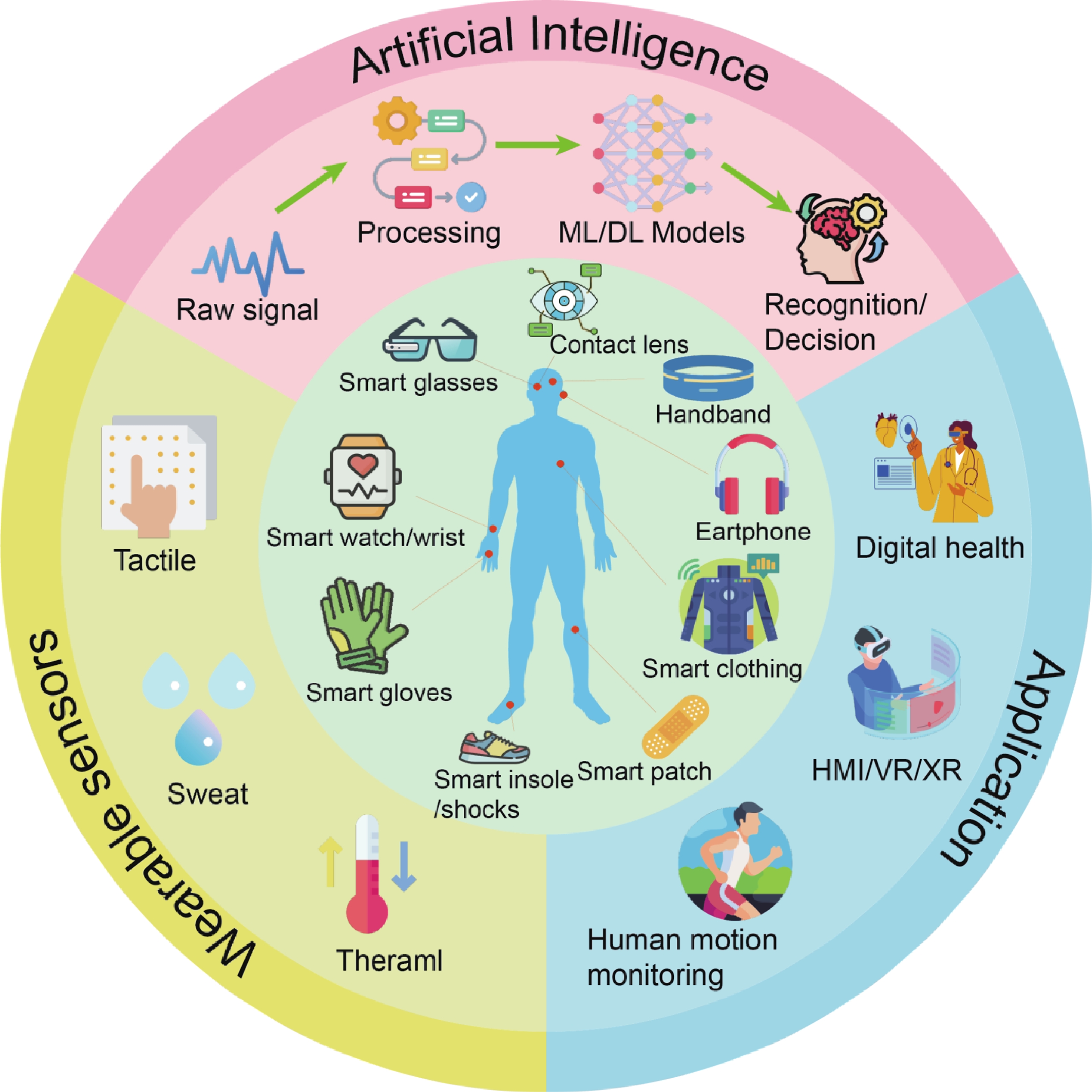
Fig. 1.
(Color online) Overview of the three pillars of wearable intelligent systems.
REVIEWS
Danyang Qin1, Rongrong Bao2, and Caofeng Pan2
Corresponding author: Rongrong Bao, baorongrong@buaa.edu.cn
Abstract: AI-integrated flexible wearable sensors combine smart materials, conformal device design, and data-driven algorithms to continuously capture and interpret physiological, motion, and environmental signals. Here, we summarize how representative machine learning and deep learning models are used for signal processing, feature extraction, multimodal fusion, and system optimization in next-generation wearable sensing platforms. We further discuss their applications in personalized healthcare, human–machine interaction, and sensory augmentation. Finally, we identify key challenges, including data quality, model generalization, interpretability, power-efficient deployment, and privacy and security, together with perspectives on the development of more reliable, scalable, and trustworthy intelligent sensing systems.
Keywords: artificial intelligence, flexible wearable sensors, smart materials, machine learning, personalized healthcare
| [1] |
Peng Y Y, Yang N, Xu Q, et al. Recent advances in flexible tactile sensors for intelligent systems. Sensors, 2021, 21(16): 5392 doi: 10.3390/s21165392
|
| [2] |
Cui X, Zhang W, Lv M H, et al. Flexible and wearable tactile sensors for intelligent interfaces. Materials, 2025, 18(17): 4010 doi: 10.3390/ma18174010
|
| [3] |
Li X, Wu G C, Gao C, et al. Flexible electronic devices and wearable sensors based on liquid metals. MetalMat, 2025, 2(1): e70000 doi: 10.1002/metm.70000
|
| [4] |
Hassan M, Abbas G, Li N, et al. Significance of flexible substrates for wearable and implantable devices: Recent advances and perspectives. Adv Mater Technol, 2022, 7(3): 2100773 doi: 10.1002/admt.202100773
|
| [5] |
Zhou K K, Zhao Y, Sun X P, et al. Ultra-stretchable triboelectric nanogenerator as high-sensitive and self-powered electronic skins for energy harvesting and tactile sensing. Nano Energy, 2020, 70: 104546 doi: 10.1016/j.nanoen.2020.104546
|
| [6] |
Mojumder M R H, Kim S, Yu C J. Soft artificial synapse electronics. Research, 2025, 8: 0582 doi: 10.34133/research.0582
|
| [7] |
Li X, Lin Y X, Cui L, et al. Stretchable and lithography-compatible interconnects enabled by self-assembled nanofilms with interlocking interfaces. ACS Appl Mater Interfaces, 2023, 15(48): 56233 doi: 10.1021/acsami.3c11760
|
| [8] |
Liu H, Chen X Y, Zheng Y J, et al. Lightweight, superelastic, and hydrophobic polyimide nanofiber/MXene composite aerogel for wearable piezoresistive sensor and oil/water separation applications. Adv Funct Mater, 2021, 31(13): 2008006 doi: 10.1002/adfm.202008006
|
| [9] |
Zhao Y, Gao W C, Dai K, et al. Bioinspired multifunctional photonic-electronic smart skin for ultrasensitive health monitoring, for visual and self-powered sensing. Adv Mater, 2021, 33(45): 2102332 doi: 10.1002/adma.202102332
|
| [10] |
Zhu R Q, Li Z Y, Deng G, et al. Anisotropic magnetic liquid metal film for wearable wireless electromagnetic sensing and smart electromagnetic interference shielding. Nano Energy, 2022, 92: 106700 doi: 10.1016/j.nanoen.2021.106700
|
| [11] |
Yang S Y, Yang W K, Yin R, et al. Waterproof conductive fiber with microcracked synergistic conductive layer for high-performance tunable wearable strain sensor. Chem Eng J, 2023, 453: 139716 doi: 10.1016/j.cej.2022.139716
|
| [12] |
Qi M, Yang R Q, Wang Z, et al. Bioinspired self-healing soft electronics. Adv Funct Mater, 2023, 33(17): 2214479 doi: 10.1002/adfm.202214479
|
| [13] |
Liu H, Li Q M, Bu Y B, et al. Stretchable conductive nonwoven fabrics with self-cleaning capability for tunable wearable strain sensor. Nano Energy, 2019, 66: 104143 doi: 10.1016/j.nanoen.2019.104143
|
| [14] |
Yang W, Liu H, Du H, et al. Robust and superelastic spider web-like polyimide fiber-based conductive composite aerogel for extreme temperature-tolerant linear pressure sensor. Sci China Mater, 2023, 66(7): 2829 doi: 10.1007/s40843-022-2418-1
|
| [15] |
Akkaş T, Reshadsedghi M, Şen M, et al. The role of artificial intelligence in advancing biosensor technology: Past, present, and future perspectives. Adv Mater, 2025, 37(34): 2504796 doi: 10.1002/adma.202504796
|
| [16] |
Liu J Q, Tian G, Yang W Q, et al. Recent progress in flexible piezoelectric devices toward human-machine interactions. Soft Sci, 2022, 2(4): 22 doi: 10.20517/ss.2022.23
|
| [17] |
Fu X M, Cheng W, Wan G X, et al. Toward an AI era: Advances in electronic skins. Chem Rev, 2024, 124(17): 9899 doi: 10.1021/acs.chemrev.4c00049
|
| [18] |
Wang C, He T, Zhou H, et al. Artificial intelligence enhanced sensors-enabling technologies to next-generation healthcare and biomedical platform. Bioelectron Med, 2023, 9(1): 17 doi: 10.1186/s42234-023-00118-1
|
| [19] |
Niu H S, Yin F F, Kim E S, et al. Advances in flexible sensors for intelligent perception system enhanced by artificial intelligence. InfoMat, 2023, 5(5): e12412 doi: 10.1002/inf2.12412
|
| [20] |
Chen Z L, Huang Y, Zhang B B, et al. Deformable materials and structures in wearable haptic interfaces. Nat Rev Mater, 2026, 11(4): 266 doi: 10.1038/s41578-025-00877-0
|
| [21] |
Li X, Wu G C, Pan C F, et al. Recent progress in flexible sensors based on 2D materials. J Semicond, 2025, 46(1): 011607 doi: 10.1088/1674-4926/24090044
|
| [22] |
Luo Y F, Abidian M R, Ahn J H, et al. Technology roadmap for flexible sensors. ACS Nano, 2023, 17(6): 5211 doi: 10.1021/acsnano.2c12606
|
| [23] |
Wu G C, Li X, Bao R R, et al. Innovations in tactile sensing: Microstructural designs for superior flexible sensor performance. Adv Funct Mater, 2024, 34(44): 2405722 doi: 10.1002/adfm.202405722
|
| [24] |
Pan C F, Zhai J Y, Wang Z L. Piezotronics and piezo-phototronics of third generation semiconductor nanowires. Chem Rev, 2019, 119(15): 9303 doi: 10.1021/acs.chemrev.8b00599
|
| [25] |
Chen S W, Fan S C, Qiao Z, et al. Transforming healthcare: Intelligent wearable sensors empowered by smart materials and artificial intelligence. Adv Mater, 2025, 37(21): 2500412 doi: 10.1002/adma.202500412
|
| [26] |
Fetzer J H. What is artificial intelligence? Artificial intelligence: Its scope and limits. Dordrecht: Springer Netherlands, 1990, 3
|
| [27] |
Xu C H, Solomon S A, Gao W. Artificial intelligence-powered electronic skin. Nat Mach Intell, 2023, 5(12): 1344 doi: 10.1038/s42256-023-00760-z
|
| [28] |
Cortes C, Vapnik V. Support-vector networks. Mach Learn, 1995, 20(3): 273 doi: 10.1023/A:1022627411411
|
| [29] |
Hou M, Kambhampati C. Locally fitting hyperplanes to high-dimensional data. Neural Comput Appl, 2022, 34(11): 8885 doi: 10.1007/s00521-022-06909-y
|
| [30] |
Sanghar M, Shukla V K, Verma A, et al. Implementation of support vector machines algorithm through R-language for diabetes database testing. 2021 11th International Conference on Cloud Computing, Data Science & Engineering (Confluence), 2021: 746
|
| [31] |
Breiman L. Random forests. Mach Learn, 2001, 45(1): 5 doi: 10.1023/A:1010933404324
|
| [32] |
Cover T, Hart P. Nearest neighbor pattern classification. IEEE Trans Inform Theory, 1967, 13(1): 21 doi: 10.1109/TIT.1967.1053964
|
| [33] |
LeCun Y, Bottou L, Bengio Y, et al. Gradient-based learning applied to document recognition. Proc IEEE, 1998, 86(11): 2278 doi: 10.1109/5.726791
|
| [34] |
Wang T T, Zhao Y B, Wang Q N. A flexible iontronic capacitive sensing array for hand gesture recognition using deep convolutional neural networks. Soft Robot, 2023, 10(3): 443 doi: 10.1089/soro.2021.0209
|
| [35] |
Hochreiter S, Schmidhuber J. Long short-term memory. Neural Comput, 1997, 9(8): 1735 doi: 10.1162/neco.1997.9.8.1735
|
| [36] |
Zhuang Q N, Yao K M, Song X, et al. An ICU-grade breathable cardiac electronic skin for health, diagnostics, and intraoperative and postoperative monitoring. Sci Adv, 2025, 11(12): eadu3146 doi: 10.1126/sciadv.adu3146
|
| [37] |
Vaswani A, Shazeer N, Parmar N, et al. Attention is all you need. Advances in Neural Information Processing Systems, 2017, 30: 5998
|
| [38] |
Wu J, Mo Z Q, Gao X, et al. Artificial intelligence assisted wearable flexible sensors for sports: Research progress in technology integration and application. Int J Smart Nano Mater, 2025, 16(3): 510 doi: 10.1080/19475411.2025.2519582
|
| [39] |
Liu Y H, Li X Y, Yang L, et al. A transformer-based gesture prediction model via sEMG sensor for human–robot interaction. IEEE Trans Instrum Meas, 2024, 73: 1
|
| [40] |
Li B J, Li L, Wang H Y, et al. TVT-Transformer: A tactile-visual-textual fusion network for object recognition. Inf Fusion, 2025, 118: 102943 doi: 10.1016/j.inffus.2025.102943
|
| [41] |
Zhang J, Hou X J, Qian S, et al. Flexible wide-range multidimensional force sensors inspired by bones embedded in muscle. Microsyst Nanoeng, 2024, 10: 64 doi: 10.1038/s41378-024-00711-7
|
| [42] |
Vu C C, Kim J, Nguyen T H. Health monitoring system from pyralux copper-clad laminate film and random forest algorithm. Micromachines, 2023, 14(9): 1726 doi: 10.3390/mi14091726
|
| [43] |
Liang X P, Li H B, Wang W P, et al. Fusion of wearable and contactless sensors for intelligent gesture recognition. Adv Intell Syst, 2019, 1(7): 1900088 doi: 10.1002/aisy.201900088
|
| [44] |
Song Y, Liu M R, Wang F L, et al. Gesture recognition based on a convolutional neural network–bidirectional long short-term memory network for a wearable wrist sensor with multi-walled carbon nanotube/cotton fabric material. Micromachines, 2024, 15(2): 185 doi: 10.3390/mi15020185
|
| [45] |
Hou Y X, Wang L, Sun R, et al. Crack-across-pore enabled high-performance flexible pressure sensors for deep neural network enhanced sensing and human action recognition. ACS Nano, 2022, 16(5): 8358 doi: 10.1021/acsnano.2c02609
|
| [46] |
Rasti-Meymandi A, Ghaffari A. A deep learning-based framework for ECG signal denoising based on stacked cardiac cycle tensor. Biomed Signal Process Control, 2022, 71: 103275 doi: 10.1016/j.bspc.2021.103275
|
| [47] |
Chen S C, Ouyang Q, Meng X L, et al. Starfish-inspired wearable bioelectronic systems for physiological signal monitoring during motion and real-time heart disease diagnosis. Sci Adv, 2025, 11(14): eadv2406 doi: 10.1126/sciadv.adv2406
|
| [48] |
Chen X J, Lou Z Y, Gao X X, et al. A noise-tolerant human–machine interface based on deep learning-enhanced wearable sensors. Nat Sens, 2026, 1(1): 39
|
| [49] |
Liu X Q, Li Y Y, Li Y A, et al. Bionic fingerprint tactile sensor with deep learning-decoupled multimodal perception for simultaneous pressure-friction mapping. Adv Funct Mater, 2025, 35(49): e06158 doi: 10.1002/adfm.202506158
|
| [50] |
Liu Y, Tao J, Mo Y P, et al. Ultrasensitive touch sensor for simultaneous tactile and slip sensing. Adv Mater, 2024, 36(21): 2313857 doi: 10.1002/adma.202313857
|
| [51] |
Chen L B, Karilanova S, Chaki S, et al. Spike timing–based coding in neuromimetic tactile system enables dynamic object classification. Science, 2024, 384(6696): 660 doi: 10.1126/science.adf3708
|
| [52] |
Tang Y F, Li G, Zhang T S, et al. Digital channel–enabled distributed force decoding via small datasets for hand-centric interactions. Sci Adv, 2025, 11(4): eadt2641 doi: 10.1126/sciadv.adt2641
|
| [53] |
Chen Z, Ou N, Zhang X Y, et al. Training tactile sensors to learn force sensing from each other. Nat Commun, 2026, 17: 2101 doi: 10.1038/s41467-026-68753-1
|
| [54] |
Ma X L, Wang C F, Wei R L, et al. Bimodal tactile sensor without signal fusion for user-interactive applications. ACS Nano, 2022, 16(2): 2789 doi: 10.1021/acsnano.1c09779
|
| [55] |
Zheng X T, Yang Z J, Sutarlie L, et al. Battery-free and AI-enabled multiplexed sensor patches for wound monitoring. Sci Adv, 2023, 9(24): eadg6670 doi: 10.1126/sciadv.adg6670
|
| [56] |
Li S J, Wu T, Xu J L, et al. Biomimetic multimodal tactile sensing enables human-like robotic perception. Nat Sens, 2026, 1(1): 52 doi: 10.1038/s44460-025-00006-y
|
| [57] |
Pei X C, Ghandehari A, Chakoma S, et al. A quantitative, multimodal wearable bioelectronic device for comprehensive stress assessment and sub-classification. Nat Commun, 2026, 17: 1150 doi: 10.1038/s41467-025-67747-9
|
| [58] |
Keum K, Kwak J Y, Rim J, et al. Dual-stream deep learning integrated multimodal sensors for complex stimulus detection in intelligent sensory systems. Nano Energy, 2024, 122: 109342 doi: 10.1016/j.nanoen.2024.109342
|
| [59] |
Bang J, Baek K, Lim J, et al. Deep neural network regression-assisted pressure sensor for decoupling thermal variations at different operating temperatures. Adv Intell Syst, 2023, 5(11): 2300186 doi: 10.1002/aisy.202300186
|
| [60] |
Huang J R, Liu J H, Zhang G Y, et al. Flexible sensor arrays with high-resolution and high-density. Nano Energy, 2026, 150: 111748 doi: 10.1016/j.nanoen.2026.111748
|
| [61] |
Payette J, Vaussenat F, Cloutier S. Deep learning framework for sensor array precision and accuracy enhancement. Sci Rep, 2023, 13(1): 11237 doi: 10.1038/s41598-023-38290-8
|
| [62] |
Kong D P, Lu Y Y, Zhou S Y, et al. Super-resolution tactile sensor arrays with sparse units enabled by deep learning. Sci Adv, 2025, 11(27): eadv2124 doi: 10.1126/sciadv.adv2124
|
| [63] |
Hu H, Zhang C Q, Lai X Y, et al. Large-area magnetic skin for multi-point and multi-scale tactile sensing with super-resolution. npj Flex Electron, 2024, 8: 42 doi: 10.1038/s41528-024-00325-z
|
| [64] |
Kim K K, Zaluska T J, Skov S, et al. A simplified wearable device powered by a generative EMG network for hand-gesture recognition and gait prediction. Nat Sens, 2026, 1(1): 27
|
| [65] |
Xia C S, Sugiura Y. Wearable accelerometer layout optimization for activity recognition based on swarm intelligence and user preference. IEEE Access, 2021, 9: 166906 doi: 10.1109/ACCESS.2021.3134262
|
| [66] |
Hu H J, Huang H, Li M H, et al. A wearable cardiac ultrasound imager. Nature, 2023, 613(7945): 667 doi: 10.1038/s41586-022-05498-z
|
| [67] |
He J, Xiao P, Lu W, et al. A universal high accuracy wearable pulse monitoring system via high sensitivity and large linearity graphene pressure sensor. Nano Energy, 2019, 59: 422 doi: 10.1016/j.nanoen.2019.02.036
|
| [68] |
Wang X, Wu G R, Zhang X K, et al. Traditional Chinese medicine (TCM)-inspired fully printed soft pressure sensor array with self-adaptive pressurization for highly reliable individualized long-term pulse diagnostics. Adv Mater, 2025, 37(1): 2410312 doi: 10.1002/adma.202410312
|
| [69] |
Jeon J, Lee S, Chae S, et al. All-flexible chronoepifluidic nanoplasmonic patch for label-free metabolite profiling in sweat. Nat Commun, 2025, 16: 8017 doi: 10.1038/s41467-025-63510-2
|
| [70] |
Wang X Y, Guo W X, Zhao Y M, et al. Highly reliable shear sensitive triboelectric smart textile for intelligent gait analysis toward early detection and offloading rehabilitation of diabetic foot ulcers. Nano Energy, 2025, 146: 111528 doi: 10.1016/j.nanoen.2025.111528
|
| [71] |
Yap L W, Levin A, Jiang Y W, et al. An intelligent, compact wearable pressure-strain combo sensor system for continuous fetal movement monitoring. Sci Adv, 2025, 11(48): eady2661 doi: 10.1126/sciadv.ady2661
|
| [72] |
Yang W K, Liu S, Wang Z Q, et al. Bioinspired composite fiber aerogel pressure sensor for machine-learning-assisted human activity and gesture recognition. Nano Energy, 2024, 127: 109799 doi: 10.1016/j.nanoen.2024.109799
|
| [73] |
Zhao G R, Zhang Y W, Shi N, et al. Transparent and stretchable triboelectric nanogenerator for self-powered tactile sensing. Nano Energy, 2019, 59: 302 doi: 10.1016/j.nanoen.2019.02.054
|
| [74] |
Yang Y, Liu X, Tang J K, et al. One-stop strabismus digital diagnosis via AI-integrated skin-like and wearable “Eyelectronics”. Sci Adv, 2026, 12(5): eaeb7242 doi: 10.1126/sciadv.aeb7242
|
| [75] |
Park S U, Lee H K, Kim H B, et al. Wearable interactive full-body motion tracking and haptic feedback network systems with deep learning. Nat Commun, 2025, 16: 8604 doi: 10.1038/s41467-025-63644-3
|
| [76] |
Arnold J, Pathak P, Jin Y C, et al. Personalized ML-based wearable robot control improves impaired arm function. Nat Commun, 2025, 16: 7091 doi: 10.1038/s41467-025-62538-8
|
| [77] |
Zhang H, Yang C Q, Xia H, et al. Layer-by-layer self-assembled honeycomb structure flexible pressure sensor array for gait analysis and motion posture recognition with the assistance of the ResNet-50 neural network. ACS Sens, 2025, 10(3): 2358 doi: 10.1021/acssensors.5c00187
|
| [78] |
He J Q, Wei R L, Ma X L, et al. Contactless user-interactive sensing display for human–human and human–machine interactions. Adv Mater, 2024, 36(25): 2401931 doi: 10.1002/adma.202401931
|
| [79] |
Gao G R, Yang F J, Zhou F H, et al. Bioinspired self-healing human–machine interactive touch pad with pressure-sensitive adhesiveness on targeted substrates. Adv Mater, 2020, 32(50): 2004290 doi: 10.1002/adma.202004290
|
| [80] |
Mu G R, Zhang Y, Yan Z H, et al. Recent advancements in wearable sensors: Integration with machine learning for human–machine interaction. RSC Adv, 2025, 15(10): 7844 doi: 10.1039/D5RA00167F
|
| [81] |
Wang G H, Tang Y, Luo X R, et al. Printed sensing human-machine interface with individualized adaptive machine learning. Sci Adv, 2025, 11(37): eadw3725 doi: 10.1126/sciadv.adw3725
|
| [82] |
Liu T, Zhang M Y, Li Z H, et al. Machine learning-assisted wearable sensing systems for speech recognition and interaction. Nat Commun, 2025, 16: 2363 doi: 10.1038/s41467-025-57629-5
|
| [83] |
Karakostis F A, Haeufle D, Anastopoulou I, et al. Biomechanics of the human thumb and the evolution of dexterity. Curr Biol, 2021, 31(6): 1317 doi: 10.1016/j.cub.2020.12.041
|
| [84] |
Liu Y M, Yiu C, Song Z, et al. Electronic skin as wireless human-machine interfaces for robotic VR. Sci Adv, 2022, 8(2): eabl6700 doi: 10.1126/sciadv.abl6700
|
| [85] |
Li K P, Yue W, Guo Y J, et al. Wearable thumb sleeves enabled by self-supervised learning with few stretchable sensors and few-shot data for switchable finger tasks. Sci Adv, 2026, 12(17): eaea2020 doi: 10.1126/sciadv.aea2020
|
| [86] |
Hou B, Yang D Z, Ren X Y, et al. A tactile oral pad based on carbon nanotubes for multimodal haptic interaction. Nat Electron, 2024, 7(9): 777 doi: 10.1038/s41928-024-01234-9
|
| [87] |
Shao B B, Wu T C, Yan Z X, et al. Deep learning–empowered triboelectric acoustic textile for voice perception and intuitive generative AI-voice access on clothing. Sci Adv, 2025, 11(41): eadx3348 doi: 10.1126/sciadv.adx3348
|
| [88] |
Liu Y M, Jia S X, Yiu C K, et al. Intelligent wearable olfactory interface for latency-free mixed reality and fast olfactory enhancement. Nat Commun, 2024, 15: 4474 doi: 10.1038/s41467-024-48884-z
|
| [89] |
Tang C Y, Gao S, Li C, et al. Wearable intelligent throat enables natural speech in stroke patients with dysarthria. Nat Commun, 2026, 17: 293 doi: 10.21203/rs.3.rs-5469584/v1
|
| [90] |
Che Z Y, Wan X, Xu J, et al. Speaking without vocal folds using a machine-learning-assisted wearable sensing-actuation system. Nat Commun, 2024, 15: 1873 doi: 10.1038/s41467-024-45915-7
|
| [91] |
Yang Q S, Jin W Q, Zhang Q H, et al. Mixed-modality speech recognition and interaction using a wearable artificial throat. Nat Mach Intell, 2023, 5(2): 169 doi: 10.1038/s42256-023-00616-6
|
| [92] |
Sundaram S, Kellnhofer P, Li Y Z, et al. Learning the signatures of the human grasp using a scalable tactile glove. Nature, 2019, 569(7758): 698 doi: 10.1038/s41586-019-1234-z
|
| [93] |
Luo Y Y, Liu C, Lee Y J, et al. Adaptive tactile interaction transfer via digitally embroidered smart gloves. Nat Commun, 2024, 15: 868 doi: 10.1038/s41467-024-45059-8
|
| [94] |
Wu Z H, Cheng Y, Yang Z Y, et al. Ultra-sensitive and high-resolution flexible iontronic humidity sensor for detecting subtle moisture differences. Adv Funct Mater, 2026, 36(12): e17569 doi: 10.1002/adfm.202517569
|
| [95] |
Han X, Tao J, Liang Y G, et al. Ultraweak light-modulated heterostructure with bidirectional photoresponse for static and dynamic image perception. Nat Commun, 2024, 15: 10430 doi: 10.1038/s41467-024-54845-3
|
| [96] |
Tang J, Zhu Y, Jiang G, et al. Human-centred design and fabrication of a wearable multimodal visual assistance system. Nat Mach Intell, 2025, 7(4): 627 doi: 10.1038/s42256-025-01018-6
|
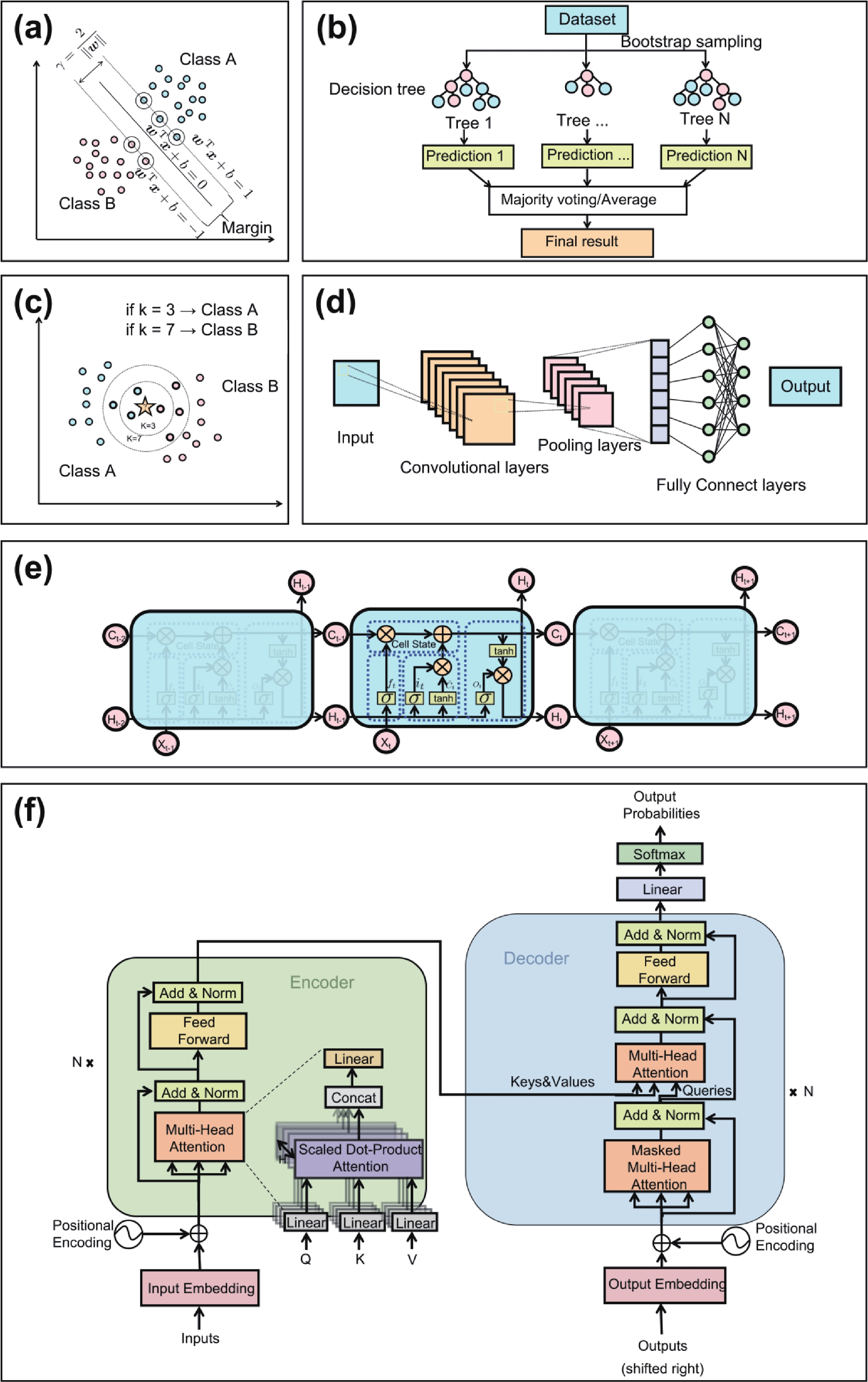


Table 1. Summary and comparison of ML in wearable devices.
| Category | Algorithms | Advantages | Disadvantages | Application |
| Traditional machine learning | KNN | Simple to implement, effective for small datasets | Sensitive to noise, feature scaling, sensor drift, and large datasets | Plantar-pressure activity recognition[41] |
| Traditional machine learning | Random forest | Robust to nonlinear features, suitable for multichannel sensing, interpretable feature importance | Dependence on handcrafted features, increased memory and latency with size growth | Breathing-pattern classification[42] |
| Traditional machine learning | SVM | Effective for small samples, suitable for high-dimensional features, strong classification margin | Limited scalability, sensitivity to distribution shifts | Wrist gesture recognition[43] |
| Deep learning | CNN | Automatic spatial feature extraction, suitable for sensor arrays and tactile maps, local-noise robustness | Large labeled-data demand, sensitivity to sensor layout and re-wearing shifts | Hand-gesture recognition[34] |
| Deep learning | LSTM | Strong temporal-dependency modeling, suitable for dynamic wearable signals, sequential-pattern learning | High sequential-computation cost, sensitivity to window length and sampling rate | Gesture recognition[44] |
| Deep learning | Transformer | Long-range dependency modeling, cross-channel correlation learning, high training parallelism | High data, memory, and computation requirements, overfitting risk on small datasets | Human-activity recognition[45] |
 DownLoad: CSV
| [1] |
Peng Y Y, Yang N, Xu Q, et al. Recent advances in flexible tactile sensors for intelligent systems. Sensors, 2021, 21(16): 5392 doi: 10.3390/s21165392
|
| [2] |
Cui X, Zhang W, Lv M H, et al. Flexible and wearable tactile sensors for intelligent interfaces. Materials, 2025, 18(17): 4010 doi: 10.3390/ma18174010
|
| [3] |
Li X, Wu G C, Gao C, et al. Flexible electronic devices and wearable sensors based on liquid metals. MetalMat, 2025, 2(1): e70000 doi: 10.1002/metm.70000
|
| [4] |
Hassan M, Abbas G, Li N, et al. Significance of flexible substrates for wearable and implantable devices: Recent advances and perspectives. Adv Mater Technol, 2022, 7(3): 2100773 doi: 10.1002/admt.202100773
|
| [5] |
Zhou K K, Zhao Y, Sun X P, et al. Ultra-stretchable triboelectric nanogenerator as high-sensitive and self-powered electronic skins for energy harvesting and tactile sensing. Nano Energy, 2020, 70: 104546 doi: 10.1016/j.nanoen.2020.104546
|
| [6] |
Mojumder M R H, Kim S, Yu C J. Soft artificial synapse electronics. Research, 2025, 8: 0582 doi: 10.34133/research.0582
|
| [7] |
Li X, Lin Y X, Cui L, et al. Stretchable and lithography-compatible interconnects enabled by self-assembled nanofilms with interlocking interfaces. ACS Appl Mater Interfaces, 2023, 15(48): 56233 doi: 10.1021/acsami.3c11760
|
| [8] |
Liu H, Chen X Y, Zheng Y J, et al. Lightweight, superelastic, and hydrophobic polyimide nanofiber/MXene composite aerogel for wearable piezoresistive sensor and oil/water separation applications. Adv Funct Mater, 2021, 31(13): 2008006 doi: 10.1002/adfm.202008006
|
| [9] |
Zhao Y, Gao W C, Dai K, et al. Bioinspired multifunctional photonic-electronic smart skin for ultrasensitive health monitoring, for visual and self-powered sensing. Adv Mater, 2021, 33(45): 2102332 doi: 10.1002/adma.202102332
|
| [10] |
Zhu R Q, Li Z Y, Deng G, et al. Anisotropic magnetic liquid metal film for wearable wireless electromagnetic sensing and smart electromagnetic interference shielding. Nano Energy, 2022, 92: 106700 doi: 10.1016/j.nanoen.2021.106700
|
| [11] |
Yang S Y, Yang W K, Yin R, et al. Waterproof conductive fiber with microcracked synergistic conductive layer for high-performance tunable wearable strain sensor. Chem Eng J, 2023, 453: 139716 doi: 10.1016/j.cej.2022.139716
|
| [12] |
Qi M, Yang R Q, Wang Z, et al. Bioinspired self-healing soft electronics. Adv Funct Mater, 2023, 33(17): 2214479 doi: 10.1002/adfm.202214479
|
| [13] |
Liu H, Li Q M, Bu Y B, et al. Stretchable conductive nonwoven fabrics with self-cleaning capability for tunable wearable strain sensor. Nano Energy, 2019, 66: 104143 doi: 10.1016/j.nanoen.2019.104143
|
| [14] |
Yang W, Liu H, Du H, et al. Robust and superelastic spider web-like polyimide fiber-based conductive composite aerogel for extreme temperature-tolerant linear pressure sensor. Sci China Mater, 2023, 66(7): 2829 doi: 10.1007/s40843-022-2418-1
|
| [15] |
Akkaş T, Reshadsedghi M, Şen M, et al. The role of artificial intelligence in advancing biosensor technology: Past, present, and future perspectives. Adv Mater, 2025, 37(34): 2504796 doi: 10.1002/adma.202504796
|
| [16] |
Liu J Q, Tian G, Yang W Q, et al. Recent progress in flexible piezoelectric devices toward human-machine interactions. Soft Sci, 2022, 2(4): 22 doi: 10.20517/ss.2022.23
|
| [17] |
Fu X M, Cheng W, Wan G X, et al. Toward an AI era: Advances in electronic skins. Chem Rev, 2024, 124(17): 9899 doi: 10.1021/acs.chemrev.4c00049
|
| [18] |
Wang C, He T, Zhou H, et al. Artificial intelligence enhanced sensors-enabling technologies to next-generation healthcare and biomedical platform. Bioelectron Med, 2023, 9(1): 17 doi: 10.1186/s42234-023-00118-1
|
| [19] |
Niu H S, Yin F F, Kim E S, et al. Advances in flexible sensors for intelligent perception system enhanced by artificial intelligence. InfoMat, 2023, 5(5): e12412 doi: 10.1002/inf2.12412
|
| [20] |
Chen Z L, Huang Y, Zhang B B, et al. Deformable materials and structures in wearable haptic interfaces. Nat Rev Mater, 2026, 11(4): 266 doi: 10.1038/s41578-025-00877-0
|
| [21] |
Li X, Wu G C, Pan C F, et al. Recent progress in flexible sensors based on 2D materials. J Semicond, 2025, 46(1): 011607 doi: 10.1088/1674-4926/24090044
|
| [22] |
Luo Y F, Abidian M R, Ahn J H, et al. Technology roadmap for flexible sensors. ACS Nano, 2023, 17(6): 5211 doi: 10.1021/acsnano.2c12606
|
| [23] |
Wu G C, Li X, Bao R R, et al. Innovations in tactile sensing: Microstructural designs for superior flexible sensor performance. Adv Funct Mater, 2024, 34(44): 2405722 doi: 10.1002/adfm.202405722
|
| [24] |
Pan C F, Zhai J Y, Wang Z L. Piezotronics and piezo-phototronics of third generation semiconductor nanowires. Chem Rev, 2019, 119(15): 9303 doi: 10.1021/acs.chemrev.8b00599
|
| [25] |
Chen S W, Fan S C, Qiao Z, et al. Transforming healthcare: Intelligent wearable sensors empowered by smart materials and artificial intelligence. Adv Mater, 2025, 37(21): 2500412 doi: 10.1002/adma.202500412
|
| [26] |
Fetzer J H. What is artificial intelligence? Artificial intelligence: Its scope and limits. Dordrecht: Springer Netherlands, 1990, 3
|
| [27] |
Xu C H, Solomon S A, Gao W. Artificial intelligence-powered electronic skin. Nat Mach Intell, 2023, 5(12): 1344 doi: 10.1038/s42256-023-00760-z
|
| [28] |
Cortes C, Vapnik V. Support-vector networks. Mach Learn, 1995, 20(3): 273 doi: 10.1023/A:1022627411411
|
| [29] |
Hou M, Kambhampati C. Locally fitting hyperplanes to high-dimensional data. Neural Comput Appl, 2022, 34(11): 8885 doi: 10.1007/s00521-022-06909-y
|
| [30] |
Sanghar M, Shukla V K, Verma A, et al. Implementation of support vector machines algorithm through R-language for diabetes database testing. 2021 11th International Conference on Cloud Computing, Data Science & Engineering (Confluence), 2021: 746
|
| [31] |
Breiman L. Random forests. Mach Learn, 2001, 45(1): 5 doi: 10.1023/A:1010933404324
|
| [32] |
Cover T, Hart P. Nearest neighbor pattern classification. IEEE Trans Inform Theory, 1967, 13(1): 21 doi: 10.1109/TIT.1967.1053964
|
| [33] |
LeCun Y, Bottou L, Bengio Y, et al. Gradient-based learning applied to document recognition. Proc IEEE, 1998, 86(11): 2278 doi: 10.1109/5.726791
|
| [34] |
Wang T T, Zhao Y B, Wang Q N. A flexible iontronic capacitive sensing array for hand gesture recognition using deep convolutional neural networks. Soft Robot, 2023, 10(3): 443 doi: 10.1089/soro.2021.0209
|
| [35] |
Hochreiter S, Schmidhuber J. Long short-term memory. Neural Comput, 1997, 9(8): 1735 doi: 10.1162/neco.1997.9.8.1735
|
| [36] |
Zhuang Q N, Yao K M, Song X, et al. An ICU-grade breathable cardiac electronic skin for health, diagnostics, and intraoperative and postoperative monitoring. Sci Adv, 2025, 11(12): eadu3146 doi: 10.1126/sciadv.adu3146
|
| [37] |
Vaswani A, Shazeer N, Parmar N, et al. Attention is all you need. Advances in Neural Information Processing Systems, 2017, 30: 5998
|
| [38] |
Wu J, Mo Z Q, Gao X, et al. Artificial intelligence assisted wearable flexible sensors for sports: Research progress in technology integration and application. Int J Smart Nano Mater, 2025, 16(3): 510 doi: 10.1080/19475411.2025.2519582
|
| [39] |
Liu Y H, Li X Y, Yang L, et al. A transformer-based gesture prediction model via sEMG sensor for human–robot interaction. IEEE Trans Instrum Meas, 2024, 73: 1
|
| [40] |
Li B J, Li L, Wang H Y, et al. TVT-Transformer: A tactile-visual-textual fusion network for object recognition. Inf Fusion, 2025, 118: 102943 doi: 10.1016/j.inffus.2025.102943
|
| [41] |
Zhang J, Hou X J, Qian S, et al. Flexible wide-range multidimensional force sensors inspired by bones embedded in muscle. Microsyst Nanoeng, 2024, 10: 64 doi: 10.1038/s41378-024-00711-7
|
| [42] |
Vu C C, Kim J, Nguyen T H. Health monitoring system from pyralux copper-clad laminate film and random forest algorithm. Micromachines, 2023, 14(9): 1726 doi: 10.3390/mi14091726
|
| [43] |
Liang X P, Li H B, Wang W P, et al. Fusion of wearable and contactless sensors for intelligent gesture recognition. Adv Intell Syst, 2019, 1(7): 1900088 doi: 10.1002/aisy.201900088
|
| [44] |
Song Y, Liu M R, Wang F L, et al. Gesture recognition based on a convolutional neural network–bidirectional long short-term memory network for a wearable wrist sensor with multi-walled carbon nanotube/cotton fabric material. Micromachines, 2024, 15(2): 185 doi: 10.3390/mi15020185
|
| [45] |
Hou Y X, Wang L, Sun R, et al. Crack-across-pore enabled high-performance flexible pressure sensors for deep neural network enhanced sensing and human action recognition. ACS Nano, 2022, 16(5): 8358 doi: 10.1021/acsnano.2c02609
|
| [46] |
Rasti-Meymandi A, Ghaffari A. A deep learning-based framework for ECG signal denoising based on stacked cardiac cycle tensor. Biomed Signal Process Control, 2022, 71: 103275 doi: 10.1016/j.bspc.2021.103275
|
| [47] |
Chen S C, Ouyang Q, Meng X L, et al. Starfish-inspired wearable bioelectronic systems for physiological signal monitoring during motion and real-time heart disease diagnosis. Sci Adv, 2025, 11(14): eadv2406 doi: 10.1126/sciadv.adv2406
|
| [48] |
Chen X J, Lou Z Y, Gao X X, et al. A noise-tolerant human–machine interface based on deep learning-enhanced wearable sensors. Nat Sens, 2026, 1(1): 39
|
| [49] |
Liu X Q, Li Y Y, Li Y A, et al. Bionic fingerprint tactile sensor with deep learning-decoupled multimodal perception for simultaneous pressure-friction mapping. Adv Funct Mater, 2025, 35(49): e06158 doi: 10.1002/adfm.202506158
|
| [50] |
Liu Y, Tao J, Mo Y P, et al. Ultrasensitive touch sensor for simultaneous tactile and slip sensing. Adv Mater, 2024, 36(21): 2313857 doi: 10.1002/adma.202313857
|
| [51] |
Chen L B, Karilanova S, Chaki S, et al. Spike timing–based coding in neuromimetic tactile system enables dynamic object classification. Science, 2024, 384(6696): 660 doi: 10.1126/science.adf3708
|
| [52] |
Tang Y F, Li G, Zhang T S, et al. Digital channel–enabled distributed force decoding via small datasets for hand-centric interactions. Sci Adv, 2025, 11(4): eadt2641 doi: 10.1126/sciadv.adt2641
|
| [53] |
Chen Z, Ou N, Zhang X Y, et al. Training tactile sensors to learn force sensing from each other. Nat Commun, 2026, 17: 2101 doi: 10.1038/s41467-026-68753-1
|
| [54] |
Ma X L, Wang C F, Wei R L, et al. Bimodal tactile sensor without signal fusion for user-interactive applications. ACS Nano, 2022, 16(2): 2789 doi: 10.1021/acsnano.1c09779
|
| [55] |
Zheng X T, Yang Z J, Sutarlie L, et al. Battery-free and AI-enabled multiplexed sensor patches for wound monitoring. Sci Adv, 2023, 9(24): eadg6670 doi: 10.1126/sciadv.adg6670
|
| [56] |
Li S J, Wu T, Xu J L, et al. Biomimetic multimodal tactile sensing enables human-like robotic perception. Nat Sens, 2026, 1(1): 52 doi: 10.1038/s44460-025-00006-y
|
| [57] |
Pei X C, Ghandehari A, Chakoma S, et al. A quantitative, multimodal wearable bioelectronic device for comprehensive stress assessment and sub-classification. Nat Commun, 2026, 17: 1150 doi: 10.1038/s41467-025-67747-9
|
| [58] |
Keum K, Kwak J Y, Rim J, et al. Dual-stream deep learning integrated multimodal sensors for complex stimulus detection in intelligent sensory systems. Nano Energy, 2024, 122: 109342 doi: 10.1016/j.nanoen.2024.109342
|
| [59] |
Bang J, Baek K, Lim J, et al. Deep neural network regression-assisted pressure sensor for decoupling thermal variations at different operating temperatures. Adv Intell Syst, 2023, 5(11): 2300186 doi: 10.1002/aisy.202300186
|
| [60] |
Huang J R, Liu J H, Zhang G Y, et al. Flexible sensor arrays with high-resolution and high-density. Nano Energy, 2026, 150: 111748 doi: 10.1016/j.nanoen.2026.111748
|
| [61] |
Payette J, Vaussenat F, Cloutier S. Deep learning framework for sensor array precision and accuracy enhancement. Sci Rep, 2023, 13(1): 11237 doi: 10.1038/s41598-023-38290-8
|
| [62] |
Kong D P, Lu Y Y, Zhou S Y, et al. Super-resolution tactile sensor arrays with sparse units enabled by deep learning. Sci Adv, 2025, 11(27): eadv2124 doi: 10.1126/sciadv.adv2124
|
| [63] |
Hu H, Zhang C Q, Lai X Y, et al. Large-area magnetic skin for multi-point and multi-scale tactile sensing with super-resolution. npj Flex Electron, 2024, 8: 42 doi: 10.1038/s41528-024-00325-z
|
| [64] |
Kim K K, Zaluska T J, Skov S, et al. A simplified wearable device powered by a generative EMG network for hand-gesture recognition and gait prediction. Nat Sens, 2026, 1(1): 27
|
| [65] |
Xia C S, Sugiura Y. Wearable accelerometer layout optimization for activity recognition based on swarm intelligence and user preference. IEEE Access, 2021, 9: 166906 doi: 10.1109/ACCESS.2021.3134262
|
| [66] |
Hu H J, Huang H, Li M H, et al. A wearable cardiac ultrasound imager. Nature, 2023, 613(7945): 667 doi: 10.1038/s41586-022-05498-z
|
| [67] |
He J, Xiao P, Lu W, et al. A universal high accuracy wearable pulse monitoring system via high sensitivity and large linearity graphene pressure sensor. Nano Energy, 2019, 59: 422 doi: 10.1016/j.nanoen.2019.02.036
|
| [68] |
Wang X, Wu G R, Zhang X K, et al. Traditional Chinese medicine (TCM)-inspired fully printed soft pressure sensor array with self-adaptive pressurization for highly reliable individualized long-term pulse diagnostics. Adv Mater, 2025, 37(1): 2410312 doi: 10.1002/adma.202410312
|
| [69] |
Jeon J, Lee S, Chae S, et al. All-flexible chronoepifluidic nanoplasmonic patch for label-free metabolite profiling in sweat. Nat Commun, 2025, 16: 8017 doi: 10.1038/s41467-025-63510-2
|
| [70] |
Wang X Y, Guo W X, Zhao Y M, et al. Highly reliable shear sensitive triboelectric smart textile for intelligent gait analysis toward early detection and offloading rehabilitation of diabetic foot ulcers. Nano Energy, 2025, 146: 111528 doi: 10.1016/j.nanoen.2025.111528
|
| [71] |
Yap L W, Levin A, Jiang Y W, et al. An intelligent, compact wearable pressure-strain combo sensor system for continuous fetal movement monitoring. Sci Adv, 2025, 11(48): eady2661 doi: 10.1126/sciadv.ady2661
|
| [72] |
Yang W K, Liu S, Wang Z Q, et al. Bioinspired composite fiber aerogel pressure sensor for machine-learning-assisted human activity and gesture recognition. Nano Energy, 2024, 127: 109799 doi: 10.1016/j.nanoen.2024.109799
|
| [73] |
Zhao G R, Zhang Y W, Shi N, et al. Transparent and stretchable triboelectric nanogenerator for self-powered tactile sensing. Nano Energy, 2019, 59: 302 doi: 10.1016/j.nanoen.2019.02.054
|
| [74] |
Yang Y, Liu X, Tang J K, et al. One-stop strabismus digital diagnosis via AI-integrated skin-like and wearable “Eyelectronics”. Sci Adv, 2026, 12(5): eaeb7242 doi: 10.1126/sciadv.aeb7242
|
| [75] |
Park S U, Lee H K, Kim H B, et al. Wearable interactive full-body motion tracking and haptic feedback network systems with deep learning. Nat Commun, 2025, 16: 8604 doi: 10.1038/s41467-025-63644-3
|
| [76] |
Arnold J, Pathak P, Jin Y C, et al. Personalized ML-based wearable robot control improves impaired arm function. Nat Commun, 2025, 16: 7091 doi: 10.1038/s41467-025-62538-8
|
| [77] |
Zhang H, Yang C Q, Xia H, et al. Layer-by-layer self-assembled honeycomb structure flexible pressure sensor array for gait analysis and motion posture recognition with the assistance of the ResNet-50 neural network. ACS Sens, 2025, 10(3): 2358 doi: 10.1021/acssensors.5c00187
|
| [78] |
He J Q, Wei R L, Ma X L, et al. Contactless user-interactive sensing display for human–human and human–machine interactions. Adv Mater, 2024, 36(25): 2401931 doi: 10.1002/adma.202401931
|
| [79] |
Gao G R, Yang F J, Zhou F H, et al. Bioinspired self-healing human–machine interactive touch pad with pressure-sensitive adhesiveness on targeted substrates. Adv Mater, 2020, 32(50): 2004290 doi: 10.1002/adma.202004290
|
| [80] |
Mu G R, Zhang Y, Yan Z H, et al. Recent advancements in wearable sensors: Integration with machine learning for human–machine interaction. RSC Adv, 2025, 15(10): 7844 doi: 10.1039/D5RA00167F
|
| [81] |
Wang G H, Tang Y, Luo X R, et al. Printed sensing human-machine interface with individualized adaptive machine learning. Sci Adv, 2025, 11(37): eadw3725 doi: 10.1126/sciadv.adw3725
|
| [82] |
Liu T, Zhang M Y, Li Z H, et al. Machine learning-assisted wearable sensing systems for speech recognition and interaction. Nat Commun, 2025, 16: 2363 doi: 10.1038/s41467-025-57629-5
|
| [83] |
Karakostis F A, Haeufle D, Anastopoulou I, et al. Biomechanics of the human thumb and the evolution of dexterity. Curr Biol, 2021, 31(6): 1317 doi: 10.1016/j.cub.2020.12.041
|
| [84] |
Liu Y M, Yiu C, Song Z, et al. Electronic skin as wireless human-machine interfaces for robotic VR. Sci Adv, 2022, 8(2): eabl6700 doi: 10.1126/sciadv.abl6700
|
| [85] |
Li K P, Yue W, Guo Y J, et al. Wearable thumb sleeves enabled by self-supervised learning with few stretchable sensors and few-shot data for switchable finger tasks. Sci Adv, 2026, 12(17): eaea2020 doi: 10.1126/sciadv.aea2020
|
| [86] |
Hou B, Yang D Z, Ren X Y, et al. A tactile oral pad based on carbon nanotubes for multimodal haptic interaction. Nat Electron, 2024, 7(9): 777 doi: 10.1038/s41928-024-01234-9
|
| [87] |
Shao B B, Wu T C, Yan Z X, et al. Deep learning–empowered triboelectric acoustic textile for voice perception and intuitive generative AI-voice access on clothing. Sci Adv, 2025, 11(41): eadx3348 doi: 10.1126/sciadv.adx3348
|
| [88] |
Liu Y M, Jia S X, Yiu C K, et al. Intelligent wearable olfactory interface for latency-free mixed reality and fast olfactory enhancement. Nat Commun, 2024, 15: 4474 doi: 10.1038/s41467-024-48884-z
|
| [89] |
Tang C Y, Gao S, Li C, et al. Wearable intelligent throat enables natural speech in stroke patients with dysarthria. Nat Commun, 2026, 17: 293 doi: 10.21203/rs.3.rs-5469584/v1
|
| [90] |
Che Z Y, Wan X, Xu J, et al. Speaking without vocal folds using a machine-learning-assisted wearable sensing-actuation system. Nat Commun, 2024, 15: 1873 doi: 10.1038/s41467-024-45915-7
|
| [91] |
Yang Q S, Jin W Q, Zhang Q H, et al. Mixed-modality speech recognition and interaction using a wearable artificial throat. Nat Mach Intell, 2023, 5(2): 169 doi: 10.1038/s42256-023-00616-6
|
| [92] |
Sundaram S, Kellnhofer P, Li Y Z, et al. Learning the signatures of the human grasp using a scalable tactile glove. Nature, 2019, 569(7758): 698 doi: 10.1038/s41586-019-1234-z
|
| [93] |
Luo Y Y, Liu C, Lee Y J, et al. Adaptive tactile interaction transfer via digitally embroidered smart gloves. Nat Commun, 2024, 15: 868 doi: 10.1038/s41467-024-45059-8
|
| [94] |
Wu Z H, Cheng Y, Yang Z Y, et al. Ultra-sensitive and high-resolution flexible iontronic humidity sensor for detecting subtle moisture differences. Adv Funct Mater, 2026, 36(12): e17569 doi: 10.1002/adfm.202517569
|
| [95] |
Han X, Tao J, Liang Y G, et al. Ultraweak light-modulated heterostructure with bidirectional photoresponse for static and dynamic image perception. Nat Commun, 2024, 15: 10430 doi: 10.1038/s41467-024-54845-3
|
| [96] |
Tang J, Zhu Y, Jiang G, et al. Human-centred design and fabrication of a wearable multimodal visual assistance system. Nat Mach Intell, 2025, 7(4): 627 doi: 10.1038/s42256-025-01018-6
|





Article views: 16 Times PDF downloads: 2 Times Cited by: 0 Times
Received: 03 July 2026 Revised: 31 July 2026 Online: Accepted Manuscript: 14 October 2026Uncorrected proof: 16 October 2026
| Citation: |
Danyang Qin, Rongrong Bao, Caofeng Pan. Artificial intelligence enhances a new generation of intelligent flexible wearable systems[J]. Journal of Semiconductors, 2026, In Press. doi: 10.1088/1674-4926/26070010
****
D Y Qin, R R Bao, and C F Pan, Artificial intelligence enhances a new generation of intelligent flexible wearable systems[J]. J. Semicond., 2026, 47(11): 111601 doi: 10.1088/1674-4926/26070010

|
 Danyang Qin received her B.E. degree from Beijing University of Posts and Telecommunications in 2025. She is currently pursuing her M.S. degree at Beihang University. Her research focuses on flexible tactile sensors, machine learning and intelligent sensing systems
 Rongrong Bao received her B.S. degree from Tianjin University in 2007 and Ph.D. degree from Technical Institute of Physics and Chemistry, Chinese Academy of Sciences (CAS) in 2012. She was a postdoc fellow in the same institute. She has been a Professor in the group of Prof. Caofeng Pan at Beihang University. Her main research interests focus on the fields of the production and characterization of organic−inorganic composite nanodevices and flexible pressure sensors
| [1] |
Peng Y Y, Yang N, Xu Q, et al. Recent advances in flexible tactile sensors for intelligent systems. Sensors, 2021, 21(16): 5392 doi: 10.3390/s21165392
|
| [2] |
Cui X, Zhang W, Lv M H, et al. Flexible and wearable tactile sensors for intelligent interfaces. Materials, 2025, 18(17): 4010 doi: 10.3390/ma18174010
|
| [3] |
Li X, Wu G C, Gao C, et al. Flexible electronic devices and wearable sensors based on liquid metals. MetalMat, 2025, 2(1): e70000 doi: 10.1002/metm.70000
|
| [4] |
Hassan M, Abbas G, Li N, et al. Significance of flexible substrates for wearable and implantable devices: Recent advances and perspectives. Adv Mater Technol, 2022, 7(3): 2100773 doi: 10.1002/admt.202100773
|
| [5] |
Zhou K K, Zhao Y, Sun X P, et al. Ultra-stretchable triboelectric nanogenerator as high-sensitive and self-powered electronic skins for energy harvesting and tactile sensing. Nano Energy, 2020, 70: 104546 doi: 10.1016/j.nanoen.2020.104546
|
| [6] |
Mojumder M R H, Kim S, Yu C J. Soft artificial synapse electronics. Research, 2025, 8: 0582 doi: 10.34133/research.0582
|
| [7] |
Li X, Lin Y X, Cui L, et al. Stretchable and lithography-compatible interconnects enabled by self-assembled nanofilms with interlocking interfaces. ACS Appl Mater Interfaces, 2023, 15(48): 56233 doi: 10.1021/acsami.3c11760
|
| [8] |
Liu H, Chen X Y, Zheng Y J, et al. Lightweight, superelastic, and hydrophobic polyimide nanofiber/MXene composite aerogel for wearable piezoresistive sensor and oil/water separation applications. Adv Funct Mater, 2021, 31(13): 2008006 doi: 10.1002/adfm.202008006
|
| [9] |
Zhao Y, Gao W C, Dai K, et al. Bioinspired multifunctional photonic-electronic smart skin for ultrasensitive health monitoring, for visual and self-powered sensing. Adv Mater, 2021, 33(45): 2102332 doi: 10.1002/adma.202102332
|
| [10] |
Zhu R Q, Li Z Y, Deng G, et al. Anisotropic magnetic liquid metal film for wearable wireless electromagnetic sensing and smart electromagnetic interference shielding. Nano Energy, 2022, 92: 106700 doi: 10.1016/j.nanoen.2021.106700
|
| [11] |
Yang S Y, Yang W K, Yin R, et al. Waterproof conductive fiber with microcracked synergistic conductive layer for high-performance tunable wearable strain sensor. Chem Eng J, 2023, 453: 139716 doi: 10.1016/j.cej.2022.139716
|
| [12] |
Qi M, Yang R Q, Wang Z, et al. Bioinspired self-healing soft electronics. Adv Funct Mater, 2023, 33(17): 2214479 doi: 10.1002/adfm.202214479
|
| [13] |
Liu H, Li Q M, Bu Y B, et al. Stretchable conductive nonwoven fabrics with self-cleaning capability for tunable wearable strain sensor. Nano Energy, 2019, 66: 104143 doi: 10.1016/j.nanoen.2019.104143
|
| [14] |
Yang W, Liu H, Du H, et al. Robust and superelastic spider web-like polyimide fiber-based conductive composite aerogel for extreme temperature-tolerant linear pressure sensor. Sci China Mater, 2023, 66(7): 2829 doi: 10.1007/s40843-022-2418-1
|
| [15] |
Akkaş T, Reshadsedghi M, Şen M, et al. The role of artificial intelligence in advancing biosensor technology: Past, present, and future perspectives. Adv Mater, 2025, 37(34): 2504796 doi: 10.1002/adma.202504796
|
| [16] |
Liu J Q, Tian G, Yang W Q, et al. Recent progress in flexible piezoelectric devices toward human-machine interactions. Soft Sci, 2022, 2(4): 22 doi: 10.20517/ss.2022.23
|
| [17] |
Fu X M, Cheng W, Wan G X, et al. Toward an AI era: Advances in electronic skins. Chem Rev, 2024, 124(17): 9899 doi: 10.1021/acs.chemrev.4c00049
|
| [18] |
Wang C, He T, Zhou H, et al. Artificial intelligence enhanced sensors-enabling technologies to next-generation healthcare and biomedical platform. Bioelectron Med, 2023, 9(1): 17 doi: 10.1186/s42234-023-00118-1
|
| [19] |
Niu H S, Yin F F, Kim E S, et al. Advances in flexible sensors for intelligent perception system enhanced by artificial intelligence. InfoMat, 2023, 5(5): e12412 doi: 10.1002/inf2.12412
|
| [20] |
Chen Z L, Huang Y, Zhang B B, et al. Deformable materials and structures in wearable haptic interfaces. Nat Rev Mater, 2026, 11(4): 266 doi: 10.1038/s41578-025-00877-0
|
| [21] |
Li X, Wu G C, Pan C F, et al. Recent progress in flexible sensors based on 2D materials. J Semicond, 2025, 46(1): 011607 doi: 10.1088/1674-4926/24090044
|
| [22] |
Luo Y F, Abidian M R, Ahn J H, et al. Technology roadmap for flexible sensors. ACS Nano, 2023, 17(6): 5211 doi: 10.1021/acsnano.2c12606
|
| [23] |
Wu G C, Li X, Bao R R, et al. Innovations in tactile sensing: Microstructural designs for superior flexible sensor performance. Adv Funct Mater, 2024, 34(44): 2405722 doi: 10.1002/adfm.202405722
|
| [24] |
Pan C F, Zhai J Y, Wang Z L. Piezotronics and piezo-phototronics of third generation semiconductor nanowires. Chem Rev, 2019, 119(15): 9303 doi: 10.1021/acs.chemrev.8b00599
|
| [25] |
Chen S W, Fan S C, Qiao Z, et al. Transforming healthcare: Intelligent wearable sensors empowered by smart materials and artificial intelligence. Adv Mater, 2025, 37(21): 2500412 doi: 10.1002/adma.202500412
|
| [26] |
Fetzer J H. What is artificial intelligence? Artificial intelligence: Its scope and limits. Dordrecht: Springer Netherlands, 1990, 3
|
| [27] |
Xu C H, Solomon S A, Gao W. Artificial intelligence-powered electronic skin. Nat Mach Intell, 2023, 5(12): 1344 doi: 10.1038/s42256-023-00760-z
|
| [28] |
Cortes C, Vapnik V. Support-vector networks. Mach Learn, 1995, 20(3): 273 doi: 10.1023/A:1022627411411
|
| [29] |
Hou M, Kambhampati C. Locally fitting hyperplanes to high-dimensional data. Neural Comput Appl, 2022, 34(11): 8885 doi: 10.1007/s00521-022-06909-y
|
| [30] |
Sanghar M, Shukla V K, Verma A, et al. Implementation of support vector machines algorithm through R-language for diabetes database testing. 2021 11th International Conference on Cloud Computing, Data Science & Engineering (Confluence), 2021: 746
|
| [31] |
Breiman L. Random forests. Mach Learn, 2001, 45(1): 5 doi: 10.1023/A:1010933404324
|
| [32] |
Cover T, Hart P. Nearest neighbor pattern classification. IEEE Trans Inform Theory, 1967, 13(1): 21 doi: 10.1109/TIT.1967.1053964
|
| [33] |
LeCun Y, Bottou L, Bengio Y, et al. Gradient-based learning applied to document recognition. Proc IEEE, 1998, 86(11): 2278 doi: 10.1109/5.726791
|
| [34] |
Wang T T, Zhao Y B, Wang Q N. A flexible iontronic capacitive sensing array for hand gesture recognition using deep convolutional neural networks. Soft Robot, 2023, 10(3): 443 doi: 10.1089/soro.2021.0209
|
| [35] |
Hochreiter S, Schmidhuber J. Long short-term memory. Neural Comput, 1997, 9(8): 1735 doi: 10.1162/neco.1997.9.8.1735
|
| [36] |
Zhuang Q N, Yao K M, Song X, et al. An ICU-grade breathable cardiac electronic skin for health, diagnostics, and intraoperative and postoperative monitoring. Sci Adv, 2025, 11(12): eadu3146 doi: 10.1126/sciadv.adu3146
|
| [37] |
Vaswani A, Shazeer N, Parmar N, et al. Attention is all you need. Advances in Neural Information Processing Systems, 2017, 30: 5998
|
| [38] |
Wu J, Mo Z Q, Gao X, et al. Artificial intelligence assisted wearable flexible sensors for sports: Research progress in technology integration and application. Int J Smart Nano Mater, 2025, 16(3): 510 doi: 10.1080/19475411.2025.2519582
|
| [39] |
Liu Y H, Li X Y, Yang L, et al. A transformer-based gesture prediction model via sEMG sensor for human–robot interaction. IEEE Trans Instrum Meas, 2024, 73: 1
|
| [40] |
Li B J, Li L, Wang H Y, et al. TVT-Transformer: A tactile-visual-textual fusion network for object recognition. Inf Fusion, 2025, 118: 102943 doi: 10.1016/j.inffus.2025.102943
|
| [41] |
Zhang J, Hou X J, Qian S, et al. Flexible wide-range multidimensional force sensors inspired by bones embedded in muscle. Microsyst Nanoeng, 2024, 10: 64 doi: 10.1038/s41378-024-00711-7
|
| [42] |
Vu C C, Kim J, Nguyen T H. Health monitoring system from pyralux copper-clad laminate film and random forest algorithm. Micromachines, 2023, 14(9): 1726 doi: 10.3390/mi14091726
|
| [43] |
Liang X P, Li H B, Wang W P, et al. Fusion of wearable and contactless sensors for intelligent gesture recognition. Adv Intell Syst, 2019, 1(7): 1900088 doi: 10.1002/aisy.201900088
|
| [44] |
Song Y, Liu M R, Wang F L, et al. Gesture recognition based on a convolutional neural network–bidirectional long short-term memory network for a wearable wrist sensor with multi-walled carbon nanotube/cotton fabric material. Micromachines, 2024, 15(2): 185 doi: 10.3390/mi15020185
|
| [45] |
Hou Y X, Wang L, Sun R, et al. Crack-across-pore enabled high-performance flexible pressure sensors for deep neural network enhanced sensing and human action recognition. ACS Nano, 2022, 16(5): 8358 doi: 10.1021/acsnano.2c02609
|
| [46] |
Rasti-Meymandi A, Ghaffari A. A deep learning-based framework for ECG signal denoising based on stacked cardiac cycle tensor. Biomed Signal Process Control, 2022, 71: 103275 doi: 10.1016/j.bspc.2021.103275
|
| [47] |
Chen S C, Ouyang Q, Meng X L, et al. Starfish-inspired wearable bioelectronic systems for physiological signal monitoring during motion and real-time heart disease diagnosis. Sci Adv, 2025, 11(14): eadv2406 doi: 10.1126/sciadv.adv2406
|
| [48] |
Chen X J, Lou Z Y, Gao X X, et al. A noise-tolerant human–machine interface based on deep learning-enhanced wearable sensors. Nat Sens, 2026, 1(1): 39
|
| [49] |
Liu X Q, Li Y Y, Li Y A, et al. Bionic fingerprint tactile sensor with deep learning-decoupled multimodal perception for simultaneous pressure-friction mapping. Adv Funct Mater, 2025, 35(49): e06158 doi: 10.1002/adfm.202506158
|
| [50] |
Liu Y, Tao J, Mo Y P, et al. Ultrasensitive touch sensor for simultaneous tactile and slip sensing. Adv Mater, 2024, 36(21): 2313857 doi: 10.1002/adma.202313857
|
| [51] |
Chen L B, Karilanova S, Chaki S, et al. Spike timing–based coding in neuromimetic tactile system enables dynamic object classification. Science, 2024, 384(6696): 660 doi: 10.1126/science.adf3708
|
| [52] |
Tang Y F, Li G, Zhang T S, et al. Digital channel–enabled distributed force decoding via small datasets for hand-centric interactions. Sci Adv, 2025, 11(4): eadt2641 doi: 10.1126/sciadv.adt2641
|
| [53] |
Chen Z, Ou N, Zhang X Y, et al. Training tactile sensors to learn force sensing from each other. Nat Commun, 2026, 17: 2101 doi: 10.1038/s41467-026-68753-1
|
| [54] |
Ma X L, Wang C F, Wei R L, et al. Bimodal tactile sensor without signal fusion for user-interactive applications. ACS Nano, 2022, 16(2): 2789 doi: 10.1021/acsnano.1c09779
|
| [55] |
Zheng X T, Yang Z J, Sutarlie L, et al. Battery-free and AI-enabled multiplexed sensor patches for wound monitoring. Sci Adv, 2023, 9(24): eadg6670 doi: 10.1126/sciadv.adg6670
|
| [56] |
Li S J, Wu T, Xu J L, et al. Biomimetic multimodal tactile sensing enables human-like robotic perception. Nat Sens, 2026, 1(1): 52 doi: 10.1038/s44460-025-00006-y
|
| [57] |
Pei X C, Ghandehari A, Chakoma S, et al. A quantitative, multimodal wearable bioelectronic device for comprehensive stress assessment and sub-classification. Nat Commun, 2026, 17: 1150 doi: 10.1038/s41467-025-67747-9
|
| [58] |
Keum K, Kwak J Y, Rim J, et al. Dual-stream deep learning integrated multimodal sensors for complex stimulus detection in intelligent sensory systems. Nano Energy, 2024, 122: 109342 doi: 10.1016/j.nanoen.2024.109342
|
| [59] |
Bang J, Baek K, Lim J, et al. Deep neural network regression-assisted pressure sensor for decoupling thermal variations at different operating temperatures. Adv Intell Syst, 2023, 5(11): 2300186 doi: 10.1002/aisy.202300186
|
| [60] |
Huang J R, Liu J H, Zhang G Y, et al. Flexible sensor arrays with high-resolution and high-density. Nano Energy, 2026, 150: 111748 doi: 10.1016/j.nanoen.2026.111748
|
| [61] |
Payette J, Vaussenat F, Cloutier S. Deep learning framework for sensor array precision and accuracy enhancement. Sci Rep, 2023, 13(1): 11237 doi: 10.1038/s41598-023-38290-8
|
| [62] |
Kong D P, Lu Y Y, Zhou S Y, et al. Super-resolution tactile sensor arrays with sparse units enabled by deep learning. Sci Adv, 2025, 11(27): eadv2124 doi: 10.1126/sciadv.adv2124
|
| [63] |
Hu H, Zhang C Q, Lai X Y, et al. Large-area magnetic skin for multi-point and multi-scale tactile sensing with super-resolution. npj Flex Electron, 2024, 8: 42 doi: 10.1038/s41528-024-00325-z
|
| [64] |
Kim K K, Zaluska T J, Skov S, et al. A simplified wearable device powered by a generative EMG network for hand-gesture recognition and gait prediction. Nat Sens, 2026, 1(1): 27
|
| [65] |
Xia C S, Sugiura Y. Wearable accelerometer layout optimization for activity recognition based on swarm intelligence and user preference. IEEE Access, 2021, 9: 166906 doi: 10.1109/ACCESS.2021.3134262
|
| [66] |
Hu H J, Huang H, Li M H, et al. A wearable cardiac ultrasound imager. Nature, 2023, 613(7945): 667 doi: 10.1038/s41586-022-05498-z
|
| [67] |
He J, Xiao P, Lu W, et al. A universal high accuracy wearable pulse monitoring system via high sensitivity and large linearity graphene pressure sensor. Nano Energy, 2019, 59: 422 doi: 10.1016/j.nanoen.2019.02.036
|
| [68] |
Wang X, Wu G R, Zhang X K, et al. Traditional Chinese medicine (TCM)-inspired fully printed soft pressure sensor array with self-adaptive pressurization for highly reliable individualized long-term pulse diagnostics. Adv Mater, 2025, 37(1): 2410312 doi: 10.1002/adma.202410312
|
| [69] |
Jeon J, Lee S, Chae S, et al. All-flexible chronoepifluidic nanoplasmonic patch for label-free metabolite profiling in sweat. Nat Commun, 2025, 16: 8017 doi: 10.1038/s41467-025-63510-2
|
| [70] |
Wang X Y, Guo W X, Zhao Y M, et al. Highly reliable shear sensitive triboelectric smart textile for intelligent gait analysis toward early detection and offloading rehabilitation of diabetic foot ulcers. Nano Energy, 2025, 146: 111528 doi: 10.1016/j.nanoen.2025.111528
|
| [71] |
Yap L W, Levin A, Jiang Y W, et al. An intelligent, compact wearable pressure-strain combo sensor system for continuous fetal movement monitoring. Sci Adv, 2025, 11(48): eady2661 doi: 10.1126/sciadv.ady2661
|
| [72] |
Yang W K, Liu S, Wang Z Q, et al. Bioinspired composite fiber aerogel pressure sensor for machine-learning-assisted human activity and gesture recognition. Nano Energy, 2024, 127: 109799 doi: 10.1016/j.nanoen.2024.109799
|
| [73] |
Zhao G R, Zhang Y W, Shi N, et al. Transparent and stretchable triboelectric nanogenerator for self-powered tactile sensing. Nano Energy, 2019, 59: 302 doi: 10.1016/j.nanoen.2019.02.054
|
| [74] |
Yang Y, Liu X, Tang J K, et al. One-stop strabismus digital diagnosis via AI-integrated skin-like and wearable “Eyelectronics”. Sci Adv, 2026, 12(5): eaeb7242 doi: 10.1126/sciadv.aeb7242
|
| [75] |
Park S U, Lee H K, Kim H B, et al. Wearable interactive full-body motion tracking and haptic feedback network systems with deep learning. Nat Commun, 2025, 16: 8604 doi: 10.1038/s41467-025-63644-3
|
| [76] |
Arnold J, Pathak P, Jin Y C, et al. Personalized ML-based wearable robot control improves impaired arm function. Nat Commun, 2025, 16: 7091 doi: 10.1038/s41467-025-62538-8
|
| [77] |
Zhang H, Yang C Q, Xia H, et al. Layer-by-layer self-assembled honeycomb structure flexible pressure sensor array for gait analysis and motion posture recognition with the assistance of the ResNet-50 neural network. ACS Sens, 2025, 10(3): 2358 doi: 10.1021/acssensors.5c00187
|
| [78] |
He J Q, Wei R L, Ma X L, et al. Contactless user-interactive sensing display for human–human and human–machine interactions. Adv Mater, 2024, 36(25): 2401931 doi: 10.1002/adma.202401931
|
| [79] |
Gao G R, Yang F J, Zhou F H, et al. Bioinspired self-healing human–machine interactive touch pad with pressure-sensitive adhesiveness on targeted substrates. Adv Mater, 2020, 32(50): 2004290 doi: 10.1002/adma.202004290
|
| [80] |
Mu G R, Zhang Y, Yan Z H, et al. Recent advancements in wearable sensors: Integration with machine learning for human–machine interaction. RSC Adv, 2025, 15(10): 7844 doi: 10.1039/D5RA00167F
|
| [81] |
Wang G H, Tang Y, Luo X R, et al. Printed sensing human-machine interface with individualized adaptive machine learning. Sci Adv, 2025, 11(37): eadw3725 doi: 10.1126/sciadv.adw3725
|
| [82] |
Liu T, Zhang M Y, Li Z H, et al. Machine learning-assisted wearable sensing systems for speech recognition and interaction. Nat Commun, 2025, 16: 2363 doi: 10.1038/s41467-025-57629-5
|
| [83] |
Karakostis F A, Haeufle D, Anastopoulou I, et al. Biomechanics of the human thumb and the evolution of dexterity. Curr Biol, 2021, 31(6): 1317 doi: 10.1016/j.cub.2020.12.041
|
| [84] |
Liu Y M, Yiu C, Song Z, et al. Electronic skin as wireless human-machine interfaces for robotic VR. Sci Adv, 2022, 8(2): eabl6700 doi: 10.1126/sciadv.abl6700
|
| [85] |
Li K P, Yue W, Guo Y J, et al. Wearable thumb sleeves enabled by self-supervised learning with few stretchable sensors and few-shot data for switchable finger tasks. Sci Adv, 2026, 12(17): eaea2020 doi: 10.1126/sciadv.aea2020
|
| [86] |
Hou B, Yang D Z, Ren X Y, et al. A tactile oral pad based on carbon nanotubes for multimodal haptic interaction. Nat Electron, 2024, 7(9): 777 doi: 10.1038/s41928-024-01234-9
|
| [87] |
Shao B B, Wu T C, Yan Z X, et al. Deep learning–empowered triboelectric acoustic textile for voice perception and intuitive generative AI-voice access on clothing. Sci Adv, 2025, 11(41): eadx3348 doi: 10.1126/sciadv.adx3348
|
| [88] |
Liu Y M, Jia S X, Yiu C K, et al. Intelligent wearable olfactory interface for latency-free mixed reality and fast olfactory enhancement. Nat Commun, 2024, 15: 4474 doi: 10.1038/s41467-024-48884-z
|
| [89] |
Tang C Y, Gao S, Li C, et al. Wearable intelligent throat enables natural speech in stroke patients with dysarthria. Nat Commun, 2026, 17: 293 doi: 10.21203/rs.3.rs-5469584/v1
|
| [90] |
Che Z Y, Wan X, Xu J, et al. Speaking without vocal folds using a machine-learning-assisted wearable sensing-actuation system. Nat Commun, 2024, 15: 1873 doi: 10.1038/s41467-024-45915-7
|
| [91] |
Yang Q S, Jin W Q, Zhang Q H, et al. Mixed-modality speech recognition and interaction using a wearable artificial throat. Nat Mach Intell, 2023, 5(2): 169 doi: 10.1038/s42256-023-00616-6
|
| [92] |
Sundaram S, Kellnhofer P, Li Y Z, et al. Learning the signatures of the human grasp using a scalable tactile glove. Nature, 2019, 569(7758): 698 doi: 10.1038/s41586-019-1234-z
|
| [93] |
Luo Y Y, Liu C, Lee Y J, et al. Adaptive tactile interaction transfer via digitally embroidered smart gloves. Nat Commun, 2024, 15: 868 doi: 10.1038/s41467-024-45059-8
|
| [94] |
Wu Z H, Cheng Y, Yang Z Y, et al. Ultra-sensitive and high-resolution flexible iontronic humidity sensor for detecting subtle moisture differences. Adv Funct Mater, 2026, 36(12): e17569 doi: 10.1002/adfm.202517569
|
| [95] |
Han X, Tao J, Liang Y G, et al. Ultraweak light-modulated heterostructure with bidirectional photoresponse for static and dynamic image perception. Nat Commun, 2024, 15: 10430 doi: 10.1038/s41467-024-54845-3
|
| [96] |
Tang J, Zhu Y, Jiang G, et al. Human-centred design and fabrication of a wearable multimodal visual assistance system. Nat Mach Intell, 2025, 7(4): 627 doi: 10.1038/s42256-025-01018-6
|

 WeChat ID
Journal of Semiconductors © 2017 All Rights Reserved 京ICP备05085259号-2